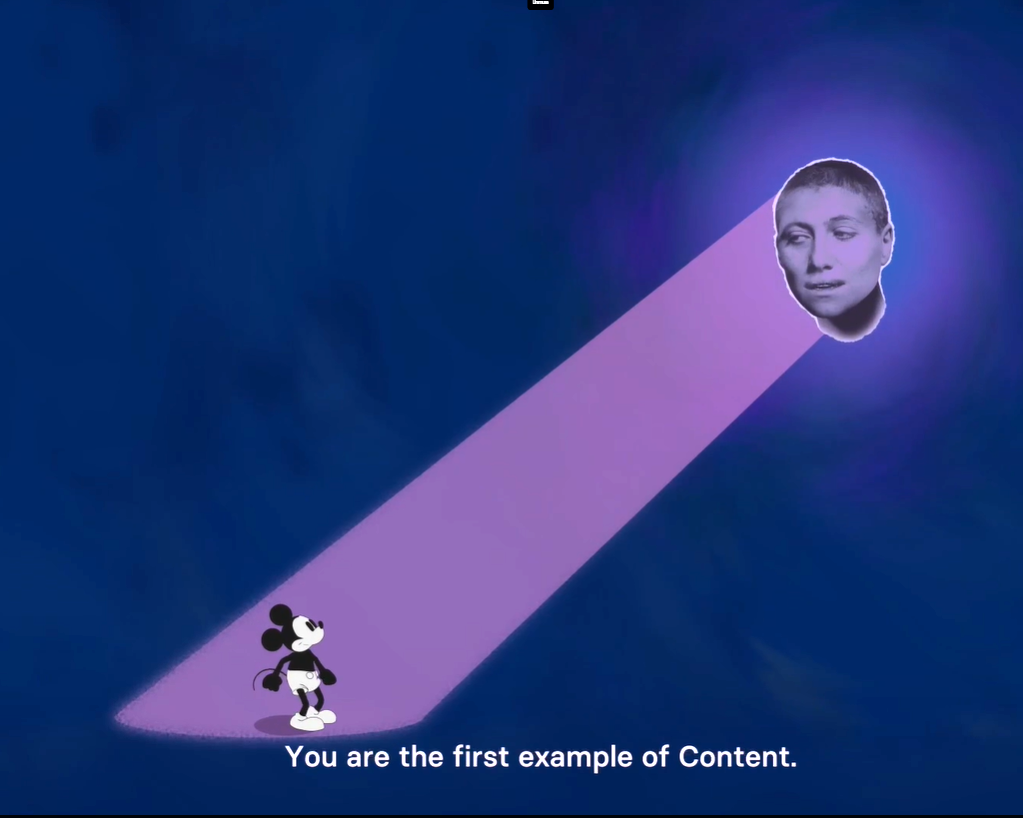
In a five-minute film that premiered in Switzerland shortly before the festival, Mickey Mouse has a religious vision, and Joan of Arc appears to him. The pairing is deliberate, Igor Simic told the audience in Athens: the Mickey of Steamboat Willie and Carl Theodor Dreyer’s silent film The Passion of Joan of Arc entered the public domain on the same day. The film, he said, is his thesis in miniature. ‘Everything is content,' and if we live in an attention economy, attention should be understood far more broadly – ‘almost spiritually’.
Simic set attention against obedience. Donald Trump signs off his Truth Social posts with ‘thank you for your attention to this matter'. Simic noted, which makes attention a form of compliance. The shift he described, which he traced to the early 20th century, is from images as holy objects to what the artist Trevor Paglen calls ‘operational images’: vectors that do things and now, in Simic’s words, ‘watch us’, registering whether we linger, tap or scroll past. The result is what he called the ‘big flat now’, borrowing a title from the Berlin magazine 032c. Every Instagram post is a square, so Palestine and celebrity trivia are given the same physical space under the thumb.
None of this is new, he argued. Marcel Duchamp’s Nude Descending a Staircase already looks ‘almost like AI art’, with its robotic figure, and his urinal works ‘almost as world building’, an object that creates discussion around it. John Berger observed in the 1960s that advertising had replaced the holiness of images; Simic proposes replacing ‘images’ with ‘content’. Joseph Beuys said everyone is an artist. ‘So tough luck,’ Simic said. 'We're all just content creators.’
Content is also capital. He pointed to the Marvel Universe as ‘a pipeline machine for generating money’, to Spotify’s internal term ‘perfect fit content’, music good enough to be ignored, and to Grand Theft Auto, which his film school teacher Paul Schrader once held up to students as ‘Goodfellas on steroids’. Studios that once made motion pictures are now ‘agnostic about the medium’, he said, and care only about the intellectual property they own. A paparazzo today ‘is probably a more daring creator than 90% of publicly funded art’.
But content can glitch, and he offered a roll-call of those who make it do so. The Vienna collective Total Refusal enters video games to study non-player characters through Marxist labour theory and asks ‘why we, the NPCs of the modern world, don’t start glitching’. The One Piece flag raised in the Nepalese uprising showed, he said, how ‘pure fiction and real politics’ can mix. He described Serbia’s student movement as ‘emergent gameplay’, a form in which, unlike film, ‘the people create the content’.
From attention he moved to intention. Of Christopher Nolan’s The Odyssey, Simic said, the criticism was never about how it was made: Emily Wilson, whose translation Nolan used, objected to ‘what he wanted to make, not how he made it’, as Simic related it. ‘Intention is one portion of our lives where we have control,’ he said. ‘And in a way, that’s the only spiritual access you can have.’
His own answer, in practice, is what he calls constellations: worlds spread across media and held together by characters rather than a single story. He cited Mark Lombardi’s drawings of financial networks, Olga Tokarczuk’s ‘constellation novels’ and Denis Villeneuve’s decision to post three short films online before a Blade Runner release. His own constellation began with the 2018 game Golf Club Wasteland, which borrows from Yugoslav and East German monuments and puts monuments to Elon Musk in the ruins. It grew into an in-game radio show, a sequel and a prequel that Netflix’s games division asked for. The work has been shown at Ars Electronica in Frankfurt; at Palazzo Strozzi in Florence; and, shortly before the festival, at the Lyon Biennial.
The apocalypse, he reminded the audience, once meant a revelation rather than merely doomsday, and his generation lived through the dissolution of Yugoslavia. ‘We’re already living the apocalypse,’ he said. ‘We’re already in the junk space of ruins.’ Against that, he described the creative’s task as ‘making bubbles that create oxygen … that other people want to breathe in’. He closed as he had on the panel, with an admission of likely defeat: ‘We will fail.’ It was, in effect, his answer to the session’s question: not a competing story about the end of the world, but a world built beside it.
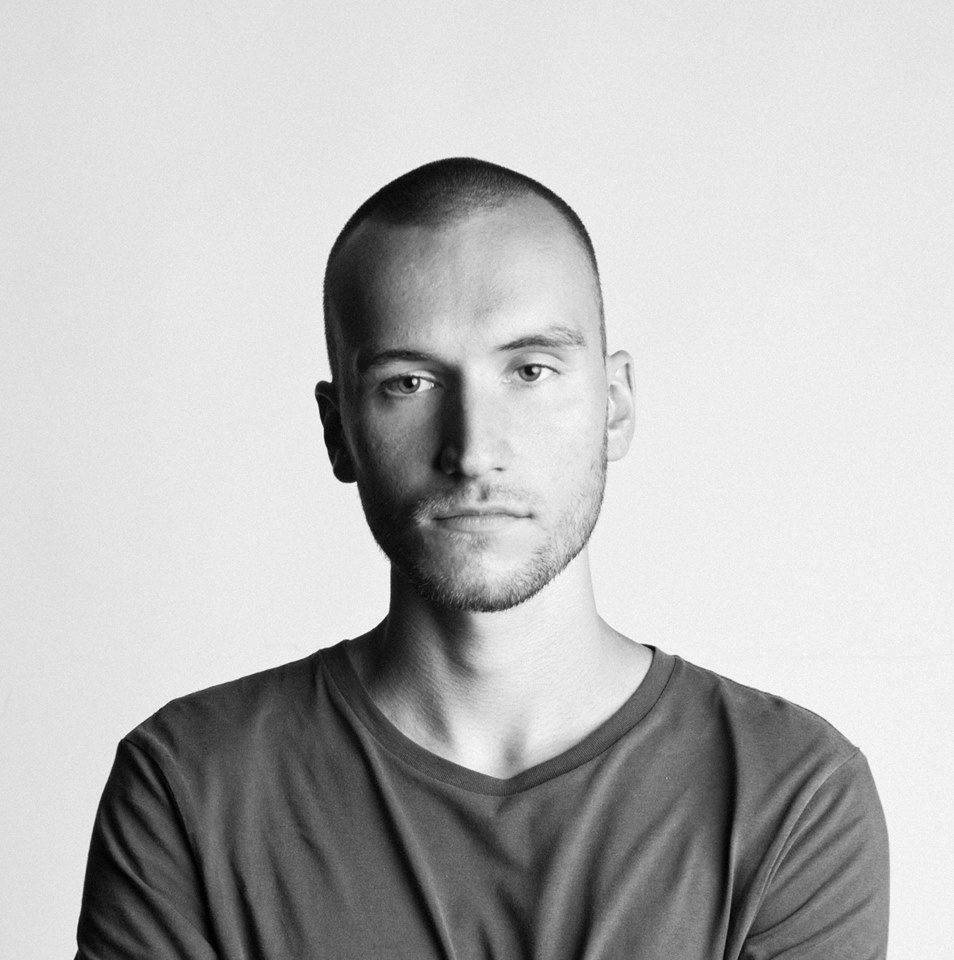
During the Bautopia festival in Athens, Creatives Unite presented a panel discussion titled 'How do we go beyond End-Times Narratives?' Thinkers, academics and artists Igor Šimić, Thanassis Moutsopoulos, Angeliki Poulou and Ainhoa Jean-Calmettes took part in an open discussion about the role of arts and culture in the current Gen Z protests around the world concerning the climate crisis, peace and democracy. Read more here
Igor Simic is a Serbian-American filmmaker, video game director, artist and writer living between New York and Belgrade. He graduated from Columbia University with a BA in Film Studies and a BA in Philosophy. Igor’s short films screened at international film festivals, but the same films along with installations were shown at the Lyon Biennale, Kunstmuseum Magdeburg, Manifesta 14, Kunsthalle Mainz, Ulm Museum, Palazzo Strozzi, Chateau de Montsoreau, The Art Institute of Chicago, Hygiene Museum Dresden, etc. Perhaps his best known work is the short film Melancholic Drone, which won the First Prize at Loop Barcelona in 2016. Simic is the co-founder of Demagog Studio, a video game company, with 3 games that take place in the same fictional world, including the original soundtrack Radio Nostalgia From Mars. The games were featured by Apple, released by Netflix and premiered at Tribeca Film Festival. Simic wrote and directed all of the games. The studio will release its fourth game in 2027 on PC and Nintendo Switch, produced by Arte France and Shochiku. Simultaneously, Igor is filming his first feature-length film. He also works for the Berlinale Talents program, Sarajevo Film Festival and often gives public talks. In the art context, Simic is represented by Galerie Anita Beckers in Frankfurt.