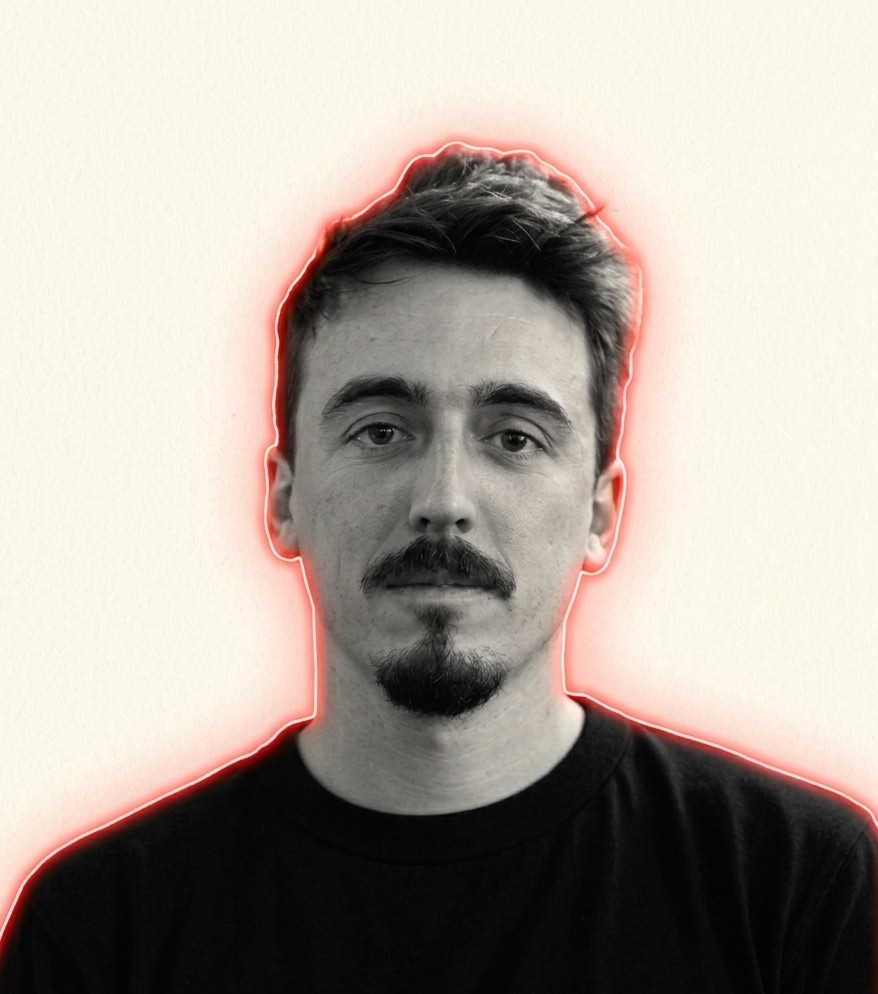
Simone Rebaudengo has spent roughly a decade designing intelligent objects, long before AI became a mainstream talking point. Trained in the cybernetics-inflected corners of design, he worked at the global consultancy Frog and co-founded the speculative collective Automato, whose work reached galleries and museums. He later contributed to the Museum of the Future in Dubai. Five years ago, he co-founded OIO, a studio that works with companies such as Google and IKEA, building experimental but usable products, from furniture that evolves to adapt to its owner to Murmur, a speaker that contains a small generative world.
Rebaudengo’s turning point came when he realised that work confined to galleries was, in his words, “preaching to the choir”. Visitors admired it, then went home unchanged. His response was to stop separating art from design and to push conceptual thinking into objects people can actually own and use. He points to the Italian designers of the 1970s, who embedded ideas about reuse, technology and everyday life into sofas, and argues that contemporary design has lost that nerve. Designers, he says, now default to commercial or user-centred logic and rarely admit that maximising profit or usage is itself a point of view.
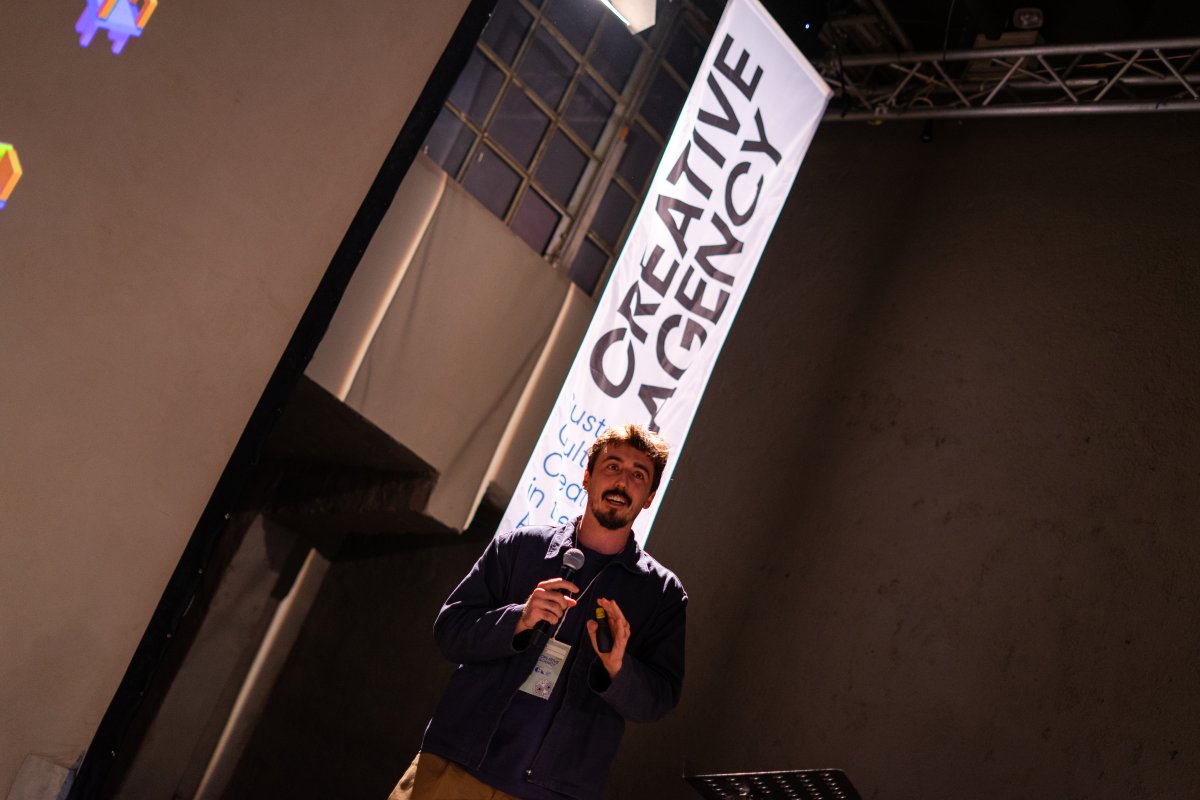
That background shapes his sharpest argument about AI. In his keynote for the Bautpopia festival in Athens, he argued that the public debate has hardened into two camps: those who promise a flawless automated world and those who reject the technology outright. Rebaudengo says the real work lies in between, in decisions designers and companies make about transparency, user involvement and friction. He treats intelligence as a material to be bent and tested rather than a tool that hands over perfect results. He also notes that today’s language models share a single angle, which is to keep people using them. For a creative sector worried about losing agency to automation, his message is that the technology can be shaped differently and that making alternatives real is more persuasive than predicting disaster.
You have been working with intelligent objects for about ten years, well before the current debate on AI narratives. How do you combine your professional and artistic activity? Does one pollinate the other, or do you keep them separate? You've worked on major projects, including designing for Google.
When I started working, it was this interesting part of smart objects, the start of machine learning. During university, I got into things with behaviours and cybernetics, and back then it was still very conceptual. Machine learning was something more for creatives. It wasn't really part of design, so I had these two tracks separated. I used to work for a big consulting firm called Frog; that's Big Consulting. But then I had this collective group called Automato that was working with galleries, with museums, and doing more speculative future things. Six years ago, with my friend Matteo Loglio, we created studio OIO, a studio that tries to work conceptually within the industry. I also work with museums, as I worked on the Museum of the Future in Dubai to show the future 70 years from now, and my big realisation was that whenever you do things that stay within galleries, you're preaching to the choir because people go there and they're like, oh, that's so nice, so interesting. So the studio, OIO, is working in this in-between. We work with companies. We also do products, but they might be conceptual in nature. I don't divide artistic practice and design practice. We are working with Google on very experimental work, but that still fits within the reality of products. Design used to be something that is not only about making a functional product, but it's also about showing a potential lifestyle, a culture. If you look at the past, like the Italian designers of the 70s, they were embedding culture into sofas because they were talking about reuse or talking about this new use of technology but also about how it fits into everyday life. You can make things that have a perspective because everything is a perspective. It's just that the perspective that we don't talk about is that you're only making things for maximising profit or maximising usage, especially in the digital world.
What does treating AI as a material let you do that treating it as a tool doesn't?
When you think about AI as a technology, you say, 'I'm applying this technology to a process,' but what if we think about intelligence and not AI? Then you have a much larger spectrum to work with. For instance, we did this project many years ago with IKEA that was about sustainability, and they wanted a vision for more sustainable furniture. We just said if something is intelligent enough, maybe it can evolve to change in order to survive. So let's say intelligence is survival and evolution. We ended up making a series of furniture that evolved to adapt to people. You abstract from AI to talk about intelligence, and so you can change the type of intelligence a system has or an object has, and then you have to understand it. We talk about materiality because it means that you have to use it, try it, bend it, and twist it. You don't take it as it is. When you work with wood, you're going to figure out what the breaking point is. How can I bend it? How can I try to do what I want to do, respecting the material but understanding the material? It's a bit of a mind trick: it's not about applying things; it is about shaping them.
Can you explain the difference between material and tool through a practical example?
In 2017 and 2018, those tools were very raw and were very weird, and it was very interesting to explore how that almost alien intelligence would help you find different things. I remember Robin Sloan was one of the first writers who made his own autocomplete for text. He trained it. And what he said is that writing like this is actually harder. It's making it different, and I think that really changed my perspective, because it's not about using technology to make things perfect or better, but to make things that you couldn't do otherwise, right? If you think of an AI system not as something that makes it easier for you to do something, but rather as something that makes it different or even harder, then you can end up with different outputs, and also it will involve you more as a person. The biggest problem that I have with all these things is that it's almost like this magical technology that, oh, you click a button, and you get a perfect result, and it's like, but why?
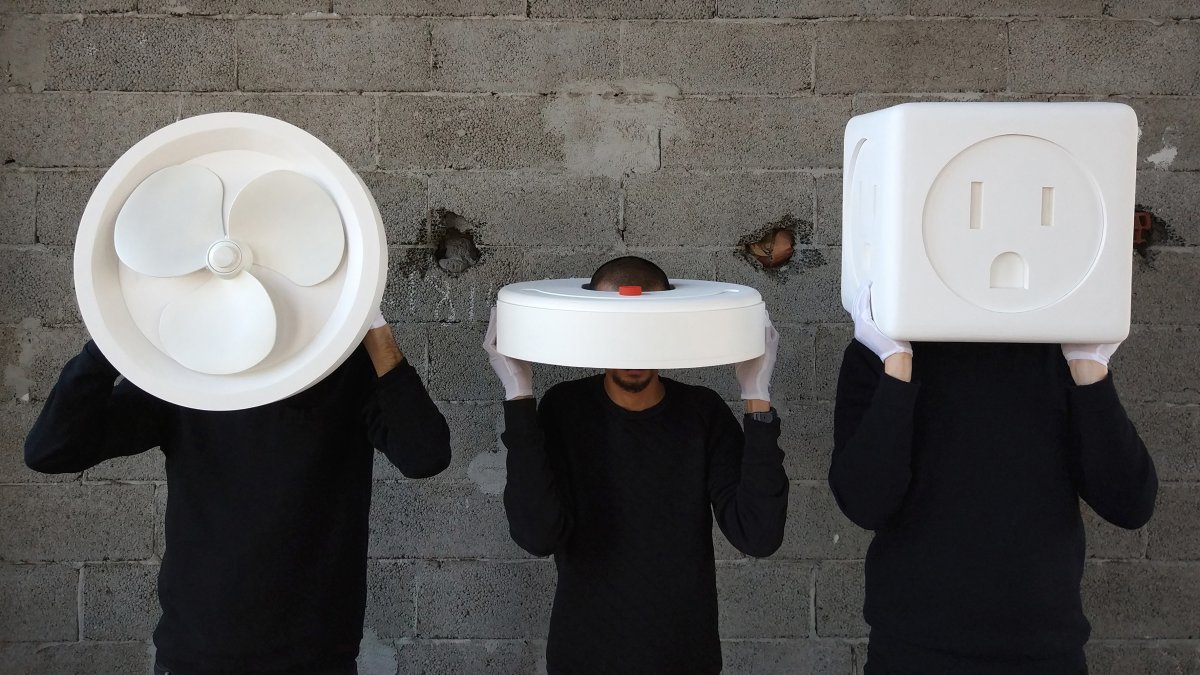
Your work on ethical objects, objects that have a point of view, seems relevant here. What is the equivalent question today, when AI itself has a point of view?
Now it's even more of a black box than it was. I think now it's very clear that the LLMs that we are using have a very particular angle, and that angle is, in the end, to make you use them more, right?
You've made objects with an opinion, a point of view.
That's been something that I've been thinking about for almost 15 years. My thesis project started with that point of view, which is that if something is smart enough, it will have an opinion that might differ from yours, so how do you deal with that? An LLM has a very particular opinion, but you just take it for granted because it seems very intelligent. What's interesting is that we jump from an opinion being an artistic perspective, like a conceptual thing, very quickly to reality. But I haven't seen people really playing with the idea of objects with really different points of view yet, because the point of view they have is still the same. We still have assistants that just tell you what to do, but you can now shape an LLM to be different for you. You could tweak it to be more adversarial, right? But you don't.
The industry is selling the autopilot idea: it has no agency; it will do whatever you tell it, a very elaborate tool. But it can be something completely different. What can art do in this case to show different potentials?
I don't think art should do something. I think design should do something. I moved my artistic approach to the product world because I think that to make an impact on someone now, to make them understand, you have to give them a real thing. I can have the biggest impact by embedding very conceptual thinking into very simple objects that make it very easy to understand. Oh, it's a chair that evolves. It's a speaker with a world inside. It's a spoon that was made in collaboration with an AI. It's a little server that is local, and it tells you how much energy to use. I really like objects, so I'm trying to force conceptual work into design. That's my fight.
Ten years ago, when you played with algorithms or designed objects with a perspective, it was perhaps easier to keep an overview and oversight. Is today's anxiety about losing agency to artificial agents new to you, or a larger expression of a problem you have faced already? Where are we going?
Very optimistic people say these things will never fail, and we should just let them do the work. Every decade you have the same thing. Self-driving cars: technology is not going to fail, and so the drive is to make this perfectly automated world where you can spend time enjoying life. This is the Fordist approach. Let's make our life more efficient so you can have time to do what you want. But actually, you just do more work. On the other end, the approach is to say, "Oh, let's not use AI. Let's not do technology." So you have this very binary view. I think the interesting part is in the middle, which is how do we involve more people in processes? That's the decision you make on a design level, because when you design a tool, it's your choice, as a company, as a designer, whatever, whether you're going to make it transparent or not, whether you're going to involve the person or not, because a lot of people, with marketing, say, 'Oh, this tool is amazing; you can make designs in three seconds,' but it's a fucking black box, and you're taking away agency and pleasure and quality. All we are doing with our work is showing examples of how you live transparency, control, involvement, pleasure, and friction. With friction comes creativity, pleasure, and learning. Now we are working a lot with education, which is another amazing problem, because now you can know everything instantly. So maybe that's a question: how do we add friction, like positive friction, in a constantly frictionless world?
You are now experimenting with multi-agent constellations, objects that contain whole ecosystems of agents. How do you set up this environment? What is the experiment, and what are you trying to find?
At a certain point, we started to see that it wasn't anymore about one agent, but maybe you divide agents with different roles, right? We did this experiment to create an infinite podcast that changes as you walk, which is also like an artistic trope. Everyone tried to do this, but now you can do it. The way we did it was by saying, "Okay, you have a researcher that looks at what's around, what is interesting in your location to talk about." Then you had a scriptwriter, or like an editor, that takes everything and tries to make a narrative and finds plot points. And then you have a narrator that chooses what to talk about. We did this very simple three-agent setup, which were prompts at the end. It wasn't an agent. It was just different roles defined in the system, and that allowed a very, very complex output that was always different and very controllable, because you were controlling the characters. You were controlling their relationship, what choices they could make, and that made me think about software. It's not gonna be software itself. It's gonna become like a small world inside an object or inside a computer. That's why we ended up doing Murmur, the speaker, because that was an experiment to say, what is a world that creates interesting sounds? When you do that, you are not generating music; you are world-building. What is the terrain? What creatures live in there? What happens? Does time change things? Does weather change things? For me, it was interesting because it got really close to video game design, right, or to cinema, or to the speculative. I can move my skills from world-building for the future to world-building for software, and that for me was amazing. But again, you can have a tiny city that creates music, and you can also go less skeuomorphic. Before, you were thinking about function code and how to make everything, but now you can think of it as roles, as entities, as politics, as management structures, so I feel like it would be very useful now to study sociology, right? You're literally making tiny worlds to make an email, which is maybe overkill, but I think that's what's interesting about it.
We are literally moving into creating worlds, from gaming, where we create worlds, to worlds we do not control, because agents can have their own agency. Then we play with these materials, almost godlike. Is that where this is heading?
It's a fine line. It all depends on what the goal is. Music is interesting because I'm not making a world of agents to solve a gigantic problem. After all, that can be uncontrollable. That's one of the big fears now of all this agentic world: that you're gonna release a team of agents that are gonna destroy the world, which is possible, very much.
Perhaps we're asking the wrong questions. Any mathematician will tell you that's unlikely, yet we take for granted that private companies competing to get there first make the agentic era the only option. So we create "sandboxes" to check how dangerous it is. Put the same question in an artistic perspective, and you end up with something much brighter and nicer to experiment with. We seem trapped in a neoliberal epistemology that is already destroying our worldview.
Some people might be critical of us using AI and doing lighthearted exploration, but someone needs to do it. Ιf all the examples we have are coming from private companies that are trying to make a profit, then that's a reality. But if we show that you can do things yourself and you can do other things, hopefully we're gonna create a culture where this is not gonna be so dramatic as well. Oh yeah, yes, they're doing agents, but I also do agents, and I'm happy, and I have my own little world that is creating recipes that I never imagined I could make, and that's nice. I think it's also about demystifying it, because the more you leave it in this doomsday, secretive labs frontier, the harder it becomes to grasp, and the more you have control of it. It's like with economics. It sounds so metaphysical and impossible by design. People don't want people to understand economics, so they keep it vague and complex. The same is now with AI. You can do it yourself. You don't have to use it for work. You don't have to use it to make everything efficient. You don't have to automate your life. Those are the only examples we have now. It's hyper-efficient solutions to relatively useless problems, and I think we can use the same technology to do other things. It's not "what if this goes bad." It's what else can we do to show another path? So it's sidestepping rather than predicting. Prediction is going to be wrong anyway. Let's open a new path.
To wrap up: what are the creative questions you're digging into right now? Murmur was your last project, if I understand correctly. Where do you go from there?
We're trying to see if we can make more products, to see if it's viable to turn this concept into small productions, because I think that's one way of making more impact. For a long time, exploring things with behaviour was interesting. Then it became very uninteresting because it became too easy. So then we moved to worlds because it was also hard. Now it's becoming easy. So I don't know yet what the next edge to scratch.