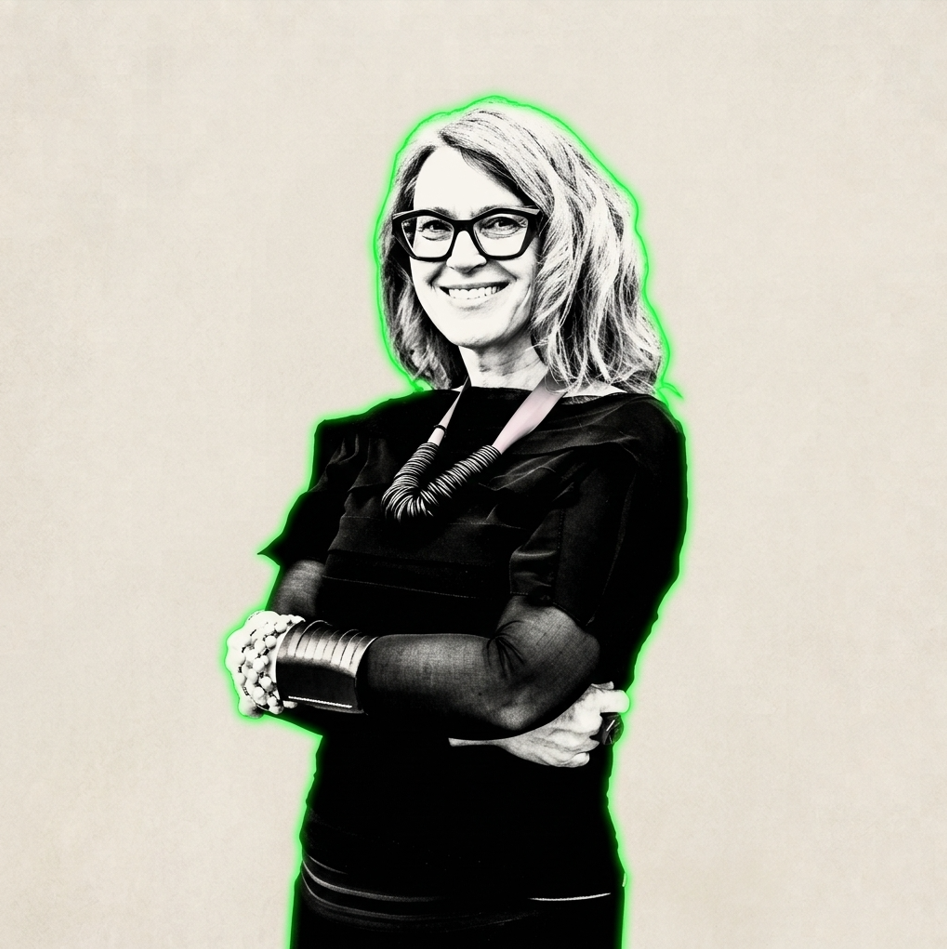



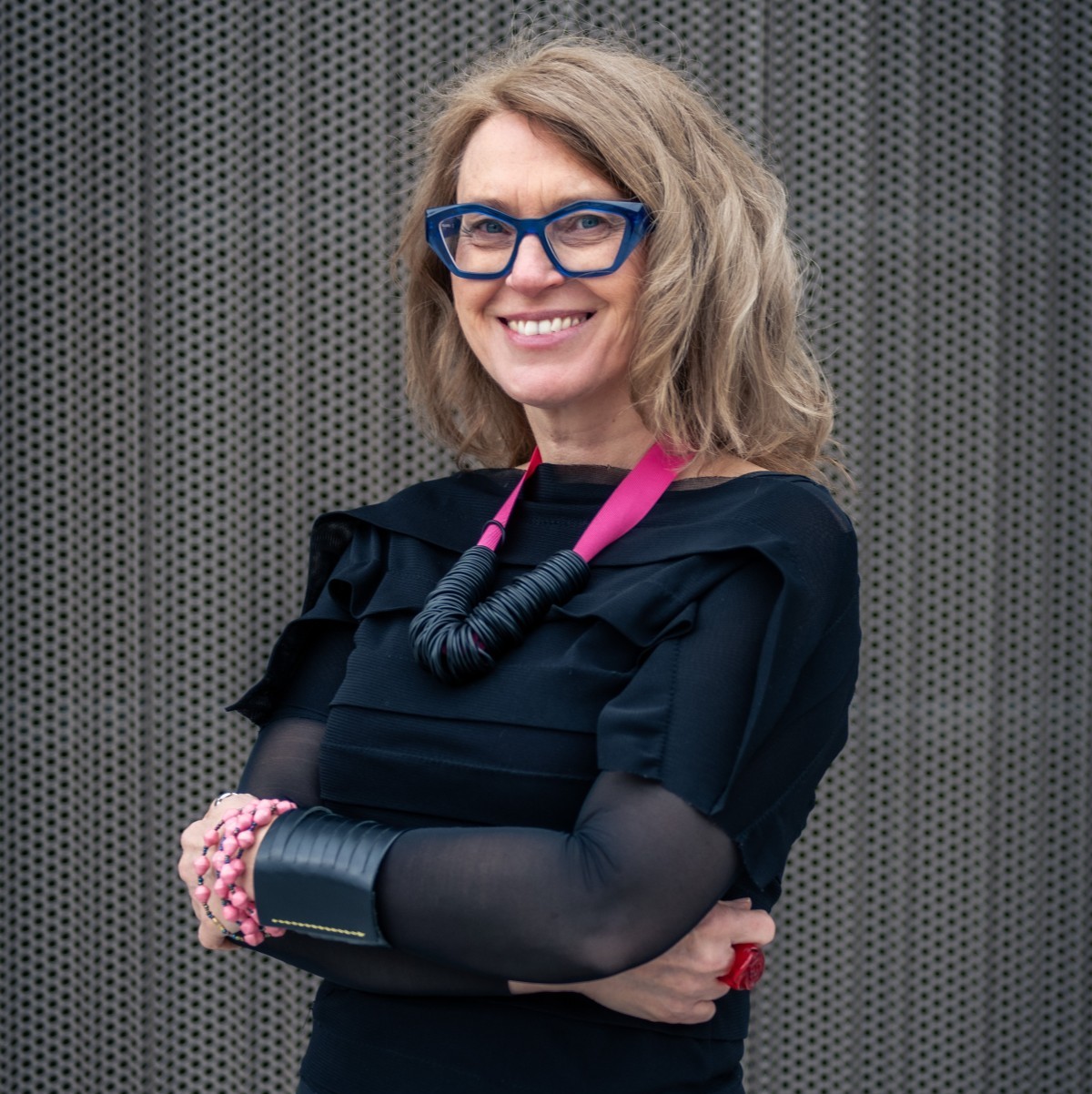
Meta spent over 20 years in social innovation and public space regeneration and led the creation of Centre ROG — one of Europe's largest hubs for sustainable design and manufacturing. In this interview with Creatives Unite ahead of the Bautopia festival in Athens, she narrates how she did it and why the identity of the site has not disappeared, but it has only taken a new form.
Meta Štular has spent more than two decades working where social innovation meets the regeneration of public space in Ljubljana. In 2010, the City of Ljubljana asked her to revisit its 2007 plans for the former Rog factory, and she has shaped the project ever since. It became Centre Rog, an 8,400 sqm building that opened in autumn 2023 and is now among Europe's largest hubs for sustainable design and manufacturing. The site has some 150 years of productive history behind it, from leather to typewriters to the Rog bicycle, and in the early 2000s it housed alternative artistic and activist groups.
Rather than follow the conventional sequence of defining a programme, renovating, and only then finding users, Štular and her then-colleague Urška Jurman proposed testing the future centre first. RogLab, a 28 sqm shipping container built in 2012, let the team trial services, access models and partnerships in real conditions. Between 2010 and 2021, more than 7,000 early users and stakeholders took part in shaping the plans, among them creators, schools, NGOs, businesses and neighbours with competing interests. Today, Centre Rog has 3,000 members, who can propose investments within a €20,000 participatory budget. It also works with people often excluded from making spaces, including asylum seekers, the long-term unemployed and older adults. Since 2021, the institution has been led by director general Renata Zamida.
Štular's work is not only about new production. She led the four-year nomination of Jože Plečnik's works in Ljubljana to the UNESCO World Heritage list and stayed on as an adviser to the research team. She sees preserving and building not as opposites but as choices about "what we choose to carry forward".
That outlook bears directly on this year's BAUTOPIA theme, "Creative Agency". Participation, she argues, "does not automatically create agency". People can be consulted without any real influence over what happens next, so agency needs tangible consequences and relationships built over time. At ROG, she sees it working on two levels: the individual maker's access to tools and knowledge and the collective ability to shape the institution itself. She also presents shared physical spaces as a counterweight to social media's information bubbles, offering contact with people we would not otherwise meet, "that cannot be controlled by algorithms".
Centre ROG grew out of RogLab, a much smaller pilot. What had to change, organisationally or in how the city and the community related to the space, to go from a lab to one of Europe's largest hubs of its kind?
In 2010 the City of Ljubljana invited me to revisit the 2007 plans for regenerating the former Rog factory in the city centre. The concept was largely conceived as a conventional top-down development method: first define the programme with a small group of established experts, then renovate the building, then bring in the users. For me, this approach was problematic in different aspects. First, if we really wish to build a relevant public institution which responds to the needs of diverse communities, then we need to involve a wider community in its development. Second, if we wish that this huge building of more than 8000 sqm is not empty once it's renovated, we need to develop a feeling of shared ownership of the project. And third, since the property was a focal point of numerous conflicting interests, including those of the temporary users occupying the building since 2006, we need to put these voices into a relationship so that not only the loudest ones are heard.
Therefore, my colleague at the time, Urška Jurman, and I first proposed to present the existing project plans to a large and diverse group of stakeholders. Their feedback was often very critical, and their criticism was directed primarily at the assumptions behind the existing development model, which did not reflect the realities on the ground or the needs of local communities. This became a strong signal that a different, more inclusive process was needed.
After two years of research, we proposed and built RogLab, a 28 sqm prototype in a shipping container that allowed us to test the future centre's services, technologies, access models and partnerships in real conditions. Rather than consulting people once and then implementing a predetermined solution, we created an ongoing cycle of experimentation, observation and improvement.
The relationship between the city government and the communities interested in Rog factory development also evolved through this process. Participation gradually moved from commenting on plans into identifying needs, testing ideas, shaping programmes and reflecting on what worked and what did not. The community in this process was not one unified group but many groups and individuals with different and often conflicting interests. The challenge was to find a way to combine the city's legal and operational procedures with the knowledge and needs of diverse groups.
What my team and I brought into the process was a paradigm shift: from debating who would use the space to proposing a participatory development method that could involve groups and individuals with diverse and sometimes conflicting interests and creating a living lab where different people could access, contribute to and shape the concept of the future Center Rog. It was precisely this process that enabled the transition from a conflictual and controversial project to Center Rog, which we know today.
Turning a former factory into a shared creative ecosystem means getting the city, cultural institutions, and a maker community to actually agree on what it's for. What does that negotiation look like in practice — where do those groups usually disagree first?
People tend to argue about the wrong things. For example, who should get the biggest part of the building, whose opinion should count, who should have access to public resources… and, of course, everyone thinks they are entitled to more than others. Different stakeholders have legitimate although competing concerns and needs: city employees are responsible for public funds and legal accountability; experts defend professional standards, creatives need affordable spaces, neighbours need good night's sleep and so on. Conflicts often emerge because no clear procedures, protocols or resources for development have been established. This pushes people into competition, uncertainty and distrust.
My team and I had no intention to erase differences or to put ourselves in an arbiter role to judge who was right, but rather to establish transparent rules for negotiating different interests. When we first proposed the participatory development approach for Centre Rog development, it was neither immediately welcomed by city representatives nor trusted by stakeholders and members of the public. City representatives feared that a participatory process would take too long, conflict with administrative timelines and procedures, and fail to produce clear or constructive decisions. Stakeholders, on the other hand, were afraid that they would become caught up in a process that formally promoted collective decision-making but would not necessarily give them meaningful influence over the final decisions.
However, the establishment of the RogLab makerspace changed this. We built it in 2012 while the concept and programme of the future Centre Rog were still taking shape, leaving enough space for ideas and improvements to emerge from diverse communities. Participants saw their ideas being directly integrated into the RogLab programme and the official project documentation. This gradually built a relationship of trust. Seeing the tangible, intermediary results of their involvement also encouraged participants to contribute even more. On the other hand, the prototype as an actual physical space and the growing number of people it activated also built trust among our colleagues at the City of Ljubljana. I would like to stress that these were not abstract institutional actors but specific individuals: Jerneja Batič at the operational and administrative level at the city's Department for Culture and former Deputy Mayor Janez Koželj at the political level. Both had the operational skills and political courage required to support this unconventional approach to development early on.
Organisationally, the transition to the larger Center Rog began in 2021, when the City of Ljubljana established a new public institution and appointed Renata Zamida as its director general, while the renovation of the former Rog factory building was underway. This took place in a politically tense atmosphere, after a long-running conflict between the City and the former users of the factory premises had ended with their eviction.
Centre Rog opened in autumn 2023. Since then, our team has been learning, often through trial and error, what it means to grow an organisation of this scale. The challenge was to scale up and formalise the principles and practices we had already been developing through RogLab: open and transparent access, clear allocation procedures, professional technical support, health and safety standards, support for socially or financially disadvantaged users, and strong connections to the educational sector. The scale of Centre Rog (8,400 sqm) demanded a different level of organisational complexity: more spaces, more people, more funds, more procedures, more rules, more interdependencies and a much greater need for coordination, while trying to keep it a flexible and welcoming shared space.
Within the formal governance structure, we try to create meaningful forms of participation. These include partnership programmes offering space and subsidies to organisations wishing to contribute to the programme of Centre Rog; an annual evaluation day with employees and contract collaborators; a programme-development brainstorming week during which we collectively develop complex interdisciplinary programmes for the following year. Currently we're also elaborating a new role for the RogLab container space, which lost its function in the fall of 2023 when Centre Rog opened. It will again become a prototyping space where new ideas, programmes and institutional development for Centre Rog will take place, providing a continuing yet new type of agency to our users.
Speaking of agency, the main lesson I've learned in my career is that participation does not automatically create agency. People can be consulted or invited to contribute without having much real influence over what happens next. Agency, for me, means that participation must have tangible consequences — people should be able to shape decision-making processes and the development of an institution. This kind of agency is not a one-time-only event, but rather it needs continuity and development of bonds through relationships built over time.
You also led the push to get Plečnik's work onto UNESCO's World Heritage list — heritage preservation is almost the opposite impulse from running a maker space full of new production. How do those two instincts, preserving and building, coexist in your work?
I don't really see preserving and building as opposite instincts. For me, both are about what we choose to carry forward and how we build on the work and knowledge of our predecessors.
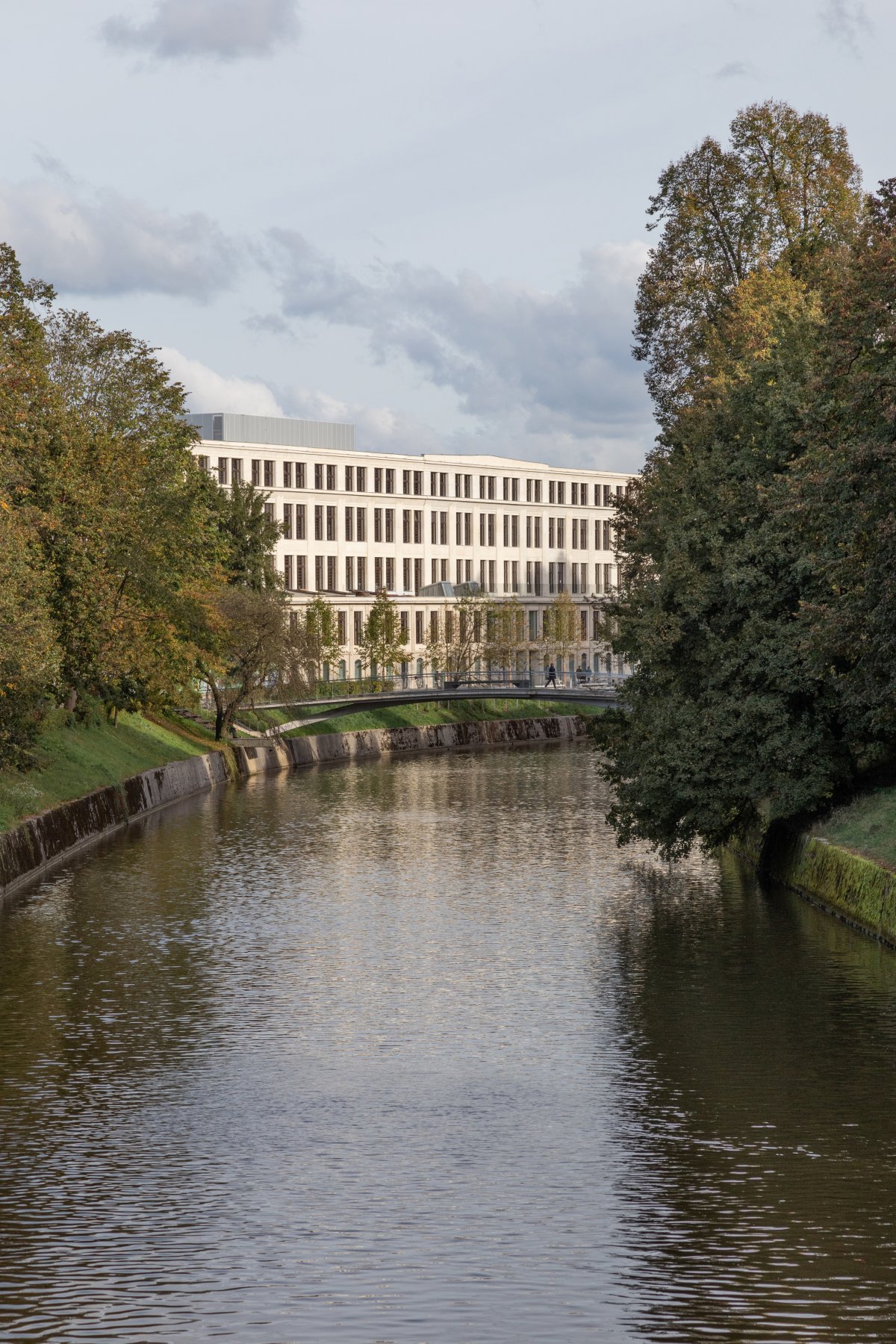
What makes Plečnik's heritage so meaningful is that it remains part of the everyday life of Ljubljana. The National and University Library and the central market are still in everyday use, the embankments of the Ljubljanica river have been renovated in recent years and are full of life, and the inscribed churches continue to serve their social purpose. The connection between Plečnik's heritage and the regeneration of the listed Rog factory building is for me quite direct: in both cases, the aim was not simply to preserve physical fabric but to keep heritage active and relevant through use.
My work developed alongside a broader shift that was already taking place in heritage practice. The Nizhny Tagil Charter for the Industrial Heritage (2003), for example, argues that one of the most meaningful ways to preserve an industrial site can be to keep it in productive use, as long as the new use respects the character, skills and working culture embedded in the place. UNESCO's 2011 Recommendations on Historic Urban Landscape move away from the idea of heritage as something isolated and frozen. It connects it with communities, everyday use and sustainability. More recently, the New European Bauhaus has connected adaptive reuse with sustainability, inclusion and quality of place. These ideas are increasingly being put into practice through EU funding programmes.
 The focus on connecting primary use with secondary use of the building was very relevant when we were developing Centre Rog. At the end of the 19th century, the first one-storey leather factory was built there, which was later expanded into a three-storey factory, still producing leather goods. After the Second World War, production shifted first to typewriters and then to the famous Rog bicycles, while during secondary use in the nineties it was a temporary exhibition place for the Industrial Design Biennale. At the beginning of this century, the building was a temporary home to alternative artistic practices and activist groups.
While developing the Centre Rog concept, I was very conscious of this productive history, or rather histories. The challenge was how to translate its diverse productive character into a contemporary institution. Today, the Centre Rog is again a place of production. But instead of making only bicycles, people are creating a myriad of different things, working with digital fabrication, textiles, ceramics, wood, food, electronics and other technologies and materials. The productive identity of the site has not disappeared; it has only taken a new form. This is what good adaptive reuse can do. It does not preserve a building as a static object. It allows its meaning to evolve through secondary use while keeping it connected to the history and character of the place.
One reason building and preservation can seem to be in conflict is that many heritage buildings remain empty even after they have been renovated. Owners of listed buildings often focus on restoring the physical structure and underestimate what it takes to bring the building back to use. Developing a meaningful programme, building partnerships, creating a community of users and then sustaining the programme over time can be at least as demanding, and in the long term more expensive, than restoring the building itself.
In my approach to Plečnik's heritage and Centre Rog's development – working for a while on both projects simultaneously – I was interested in the same thing: how to keep what is meaningful from the past alive by allowing it to remain useful in the present.
This year's BAUTOPIA theme is "Creative Agency" — for a hub like Rog, is that agency mostly the individual makers using the space, or the community that shaped what the space became?
At Centre Rog, agency operates on several levels. There is the individual maker's ability to access tools, knowledge, spaces, other makers, and turn an idea into something tangible. But Rog is not just a building full of machines. It is an infrastructure for encounters, exchanges and shared experimentation. It allows people to circulate knowledge, test ideas and do things that would remain impossible in isolation. At a time when social media increasingly sorts people into separate information bubbles, shared physical spaces create the possibility of something less predictable: direct contact with people we would not otherwise meet; a merger of various perspectives of individuals and groups from different strands of society that cannot be controlled by algorithms.
That collective dimension raises an even more interesting question: can people influence not only what happens within an institution, but the institution itself? This focus was central to the development of Centre Rog.
The way Center Rog operates today confirms the value of this dynamic approach based on live prototyping. Its workshops, open programmes, residencies, exhibitions and partnerships bring together not only professional makers, students, residents, schools, researchers, but also people who are often systemically excluded from productive community spaces, such as asylum seekers, people experiencing long-term unemployment, older adults, etc. Retrospectively, the relevance of this approach is also reflected in recent developments in the field of public policy. The OECD increasingly understands cultural institutions as contributors to local development, social inclusion and wellbeing, rather than only as generators of economic activity. The New European Bauhaus connects cultural and spatial development with sustainability, inclusion and participation. In the UK, public investment discussions are increasingly considering cultural infrastructure in relation to belonging, trust, social networks and social cohesion. I find this an especially strong signal of positive change, since British cultural policy has traditionally been significantly more market-oriented than that of many continental European countries.
And it is through such a lens that I view institutional cultural development – I'm not interested only in the question of what programmes a cultural institution delivers and how many people it attracts, but rather what kind of relationships, trust, public value and, indeed, agency it enables over time.