
In Henriette Waal's bioregional model, funding behaves like an ecosystem: a set of conditions, experimentation and relationships from which exceptional work emerges. That can come through micro-funds, shared workshops and long-term support for practitioners.
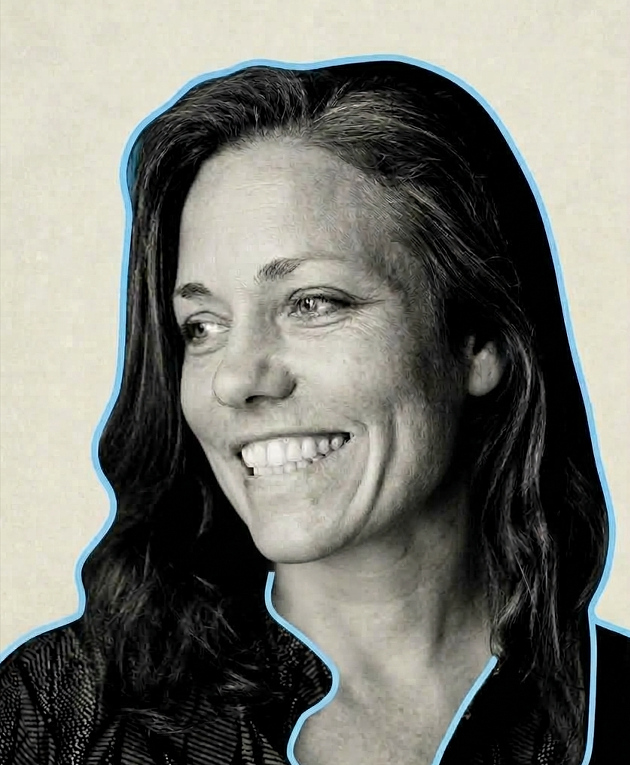
Waal is co-founder, with Jan Boelen, of Atelier LUMA, the design and research programme of LUMA Arles in the south of France. Since its founding, the lab has worked bioregionally, designing with the materials, skills and landscapes of the Camargue, the Alpilles and the Crau rather than with global supply chains. She trained through the Sandberg Institute's Vacant NL programme and has led the atelier's artistic and research direction, including projects such as Colour Geographies and III+1. She now also steers the Veenweide Atelier, where the same place-based logic is applied to the problem of subsiding peat meadows.
Her work speaks directly to this year's BAUTOPIA theme of creative agency. Her answer to who holds that agency is practical: it sits with makers rooted in a place, working as equal partners with scientists, industry and policymakers. Her argument that creative funding should be matched with innovation, scientific and EU funding, with room for creative thinking, is one that policymakers and cultural professionals can act on. In peatlands, she adds, building empathy between farmers, conservationists and scientists is part of the ecological work, and science and industry should pay creatives as research partners rather than as communicators.
At Atelier LUMA and the Veenweide Atelier, you design in symphony with the surrounding landscape, using local biomaterials as alternatives to destructive industrial supply chains. Is there a bioregional version of this logic for how creative-sector funding or infrastructure should work? Specifically, how can we design intentionally smaller support systems, localised and optimised for ecological health rather than continuous scale and growth?
Yes, it requires shifting the question from 'How to scale creative production for visibility, outreach and popularity' to 'What conditions allow creative ecosystems to remain healthy?'
In a bioregional model, creative funding would behave like an ecosystem. Rather than extracting talent from places and concentrating resources in a few centres, we would try to keep more resources circulating within the places where the actual creative work happens.
That could mean smaller, distributed and long-term forms of support: local micro-funds, shared workshops and studios, regional creative infrastructures, residencies linked to local ecological questions, or structural support for practitioners rather than project-based grants. The objective would be to increase the resilience, diversity and quality of the local creative ecology.
I think the quality and potential of collaborations should be assessed as a criterion. And the creative sector should open up more to cross-sectoral collab. Matching creative sector funding with innovation funding, scientific funding, and EU funding to make sure that within these collaborations there is room for creative processes and thoughts.
A bioregional funding approach asks: how can the resources of a place sustain a diverse and resilient creative ecosystem without exhausting the ecological and social conditions that make it possible?
Instead of primarily funding finished projects, we could fund the conditions of creativity: time, experimentation, maintenance, shared infrastructure, repair, learning, and relationships. Some of the most valuable creative infrastructure may produce very little measurable “output” in the short term but create the conditions from which exceptional work can emerge.
Smaller does not necessarily mean less ambitious. It can mean more specific. A local system can be highly sophisticated precisely because it is adapted to its particular ecology, culture, materials and communities rather than serving for replication everywhere.
In your work at the Veenweide Atelier in Friesland, you deal directly with the tangible realities of ecological crisis, such as peatland soil subsidence. This work relies heavily on bringing conflicting local groups—farmers, conservationists, and scientists—into a shared, empathetic space. How does this hands-on process of building community empathy act as a direct tool for environmental regeneration, rather than just a separate social challenge?
I think empathy is not a separate social layer added to environmental work; it is part of the infrastructure that makes ecological change possible.
In a place like the Veenweide (peat meadow landscape), the ecological problem is also a conflict between different forms of knowledge and responsibility. Farmers experience the landscape through their income and daily routines; conservationists through biodiversity, ecological control and policy; and scientists through data and long-term trends. If you don’t bring in other perspectives, then these perspectives stick with their own view and can easily become positions that are defended against one another. Bringing people together in and around the actual landscape creates an opportunity to move from defending positions to understanding the conditions and dependencies that everyone is part of.
This is also why I see the Veenweide Atelier as more than a cultural project. It is a boundary space where different fields of knowledge can collaborate and where new possibilities can emerge through friction, curiosity, and hopefully fun. I think other sectors, particularly science and industry, should be much more open to reciprocal collaborations with cultural makers, not simply asking creatives to communicate or aesthetically represent their work. Making is a way of thinking, researching, questioning, and opening up possibilities. And if we genuinely value that contribution to environmental transition, we need to recognise it and pay for it.
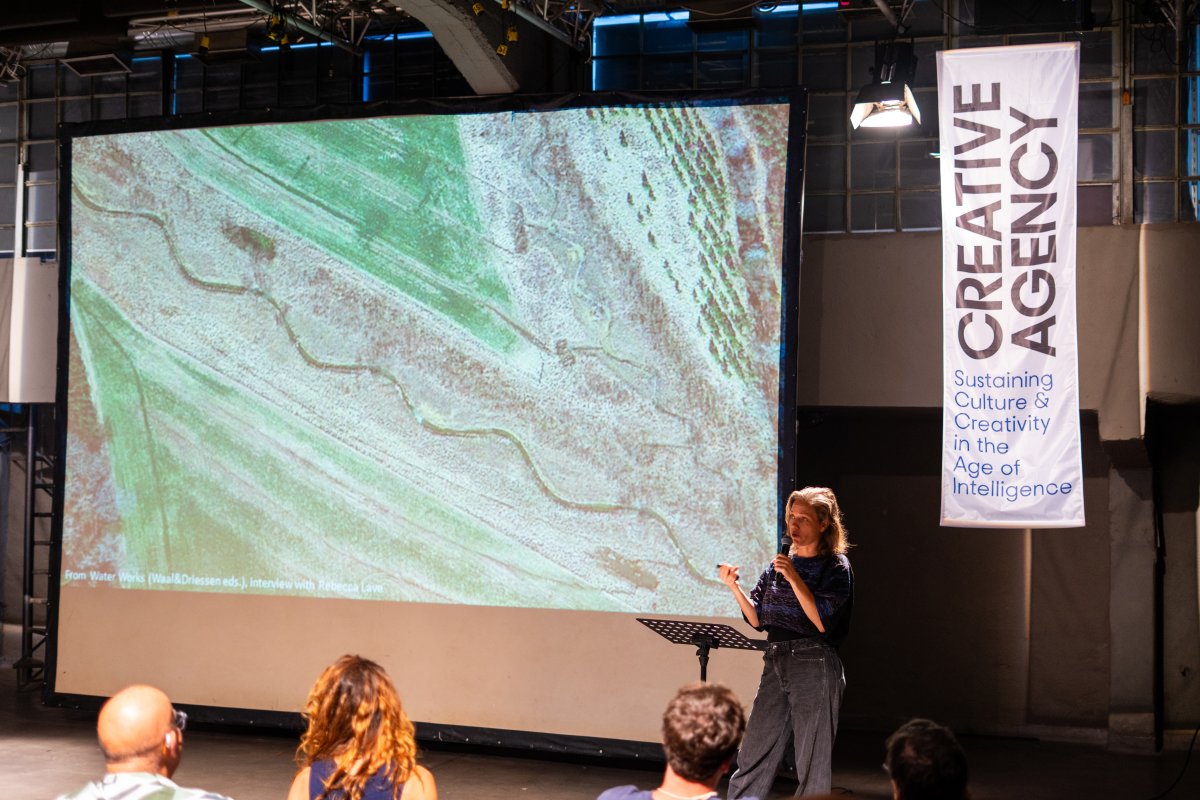
Scientists and organisations that should bring art and culture into their work often don’t, because in their minds it is a separate silo. From our perspective, it should be an integral part of what they do. The silo suggests that there is a boundary, a border, one side and the other. So often people try to popularise ideas from another silo and do it badly, while artists who incorporate ideas into their own practice don’t understand them very well. They make a shadow, a scheme that is not really essential. Can that gap be bridged at all?
That’s what I’m trying to do in my work with the Veenweide Atelier and in my projects: to create democratic, reciprocal ways of exchange, mainly between science and art. It’s not easy. Not every collaboration between art and science works, so maybe we also have to accept that sometimes it fails. But it’s like making, like working on a design: things don’t work immediately. It’s a question of continuing, trying, and maintaining. I’m trying to do right now is gather people in other fields who believe that art, culture and design can do something. I look for people who share the vision that this is important, and then I work with them. What I see a lot is people from science and so on trying to work with creatives, but it’s not always easy. So in a few projects I try to work from the inside out: not from the creative sector towards them, but by finding allies inside other sectors and working with them. You will always find a young employee, or someone, with the energy to connect or to try something different. I think it happens maybe even more on a personal level. You connect, and then you work from there.
What are the best examples you’ve seen of this working well?
One example is the book about water (Waal & Driessen, Valiz 2025). It was a collaboration between a scientist, a cultural geographer, and myself as an artist and designer. The book combines scientific, design and art contributions. I think we managed to have more depth in content and understanding, including in how we put on paper the methodology of eco-social design, which is what the book presents. That brought together a reflective, theoretical mind, which brings in the different theories, and a practice like mine, which develops from making. In form, it also came out far more interesting than what scientists would do with their papers. It’s a hybrid book with different forms of reading, and the scientific papers were shortened so they’re more accessible to artists and designers. I think it worked quite well, although a book is, of course, a different thing.
At Atelier LUMA, we had a team of mainly designers but also some scientists, for instance, a biologist. What she gave back to me was that it was really interesting to get challenged with different types of questions to work with, which she normally didn’t get. At the same time, I thought it was great that she wasn’t the kind of scientist who would reason things away or kill ideas early. I put it a bit heavily, maybe, but scientists often want to tunnel quite strongly, and that doesn’t combine well with a creative ecosystem if there is constant critical questioning. So maybe it’s also about thinking through when the moments are in which this works well.
Another example was a new type of natural rubber that I worked on with Atelier Luma. At first, only the scientists were working on it, and they couldn’t solve the formulation. I said, 'I know you can’t share your recipe protocols, but I think it’s important that we are both in the lab together so we can see which actions are done with this material. ' Then the designers could solve the problem, because it wasn’t the formulation; it was the handling of the material.
I could also mention so many bad examples, of course. It brings friction, true. But I call that boundary work, and I often see my role as doing that boundary work. If you stay in your own silos, it doesn’t work. You need to really move, to shift a bit. When it succeeds, it is because both sides move a little towards the other. It’s not comfortable, but in the end it is more exciting.