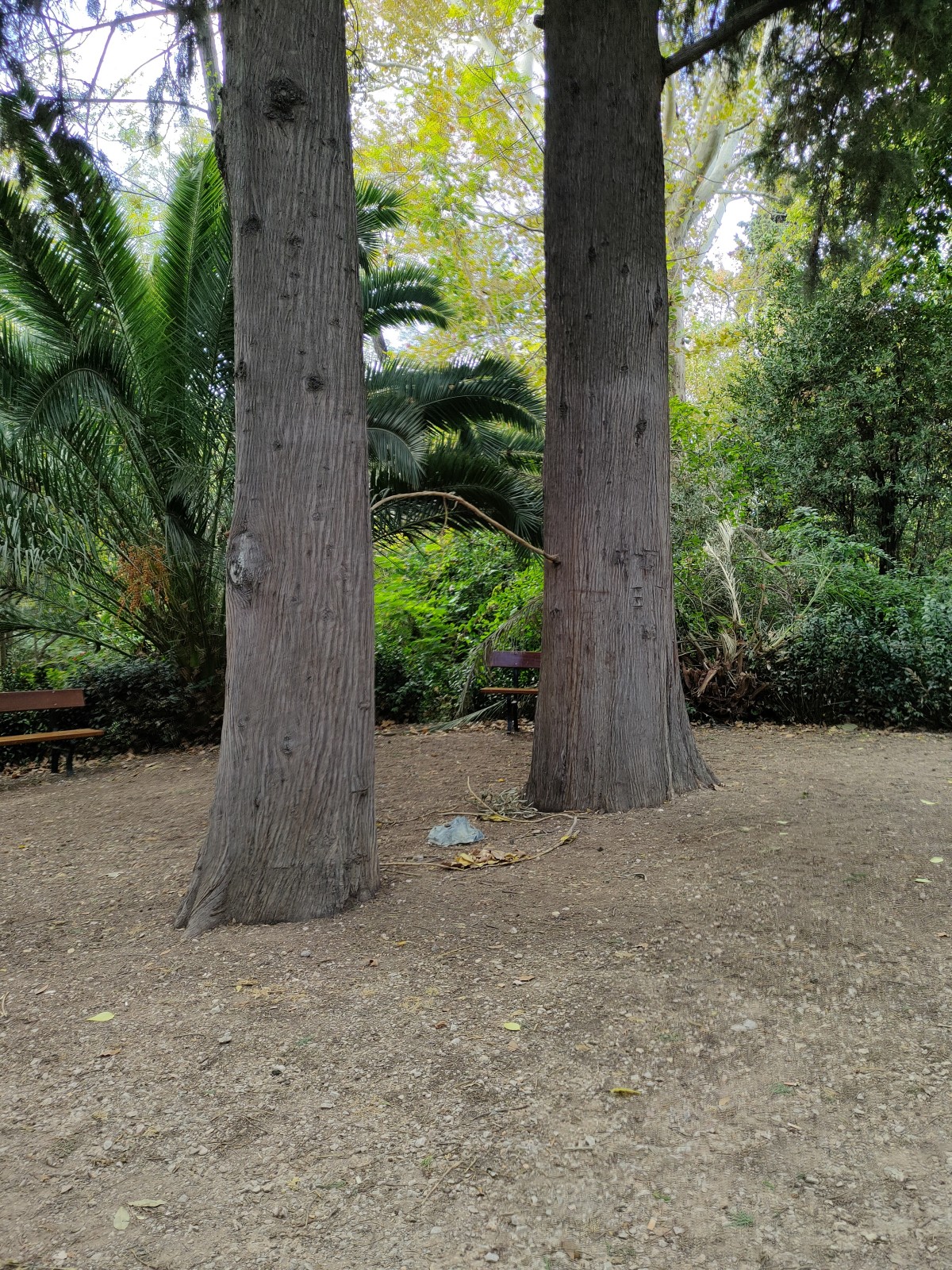





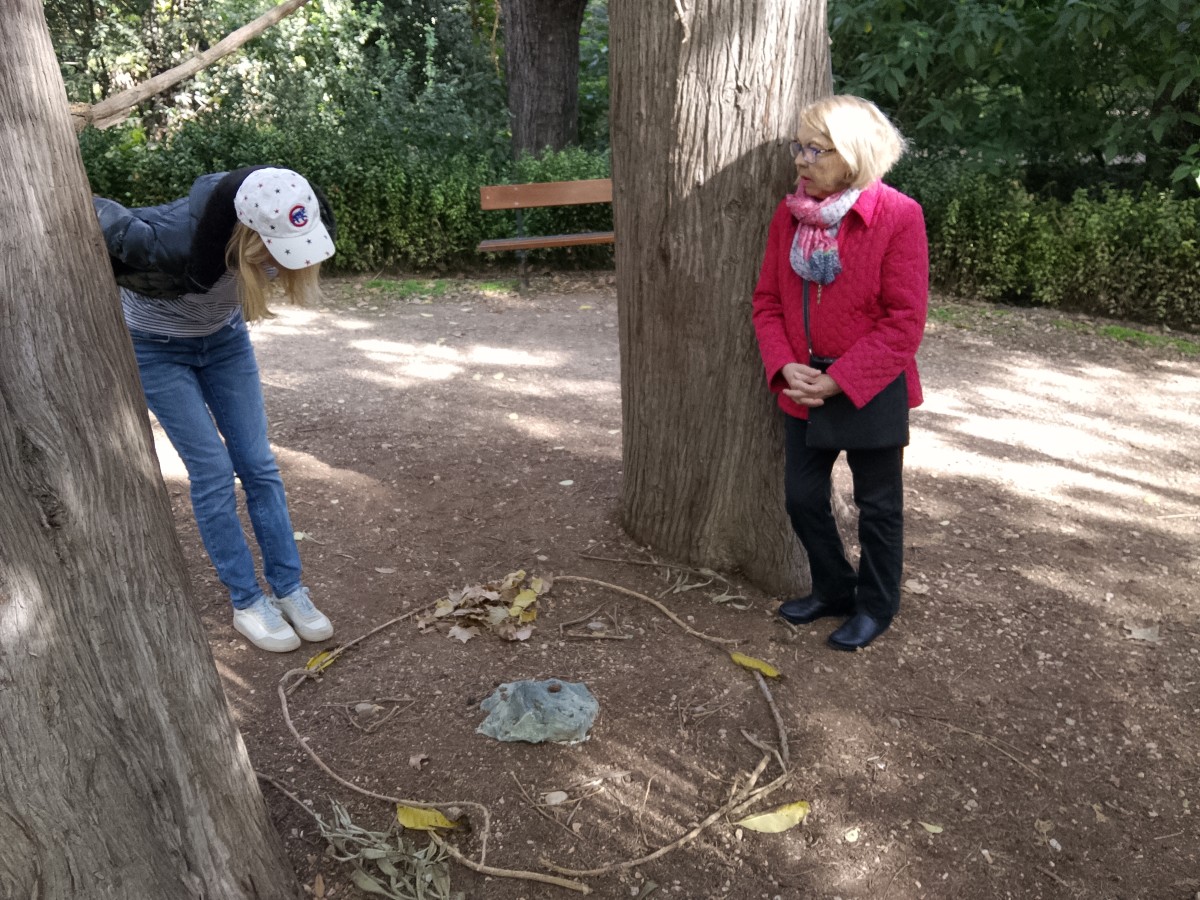
At the heart of the National Garden of Athens, in a quiet setting, a stone began to speak. Visitors approached it cautiously at first, touching its surface, leaning closer, sometimes whispering a word or a thought. In response, the Whispering Stone answered with fragments of AI-generated speech: poetic, reflective, and often unexpected. Around it, a carefully composed landscape of natural materials created a subtle, almost ritualistic atmosphere. What emerged was not just an installation, but a space of encounter—between human presence, language, and technology.
This moment captures the core outcome of The Whispering Grove: a working prototype of an immersive environment where artificial intelligence becomes a quiet, responsive presence embedded within nature. As the team describes, “the main tangible outcome is the creation of the Whispering Stone installation that activates AI-generated spoken fragments when touched or is spoken to.”
The Whispering Grove was conceived as an artistic space that invites older adults to reconnect with nature through creativity, contemplation, and shared experience. Developed through a collaboration between the socially engaged organisation People Behind in Greece and artist and urban designer Mateja Stanislava Rot from Slovenia, the project brings together artistic vision and social engagement to foster a sense of calm, curiosity, and connection.
The project evolved as an exploration of how poetic language, tactile interaction, and AI could coexist within a natural setting. Its most tangible result is the Whispering Stone itself, a sculptural object designed to resemble a natural rock, concealing within it the technological components that enable voice and touch interaction.
But the stone does not stand alone. It was placed within a scenography built from materials gathered on-site, forming a contained yet open environment that gently guided movement and attention. This approach became central to the identity of the installation: “creating the scenery using local materials was much nicer than having ready pieces of decoration that would have no connection with the local context.”
The public presentation marked a turning point. Visitors, particularly individuals over the age of 60, engaged with the installation in ways that revealed both its strengths and its limits. Some lingered, listening carefully to the voices; others tested the boundaries of interaction. As reflected in the process, “seeing how people approached the Whispering Stone… showed us which elements were intuitive and which needed adjustment.”
At the same time, the process generated less visible but equally important outcomes. The team developed a nuanced approach to working with AI-generated speech, learning how variations in tone, rhythm, and language structure could shift the emotional quality of the interaction. As they note, “the iterative testing helped us understand how different tones of voice, lengths of text and environmental cues shape the emotional experience of the space.”
The Whispering Grove exists at the intersection of different ways of thinking.
On one side, there is a poetic and artistic approach—concerned with atmosphere, language, and the subtle shaping of experience. On the other, there is a strong social focus, grounded in understanding how older individuals with diverse abilities engage with space, technology, and participation.
Bringing these perspectives together required constant negotiation. How can an interaction remain intuitive without losing its sense of mystery? How can technology support an experience without becoming its focus?
This balance became clearer through practice: “bringing these approaches together generated a clearer picture of how the installation can remain both imaginative and accessible.” In this sense, the installation became not only an artwork but also a space for dialogue.
Environmental awareness added another layer to this intersection. The use of locally sourced natural materials shaped both the physical composition and the emotional tone of the work, reinforcing a sense of place and belonging. At the same time, technological expertise ensured that interactions remained clear and approachable.
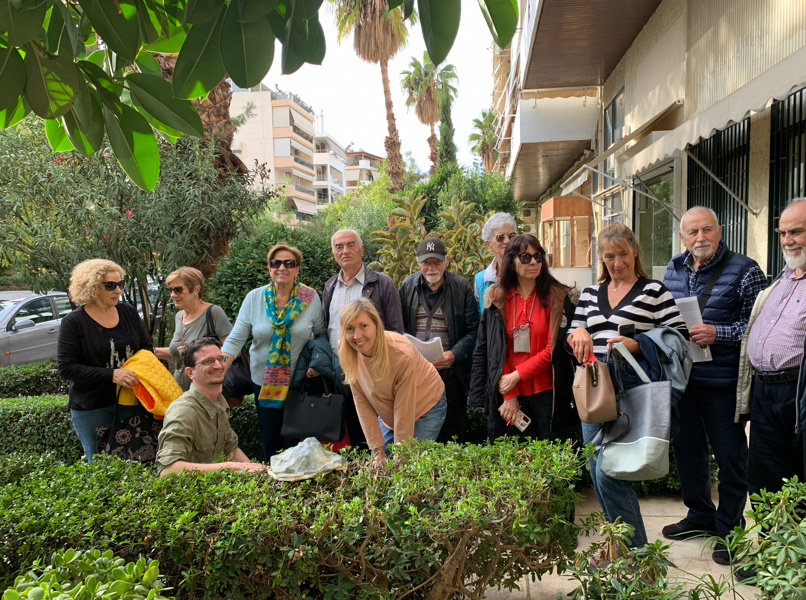
If there is one lesson that stands out, it is that understanding comes through doing.
Many aspects of the installation only became clear once they were experienced in real conditions. Observing how people approached the stone, how long they stayed, and how they reacted revealed patterns that could not have been anticipated. Prototyping, in this sense, was not a step toward completion but an ongoing way of thinking.
Another insight emerged from the role of atmosphere. Small adjustments- sound levels, textures, spatial arrangement- had a profound impact on how visitors engaged. Accessibility revealed itself not just as a matter of function, but as a matter of feeling.
The team also learned the importance of restraint. “When it was integrated more quietly, it supported the poetic and reflective qualities of the work.” When technological elements receded into the background, they allowed the experience itself to come forward.
Perhaps most importantly, the project showed that interaction cannot be fully predicted. Visitors brought their own interpretations, sometimes engaging in ways that surprised even the creators. These moments pointed toward a more open-ended approach, one where the installation evolves through use.
The path to these outcomes was not without difficulty. Translating a clear conceptual idea into a stable and responsive system proved more complex than anticipated. Early versions of the stone struggled with consistency, prompting a cycle of testing and refinement.
Engaging the intended audience also presented challenges. Although many older participants expressed interest, practical barriers, such as mobility,limited attendance. This highlighted the need to consider accessibility not only within the installation, but also in how it is presented and reached.
There were also moments where artistic intention and technical reality did not align. Certain poetic ideas resisted translation into AI-generated speech, requiring careful adjustment of tone and structure.
Even the environment itself introduced unpredictability. Noise, movement, and shifting conditions required adaptation. Rather than seeing these as obstacles, the team treated them as variables, learning from how the installation responded in context.
Future plans include expanding the installation into a larger landscape of multiple stones, creating a network of interactions that unfold as visitors move through space. Additional layers, such as subtle soundscapes or responsive visual elements, may be introduced to deepen the experience without overwhelming it.
At its core, the ambition remains the same: to create a space where technology supports a quiet dialogue, between people, language, and the environment. A space where a stone can speak, but also where listening becomes just as important.
Key Takeaways
Mateja Rot
Mateja Rot is urban innovator, architect of peace and interdisciplinary artist from Slovenia. She works at the intersection of community activism, urban design, sustainable architecture, environmental arts and technology and advocates user related solutions that enable environmentally friendly living.
Mateja’s research interests lie in the field of aesthetics and embodied perception in relation to games and play. One of her core research topics is the sustainable development of communities and cities within current technological possibilities. Among her recent urban projects are PLAY:CES, featured at Fusion Urban Games Festival Matera, Sprites of Meadowlands, a game exploration of green spaces in the city, Flækingar, set in Iceland and Greenscapes immersive installation and experience, set in Milan, Madrid, Liège and Luxembourg.
Nikos Vandoros
Nikos Vandoros is an architect with a special interest in revitalizing neglected spaces through culture and technology. Since 2019, he has been collaborating with the NGO People Behind, aiming to reduce digital illiteracy among people over the age of 60. Currently, Nikos also works as a project manager at the Erasmus+ Greek National Agency and the EPALE National Support Service.