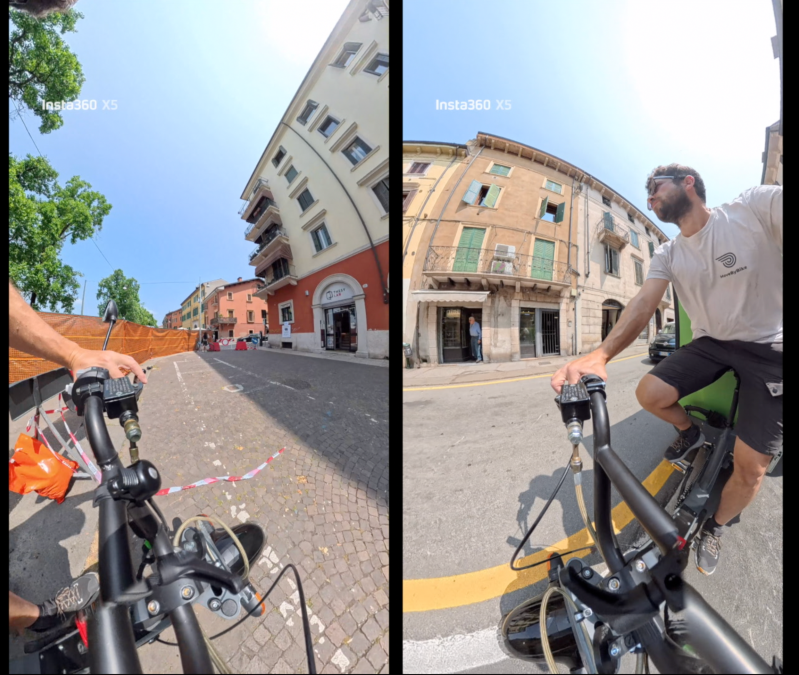



The Velosonics project used contact microphones and machine learning to turn cargo bike vibrations into diagnostic data. This functional prototype monitored bike health, proving that low-cost acoustic tools offer a scalable, non-invasive way to track equipment wear and tear effectively.
By ECHN for Creative FLIPCargo bikes move through cities every day, collecting parcels, navigating potholes, bearing loads that test their frames and components in ways that are difficult to measure. What if sound could do the measuring? That was the question behind Velosonics — a project that set out to turn contact microphones, machine learning, and the noise of urban logistics into a new kind of diagnostic tool.
Velosonics grew from a collaboration between two organisations that would not normally find themselves in the same room. Swedish creative sound studio Sonic Assembly, represented by Joshua Ng, brought expertise in experimental sound design and acoustic analysis. Italian last-mile logistics company MoveByBike Italy, represented by Francesco Sabaini, brought a fleet of Laplander cargo bikes and deep operational knowledge of how those bikes perform under pressure. The partnership was built on a shared belief in data-led design and a willingness to try unconventional approaches to understanding the urban environment.
The project took place in Verona, Italy, in May 2025. Its core question was methodological: could contact microphone recordings of delivery bikes in real-world conditions generate acoustic data useful enough to support monitoring, maintenance planning, and product development? To answer it, the team had to combine sound design, engineering, logistics, and software development — fields that rarely work this closely together.
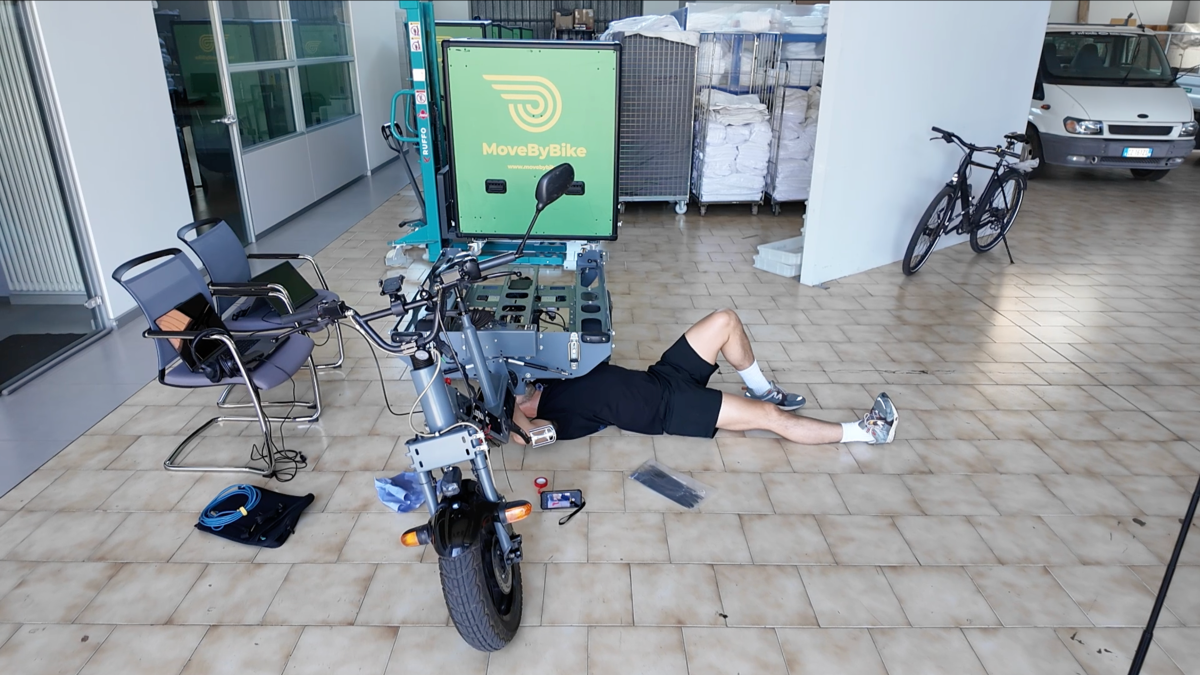
The testing phase was hands-on and deliberately lo-fi. A Laplander cargo bike was partially disassembled and equipped with a prototype recording system, then put back into use in real delivery conditions. The team used contact microphones — sensors that pick up vibrations directly from a surface rather than through the air — to capture acoustic data at key structural and pressure points identified by engineering expertise. The sound design techniques applied to process and analyse those recordings came from Sonic Assembly's practice.
Over a short but intensive period, the project produced more than five hours of acoustic data from real delivery scenarios. That data fed into a proof-of-concept machine learning model built to monitor the Laplander bikes — supported by a React-based code package integrating Google Teachable Machine and TensorFlow, designed as a foundation for building similar DIY "smart ear" systems in other contexts.
What emerged was something the team had not fully anticipated: engineers began asking whether spectrogram-based analysis could fill performance evaluation gaps in existing simulation tools for cargo bikes — a potential application for manufacturers, not just operators.
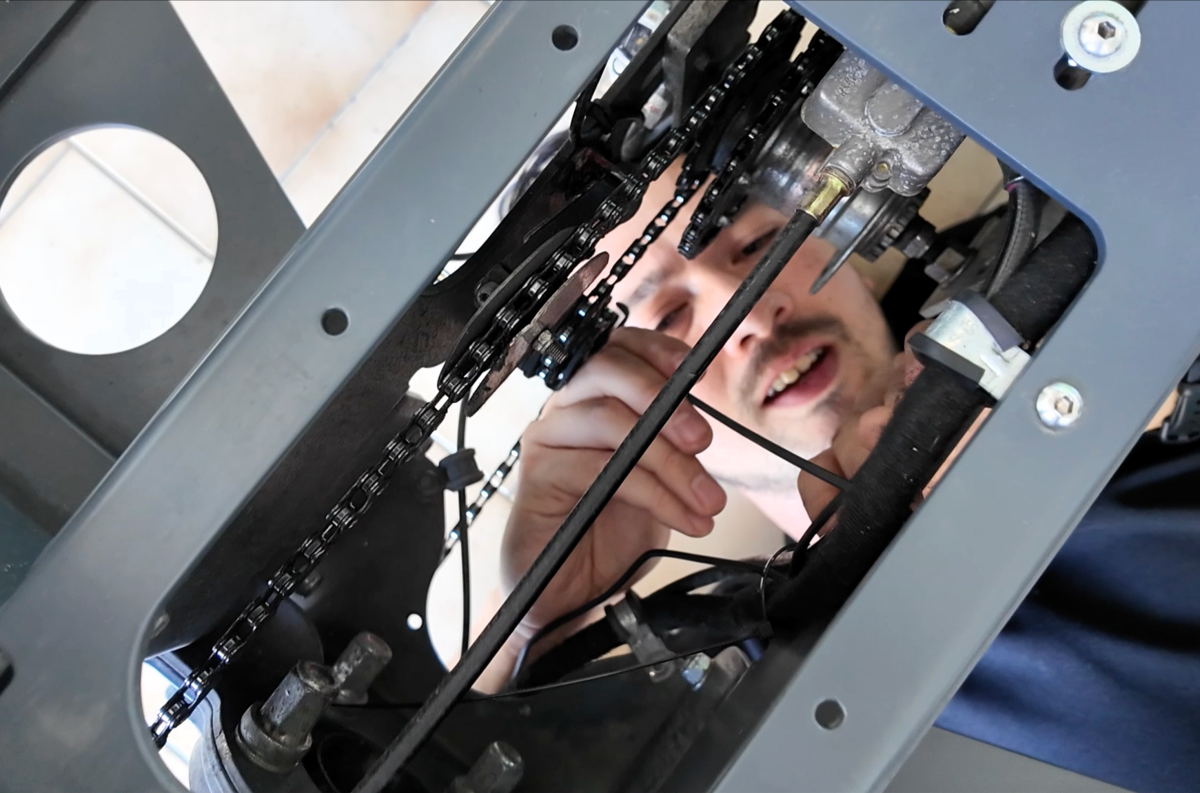
The convergence of sound design, engineering, urban logistics, software development, and media production opened approaches that none of those fields would have arrived at independently. Operational knowledge from MoveByBike shaped which aspects of the bike's performance were most worth monitoring and what daily-use stress actually looks like in practice. Engineering input identified the structural points worth instrumenting. Sound design provided the methodological vocabulary for capturing, processing, and interpreting the results.
Beyond the outputs, the collaboration expanded the team's understanding of how sound can function outside its conventional artistic frame — as a non-invasive sensing tool with practical applications in product testing, fleet monitoring, and operational planning. The outcomes aligned closely with what had been set as objectives at the outset, demonstrating that even within a tightly constrained timeframe, a functional and transferable proof of concept is achievable.
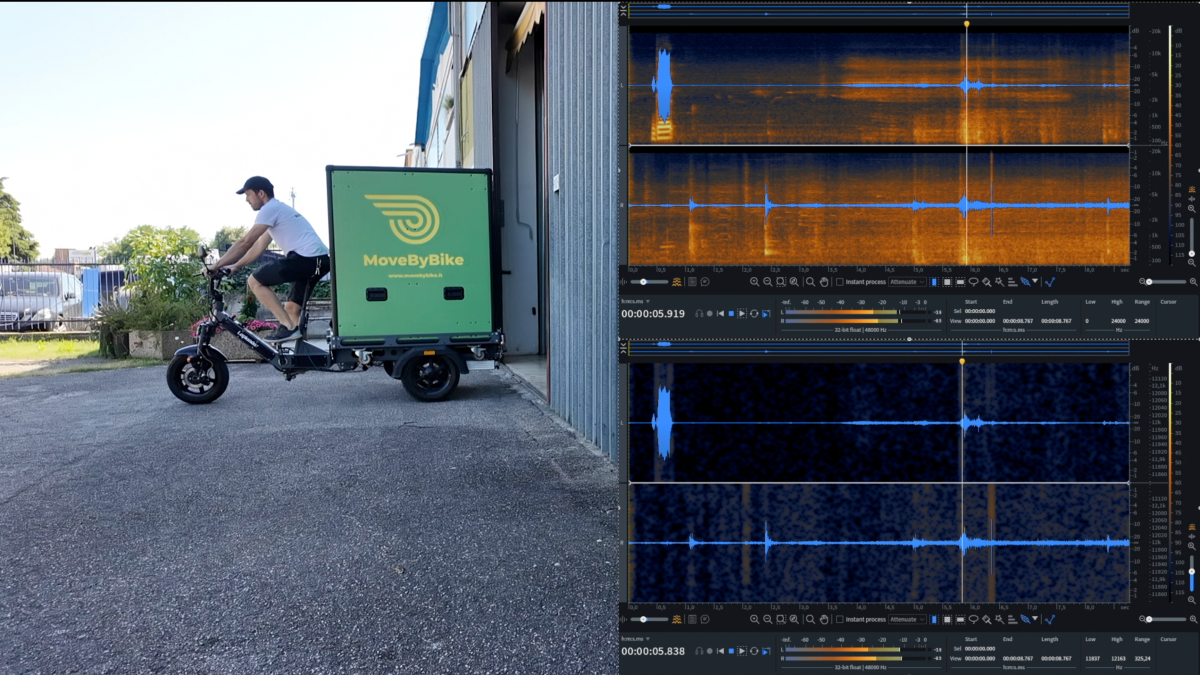
As expected in an experimental project of this kind, technical challenges emerged during prototyping, system integration, and data capture. These required continuous adjustment and problem-solving. They remained manageable, however, and did not significantly impact overall progress. Outside of these technical aspects, no major obstacles were encountered — itself a notable outcome, given how rarely fields this different from one another manage to share a workflow without friction.
The team describes the current iteration of Velosonics as a functional prototype, not a finished product. The first version relied on accessible tools with limited customisation. Future development will focus on building a standalone, non-intrusive recording device that can be attached to various objects and environments, paired with a customisable software platform that lets users train their own machine learning models, define monitoring parameters, and analyse acoustic data in real time. The longer-term vision is to move from proof of concept to a scalable, user-driven tool with applications well beyond cargo bikes.
Key Takeaways