


Expanding Collections began with a simple but urgent question: what remains invisible in cultural datasets, and how can we make it visible? What emerged from this inquiry is not just a prototype but a shift in perspective: cultural collections are not fixed repositories of knowledge but active sites of making, where gaps, inconsistencies, and absences can generate new forms of understanding.
Developed by PdBA Lisboa and Data Engineer Daníel Eldjárn Vilhjálmsson, the project brings together cultural institutions and creative practitioners to rethink how collection data is accessed, interpreted, and improved. Rather than treating data as neutral, the project explores how digital tools can surface biases, omissions, and structural blind spots in open cultural collections and how these can become productive entry points for rethinking infrastructure itself. Through this process, one idea became increasingly clear: "Missing data is never simply empty space; it tells a story about systems, priorities, and histories.”
As part of the Cross-Sectoral Pioneers programme, researcher Lia Carreira and data engineer Daníel Eldjárn Vilhjálmsson approached the work through making rather than abstraction. Using Europeana as a testbed, they began building a custom search tool that does more than retrieve information; it interrogates it. The system was designed to expose structural gaps, irregularities, and blind spots within cultural and creative sector datasets, while also testing how existing metadata standards might be extended or reshaped through practice. In this sense, the prototype became “less a search engine and more a way of questioning the conditions under which knowledge is organised.”
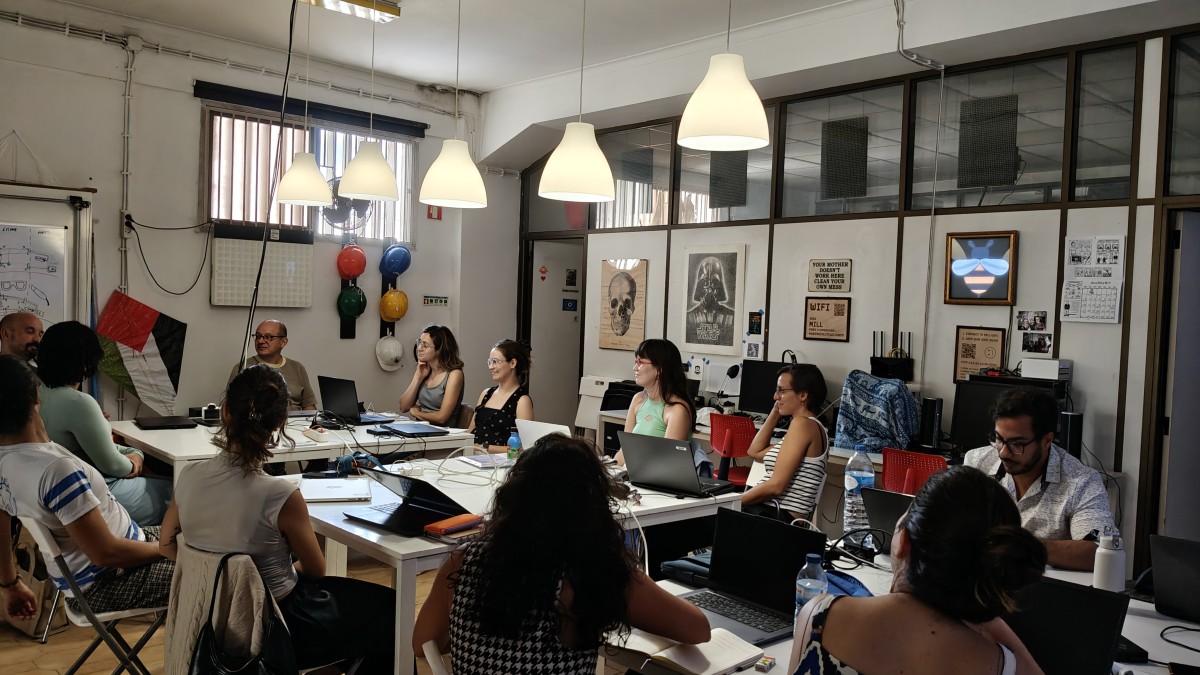
The collaboration moved between digital sessions and an intensive five-day workathon in Lisbon, hosted by the Goethe-Institut. There, the prototype became a working object, something to be tested, broken, and rebuilt in real time through code, discussion, and iteration. Rather than aiming for completion, the process embraced instability as a method.
Working closely with the data made its complexity unavoidable. Gaps were not isolated errors but systemic conditions, shaped by uneven standards, fragmented institutional practices, and long-standing infrastructural differences. At the same time, these inconsistencies became productive, revealing the need for tools that do not smooth over complexity but make it visible and navigable. As participants reflected during the process, "The messiness of cultural data is not a problem to erase but a reality to work with.”
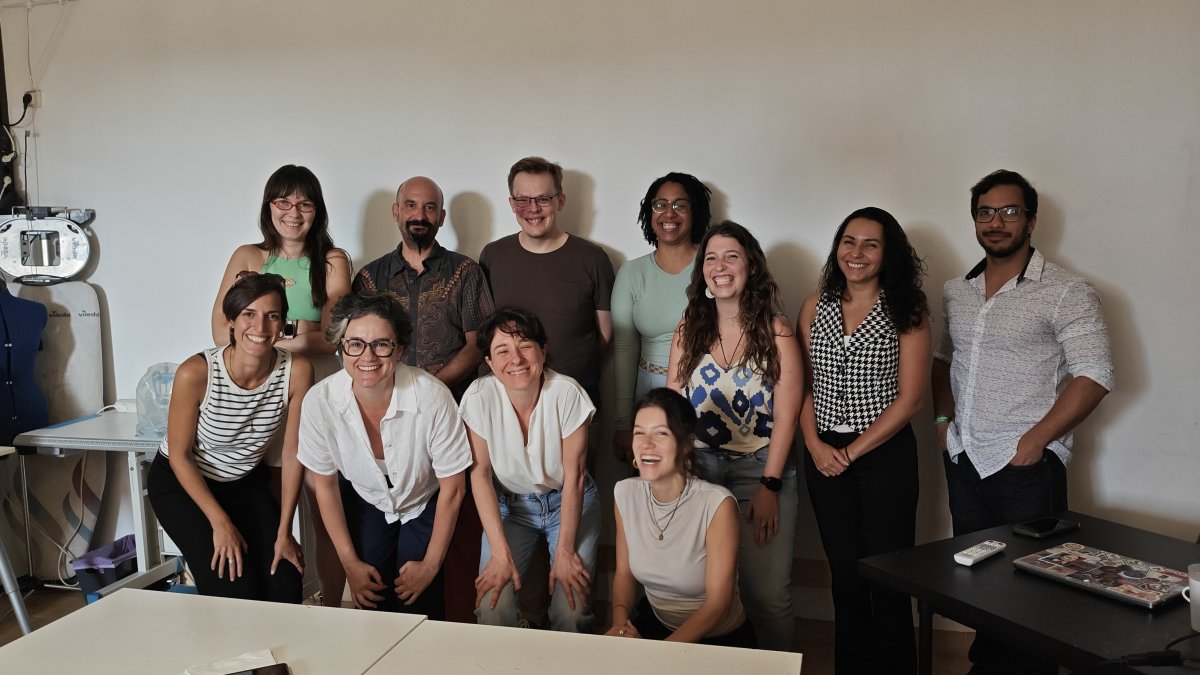
This hands-on process continued into a public session at the Makers in Little Lisbon (MILL), where museum professionals, developers, and creatives engaged directly with the tool. Their feedback tested not only the prototype but also the assumptions embedded in it, bringing multiple perspectives into the development cycle.
The collaboration also became a space of mutual learning. Daníel gained direct insight into museological workflows and the realities of heterogeneous heritage data, while Lia deepened her engagement with computational methods, open data infrastructures, and collaborative development environments. This exchange helped ground the project both technically and conceptually.
What emerged was less a finished product than a direction of travel: a functional prototype, a shared methodology, and a clearer sense of what needs to be built next. It also became clear that while there is strong interest in cross-sector collaboration, future formats must remain flexible enough to support participants with different levels of technical experience.
Expanding Collections continues to evolve from this foundation. With a growing network of collaborators and a tested prototype, the project works toward making cultural data more FAIR (Findable, Accessible, Interoperable, and Reusable), not as an abstract goal, but as something that is built, tested, and continuously reworked through practice.
Want to learn more? Visit the MILL session material and final outcomes and PdBA project website
Key Takeaways

Lia Carreira is a media artist, curator and researcher, currently based in Lisbon, Portugal. As an artist and curator she explores existing technologies as potential platforms for engagement and agency in order to discuss and unravel contemporary modes and understandings of being. Her research lies in the intersection of curatorial studies and software studies, addressing key challenges in curating software-based art.
Daníel Eldjárn Vilhjálmsson is a data engineer and scientist working across open data infrastructures, digital systems, and collaborative technology development, with a focus on accessibility, transparency, and cross-sector innovation.