


Led by Studio WOUW, students in Ghent’s Muide-Meulestede explored their neighbourhood, gathering flowers and leaves. Back in their creative workshop, they hammered the plants onto fabric, revealing vibrant natural colours. This simple act of creation reflects the Learning Lab’s mission—making sustainability tangible through playful, hands-on exploration.
By Goethe-Institut BrusselsWhat happens when a neighbourhood becomes a fashion studio? In Ghent’s Muide-Meulestede, a group of 5th and 6th graders set out to find the answer. With guidance from Studio WOUW’s Kasper and Jolinde, they collected petals, leaves, and stems—ingredients for a creative experiment. Back in the workshop, the students discovered the magic of natural colour by pressing their finds onto fabric, watching patterns bloom like tiny works of art. This hands-on adventure captures the spirit of the Learning Lab: Future of Fashion – Upcycling & Natural Dyeing, where imagination meets sustainability.
In Ghent’s multicultural neighbourhood Muide-Meulestede, a group of 5th and 6th-grade students wandered through their streets, scanning the ground and hedges for petals, leaves, and stems. Guided by Studio WOUW facilitators Kasper and Jolinde, they collected plants and flowers—not for decoration, but for transformation, showing how nature itself can become a classroom. Back in their creative space, students hammered their botanical finds onto fabric, watching vibrant colours bloom from nature’s palette. This simple, sensory act captures the spirit of the Learning Lab: Future of Fashion – Upcycling & Natural Dyeing.
The workshops were not just about textiles—they were about stories. Students learned about the environmental and social impacts of fast fashion and discovered alternative paths through upcycling and natural dyeing. They met industry professionals, gaining insight into the rich history and future possibilities of textiles.
The open, hands-on approach of this Learning Lab encouraged mutual inspiration between students and facilitators. The children’s enthusiasm and creativity were contagious, and their sense of ownership over the process was striking. They looked forward to each session with excitement, and their pride in their work was evident in every dyed tote bag and printed fabric sample.
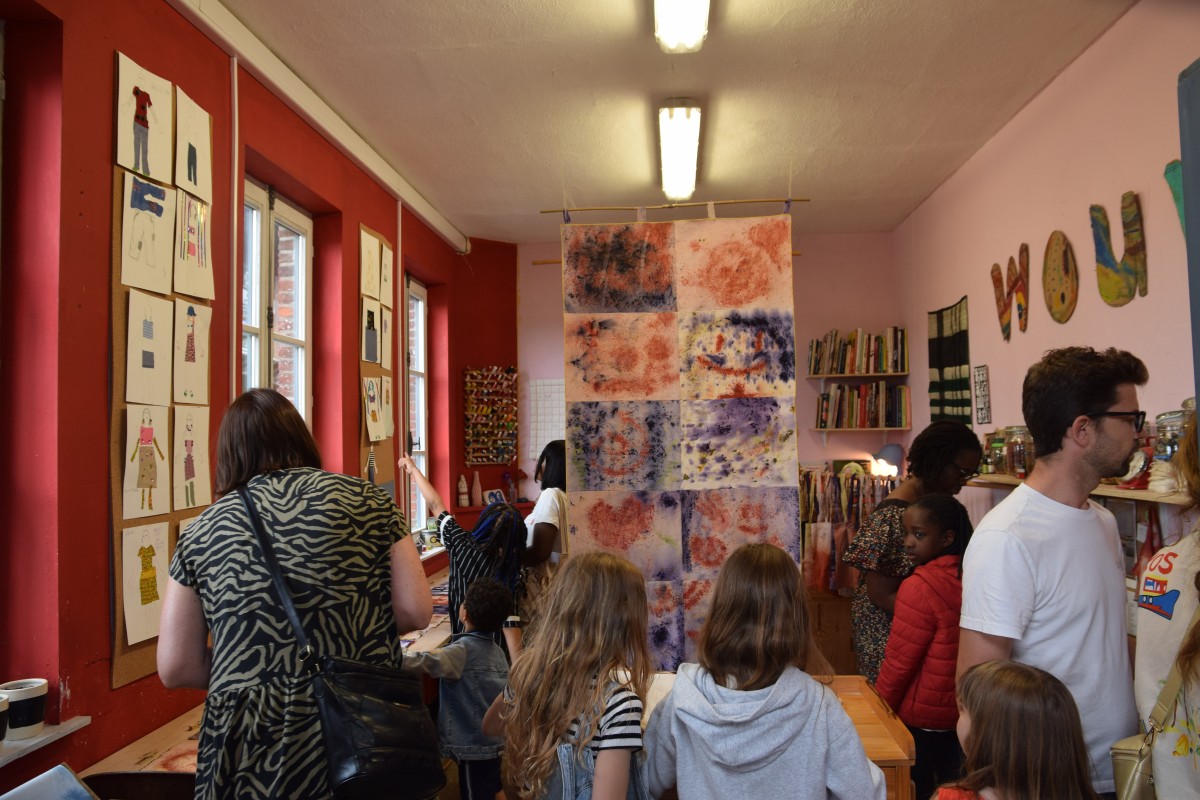
Throughout the workshop sessions, students asked thoughtful questions about fashion careers and sustainability. Several parents expressed how valuable the workshops had been for their children, both in terms of creative expression and personal growth. One parent shared that the workshops had done her daughter visibly well, especially during a difficult time at home. At the end of the final session, many students gave facilitator Jolinde a heartfelt hug —a gesture that spoke volumes about the trust and connection built during the Learning Lab.
By the end of the Learning Lab, each student created a personal sample booklet and a hand-dyed tote bag, proudly showcasing their individual style, and learnings. In addition, the students designed and dyed textile flags for their school, representing their group identity and collective imagination. This flag came together in a co-created patchwork banner. The final school-wide exhibition celebrated their work, inviting families and the wider community to witness the beauty of sustainable fashion through young eyes. During the event, the patchwork flag got revealed and is now displayed at the school entrance —a daily reminder of unity, creativity, and shared purpose.
Feedback from the partnering school was overwhelmingly positive. Teachers emphasised the strong engagement and expressed interest in continuing or expanding the collaboration in future school years. Internally, the Studio WOUW team reflected on the experience through informal debriefs and team meetings, feeling empowered and inspired by the students’ curiosity and output.
The Learning Lab also offered valuable insights into working across disciplines and adapting creative practices to educational settings. One major takeaway was the importance of clear and consistent communication with school partners—especially regarding participants, expectations, and logistics. Even small misunderstandings could disrupt the flow of workshops, particularly in short-term projects.
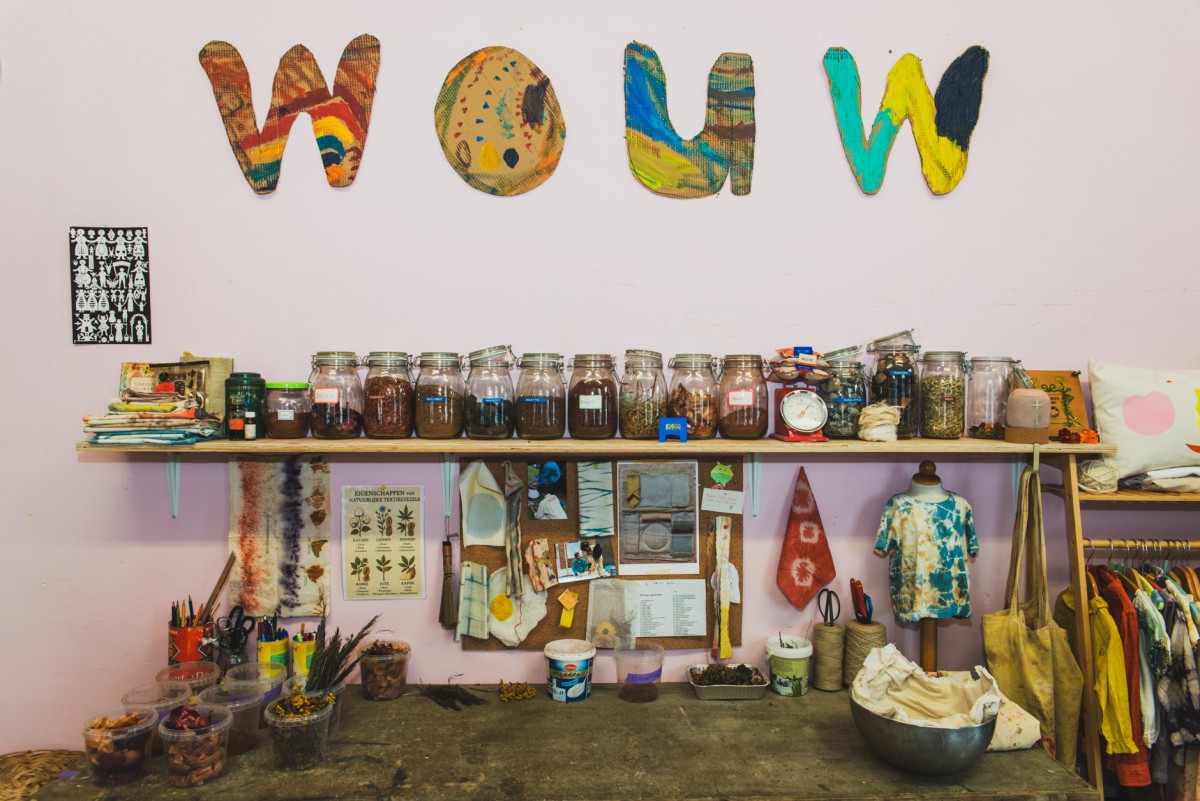
Another key insight was how effective plant-based dyeing techniques can be when translated into accessible, child-friendly formats. By using intuitive and sensory methods such as hammering flowers or folding dyed fabrics, Studio WOUW was able to introduce sustainable fashion concepts in a way that felt playful, personal, and empowering for the children.
Moreover, the Learning Lab fostered emotional well-being and social cohesion. Students formed strong group connections, and the safe, inclusive environment allowed them to express themselves freely. The act of creating something with their own hands, built confidence and pride. The emotional connection students formed with their self-made creations was profound. They didn’t just learn about sustainability—they felt it. They saw how fashion could be personal, expressive, and responsible. And they understood that their choices, even at a young age, could shape the future.
The success of Future of Fashion: Upcycling & Natural Dyeing shows that sustainability education can be joyful, impactful, and deeply motivating. By combining experiential learning with creative freedom, the Learning Lab empowered students to reimagine fashion with purpose. As one teacher put it, “This format has great potential—not just for creative learning, but for building awareness and connection.” The desire to continue the workshops beyond the initial cycle speaks to their lasting impact.
Image: studio WOUW & Karel Saelaert
This case study was created under Creative FLIP, an EU co-funded project aimed at further increasing the long-term resilience of the CCSI in key areas such as Finance, Finance, Learning, Working Conditions, Innovation & Intellectual Property Rights.
Key Takeaways

1. studio WOUW is a creative organisation based in Ghent, Belgium, that specialises in plant-based dyeing, with a primary focus on bringing new life to existing textiles.
2. Basisschool Victor Carpentier is a Dutch-speaking primary school in the Muide-Meulestede district of Ghent, with more than 40 nationalities represented. The school focuses strongly on social inclusion and community-oriented projects. For this Learning Lab 20 pupils of Victor Carpentier and De Loods (the other primary school in the neighbourhood) took part, organised in collaboration with Brede School Muide-Meulestede-Afrikalaan.


