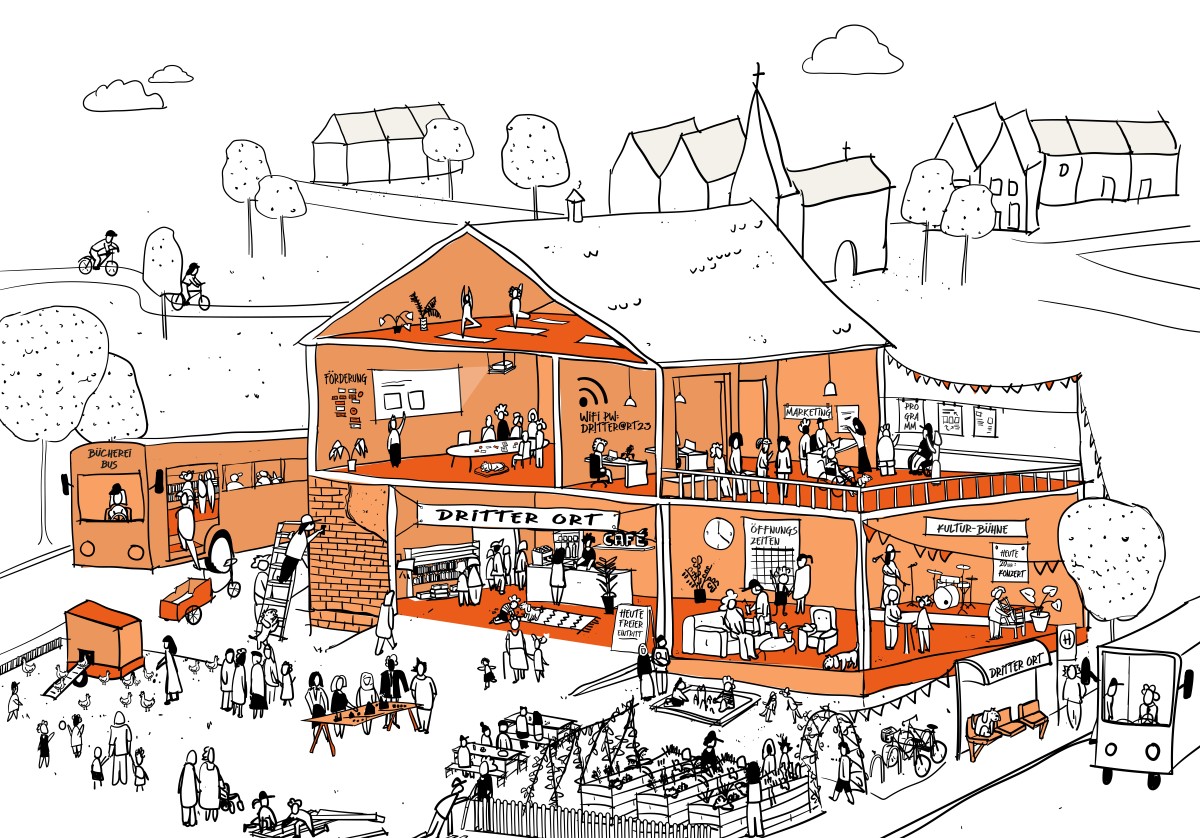



Third Places is a funding programme in Germany addressing shared challenges of rural spaces in Europe through an alternative way of local cultural development. By consistently practicing a participatory approach they enable sustainable civic engagement, as demonstrated by 45 ongoing projects and an increasing local youth activity for positive transformation.
By Sylvia Amann, inforelais“Third Places” started in 2019 by the Ministry of Culture and Science of North Rhine-Westphalia in Germany as a funding programme with the objectives to provide new perspectives towards positive transformations, while tackling challenges which were inherent to the rural territories in the region. To enable cultural spaces becoming part of the solution Third Places had to go beyond institutional or thematic silos so far developed and sufficiently take into account the areas' specific needs and characteristics, such as their fragmented populations. This is their story.
Third Places is a funding and support programme in North Rhine-Westphalia, a German State, dedicated to the establishment of places of encounters in rural areas and small urban settlements.
The programme was initiated by the coalition government in the year 2017 based on the will to strengthen the rural spaces in the State. The need for investment was based on the conclusions of an analysis showing that rural zones have at their disposal less (cultural) infrastructures compared to urban areas and considerable volunteer engagement.
A “traditional” funding programme for artistic programme was not perceived as a sustainable solution for the rural regions and their characteristics. The decision-makers went for an alternative approach. Based on a participative process, they engaged stakeholders in order to design an alternative support programme specifically targeting the needs of the rural areas as well as reflecting on their characteristics.
Dr. Ina Rateniek, pro loco: “A milestone for the Third Places programme was already the participative development process of the support and funding schemes with stakeholders from different professional backgrounds.”
During this process of open, comprehensive and collaborative governance on State-level as well as on the local ground, it became clear that strengthening the rural areas requires time and process-orientation.
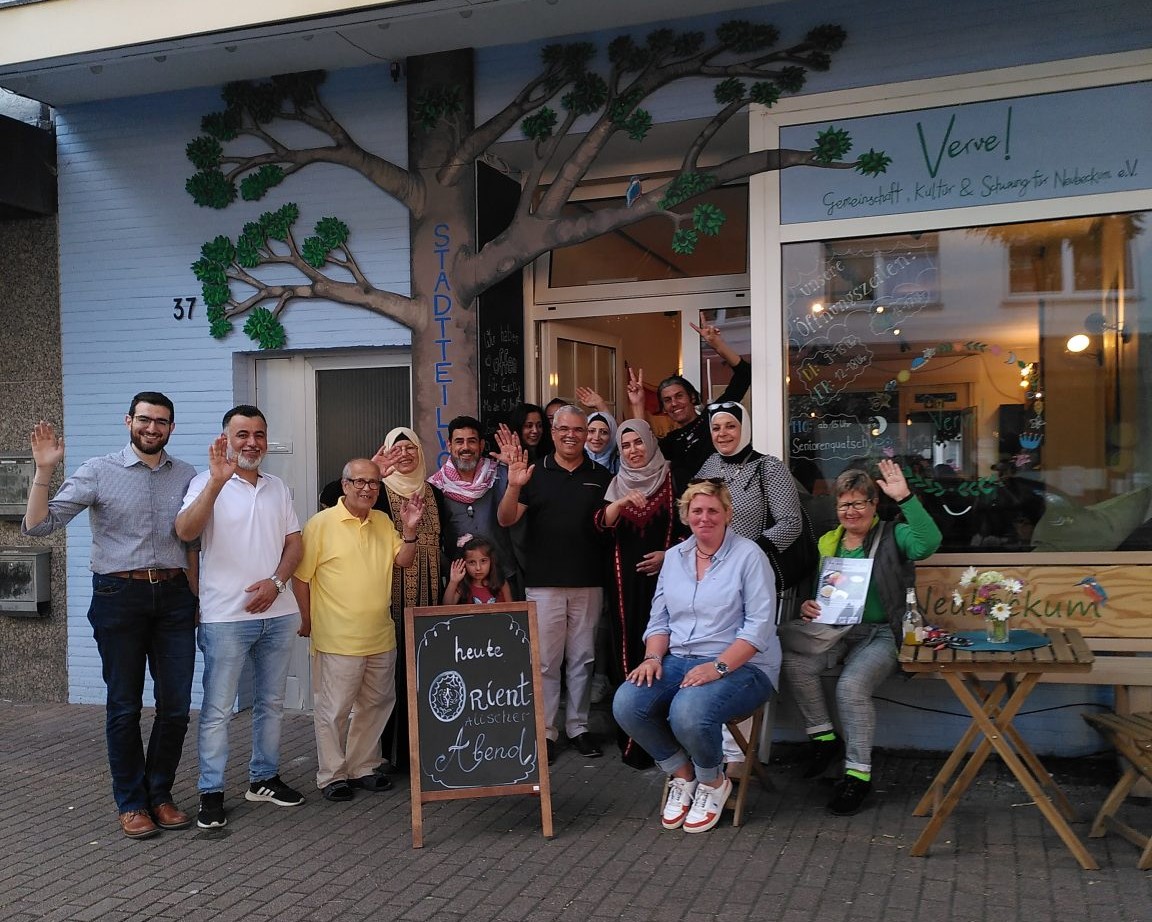 Foto Stadtteilwohnzimmer Verve Neubeckum
A merely once-off funding will not generate sustainable results and stakeholders will need support for the implementation. These key necessities were the basis for the design of the support programme “Third Places”, to include the promotion of professional frameworks and a programme coordination office. Experts help the local associations and implementers with advice. Networking is another tool to build synergies and to enlarge further the movement of Third Places.
The programme Third Places is currently in its second edition. The funding is provided in two phases. Based on the submission of a proposal, the project promoters enter in a conceptual phase in order to establish a "third place". Another programme strand builds on existing places.
A third place is a (cultural, emblematic) space which is dedicated to open exchanges and encounters for wide strata of the population. It is managed in a networked manner e. g. involving at least two organisations. Diverse stakeholders are involved to design the third place for which a budget of €50.000 is available.
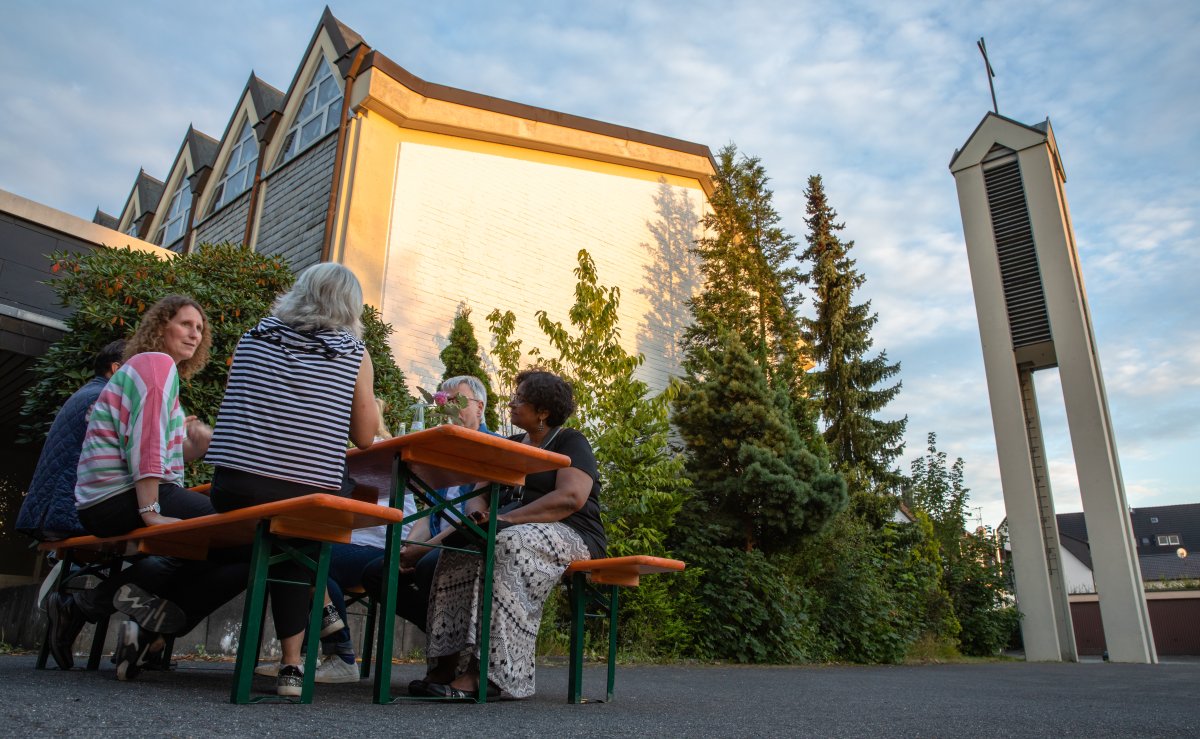 Schalksmühle 8Giebel - Foto Markus Trienke
After this first phase, the projects enter into a second activity dedicated to the implementation of the concept. Project promoters can receive up to €450.000.
In addition to the funding, the selected third places benefit of expert support in all kinds of areas from regularly held individual consulting meetings to external expert involvement for e. g. minor protection concepts. The related overall coordination, networking and professional consultation is provided by a specialised agency – a crucial element to support the individual process and ensure the building of synergies and for the wider dissemination of the results and learnings.
Currently 45 Third Places projects have been implemented or are under implementation. The projects cover a considerable range of approaches and are all tailor-made for the spaces in which they take place. Some examples include:
- A local cultural association run mainly by elderly ladies provided creative courses for the local population in Hiddenhausen, but had to find an alternative space.
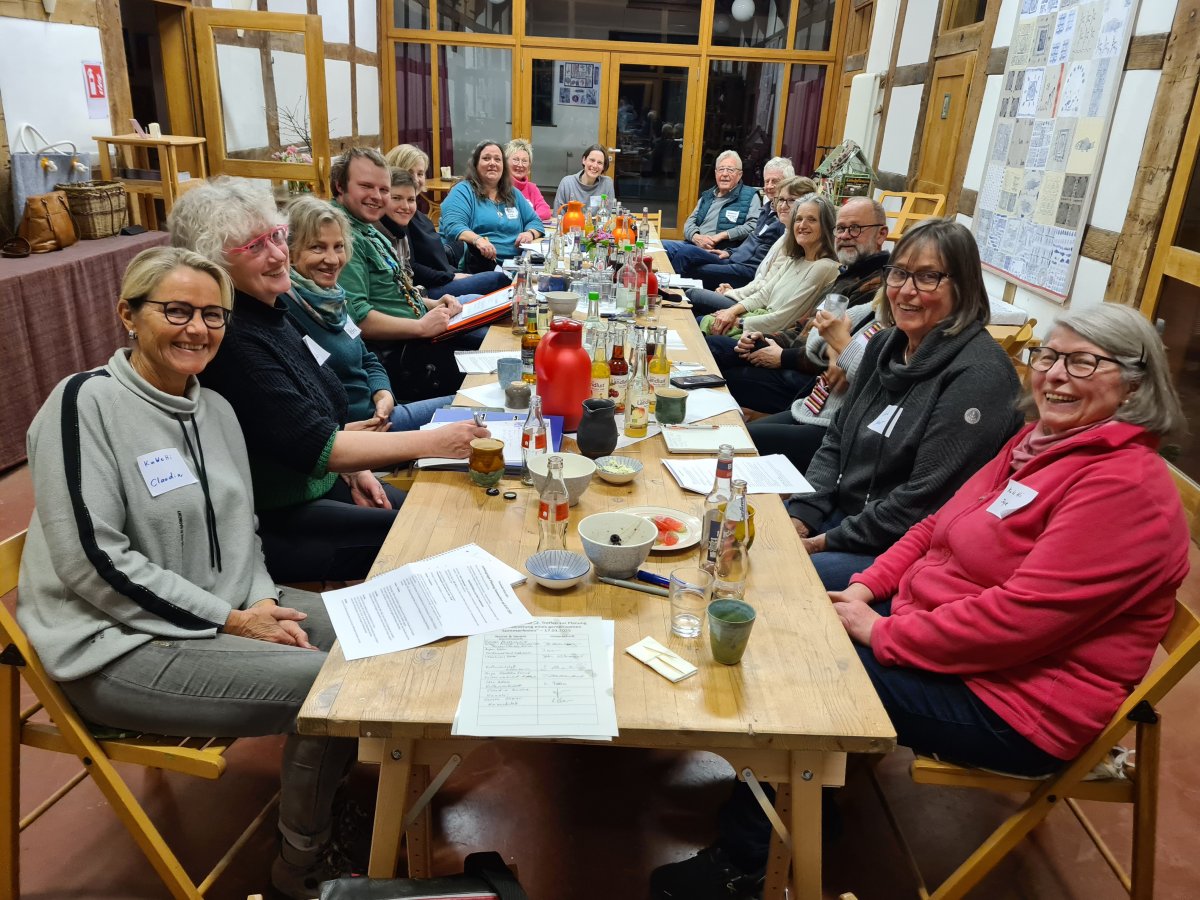
Foto Kulturwerkstatt Hiddenhausen
- An old farm house could be adapted to a place of encounter, for social and intercultural activities, with considerable support of the local municipality.
- A contemporary art museum in Herford dedicates now a whole floor to opening up to local activities, enabling considerable audience broadening possibilities.
- An empty shop was repurposed on the initiative of a local cultural manager to a place with a heart for meeting and creative processes.
The programme Third Places demonstrates how transformation with and close to citizens can work in the countryside by building an intersectional network with stakeholders from various sectors such as culture, social life, education and local economy.
Local authorities and the civil society needed moderated processes to generate trust into each other and to bring common interests forward together.
The project supports cross-sectoral networking as a pre-condition for funding and the results become visible. The success of the programme even added to an extensive use of the term of third places also for those projects which are not funded by the programme or are not complying with the quality criteria established for the programme.
Dr. Ina Rateniek, pro loco: “In the second phase of the programme, we see more young people engaging for and with Third Places – a very promising perspective for the future.”
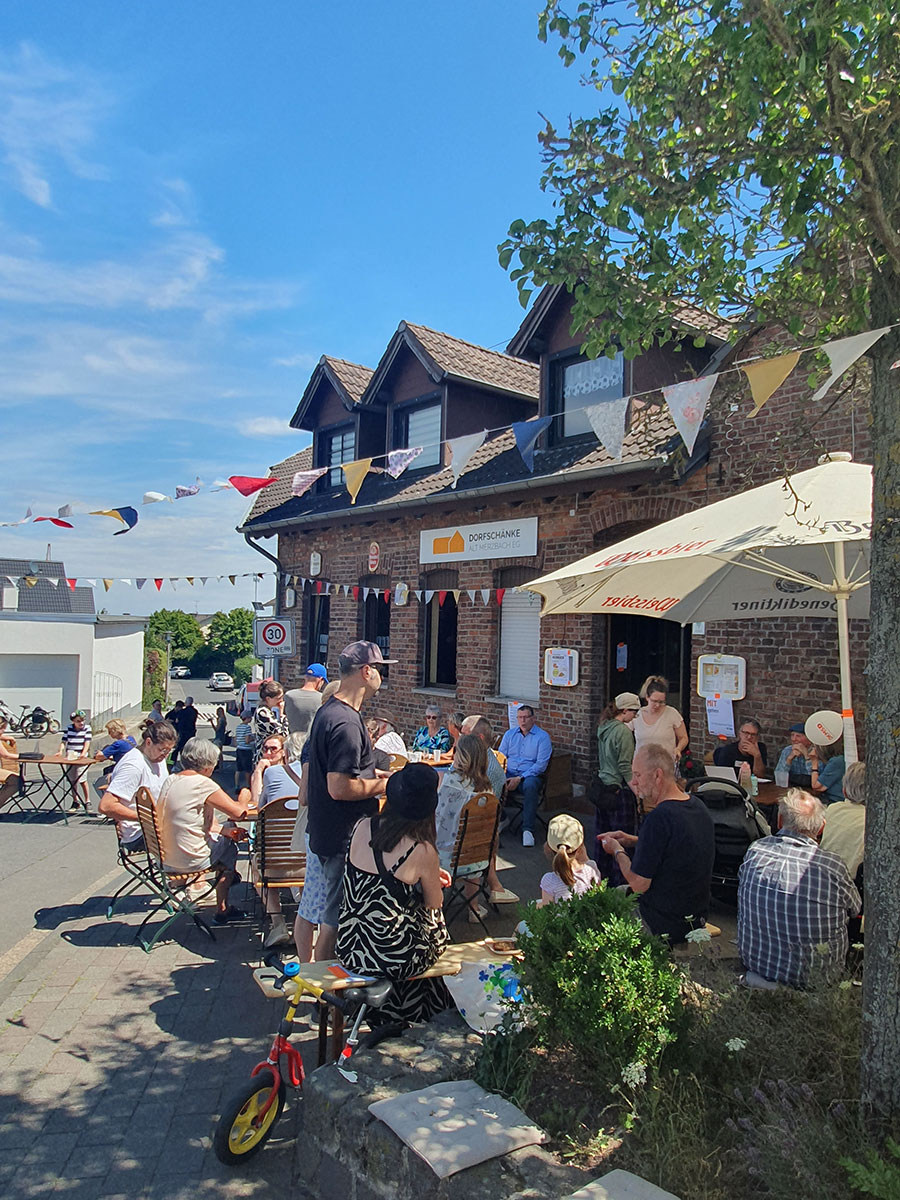 Rheinbach Foto pro loco
The quality criteria which apply to the projects in the programme comprise several elements which are crucial to achieve a democratic approach: the funded third places are situated in the centre like the main square of a village and easily accessible.
The projects implemented focus on broad needs of the local populations in order to become a kind of living room for residents. For example, the opening hours are adapted to the local situation to involve a wide range of potential users of the place. The local processes are designed in a way to empower people, including encouraging them to take over responsibility.
In that sense, the Third Places programme addresses the core principles of active citizenship, which is a fundamental element for strengthening the European democracies.
This Case Study was created under Creative FLIP, an EU co-funded project aimed at further increasing the long-term resilience of the CCSI in key areas such as Finance, Finance, Learning, Working Conditions, Innovation & Intellectual Property Rights.
Key Takeaways

Dr. Ina Rateniek, pro loco, Programme Manager Third Places NRW
After studying English and German Literature and Sociology, Ina Rateniek began as a project manager of independent theatre festivals and art exhibitions. She then worked for a private culture consulting company at the interface of urban development, arts and culture. From 2011 to 2019 she focused on youth arts education. Currently she is program manager of “Third Places” for the Ministry of Culture and Science of North Rhine-Westphalia. As a consultant, she is focused on systematic organizational and cultural development.