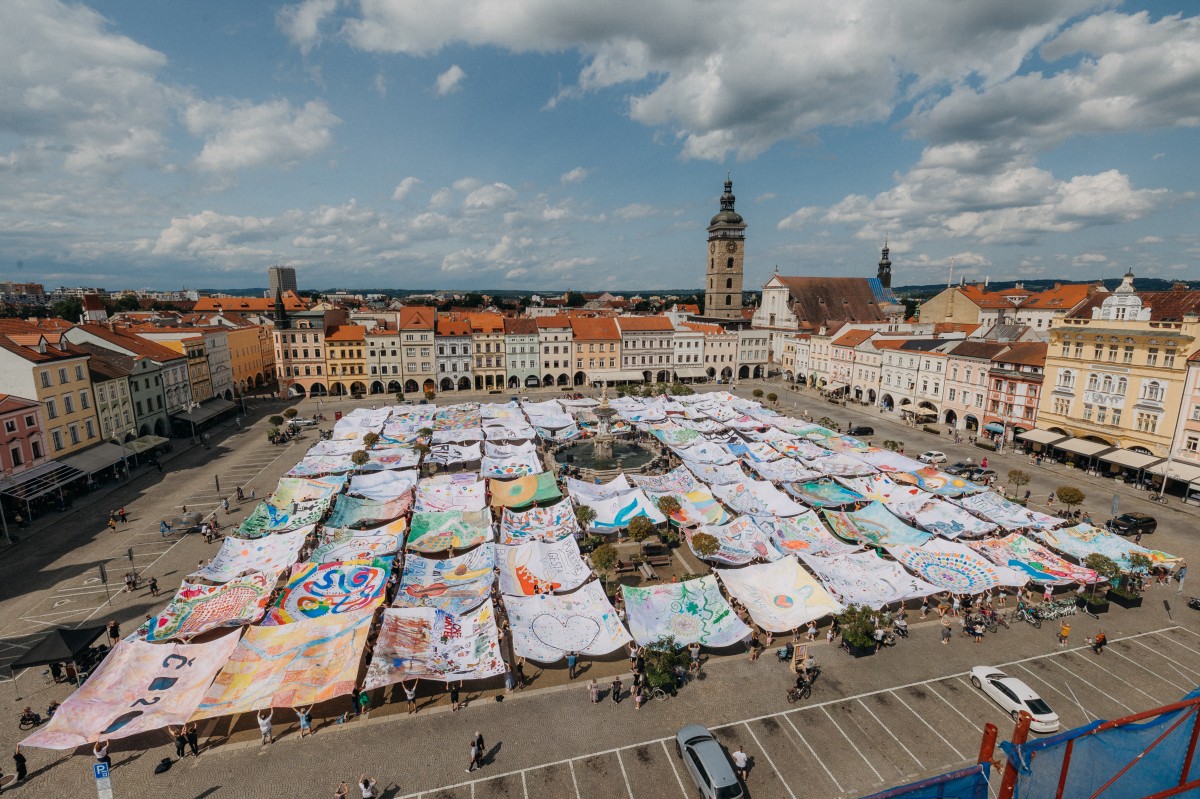

Budweis shows how the ECoC may provide a strong green storytelling approach by building strategy, programme and implementation activities on the concept of “Perma(Culture)”. Deriving from agriculture, the Perma(Culture) idea has allowed avoiding greenwashing challenges, while facilitating a shift for environmental sustainability from an activists’ agenda to ECoC's long-lasting legacy, reconnecting and empowering local populations.
By Sylvia Amann, inforelaisWhen Budweis - a city in the South of the Czech Republic - decided to apply for European Capital of Culture (ECoC) in 2021, the concept “Perma(Culture)” was proposed as an overarching topic, translating for wide populations the complex climate change and environmental narratives. Budweis 2028 won the title and now aims to become a large-scale sustainable delvelopment model of how an ECoC empowers a true green transformation, beyond marketing slogans, inspiring positive orientations on nature, sharing and care, supported by art and creativity. This is their story.
Permaculture is a concept of regeneration. It is originally an agricultural term expressing a type of long-term planning. Its goal is to create a sustainable process that provides sufficient resources while not destroying them. In that sense, it brings forward a narrative for ecosystems under pressure and in need of new orientations. Permaculture principles can be applied to all human actions, to every area of human activity. In such a system, people are considerate of each other and the environment in which they live and create. These principles guide the European Capital of Culture project in Budweis.
 Image Courtesy of Budweis ECoC 2028
(Perma)culture as the Framework
The concept of (Perma)culture serves as both a practical and dramaturgical principle for České Budějovice 2028. It connects care for the environment, people and resources with long-term thinking and resilience.
The dramaturgical arc 2021–2029 presents the ECoC as a garden moving through the phases of sowing, germinating, growing, flowering and harvesting. Each year plays a clear role in building an ecosystem designed to last beyond 2028. This imagery permeates the communication strategy and visual identity, making sustainability principles accessible to both professional and wider audiences.
Anna Hořejší, Creative Director of the ECoC culture programme shares that: “We need Perma(Culture) as driver for positive change, as a guiding principle for project designs and to re-connect with nature in a sustainable way!”.
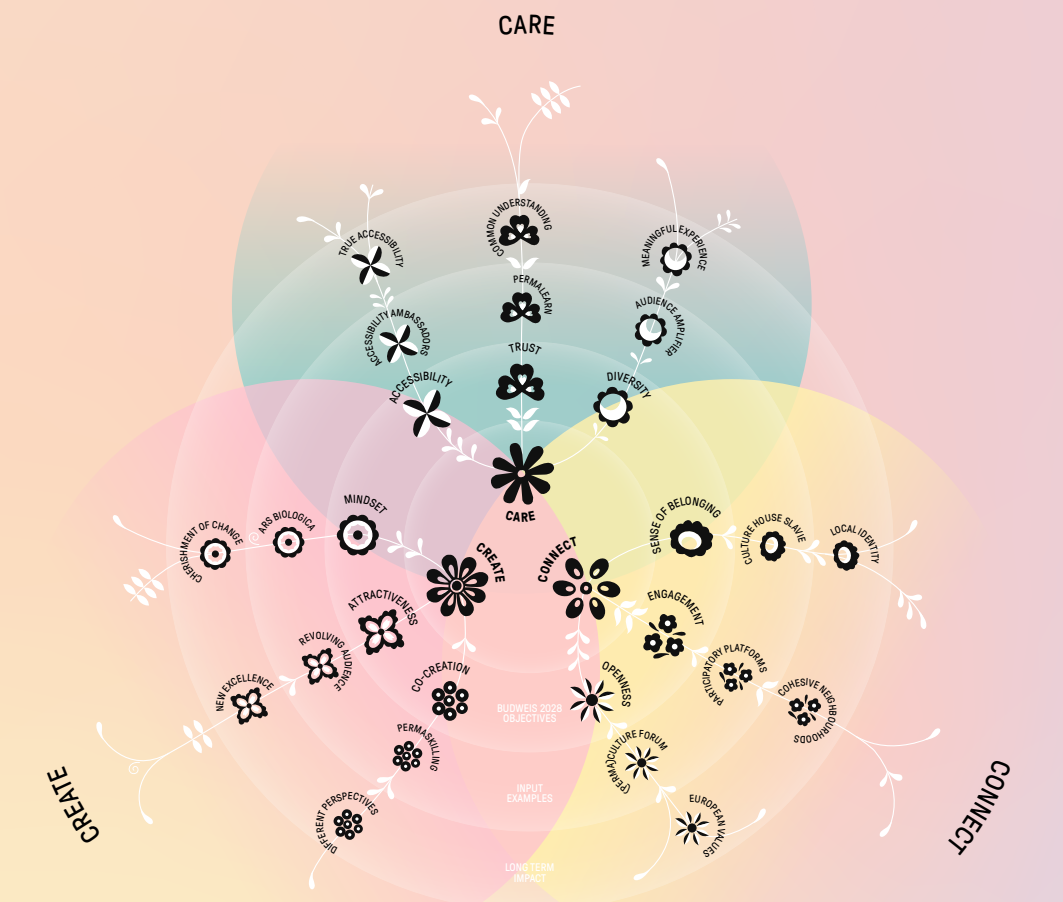 Image Courtesy of Budweis ECoC 2028
How to translate the concept into concrete action?
The ECoC strives for minimal ecological impact, careful use of material, human and financial resources, and production standards that are gradually adopted by partner institutions across the region. Sustainability is not only a marketing theme - it is an organisational commitment, as (Perma)Culture sets a coherent governance and programme framework, informing each flagship project, such as the following.
Ars Biologica brings together artists, scientists and agricultural experts in a long-term exploration of climate change, biodiversity and the relationship between people and the environment.
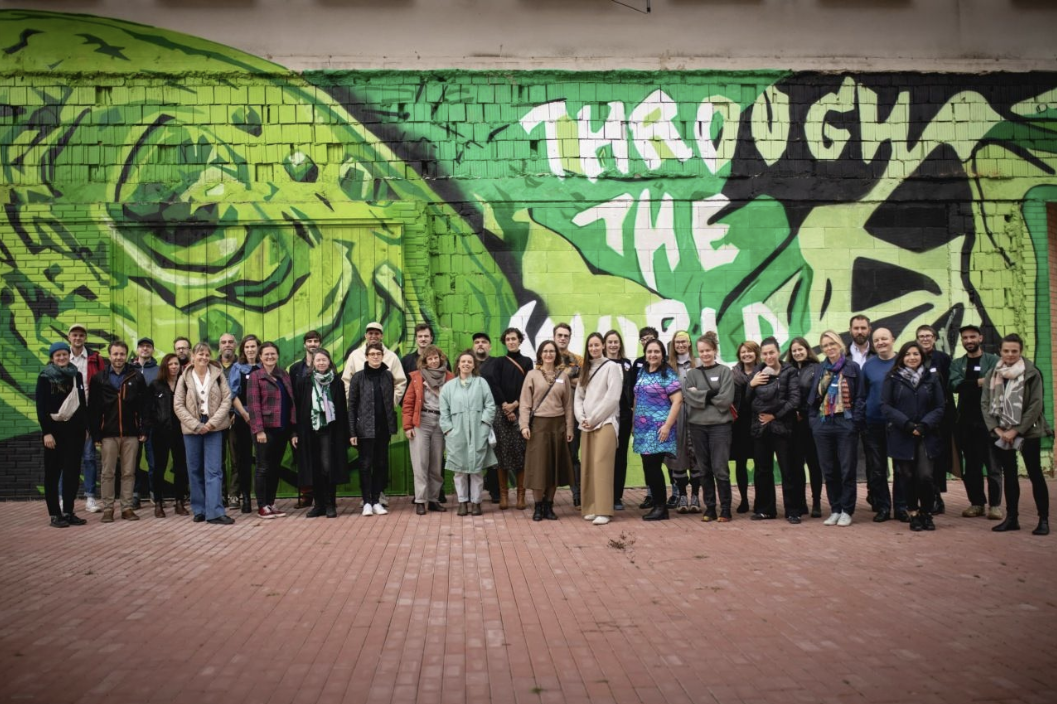 Image of Ars Biologica project - Courtesy of Budweis ECoC 2028
The Circular House is a practical sustainability laboratory for the entire ECoC ecosystem. It functions as infrastructural support from a library of things and repair formats to workshops, talks and public programming.
Hotspots are site-specific installations that use permaculture-inspired urban design to enhance public space. Each hotspot is created participatively: in collaboration with communities, artists, urbanists and social researchers.
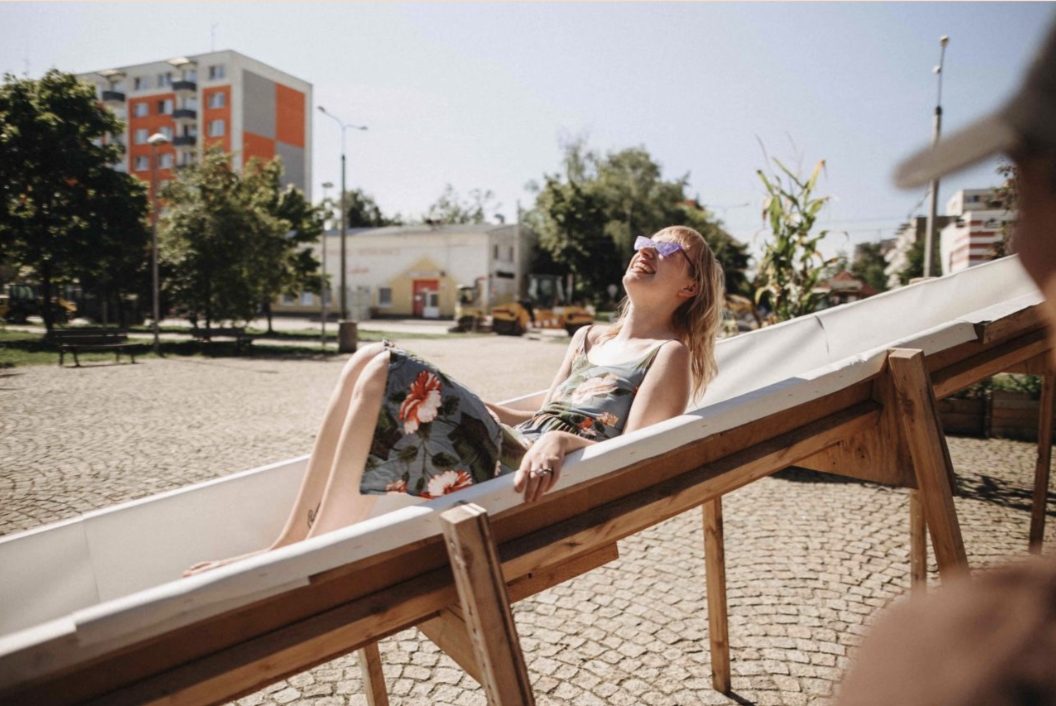 Image of Hotspots project - Courtesy of Budweis ECoC 2028
Engaging locals' traditions to empower connectivity and change
South Bohemian region and Budweis build on a strong agricultural tradition. Connectivity with nature is important for locals, complemented by ecology priorities of the area's research bodies and universities and boosted by the agricultural fair, the region's largest yearly event.
“I strongly believe in alliances between the permaculture ecosystem which we will strengthen with the European Capital of Culture and our cross-sectoral partners!” says Anna Hořejší.
Shifting to New Ways of Relationships
The period of the early 20ies was strongly linked to environmental agendas. The European Commission was fully promoting the EU Green Deal. During the pandemic in 2020-21, larger parts of populations had reconnected to nature. Societies shared the perception of a need for a stronger connection with nature, landscape and the environment.
The cultural sectors experienced several disruptive crises. In that sense, the stakeholders of the culture ecosystems were equally in search for more sustainable models.
Such models of sustainability are connected with shifting to a new culture of sharing. As Anna Hořejší says: “A new culture of sharing is central for European societies. The culture and creative sectors can show how this approach can be implemented. The Perma(Culture) narrative translates these new ways of relationships!”.
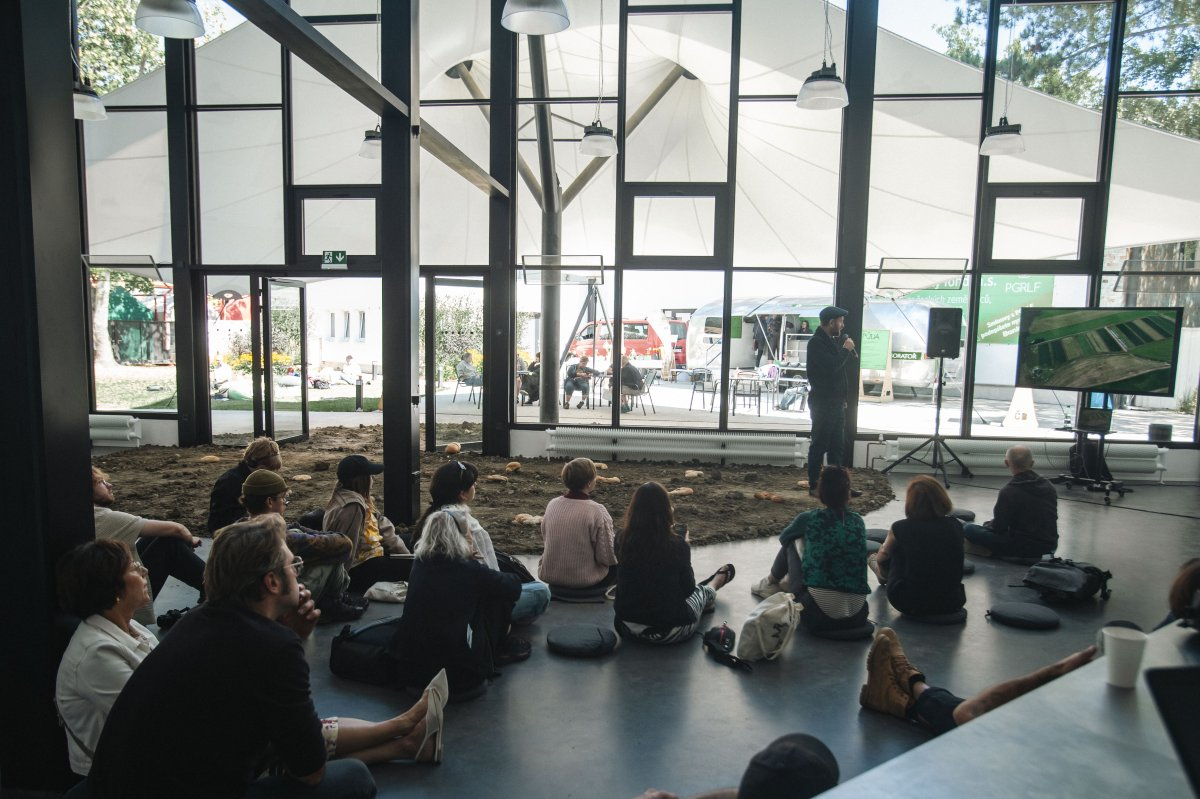 Photo by Pavel Balek
In order to accelerate permaculture approaches and new ways of connecting with nature and care, Budweis 2028 aims at opening up new perspectives.
The focus was never on crisis narratives, but much more on the level of connecting and relation building. Art and culture are able to translate complex concepts, find new ways to involve audiences to nature and to the environment. In addition, the Czech culture and creative sectors aim at further greening their practices.
Header Photo by Pavel Balek
This Case Study was created under Creative FLIP, an EU co-funded project aimed at further increasing the long-term resilience of the CCSI in key areas such as Finance, Finance, Learning, Working Conditions, Innovation & Intellectual Property Rights.
Key Takeaways

Anna Hořejší, Creative Director Budweis 2028 – European Capital of Culture
Anna Hořejší is a cultural manager from České Budějovice. She studied theatre production at the Academy of Performing Arts in Prague (DAMU). She worked on the Prague Quadrennial (2013–2016) as production and project manager of the SpaceLab programme and later coordinated communications at the Creative Europe Desk Czech Republic – Culture (2017–2020). She co-authored Culture for the Future, a sector-wide statement supporting climate action. Since 2021, she has been part of the team of Budweis – European Capital of Culture 2028, where she serves as Creative Director. She is also a board member of the Czech Cultural and Creative Federation.