



Spazio Nour demonstrates how participatory art can revitalise rural heritage sites and strengthen community bonds. Their exchange with Nástupište 1-12 and immersive activities at Kasteel Hof d’Intere, like The Ground We Share festival, showcased how dialogue, co-creation, and artistic practice can transform heritage into a living process with community at its heart.
In the rural area of Wechelderzande, Belgium, Spazio Nour is exploring how artistic practice can reactivate heritage sites and strengthen community life. Working from the recently revitalised Kasteel Hof d’Intere, a seventeenth-century castle, the organisation combines participatory art, artistic research, and community engagement to transform historical spaces into places of dialogue, experimentation, and collective action.
Rather than treating heritage as something to be preserved and observed from a distance, Spazio Nour approaches it as a living and evolving process. Αn artistic and cultural project born in Milan in 2014, the organisation creates opportunities for local residents, artists, and visitors to participate directly in shaping the future of a place through festivals, shared cultural activities, and socially engaged artistic practices.
The organisation is committed to the notion of participation as both an artistic and social methodology. Their work is rooted in the belief that culture is created through relationships and shared experiences rather than through fixed cultural products alone. Within the setting of Kasteel Hof d’Intere (Belgium), this philosophy takes shape through multifaceted activities, from concerts and balls to yoga gatherings and hands-on art workshops, that serve as community encounters and set the castle as a focal point for the area.
For Spazio Nour, heritage is not simply a monument but a framework for contemporary exchange. As the organisation reflected during the exchange, the castle has become a “living heritage” site and a common space where art, dialogue, and everyday life intersect. This approach was particularly visible during De Grond Die We Delen / The Ground We Share festival, where artistic activities encouraged participants to reflect on questions of belonging, shared ownership, and collective responsibility.
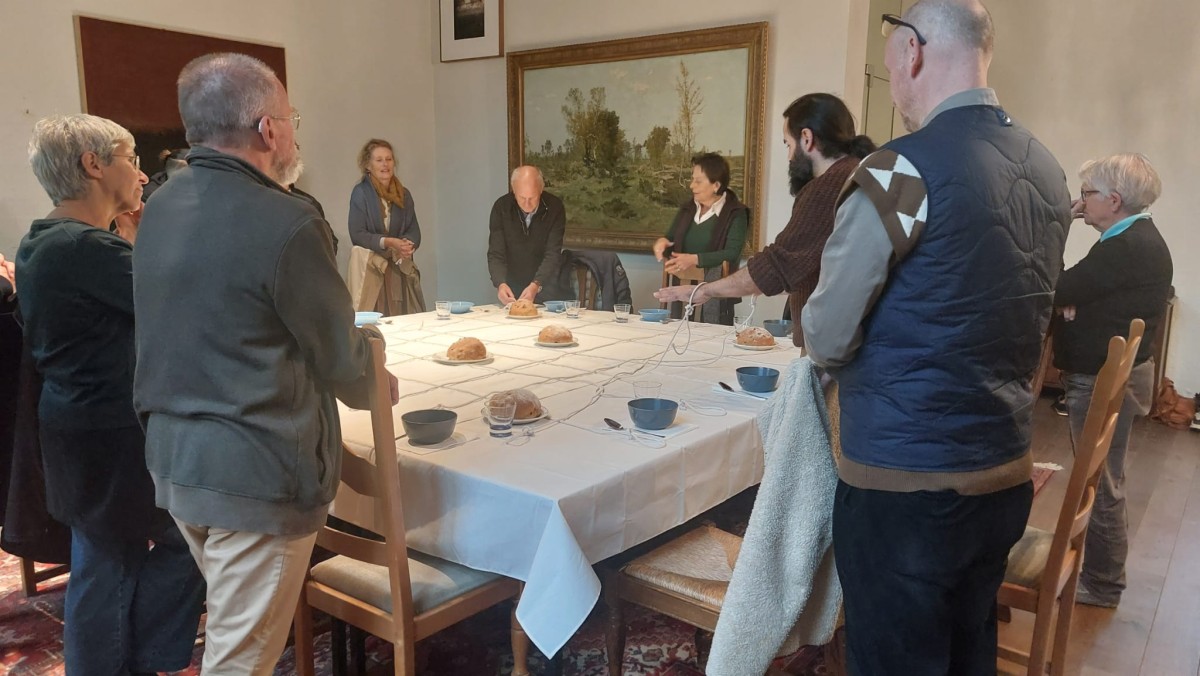
These principles shaped the Ambassadors of Good Practice exchange in October 2025 between Spazio Nour and Nástupište 1-12, a community-based cultural organisation in Slovakia working in a similarly non-urban context. The exchange began with online preparatory meetings before moving into an intensive on-site programme during the festival.
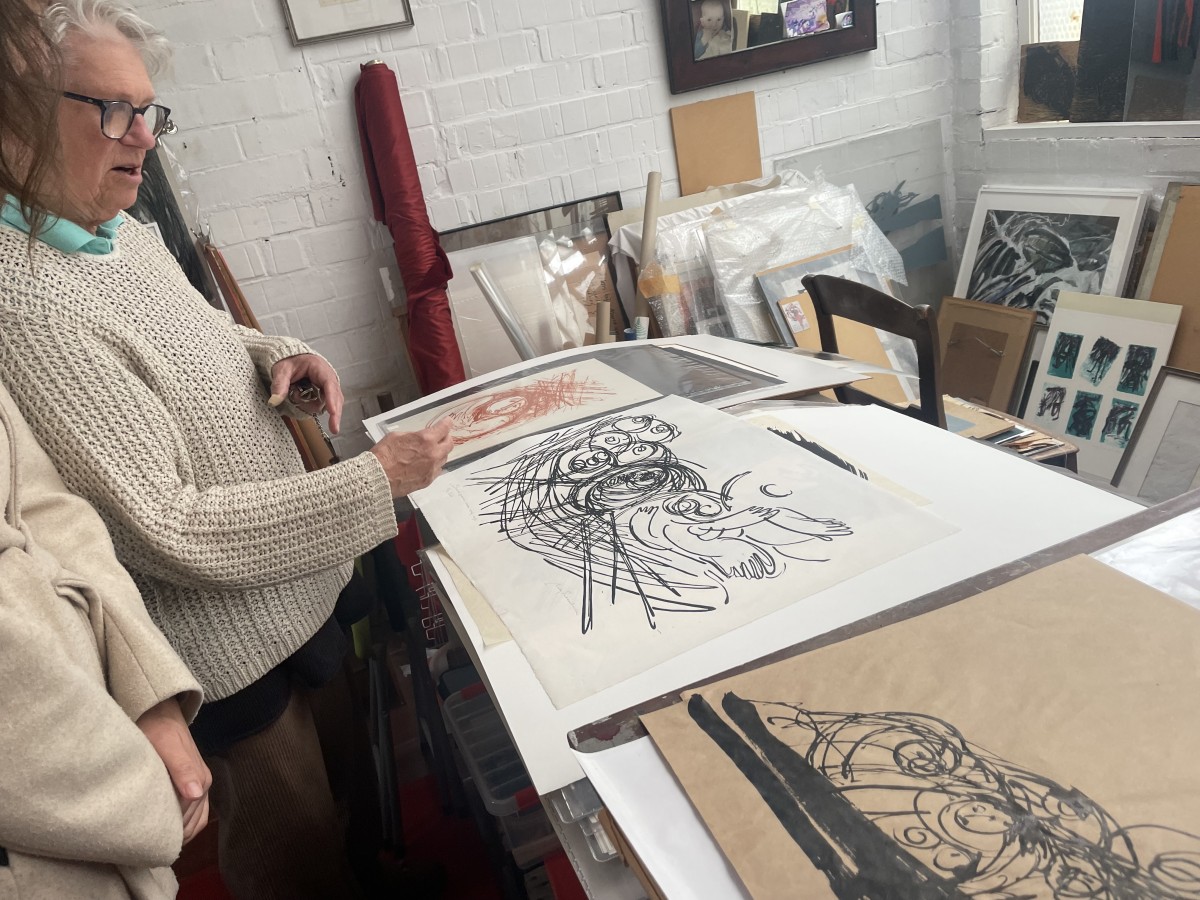
Central to the exchange was The Ground We Share festival, a week-long participatory art event hosted at Kasteel Hof d’Intere. Through workshops, collaborative artmaking, shared meals, exhibitions, and community encounters, the festival explored how artistic practice can foster social inclusion, dialogue, and collective ownership of heritage. Participants engaged in activities ranging from lino printing and kintsugi to co-creation sessions with local residents, while exhibitions and discussions connected contemporary artistic practice with the site’s historical and cultural context. The festival demonstrated how participatory art can bring culture into everyday life while creating new forms of community engagement in a rural setting.
The programme deliberately balanced structured activities and good practices on how to organise an artistic event with informal interactions. Workshops, presentations, and discussions focused on participatory artistic methods, sustainability, and community engagement, while shared meals and social gatherings created opportunities for genuine connection between participants and local residents. According to the visiting organisation, the castle became “a living laboratory for dialogue and change,” demonstrating how heritage sites can serve contemporary social and cultural purposes.
This openness proved central to the experience. As the host reflected, participants quickly integrated into the local context through both artistic activities and everyday encounters, helping to establish trust and meaningful relationships, while learning helpful practices of running a festival in a rural area.
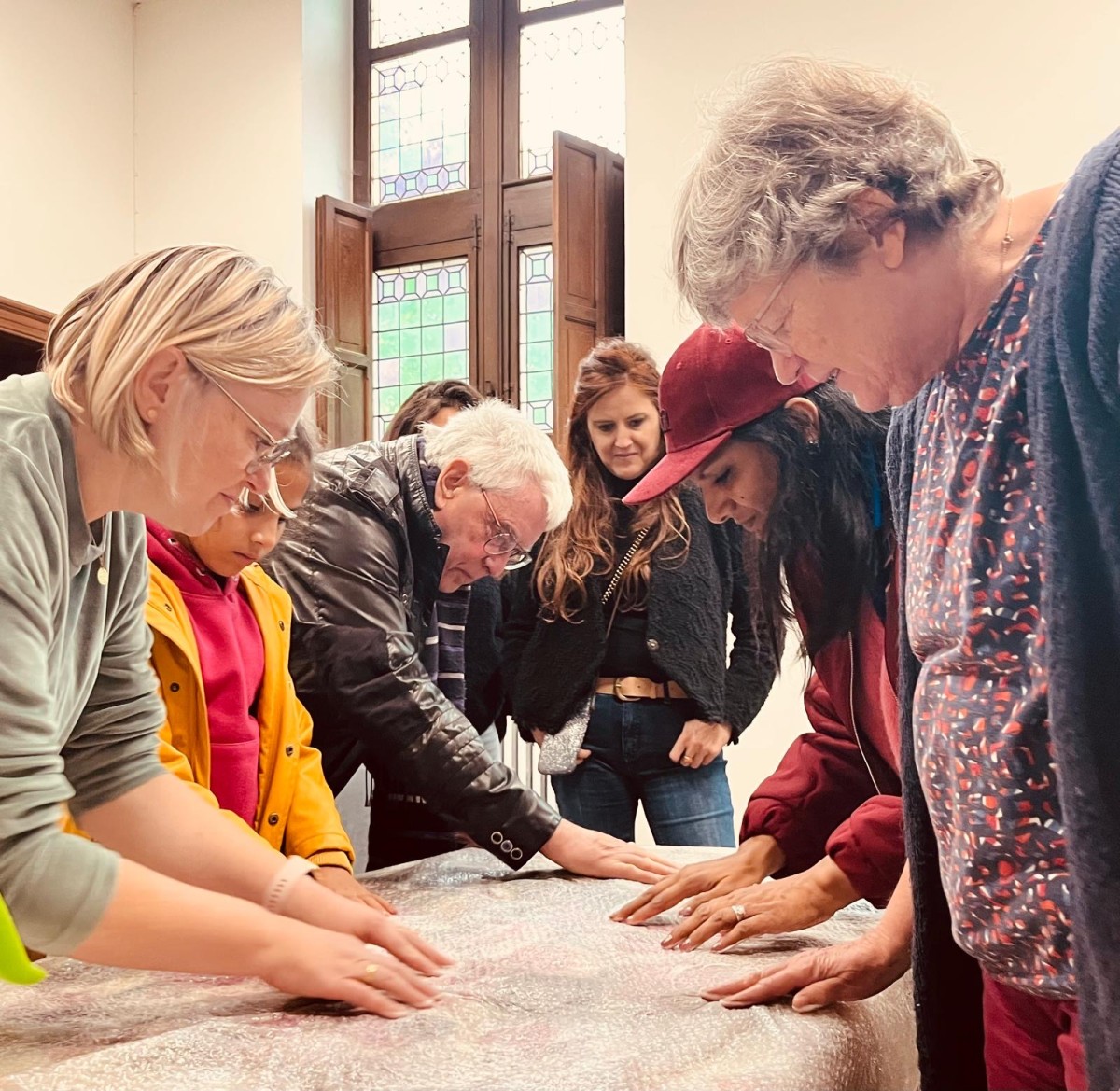
One of the key lessons emerging from the exchange concerned the role of cultural organisations in rural areas. Rather than acting primarily as producers of cultural content, both organisations recognised the importance of becoming facilitators of dialogue and collective action.
For the visitor, the experience reinforced the conviction that “participatory art is not just an aesthetic tool, but a powerful engine for social cohesion, where dialogue and collective action are the true output.”
This perspective aligns closely with Spazio Nour’s working methods. Artistic processes are designed not simply to produce installations or performances, but to create encounters between people, encourage exchange, and generate new ways of imagining community. The exchange therefore moved beyond the transfer of practical knowledge to a broader reflection on how culture can contribute to social cohesion in rural environments.
The exchange also revealed the organisation’s openness to learning. As the host noted, engagement with Nástupište 1-12 encouraged reflection on their own methods and generated new ideas for future projects. Experiencing how another organisation addresses similar challenges offered valuable perspective and reinforced the importance of dialogue as a creative tool. One of the most inspiring aspects was seeing “how a rural heritage site can be transformed into a dynamic cultural hub.” The experience provided concrete examples of how heritage can become a platform for contemporary art, social dialogue, and community participation rather than remaining a passive historical asset.
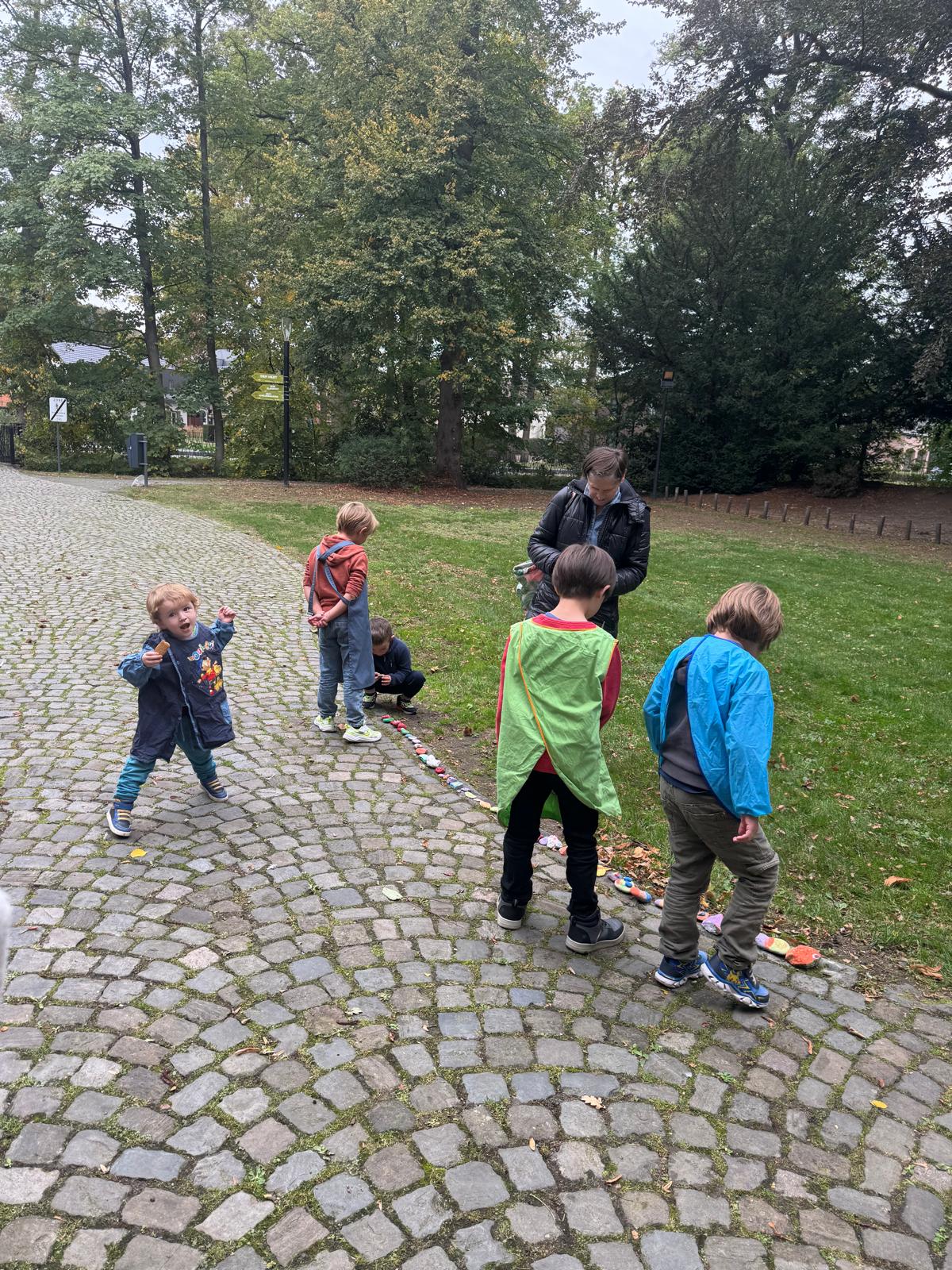
The exchange generated immediate outcomes. Most notably, it led to the development of a joint project planned for presentation in Slovakia in 2026. Both organisations view the partnership as the beginning of a longer process of collaboration rather than a one-off encounter.
At a broader level, the programme strengthened a shared understanding that rural cultural regeneration depends on relationships, trust, and long-term commitment. Through dialogue and collective experimentation, participants explored practical ways of activating heritage sites, supporting local communities, and fostering social cohesion.
The case of Spazio Nour is an example of how participatory art can serve as a catalyst for both local empowerment and international cooperation. By treating heritage as a living process and creating spaces for collective action, the organisation has developed a model that is deeply rooted in place while remaining open to external perspectives. Activities like the festival revitalise the area and its community. As one local participant shared, “the castle was alive again,” capturing the essence of Spazio Nour’s work: reactivating places by reactivating relationships.
Key Takeaways

Spazio Nour is an independent artistic and cultural organisation founded by artist Mahmoud Saleh Mohammadi in Milan in 2014 and currently active in its second location in Belgium at Kasteel Hof d’Intere, Wechelderzande. It creates inclusive, participatory art experiences that connect people across cultures, generations, and communities in urban and non-urban areas. Using contemporary art to engage public and this historic space, it develops site-specific projects rooted in local histories. Its current project, De Grond die We Delen/The Ground We Share, transforms this 17th-century castle into a cultural platform exploring belonging, memory, and regeneration through art.
Nástupište 1-12 (Platform 1-12) is an independent centre for contemporary culture with a multidisciplinary focus on music, visual arts, education, public discussions, and community-based cultural activities. Based in Slovakia, the organisation develops and implements projects across culture, education, environmental awareness, and community development, with the aim of improving the quality of life in the region. A strong emphasis is placed on collaboration: Nástupište works closely with cultural organisations, educational institutions, and local communities, including secondary schools, while maintaining partnerships with cultural actors across Slovakia and internationally. Through cultural production, artistic projects, and educational programmes, the organisation seeks to strengthen social cohesion and create new opportunities for participation in non-urban contexts.