


Leather is one of the most persistent materials in fashion and industry. It is also one of the most contested – tethered to animal agriculture, resistant to biodegradation, and increasingly scrutinised for its environmental footprint. For years, the alternatives on offer were mostly synthetic: polyurethane, PVC, and plastic-backed composites that traded one problem for another. Lukas Fuhrmann, co-founder and CEO of Revoltech, started from a different premise. What if the answer were already growing in a field — and being thrown away? Here's what he found and created.
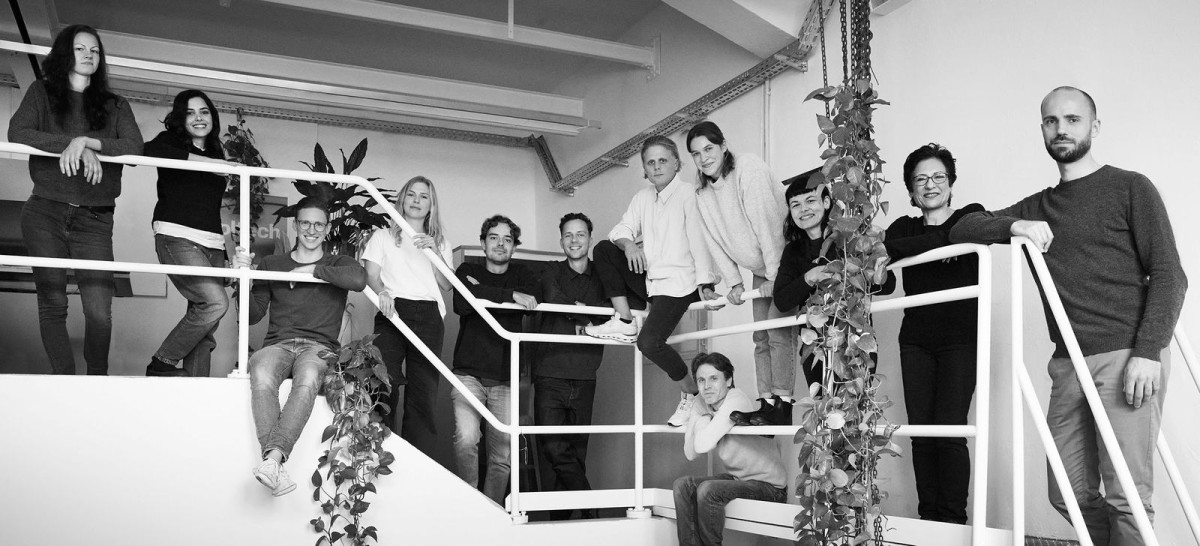
Revoltech is a Darmstadt-based materials company and official spin-off of the Technical University of Darmstadt, founded in 2020. Its 15-person team has spent the intervening years developing two fully bio-based, biodegradable leather alternatives made from hemp fibres and from algae. Both are free of polyurethane, PVC and synthetic additives. Both are designed, from the ground up, for circularity. And both are now beginning to find their way into real products — from watch straps and camera accessories to, if the current trajectory holds, the interior of a Volkswagen.
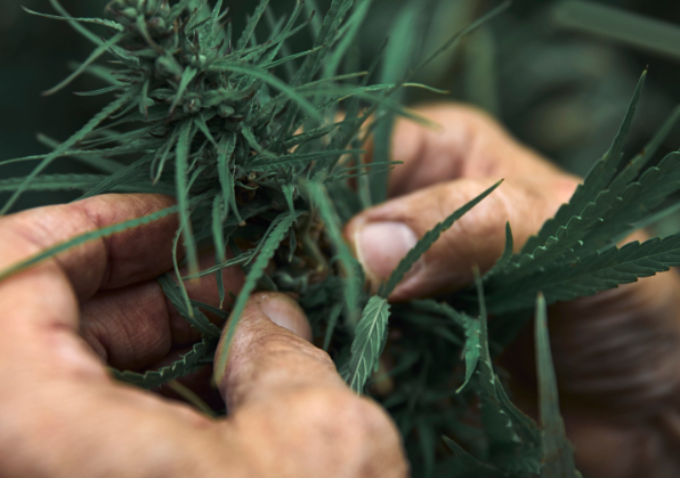
The starting point for the first one called LOVR was an observation about agricultural waste. "The hemp cultivation, at least in Germany – and I know in Canada it's the same and in other big hemp-growing countries – the industrial hemp is really grown for the hemp seeds", Fuhrmann explains. "And in the plant, there are still a lot of plant fibres that can be used — and this was really the starting point for the development of our leather alternatives."
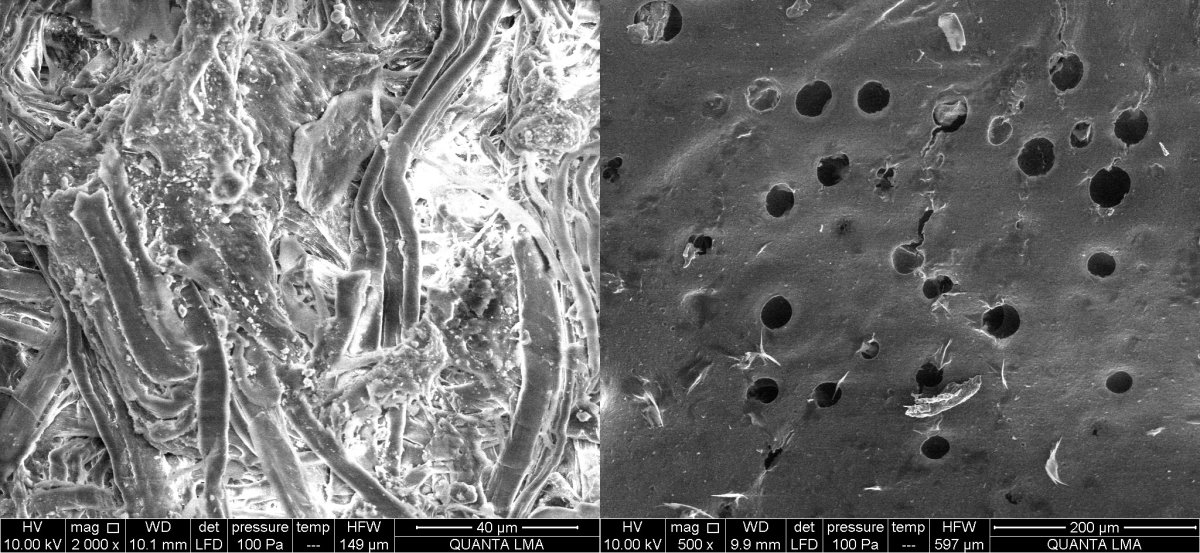
The material logic of LOVR rests on a deliberate rejection of the standard approach to bio-based composites. Most plant-based leather alternatives use natural fibres as a filler within a synthetic matrix — typically polyurethane — which limits biodegradability and circular end-of-life options. Revoltech's position was uncompromising from the outset: "It was always important to not just use the fibre as a filler or as some secondary component in the material but really make it a structural component of the material," Fuhrmann explains, "and then not add any polyurethane or PVC or any other synthetic matrix to it. " The result is a material that is genuinely fully bio-based — not merely bio-derived.
The carbon story is equally compelling. Hemp grows fast and sends deep roots into the soil; after harvest, those roots remain and contribute to humus formation, sequestering carbon over time. As Fuhrmann puts it, "The hemp fibres that we use for our production are actually carbon-negative. The hemp grows very fast, but at the same time it grows very deep roots into the soil. So what happens after harvest? The roots stay in the soil, and they play a part in the humus formation. So the carbon is actually sequestered in the soil for a long time." When the full agricultural cycle is calculated — including diesel for tractors — LOVR's hemp input still arrives with a net negative carbon footprint, directly reducing the overall footprint of the finished material.
MATTR, the algae-based material, is at an earlier stage — currently scaling from lab to pilot production. The lessons learned from developing LOVR are being applied deliberately: minimising the carbon footprint of input materials, managing energy consumption carefully, and designing for scalability from the start rather than retrofitting it later.
An unexpected first mover: the automotive industry
Fashion might seem like the natural home for a leather alternative. The first industry to come knocking was, in fact, automotive. "Automotive was really one of the first industries that got super, super interested," Fuhrmann notes, "because they use a lot of leather in their cars. I think probably over 20% or so of the global leather production just goes into cars. " As manufacturers race to electrify their fleets and reduce their sustainability footprint, the interior materials of a car have become an unexpectedly urgent design problem.
The result is a joint development project with Volkswagen — one of the world's largest automotive manufacturers — with a clear target: "to bring our material, the LOVR, the hemp-based material, into serious production by 2028."

The collaboration, which also involves Motherson Innovations and received the Plug and Play Global Innovation Award for Sustainability at Expo 2025, positions Revoltech at the intersection of material science, industrial manufacturing and circular economy policy in a way that few fashion-adjacent startups have managed.
The in-store applications are already visible. ID Genève, a Swiss watch brand, uses LOVR for its watch straps. Leica uses it for camera accessories. Prototypes exist across belts, wallets, furniture surfaces and footwear — a growing catalogue of collaborators that includes designers, manufacturers and brands across Europe.
For all its industrial momentum, Revoltech has not lost sight of its original relevance to fashion and design. Fuhrmann is direct about both the opportunity and the responsibility that comes with it. "Developing new materials takes time and is not something that is done easily and quickly," he says — a reminder aimed at designers who expect new sustainable materials to be immediately available in twenty colours and unlimited quantities. The development pipeline for a genuinely circular material is measured in years, not seasons.
More pointedly, Fuhrmann places a significant share of responsibility for greenwashing at the feet of the design and fashion community.
"There's a lot of greenwashing out there," he says. "And I think unfortunately, the designer is responsible then to really have a very close look and really ask a lot of questions—and really also ask a lot of questions to the manufacturers of materials and really understand the materials that you're planning to use." The easy headline — "made with natural materials" — is no longer sufficient. The questions that matter are harder: What is the actual carbon footprint of the input materials? Is the matrix synthetic? What happens to this material at the end of life?
Revoltech's own answer to those questions has been recognised with the German Sustainability Award 2025, the German Ecodesign Award 2025, and the German Design Award 2025, among others — a signal that the industry is beginning to take bio-based circularity seriously, not just as an aspiration but as a measurable, scalable standard.
Key Takeaways

Lukas Fuhrmann, Co-founder and CEO, Revoltech — Darmstadt, Germany
Lukas Fuhrmann is co-founder and CEO of Revoltech, a TU Darmstadt spin-off developing fully bio-based, biodegradable leather alternatives. Under his leadership, Revoltech has brought LOVR™ from a university lab to a joint production project with Volkswagen targeting 2028, while building a growing portfolio of collaborations across fashion, accessories and automotive design.