


At FarmLab, a hybrid rural organisation in Austria, farming, creative education, and collaboration come together in a circular approach that blends traditional crafts, digital fabrication, and sustainability. During their exchange with the Mountain Makers, learning emerged through doing, exchange, and reflection on common challenges. The experience reinforced the notion of rural areas as spaces of innovation.
By Goethe-Institut Brussels
In November 2025, four members of the Mountain Makers (Makers des Montagnes), a rural creative association based in France, spent five days at FarmLab, a creative farm and cultural initiative in the Styrian Vulkanland in Austria. Hosted by FarmLab’s co-founders Silvia Brandi and Martin Gutmann, the exchange took place within the framework of the Creative FLIP Ambassadors of Good Practice programme, designed to foster peer learning among cultural organisations operating in non-urban contexts.
In Kapfenstein, Austria, a multi-faceted organisation is driving local regeneration. Part-farm, part-creative hub, and on mission to explore the intersection of nature, technology, and craft, FarmLab is rooted in a hybrid model that blends farming, making, creative education and European cooperation. Through creative residencies, workshops combining digital and traditional practices, and community events, the hub is a living case study for regenerative rural development, through the adaptive reuse of agricultural spaces and circular use of local resources for hands-on workshops on practical skills, like working with wood or fabrics. Its facilities include labs for woodworking, ceramics, textiles, and a biolab for biomaterials.
What distinguishes the organisation is how these activities overlap and unfold through everyday work, seasonal rhythms and shared responsibility. The organisation actively promotes a sustainable future through cultural and creative practices and provides an open space where creatives and local communities explore circular approaches to local development. Through its daily practices FarmLab blends traditional crafts with digital fabrication and ecological innovation.
FarmLab’s adaptable, low-threshold model is at the heart of its programme. The hub’s way of working promotes cultural exchange, creative development, and sustainability in a rural context. FarmLab has developed a responsive, replicable approach grounded in local and seasonal rhythms, generous land-based knowledge-sharing and slower pace. Some of their project include research on female entrepreneurship linked to the use of natural materials, development of new biomaterials from organic waste, and exhibitions and other events that bring the community together.
It was this model that the visitors would become familiar with, and that would inspire them to make similar implementations to their own organisation.
For Ophelie Reiller, Christel Renoult, Michel and Alexandre Rousselet of the Mountain Makers, who are themselves engaged in building a rural creative ecosystem that brings together fabrication, community life and engaging the local residents their organisation’s activities, the visit was less about observing this model from the outside and more about participating in it.
Hands-On Learning as a Shared Language
The exchange organised by FarmLab was an immersive peer-learning programme rooted in the rhythms of rural life. The programme began with a guided tour of FarmLab’s workshops, micro-farm and residency spaces, followed by a communal dinner with the hosts and their family. This shared meal set the tone for the entire exchange: informal, open, and grounded in everyday life. Expectations, challenges and ideas were exchanged around the table, rather than in meeting rooms.
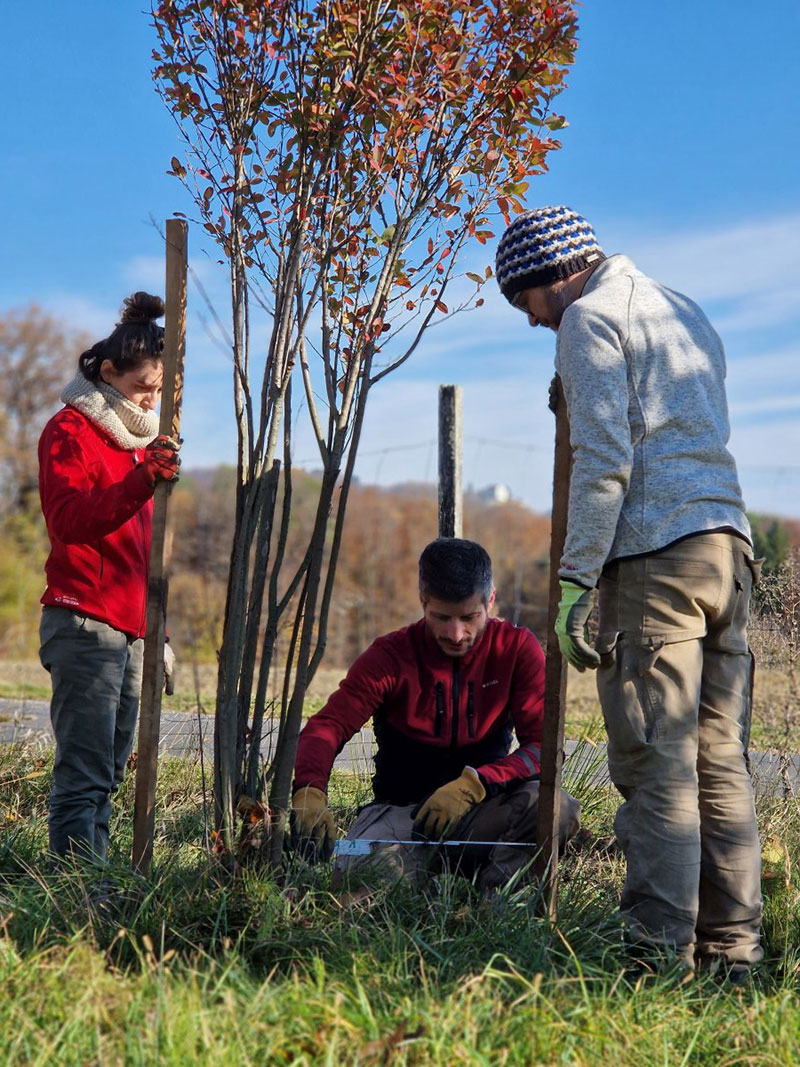
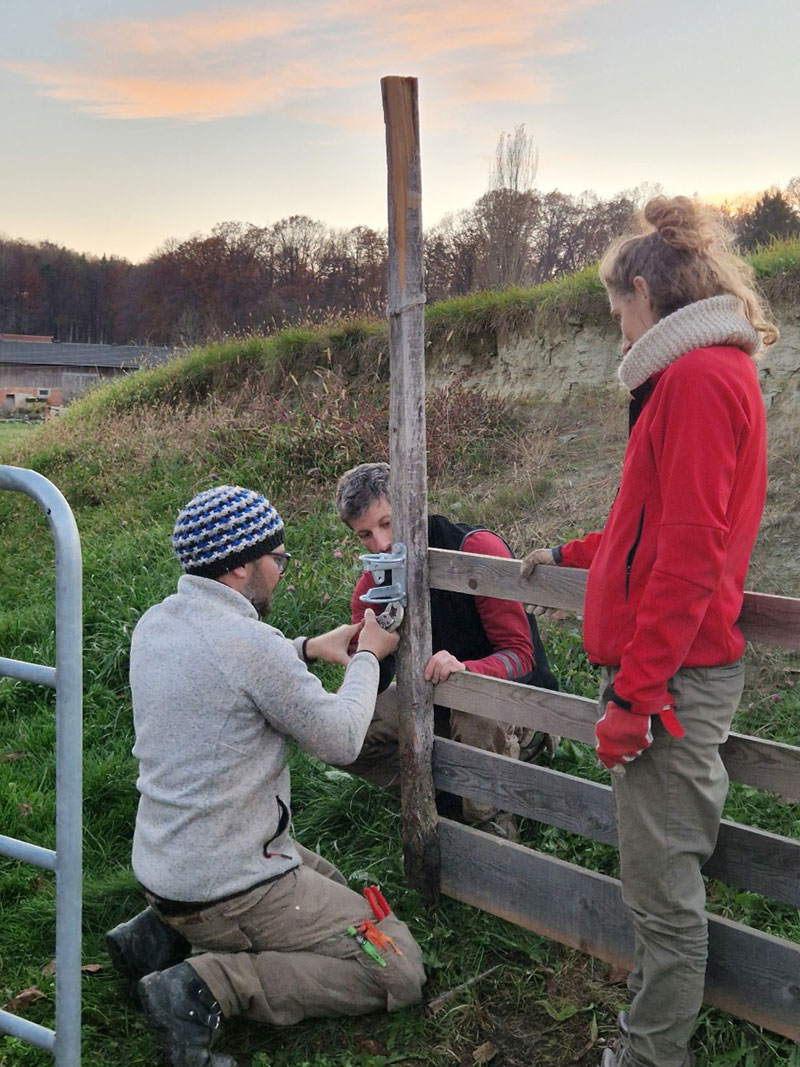
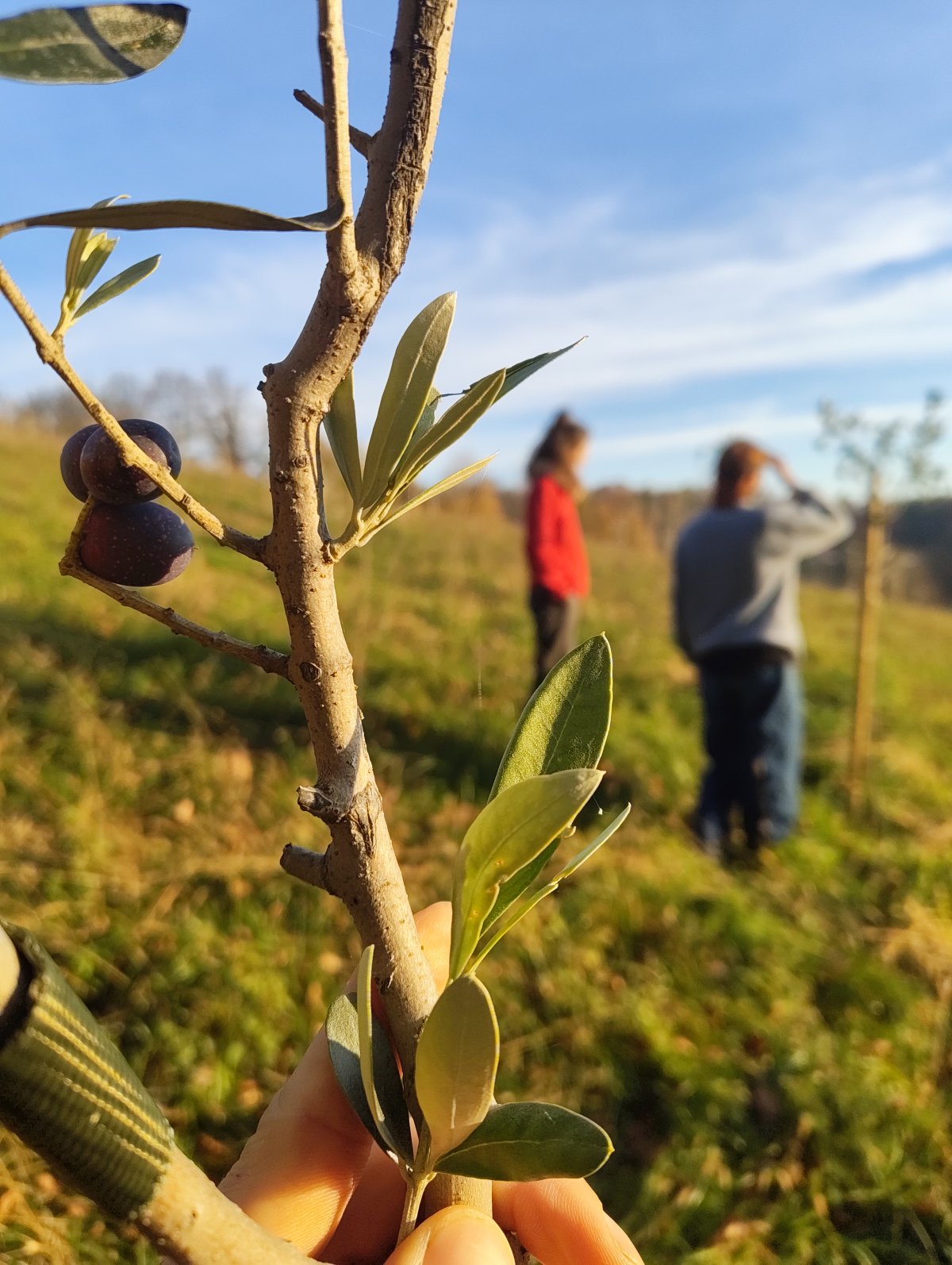
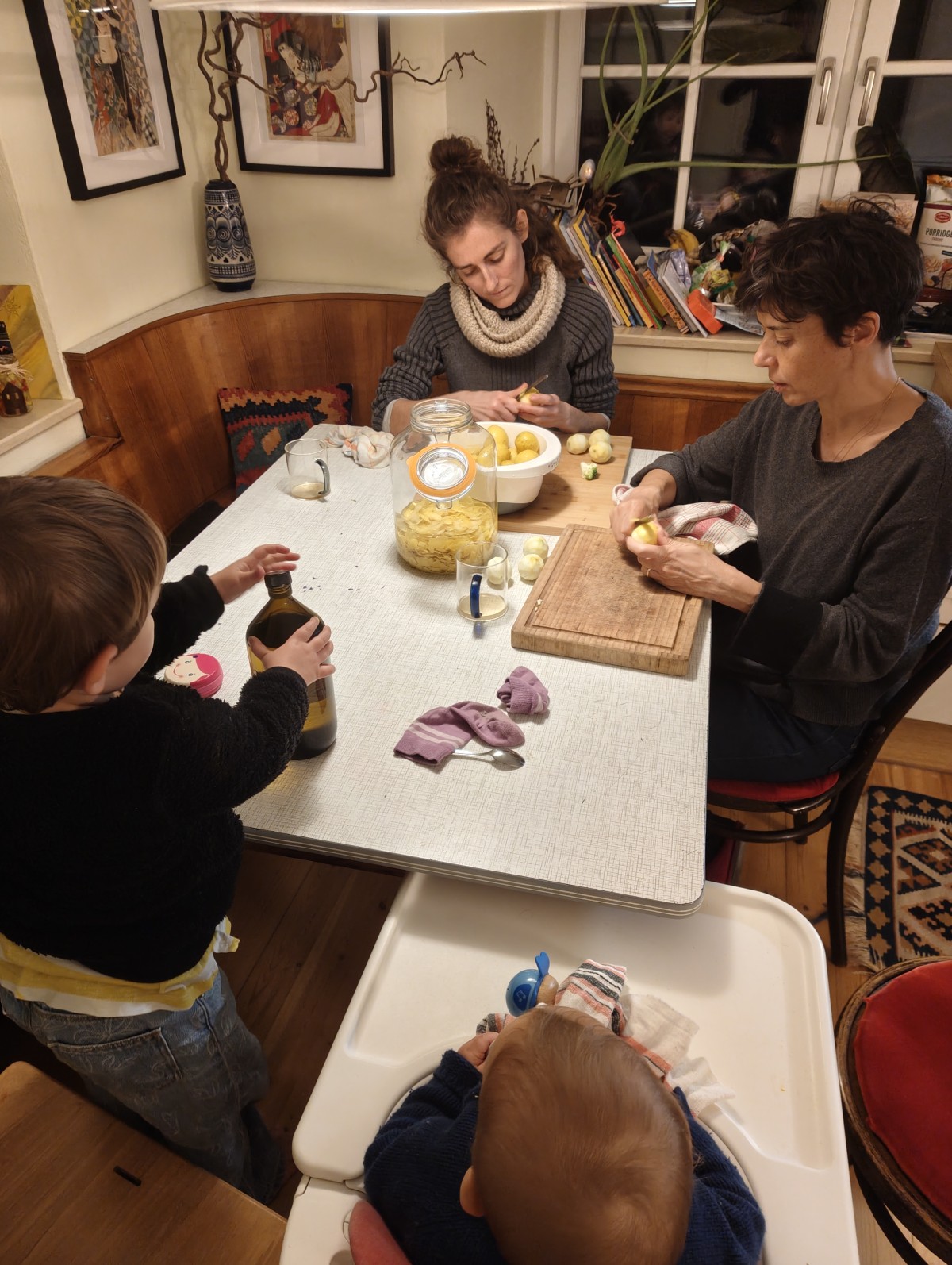
From the start, it was clear that FarmLab’s way of working is deeply connected to its seasonal and rural context. As the exchange took place in November, activities followed the rhythm of late autumn, a time dedicated to food processing, maintenance, and preparation for the winter to come. Throughout the week, physical work and peer exchange unfolded side by side. The four Mountain Makers participated in everyday tasks: setting up wooden tree protections to guard young trees from livestock; processing FarmLab’s lemon harvest into limoncello and marmalade; repairing workshop machines; constructing small objects and toys from upcycled wood scraps; and contributing to ongoing renovation work on the farm. For the visitors, this hands-on approach demonstrated how low-cost, practical solutions (such as DIY tree barriers or creative reuse of materials) can be replicated and adapted in other rural settings. “The days together — fixing machines, cooking, talking about projects and next steps — turned into a learning process in themselves,” the FarmLab team shares.
At the same time, there were dedicated moments for conversation and reflection. Discussions moved fluidly between concrete challenges (how to maintain tools, structure a workshop, or manage volunteers) and broader strategic questions, including Erasmus+ partnerships, EU mobility schemes, and ways of activating local communities in places with limited population density. A visit to another creative farm project, Kunst am Hof, and working with the people there, was a further opportunity for networking and exchange of creative practices in a rural operating context.
Exposure to EU-level tools such as Culture Moves Europe, Rurasmus, the Rural Pact platform, and the European Creative Hubs Network (ECHN) expanded this perspective further. These programmes revealed to the visitors concrete pathways for scaling rural initiatives internationally without losing their local grounding.
For the Mountain Makers, one of the most powerful aspects of the exchange was the sense of recognition. Both organisations operate in mid-mountain regions, combining agriculture, craft, and digital or technical practices. Rather than copying each other’s models though, the exchange reinforced the idea that rural spaces are not cultural peripheries, but laboratories for innovation, where hybrid models, like farming alongside creative work, can emerge precisely because of geographical and financial constraints.
The impact of the exchange did not remain abstract. Mountain Makers returned to France with clear intentions to translate what they experienced into their own context. Among the concrete outcomes now in development are a “Rural Hacks” workshop series, focused on low-tech, sustainable solutions for everyday rural challenges, and the design of a pilot residency programme blending art, craft and agroecology.
The visit also triggered a shift in mindset: from seeing rural work as locally bounded to understanding it as part of a broader European movement of non-urban cultural hubs connected through peer learning and mobility. For volunteer-based organisations in particular, this sense of belonging to a wider ecosystem proved both motivating and strategically important. According to FarmLab, “the exchange helped them [the Mountain Makers] see how circular and regenerative ideas translate into real work.”
Key Takeaways

FarmLab is a rural creative hub in Kapfenstein, Austria, promoting a sustainable future through cultural and creative practices. They provide an open space where makers, artists, designers, researchers, and local communities explore circular approaches to local development through cultural and creative practices. Through workshops, residencies, and EU-funded projects, FarmLab blends traditional crafts with digital fabrication and ecological innovation. Facilities include labs for woodworking, ceramics, and textiles and a biolab for biomaterials.
Makers des Montagnes was born from a meeting between several local inhabitants and passers-through who wanted to create a space to federate, making and sharing in an often-overlooked rural territory. In 2020, in the middle of lockdown, the idea became concrete: transforming an old farmhouse in the village into an open maker third place. Driven from the start by local residents and a clear vision that rurality should not mean isolation, but robustness and innovation. Since then, the space has grown with its members, residents and everyone who has passed through to contribute, with their hands, their ideas or simply their presence.