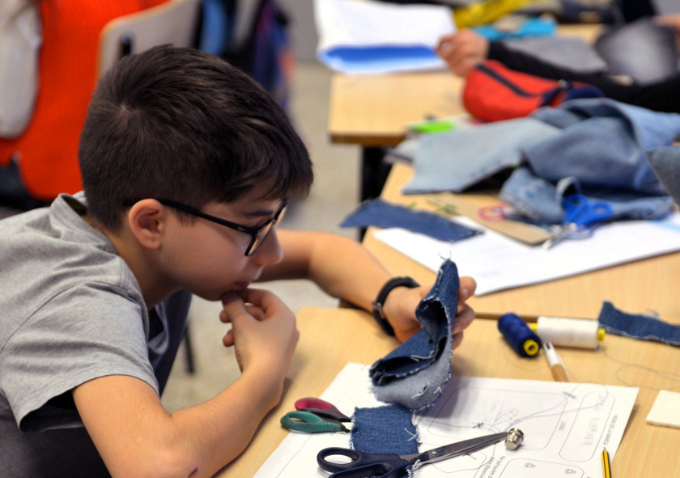




Denim Remix is an interdisciplinary Learning Lab, introducing 13-year-olds to sustainable fashion through creativity, critical thinking, and hands-on exploration to investigate the issue of textile waste. At the core of the learning experience is the creation of a small accessory from post-consumed jeans, which becomes a tool for exploring the entire textile production chain—from waste to reinvention. This program invites young minds to rethink fashion and materials through upcycling.
By Goethe-Institut Brussels
Around 90 young students from the school Sagrat Cor Diputació in Barcelona, all age 13, had the chance to go on a journey that challenged their views on fashion, waste, and creativity. The Learning Lab Denim Remix, a collaboration between local educators, designers, and sustainability advocates from Back to Eco, invited students to learn about fashion through the lens of upcycling jeans material.
This Learning Lab program unfolded over six sessions, each carefully designed to guide students through the full lifecycle of a small denim accessory product—from concept to creation. The journey began with a deep dive into the global waste problem and an introduction to pioneering projects like Safe Passage Bags, and the local initiatives Back to Eco and Infinit Denim.
“Exploring the whole chain of the creation of a small accessory gave us the opportunity to reflect on specific concerns and solutions of fast fashion,” explained one of the facilitators.
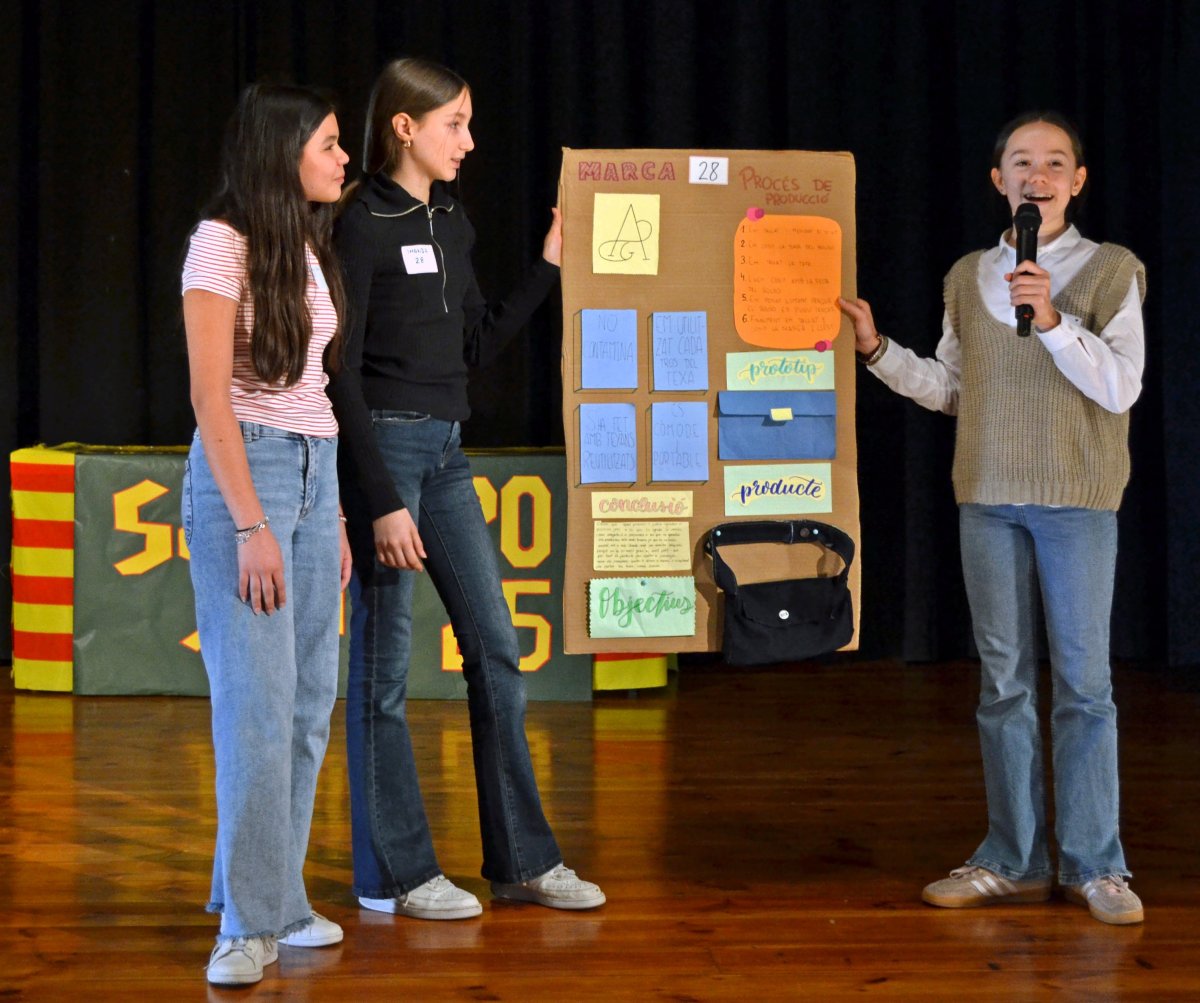
Students were grouped into teams of three, fostering collaboration and shared responsibility. Through role-play and creative exercises, they developed their first accessories prototypes made from paper, including among others, small wallets, bags, gloves, and hats. As the sessions progressed, students explored intellectual property, branding, and communication strategies. Using content from Creative FLIP, they imagined their own brands, designed logos, and crafted narratives around their creations.
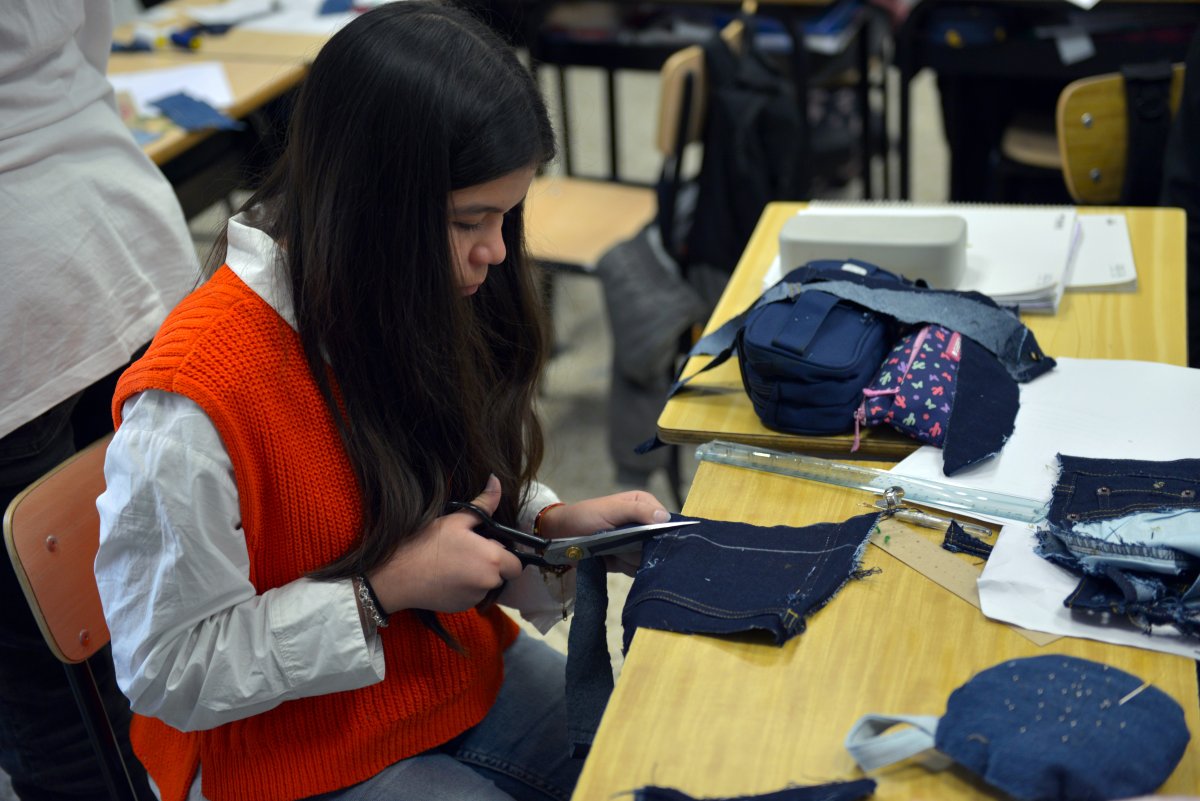
The hands-on component was central. Students learned all about the Back to Eco workshop and learned about Infinit Denim, their own circular brand that reuses denim waste. They constantly revised their designs to adapt to real denim materials, learning how to cut, stitch, and shape fabric with intention. A highlight was the visit to the Ateneu de Fabricació Digital, one of Barcelona’s public FabLab. There, students experimented with laser cutting and vinyl printing as creative tools for their logos, combining traditional and digital fabrication techniques. “I was very positively surprised by their initiative to create and develop their products. With few guidelines, they were capable of creating very nice accessories.”, says Penny Papachristodoulou, the lead facilitator of the Learning Lab Denim Remix.
Throughout the programme, several key insights emerged that shaped the experience for both students and facilitators:
Penny emphasized the importance of collaboration: “The assistance and collaboration of the teachers was essential, especially through constant communication.” Having a strong support system within the school made it easier to adapt and respond to students’ needs.
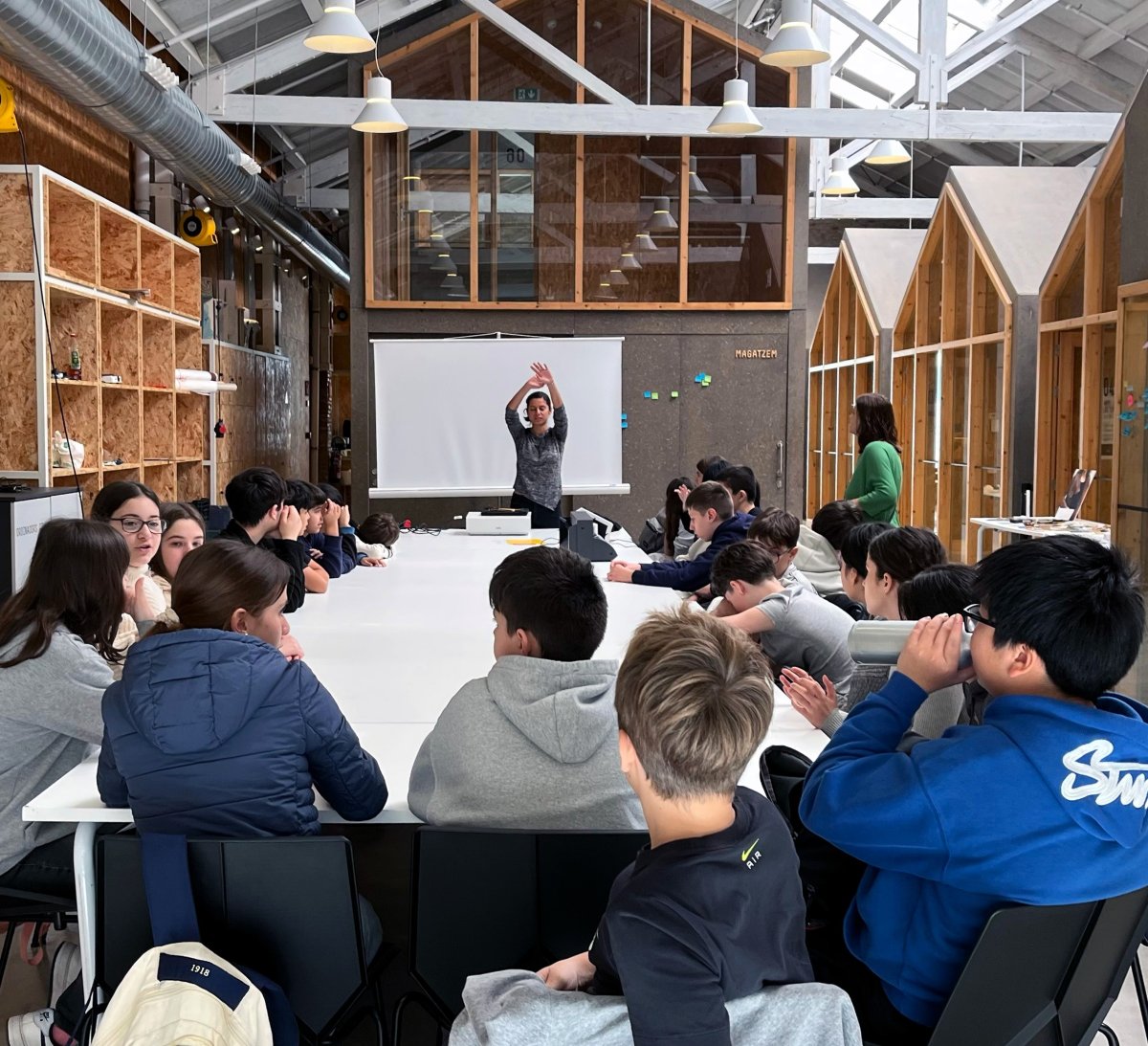
Repetition played a crucial role. “At first, they forgot terms,” Penny noted, “but later, they could explain solutions to fast fashion’s problems.” This gradual reinforcement helped students internalize complex ideas.
Personal stories shared early in the programme helped students connect emotionally with the topic, catching their attention and making the abstract issue of textile waste feel more tangible and urgent.
Sewing, often perceived as a gendered activity, became a unifying skill. “Sewing is not a feminine task, and most of them enjoyed it,” Penny said, reflecting on how students embraced the hands-on work regardless of background or experience.
Keeping the sessions focused was also key: “Keep it simple; too much information sometimes gets them confused or easily distracted,” Penny explained.
Finally, the combination of conceptual discussions and hands-on creation kept students engaged and motivated throughout the program.
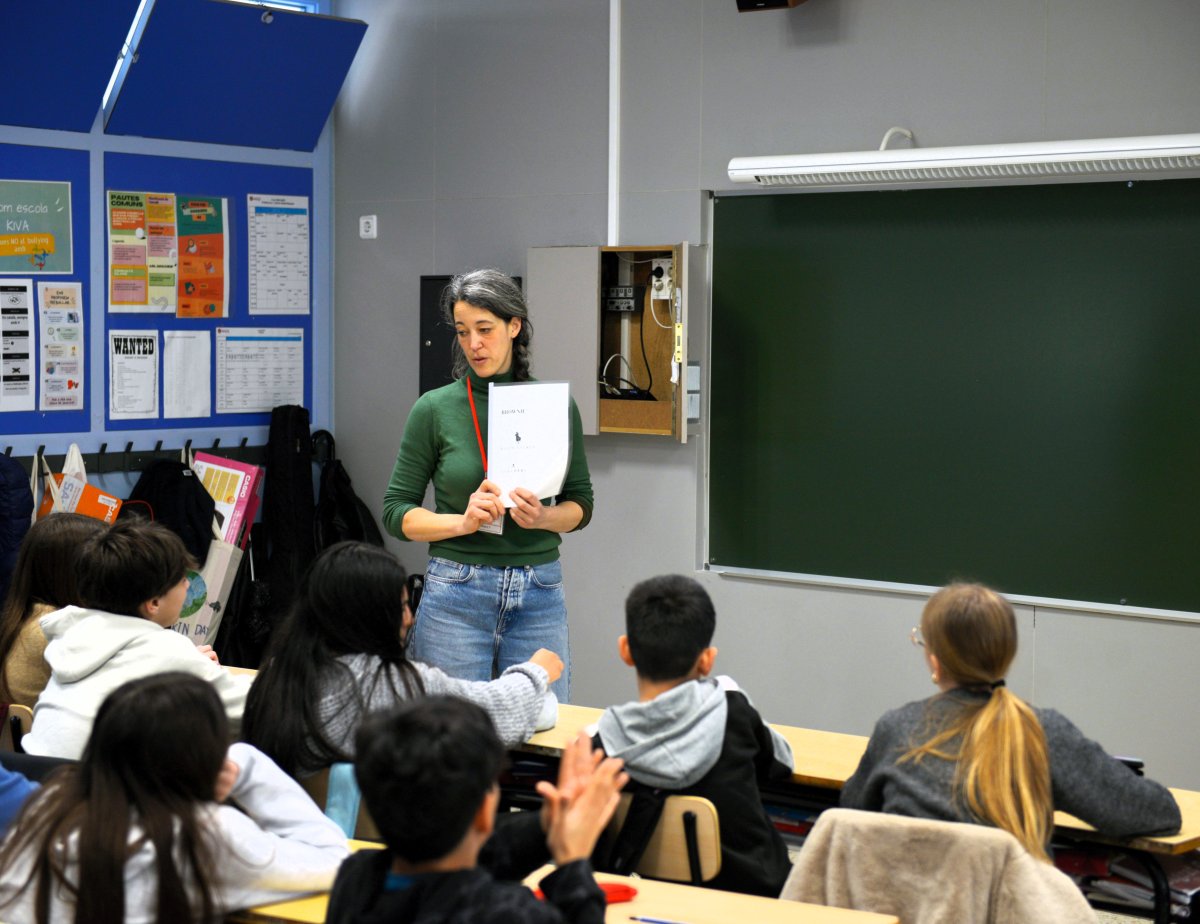
One unexpected challenge arose during the logo design sessions. Some students used AI tools to generate logos, sparking confusion and debate.
“I wanted to explore this further,” the facilitator noted, “but the teacher preferred not to insist. Still, it showed how unprepared we are to talk about AI in education. We need more space for these conversations, which can unfold interesting questions on ethics and creativity.”
In the final event, students showcased their creations—accessories made from upcycled denim, each with a unique logo and story. The school’s main hall buzzed with pride as students presented their work to peers, teachers, and families.
Feedback was overwhelmingly positive. Teachers rated the experience 8.5 out of 10 and expressed enthusiasm for future collaborations. “We enjoyed having an external partner/designer during the project,” one teacher shared. “The students had the chance to learn new things both in the format/design and sustainability content.”
The program also left a lasting impression on the organizers. “This was our first European project with Back to Eco,” said the lead facilitator. “It opened new doors for us. We’d love to do it again.”
The Learning Lab Denim Remix showed that when education, creativity, and sustainability intersect, powerful things happen. Students did not just learn how to make a bag—they learned how to think critically, collaborate, and care.
Images: Lars Petrova Taylor / Penny Papachristodoulou
This case study was created under Creative FLIP, an EU co-funded project aimed at further increasing the long-term resilience of the CCSI in key areas such as Finance, Finance, Learning, Working Conditions, Innovation & Intellectual Property Rights.
Key Takeaways

Back to Eco is a non-profit, non-governmental organisation that develops and promotes initiatives for a more circular textile industry. Their goal is to extend the life cycle of textiles, encouraging reuse and recycling on a global scale. They support individuals, companies, and institutions on the journey toward a fashion industry that benefits the planet.
Sagrat Cor Diputació is a socially committed school in the center of Barcelona providing education for students from kindergarten up to high school. Their main focus is to offer student-centered education encouraging diversity, social justice and autonomy and help students become responsible, grateful, competent and happy people, who will make a better world. The Learning Lab involved three classes of 13 years old students (90 students in total).