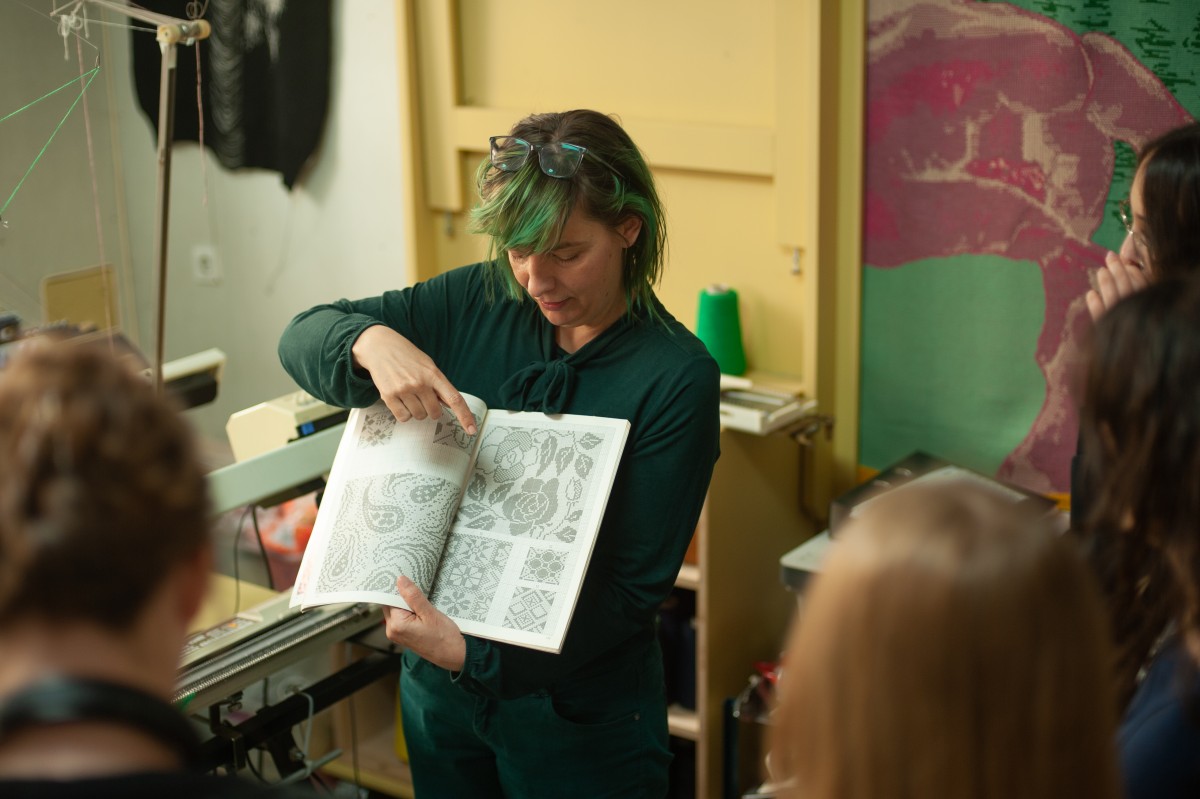




In the Learning Lab Tight-Knit: Create a Sustainable Fashion Future, students from Vienna explored knitting technologies, sustainability, and regional craftsmanship. Collaborating with Clean Clothes Campaign Austria and Vienna Textile Lab, they learned about ethical production, biotech dyeing, and fashion careers.
By Goethe-Institut Brussels
At the Höhere Bundeslehranstalt für Kunst und Gestaltung in Vienna, a group of 15- to 18-year-old students participated in the Learning Lab Tight-Knit: Create a Sustainable Fashion Future, entering a learning environment where heritage, making, and critical reflection were closely intertwined. Through a comprehensive approach combining regional craftsmanship with knitting technologies and ethical production, they learned how textile knowledge is passed on and transformed, from traditional knitting practices and local craft legacies to digital machines and contemporary design.
At the Höhere Bundeslehranstalt für Kunst und Gestaltung in Vienna, a group of 15- to 18-year-old students took part in the Learning Lab Tight-Knit: Create a Sustainable Fashion Future. The Learning Lab was designed to go beyond textbooks. Partnering with the Clean Clothes Campaign Austria and Vienna Textile Lab, students examined the textile and clothing industry from multiple angles. The students were invited to explore the textile industry through the lens of knitting technologies, ethical production, and regional craftsmanship.
They learnt about the environmental and social costs of fast fashion, the science behind biotechnological dyeing, and the diverse career paths available in the sector. Furthermore, the students visited local workshops and companies like Kitech and schnittBOGEN, where they saw sustainable practices in action. Expectations were high from the beginning, as one student put it: “I expect from the Learning Lab to learn a lot about sustainable fashion and make cool things with new techniques”. And so they did. They experimented with digital pattern design, operated knitting machines, and embellished their creations with pearl embroidery. One student even developed a pearl weave based on her design—a testament to the Learning Lab’s encouragement of innovation.
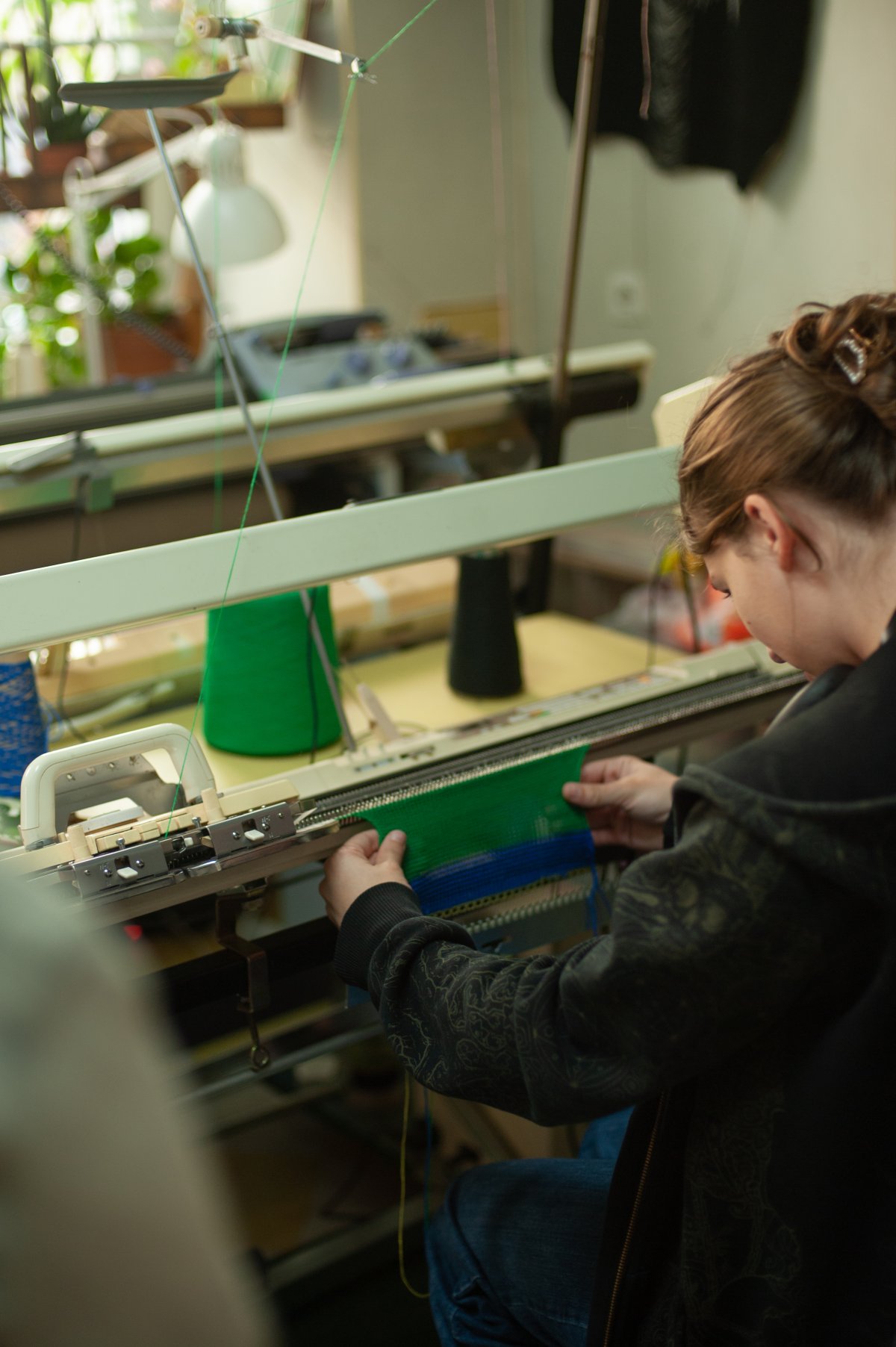 The LLab began with a Fair Isle design workshop, where students created their own knitting patterns—both digitally and by hand. This sparked reflections on material choices and the challenges of sustainable textile production. The visit to Veronika Persché’s studio was another highlight, offering students the chance to work directly on knitting machines and explore digital techniques. Discussions on copyright and design ownership added depth to their creative process.
At Vienna Textile Lab, students discovered how microorganisms can produce vibrant, sustainable dyes. This intersection of biotechnology and fashion fascinated them, especially as they considered the environmental impact of conventional dyeing methods.
The Learning Lab was rounded off with a visit to Kitech, which introduced students to SHIMA SEIKI knitting technologies—seamless knitting and software-supported design that represent the cutting edge of textile innovation. Meanwhile, schnittBOGEN offered a glimpse into the life of self-employed designers, emphasising upcycling, no-waste approaches, and the realities of running a fashion business. The creative facilitator Veronika Persché reflected, “The workshop at the fashion and tailoring studio made an excellent impression; the designers there really told them the truth and very insightful facts about the life of a self-employed designer and craftsperson.”
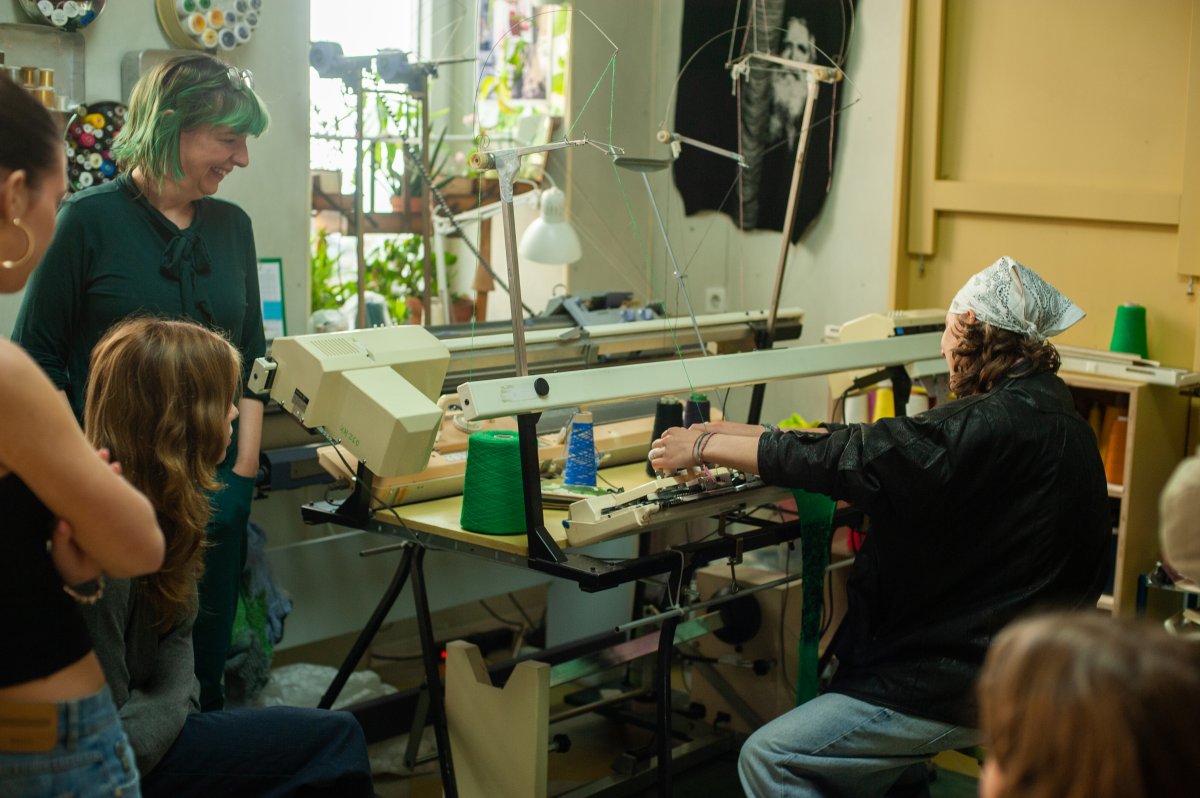
These experiences grounded the students’ learning in real-world contexts. They asked insightful questions about production costs, planning, and programming—showing a growing awareness of the complexities behind the clothes they wear.
By the end of the workshop series, each student produced one to two samples of their knitting design, embellished with embroidery and pearls. These creations were later showcased in a public exhibition at the school in June 2025, where students demonstrated machine knitting, embroidery, felting, and pearl weaving live for visitors. Furthermore, students shared their insights on sustainable fashion, ethical production, and the importance of conscious consumer choices. One student remarked, “When I choose my own clothes, I watch out that they don’t look like 100% polyester.”
Feedback from students and teachers highlighted the LLab’s strengths and areas for growth. The hands-on workshops were clear favourites, especially the knitting machine sessions.
Teachers Christina Dörfler and Elisabeth Stich praised the lab’s integration of technical expertise and creative freedom. They noted that a stronger focus on pattern design and a tighter connection between theory and practice could enhance the learning experience.
The creative facilitator reflected, “The plan worked out well overall. But next time, I’d include more interactive elements and focus on fewer topics to teach them more thoroughly.”
The Learning Lab Tight-Knit proved that sustainable fashion education can be both inspiring and practical. By combining traditional craftsmanship with cutting-edge technology and ethical reflection with creative expression, students gained a more holistic understanding of the textile industry. They didn’t just learn how to knit—they learnt how to think critically about fashion, sustainability, and their role as future designers, consumers, and changemakers.
Image: Noël Barz und Dora Kuthy
This Case Study was created under Creative FLIP, an EU co-funded project aimed at further increasing the long-term resilience of the CCSI in key areas such as Finance, Finance, Learning, Working Conditions, Innovation & Intellectual Property Rights.
Key Takeaways

1. Veronika Persché produces textiles for local and international customers in her knitting workshop in Vienna's 16th district. She has extensive expertise in design and creation as well as in the technical field and has mastered myriad techniques in machine knitting.