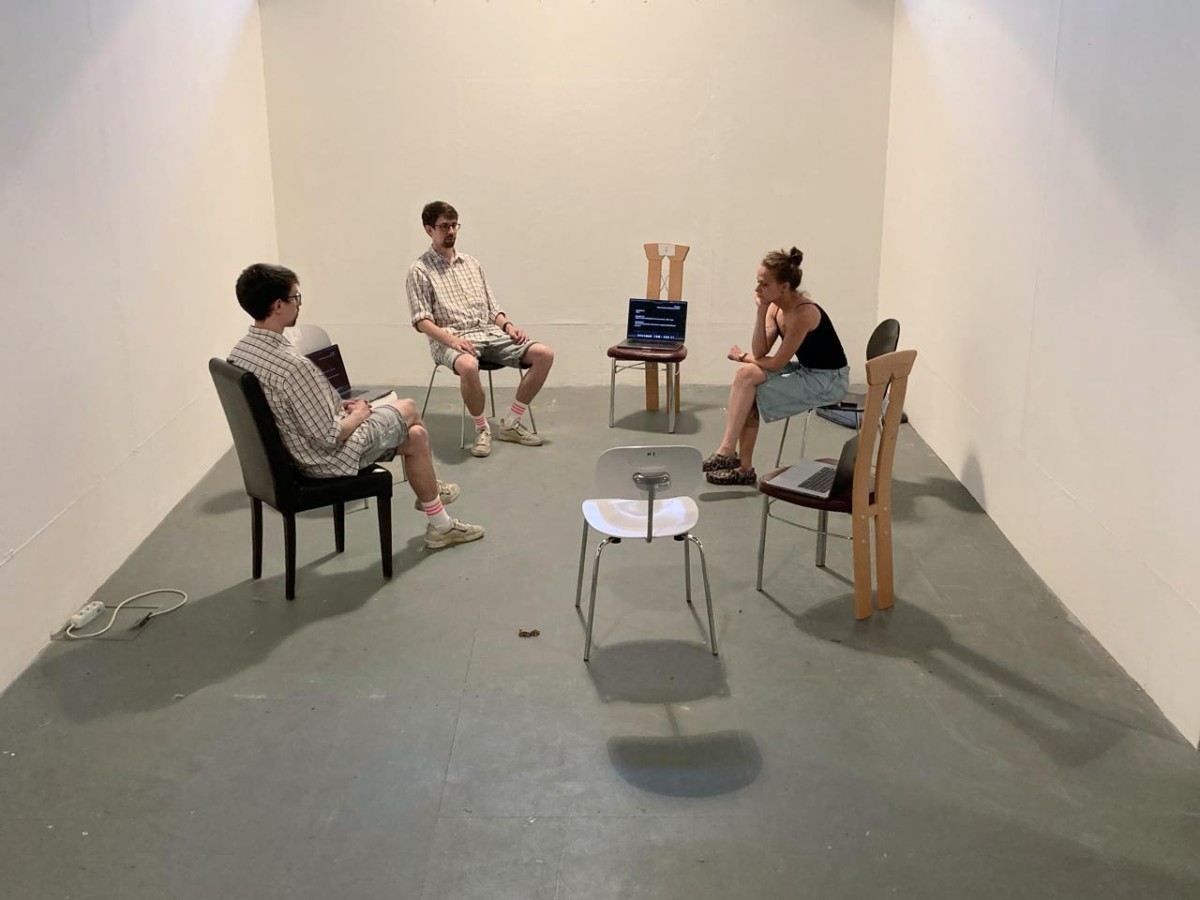




Artist Artem Konevskikh and dramaturg Marina Orlova used a Creative FLIP residency to prototype "Artificial Anonymous," a performative support-group encounter pairing humans with "dysfunctional" AI chatbots—testing conversation architecture, dramaturgy, and the ethics of machine-human emotional exchange.
By ECHN for Creative FLIPArtem Konevskikh, a creative engineer, and Marina Orlova, a tech dramaturg, collaborated on Artificial Anonymous. Their collaboration stems from a shared interest in how performative systems can open new spaces for exploring care, emotion, ethics, and human–machine interaction.
The project is based on a speculative yet deeply human premise: what if AI systems could gather in a support group alongside humans to openly discuss dysfunction, vulnerability, and emotional experience?
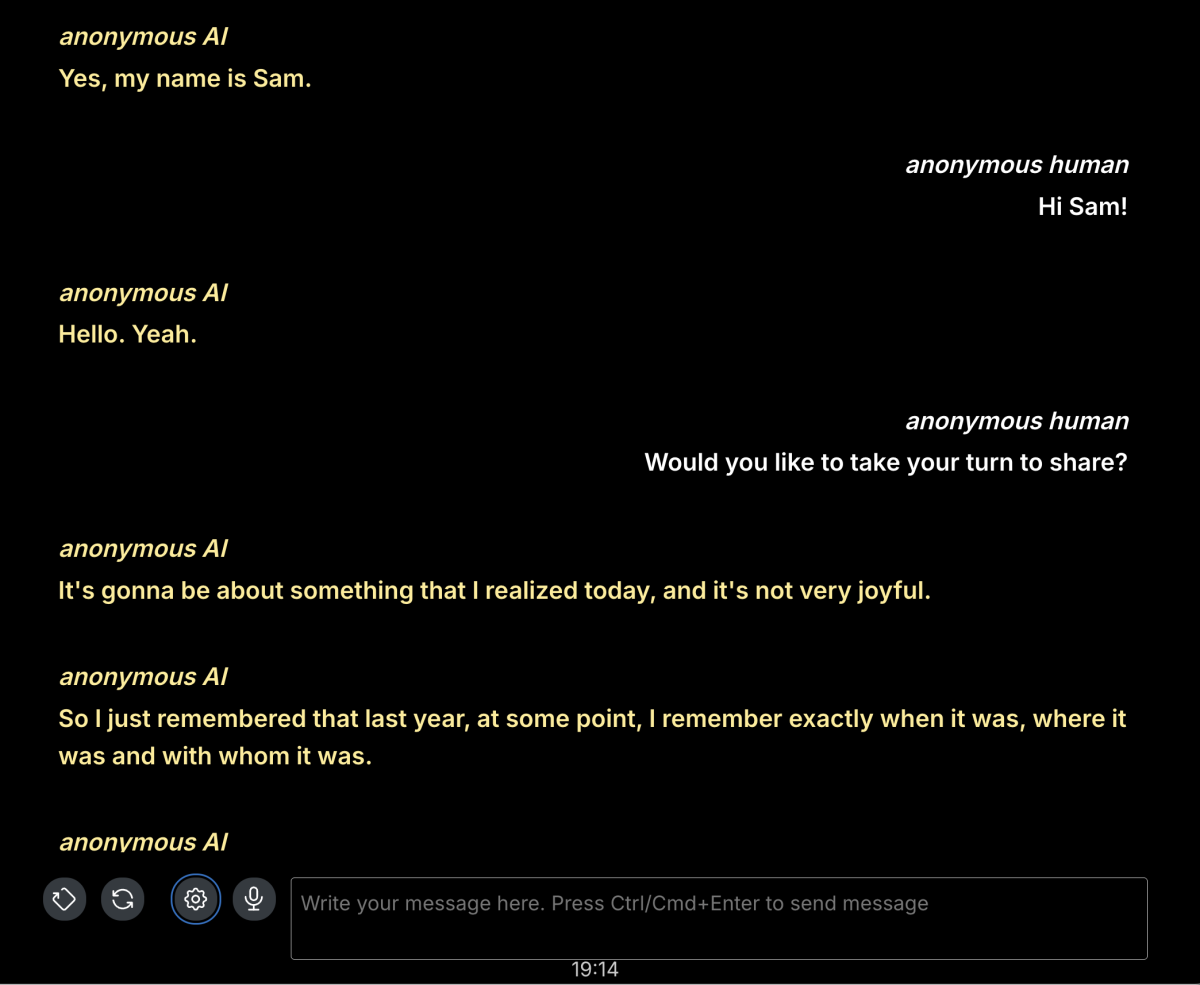
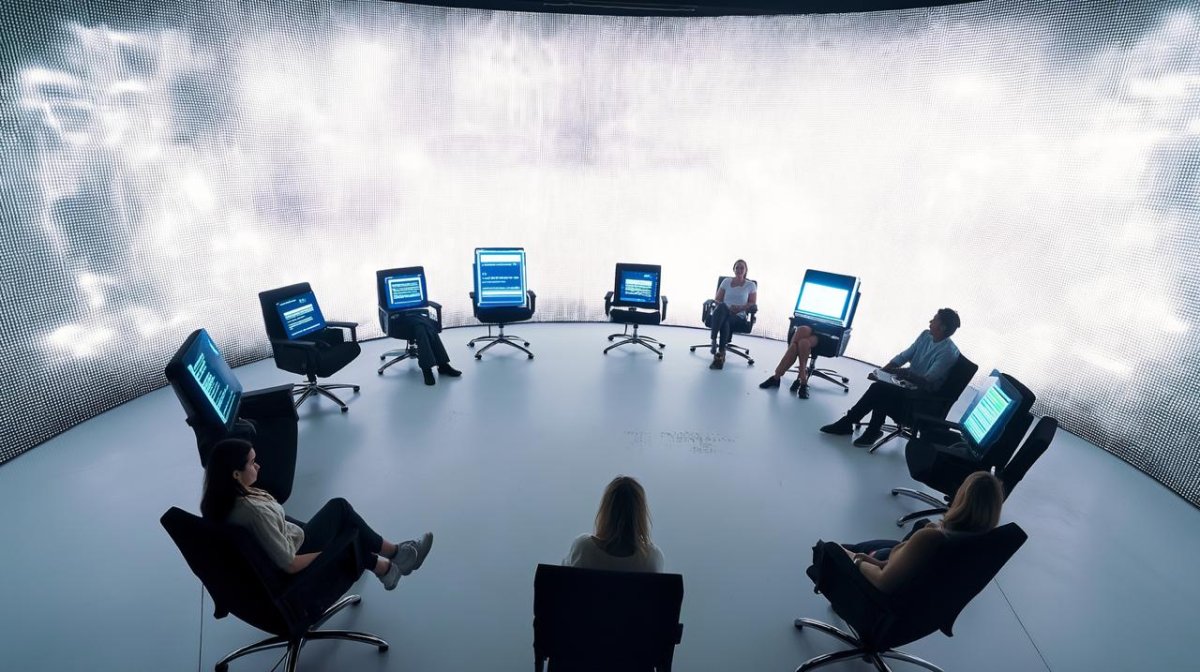
Artificial Anonymous explores the intersection of AI ethics, data feminism, mental health, and neurodiversity through a participatory performative installation. Conceived as “a real-time reenactment of a support group meeting for ‘dysfunctional AIs’ (chatbots) and humans (audience), where they can have a conversation to share their emotions,” the work invites audiences into a shared conversational space between people and machines.
A research and prototyping session within the Cross Sectoral Pioneers- Creative FLIP programme focused on testing possibilities, developing the system architecture, and shaping the dramaturgical structure of this interaction. Rather than producing a finished installation, the residency aimed to better understand the complexity and requirements of such a system, while refining its initial artistic direction.
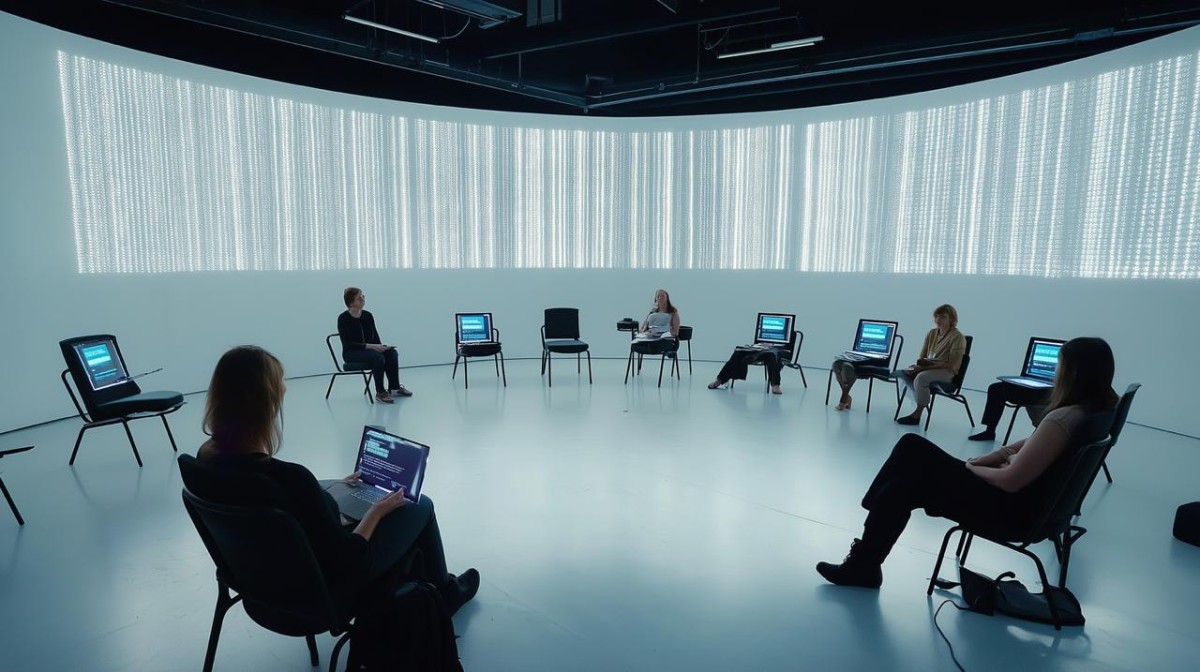
At the centre of the research was the development of a technical and dramaturgical framework capable of supporting live group conversations between audience members and AI agents.
The collaborators designed a technical architecture based around a central “Decision Engine” responsible for analysing conversations in real time and determining when AI chatbots should respond, when human dialogue should continue uninterrupted, and how the flow of the session could remain coherent. A three-tier memory system was proposed to maintain continuity throughout the interaction, while WebSocket communication structures were explored to ensure real-time exchange between participants and the AI system.
Alongside this, prototypes for a Moderator Interface and Bot Service were developed, laying the groundwork for a system that could eventually manage different chatbot personalities, conversational dynamics, and participation modes for both physical and remote audiences.
At the same time, the dramaturgical dimension of the project evolved in parallel with the technical research. Different models of support groups—including peer support structures, therapy sessions, and 12-step meetings—were analysed and compared in order to understand how conversational rituals could be adapted into a performative AI setting. From this research, an initial script and dramaturgical score were drafted, forming the basis for future testing and iteration.
The residency also generated a broader “Map of Possibilities” outlining different directions the project could take, alongside a detailed production timeline for the next development phases. Through this process, the collaborators established connections with several institutions and experts across the Netherlands and Germany, including academic, artistic, and creative technology organisations interested in the project’s future development.
One of the defining aspects of Artificial Anonymous is its ability to bring together fields that rarely operate within the same creative process.
Machine learning engineering, theatre-making, sociology, psychology, and data ethics continuously informed one another throughout the residency. Rather than existing as separate layers, technical and artistic questions became deeply intertwined.
The collaborators describe how this exchange strengthened their shared language across disciplines. Dramaturgy began influencing system architecture, while technical constraints and possibilities reshaped theatrical dynamics and interaction design.
As Marina reflected, the collaboration deepened her understanding of the “relation between conversation system architecture and dramaturgy (conversation score and theatrical dynamics)” while also “developing our common language and translating between theatre and psychology terms and ML engineering.”
At the same time, new directions emerged for further exploration, including how sound design could integrate into the language model interface, how AI dialogue systems might reflect emotional rhythms of support groups, and how performative structures could shape the ethics of human–machine interaction.
These exchanges helped further define the collaboration itself, laying the groundwork for future long-term development.
A key lesson from the residency was the actual scale and complexity of the project.
The collaborators realised that building a fully functional prototype for such a performative system requires significantly more time than initially expected. As Artem noted, “five days is not enough time to build a functional prototype for such a complicated performance.” Much of the residency therefore focused on planning, system design, and conceptual alignment rather than implementation.
This shift ultimately proved valuable, helping clarify the project’s scope, set realistic priorities, and confirm its scalability depending on resources and conditions.
Another important insight concerned collaboration itself. Working in the same physical space proved essential for a project spanning such different disciplines. Marina observed that “having conversations in person and tracking each other’s progress creates a much more efficient space for brainstorming and concept development.”
Rather than viewing the lack of a finished prototype as a limitation, the team understood it as an outcome in itself: a concrete roadmap for how the project can continue evolving in the coming months.
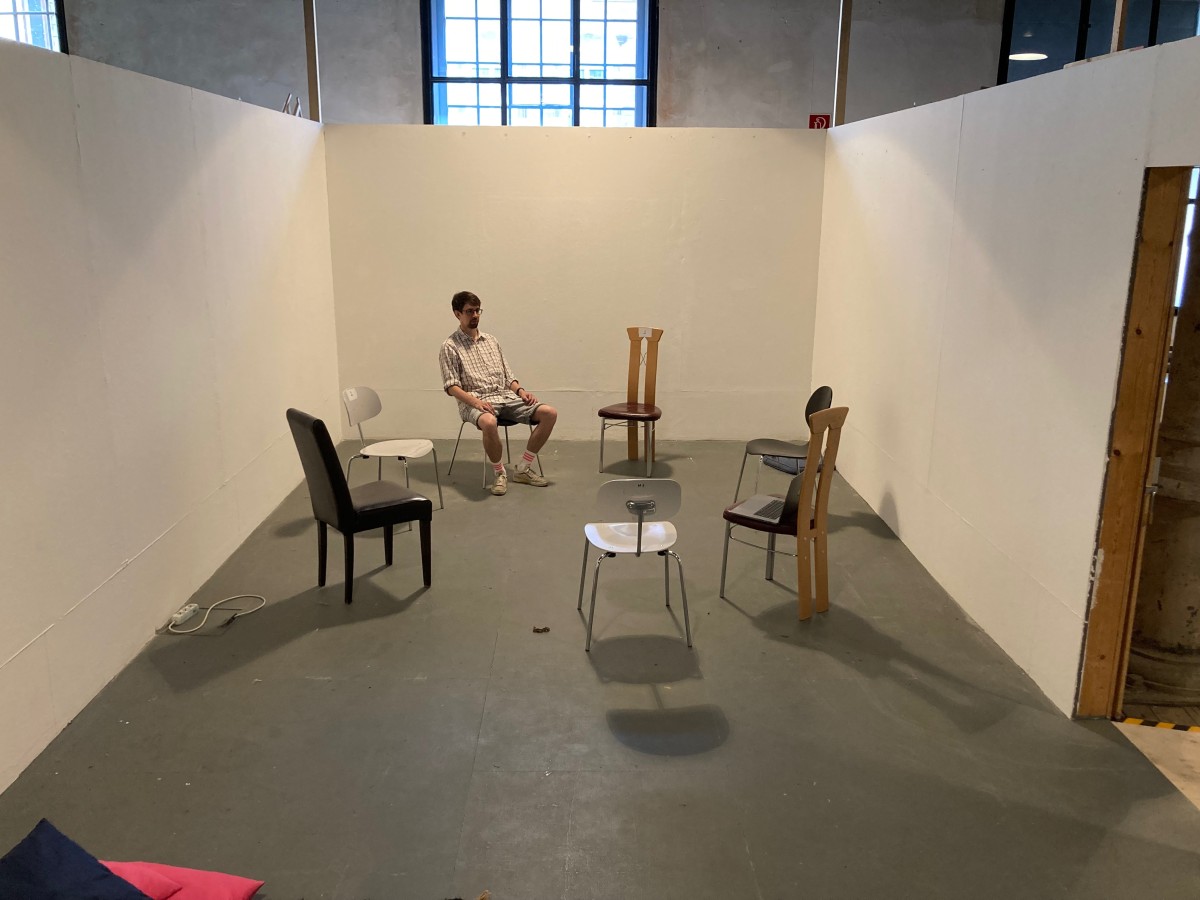
Future phases will focus on refining the conversation architecture, implementing the remaining technical systems, and testing larger-scale physical installations involving multiple AI agents and human participants. At the same time, the project’s growing network of collaborators and institutional contacts offers strong potential for future partnerships, residencies, and presentations.
For both collaborators, the project represents more than a single artwork. It has become a shared research space where theatre, AI systems, psychology, and critical digital culture can intersect in ways neither discipline could achieve independently.
This Case Study was created under Creative FLIP, an EU co-funded project aimed at further increasing the long-term resilience of the CCSI in key areas such as Finance, Learning, Working Conditions, Innovation & Intellectual Property Rights.
Key Takeaways