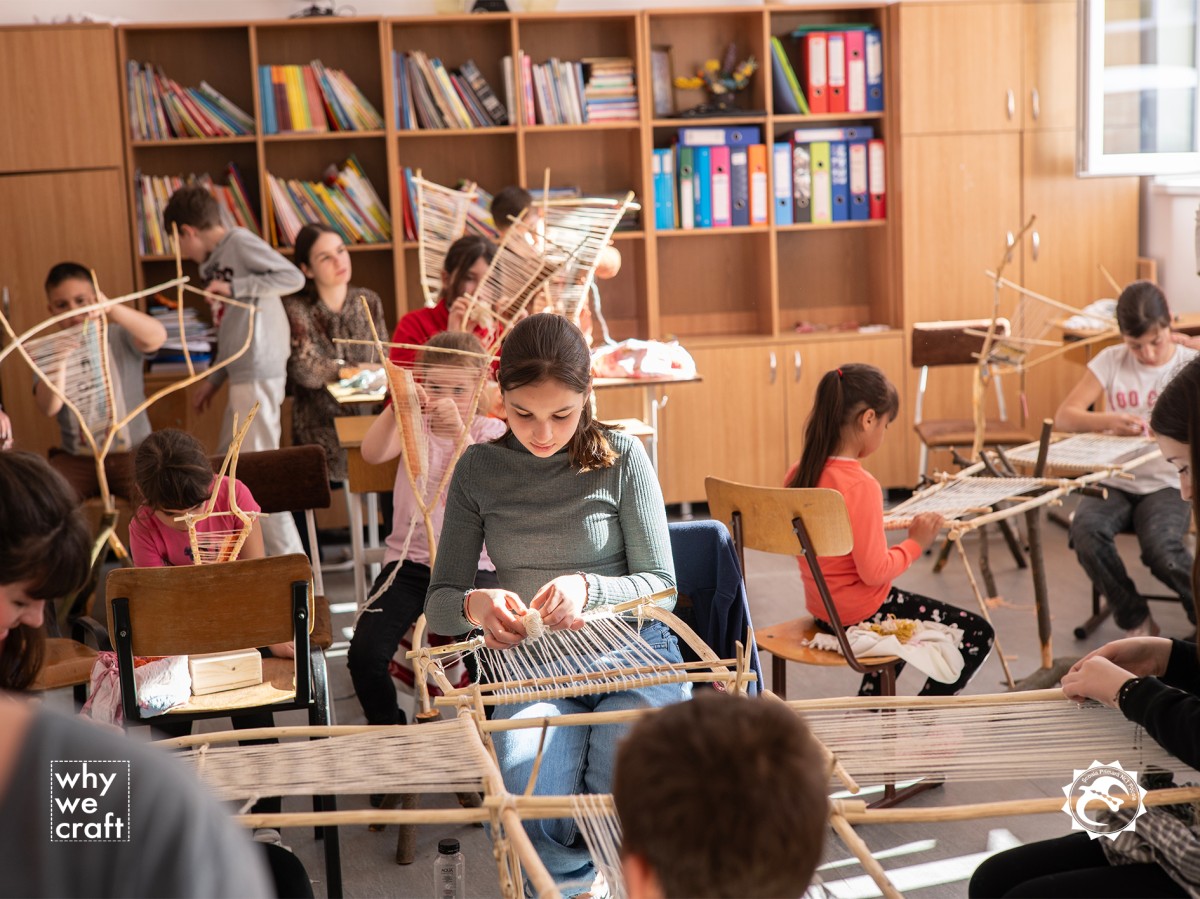


The Learning Lab WhyWeCraft®: Cultural Sustainability Beehive is an immersive educational programme in Pocola, Romania, empowering children to become cultural sustainability weavers. Students explored their biocultural heritage through creative practices, storytelling, and community engagement.
By Goethe-Institut BrusselsRural Village of Pocola: In a rural village in Romania’s mountains, the Learning Lab WhyWeCraft: Cultural Sustainability Beehive came to life, aiming to nurture a generation of young custodians of cultural and ecological knowledge. Here, students aged 7 to 11 from the Școala Primară nr.1 Pocola became weavers, not just of yarn, but of stories, identity, and change.
Rooted in local cultural practices, the WhyWeCraft: Cultural Sustainability Beehive project set out to nurture a new generation of young custodians of ancestral and ecological knowledge. Here, students from Școala Primară nr.1 Pocola became weavers—not just of yarn, but of inherited skills, shared stories, and renewed identity. The participants got to learn through practice how tradition can inform creativity and change, exceeding expectations in both reach and impact.
Each child brought their rhythm, their own story. Some were shy at first, unsure of their hands or their voice. But as the days passed, confidence bloomed. They began to see themselves not just as students but as artists, storytellers, and custodians. They were weaving not just wool but a new narrative for their community—one rooted in care, creativity, and connection.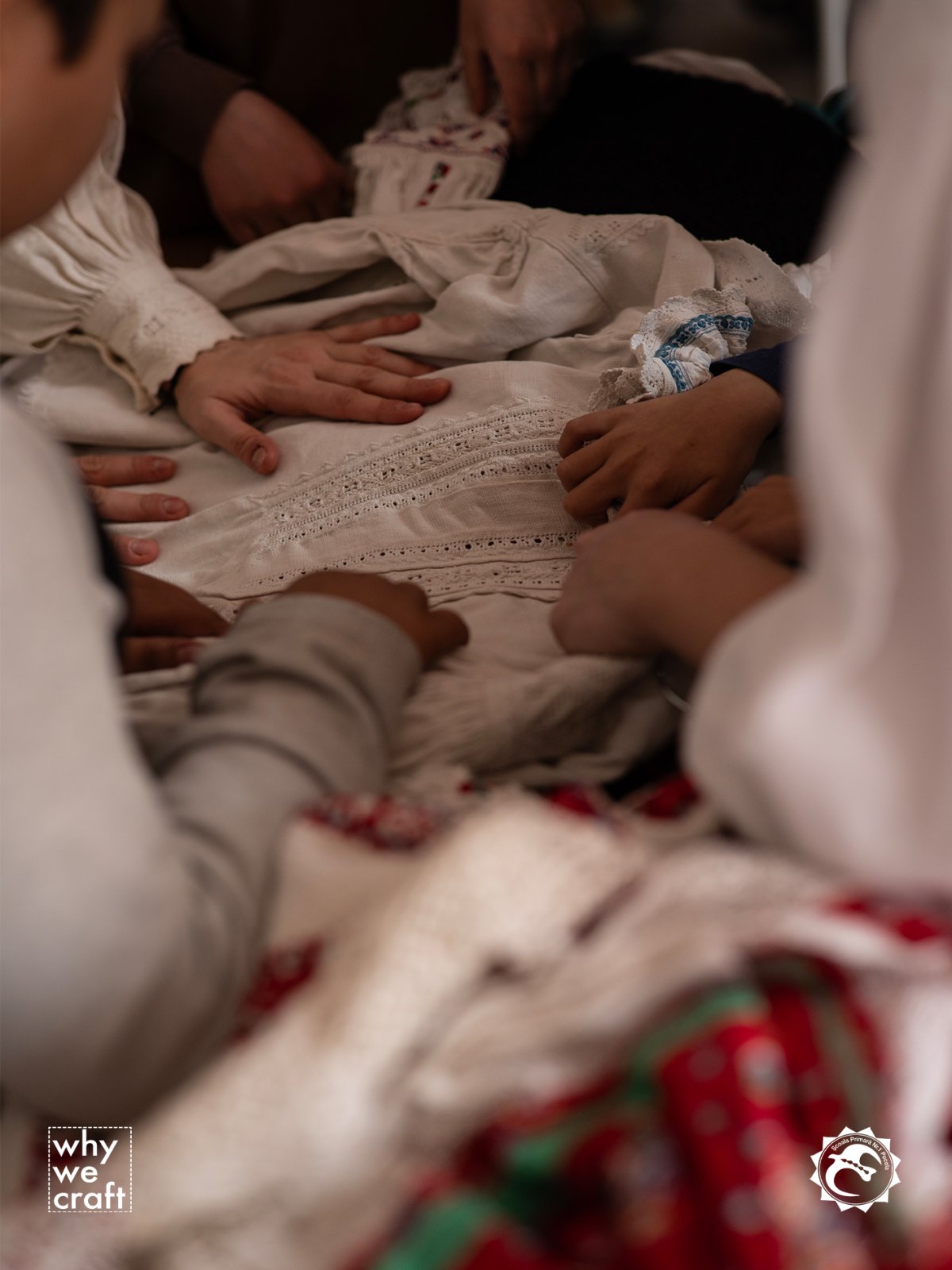
The outcomes were tangible and beautiful. A new visual identity for Școala Primară nr.1 Pocola was created, including a logo designed in collaboration with the students. This sparked the broader concept of collective mark logos—symbols rooted in biocultural heritage that reflect the identity and values of a community. A library of tinctorial plants and naturally dyed wool became a living archive of local knowledge. Frugal looms made from tree branches reminded everyone that innovation does not require expensive tools—just imagination and intention. A wooden triptych exhibition panel proudly displayed the fruits of their labour, while co-created stickers captured the joy and humour of the journey.
The success of the Learning Lab was made possible through strong partnerships and a shared vision with local partners. The alignment with the local school was organic and deeply collaborative. Educators and the school director supported the initiative and became active facilitators, embracing the programme’s methodology and values. External partners, such as Nalba Studio and Format Film, brought fresh perspectives and helped document and amplify the experience. Their presence as respectful guests in the community enriched the process and deepened the impact.
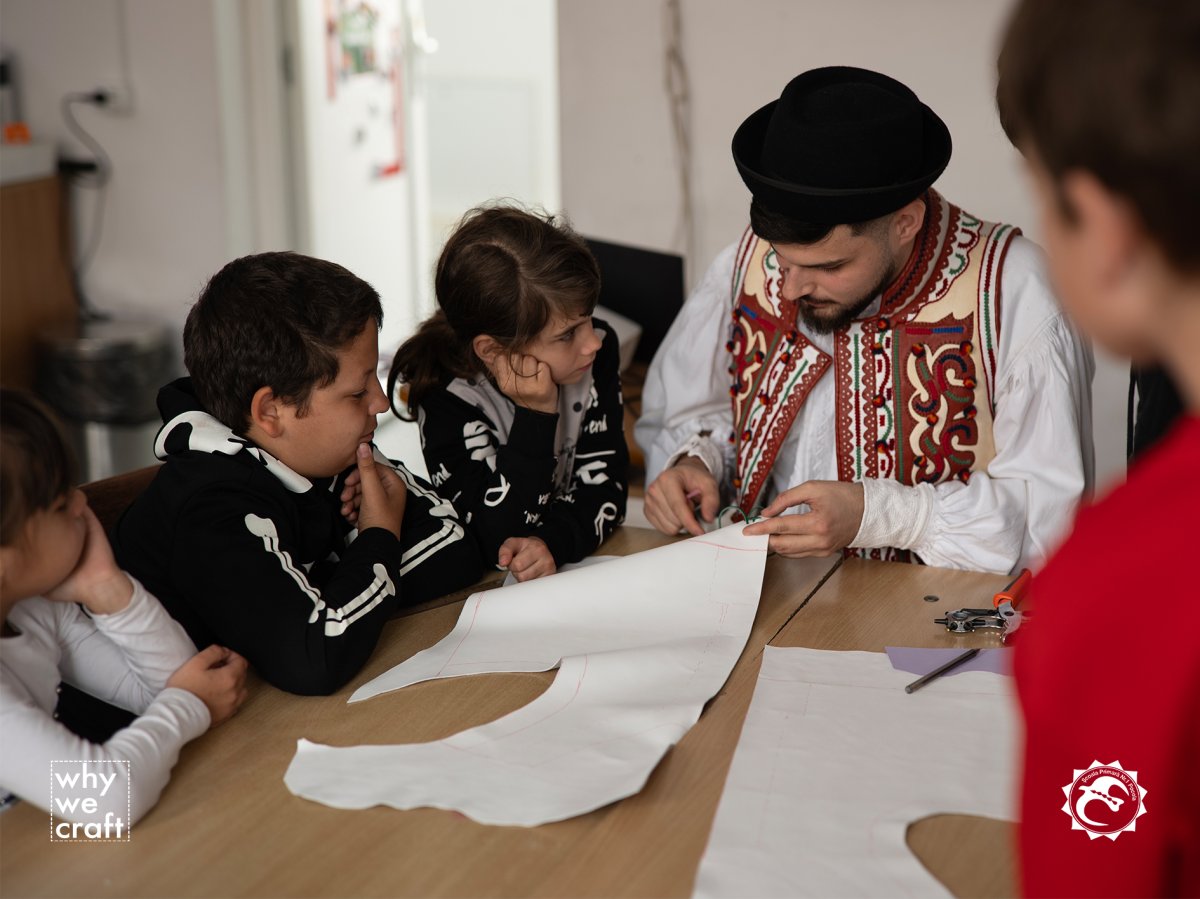
The school director, Felicia Malița, saw it in the children’s eyes. “We observed the powerful impact on their creativity,” she said. “We’re already planning next year’s activities—storytelling, weaving labs, and traditional textile symbols. This project brought us closer as a community. The parents got involved. The mayor got involved. And the children keep asking for the WhyWeCraft® team to come back.” One mother, Diana Popa, shared her astonishment: “My husband and I could not believe our boy is weaving.”
For Monica Boța Moisin, co-founder of WhyWeCraft®, the Learning Lab did not just teach skills—it reminded everyone that cultural sustainability is not a distant policy goal. It is something that lives in the hands of children, in the stories of elders, and in the symbols woven into every thread of a traditional textile. It is something that must be nurtured, protected, and passed on—not in isolation, but in community.
And that is the heart of the Learning Lab implemented by WhyWeCraft®. It is about seeing our cultural and natural heritage not as static artefacts but as kin—living, breathing relatives who guide us, challenge us, and heal us.
As Lavinia Ghimbășan of Nalba Studio and facilitator of the Learning Lab put it, “Cultural sustainability was born in rural communities.” And through the WhyWeCraft: Cultural Sustainability Beehive programme, it is being reborn — one story and one thread at a time.
Creative FLIP in cooperation with Asociația WhyWeCraft®
Image: Copyright Asociația WhyWeCraft® 2025. Photo and video credits: Tudor Cioroiu
This Case Study was created under Creative FLIP, an EU co-funded project aimed at further increasing the long-term resilience of the CCSI in key areas such as Finance, Finance, Learning, Working Conditions, Innovation & Intellectual Property Rights.
Key Takeaways

1. Asociația WhyWeCraft® is an initiative that discovers a holistic approach to reimagine fashion. They believe that textile craftsmanship is a tool for self-reliance, mindfulness and sociocultural well-being and advocate for the rights of craft custodians.
2. Școala Primară nr.1 Pocola, is a small primary school for students aged 7 to 11 years old in rural Romania, Pocola commune, Țara Beiușului. Led with vision and dedication by educator Felicia Malița, the school strives to become a youth education pioneer in Țara Beiușului by offering their students extra-curricular holistic and multidisciplinary immersive education rooted in valuing the local cultural knowledge and biodiversity.