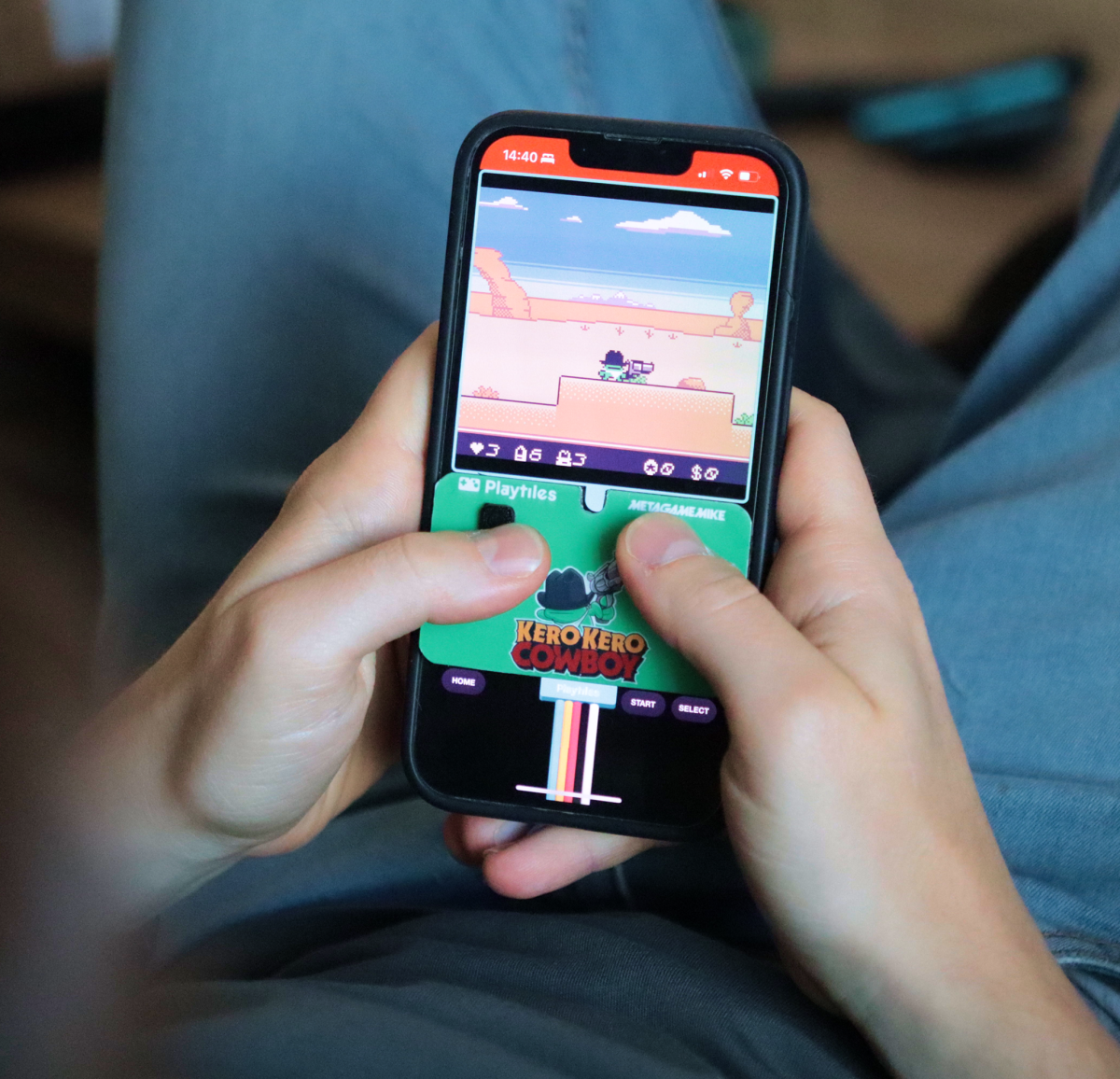



Playtiles by INNO Studio began as a simple spark in a small French workshop and grew into a protected, international-ready gaming platform. By securing patents, designs and trademarks before unveiling their invention, the founders built a solid foundation for scale, licensing and global partnerships. Their journey shows how early Intellectual Property (IP) strategy can turn a clever idea into a credible, thriving ecosystem.
By Intellectual Property Institute Luxembourg (IPIL)When Wesley Deglise and David Pinneau first met in 2022, they bonded over a shared passion for product design, video games, and technology, and a common frustration with modern gaming: endless subscriptions, bloated systems, and digital noise everywhere. They were dreaming the days when gaming was simple, clever, physical. That dream became the birth of what would one day turn into Playtiles.
But the path was not linear. They were faced with the many challenges related with being a self-funded SME on their way to building their new hybrid mobile gaming ecosystem, that combines a physical device, a software layer and their brand identity. This is their story.
In their small workshop in France, they initially had a different ambition: a low-power, open-source handheld console known only in their notebooks as “Project Nomad”. The table was covered in breadboards, microcontrollers and half-working screens. They wanted something playful and tactile, a platform that could ignite a homebrew community rather than become “just another emulator box”. But despite months of work, the project never clicked. The magic hook was missing. But it was soon to come.
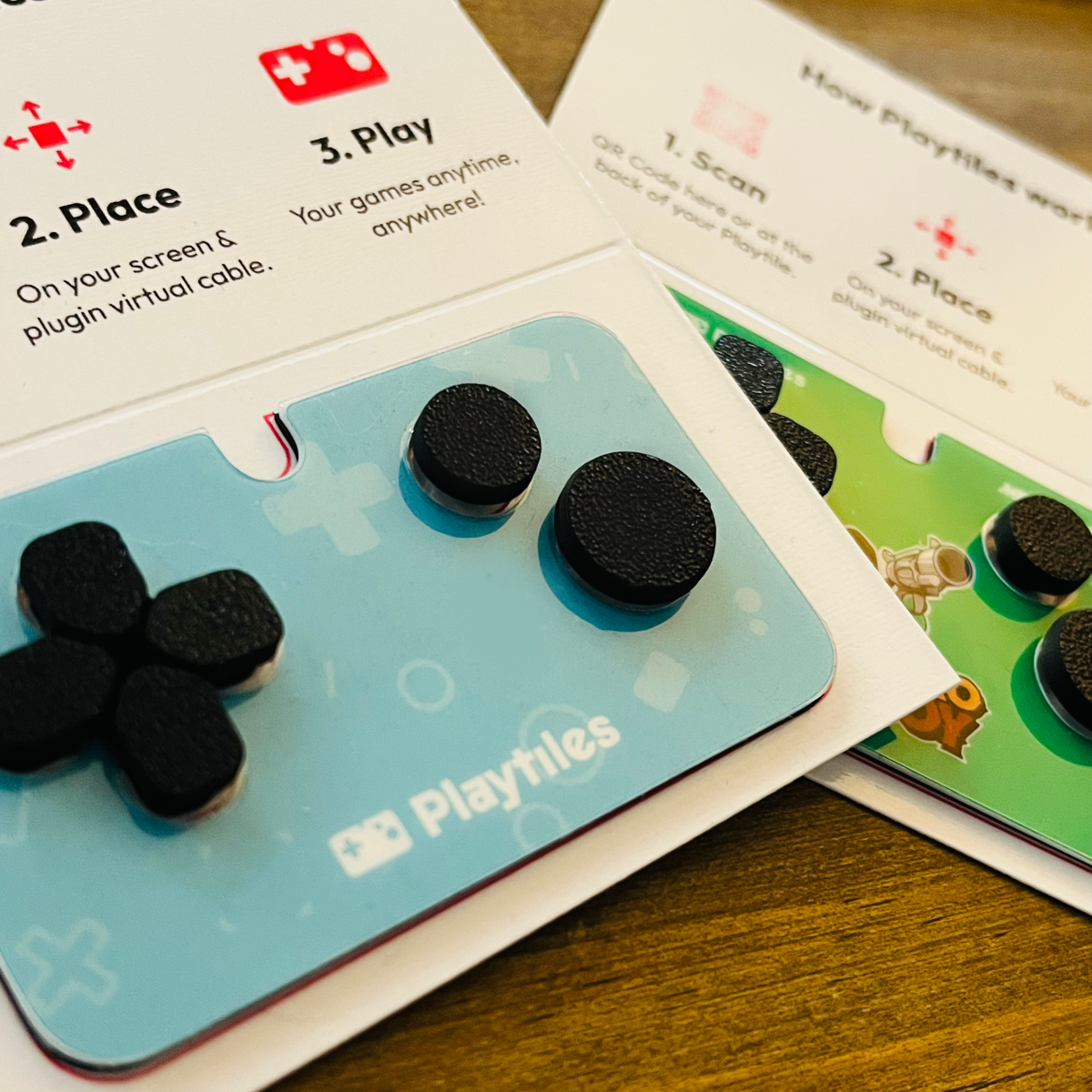
The breakthrough arrived from an entirely unexpected place. At the end of 2024, the team wanted to create a fun, interactive New Year greeting for clients: a tiny game accessed through a QR code printed on trading cards. When they held one of these prototypes in their hands, a thought struck them: What if the card itself was the controller?
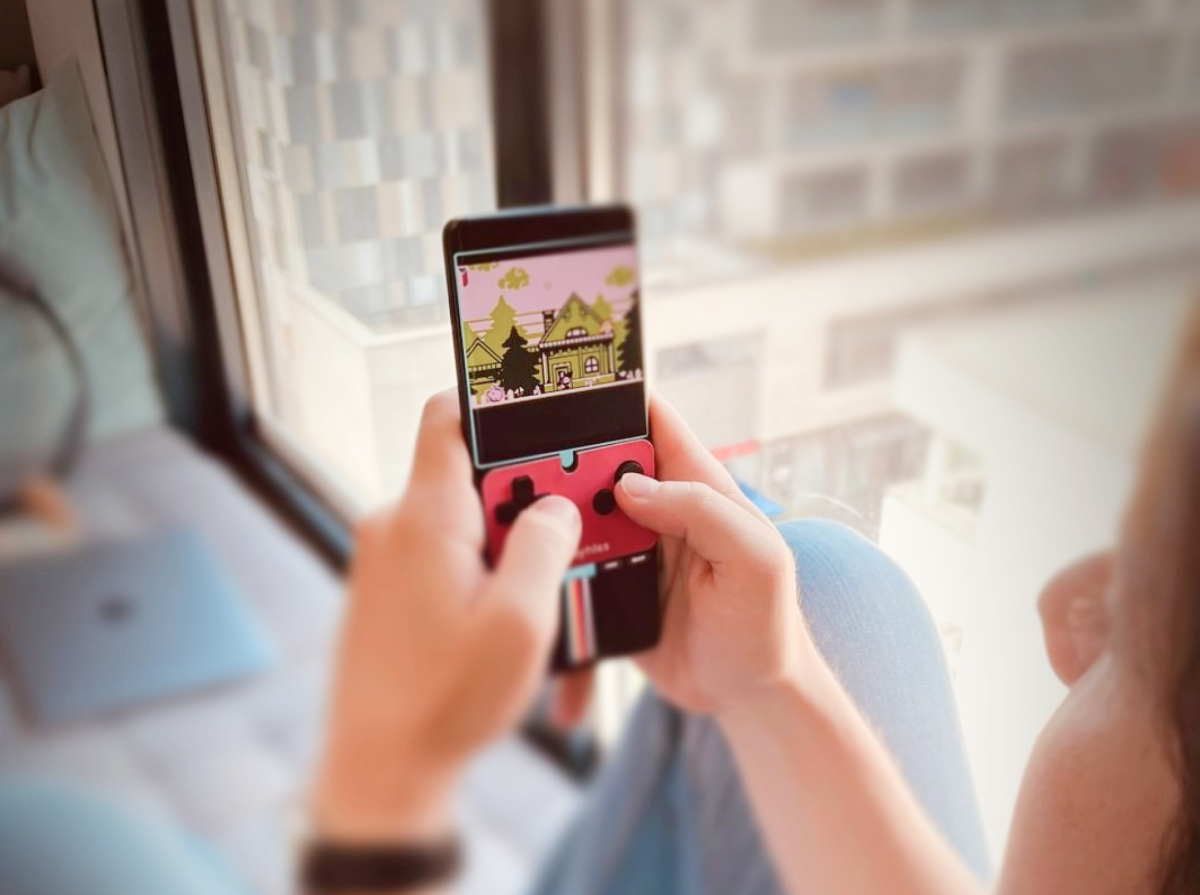
That moment changed everything. “It was like two separate puzzle pieces suddenly snapping together”, they recall. Their old dream aligned perfectly with this physical interface experiment. Within days, the team was cutting, gluing, and testing the very first Playtiles prototypes; barely more advanced than a sticky note with non-pressable buttons. But when trusted friends tried it, their reaction was immediate. “You just stick this card on your mobile screen… and it controls the game? This is so innovative!”. It was the moment Wesley and David’s eyes lit up. “OK, we definitely have to protect this!”. But firstly, they needed to make the product perfect.
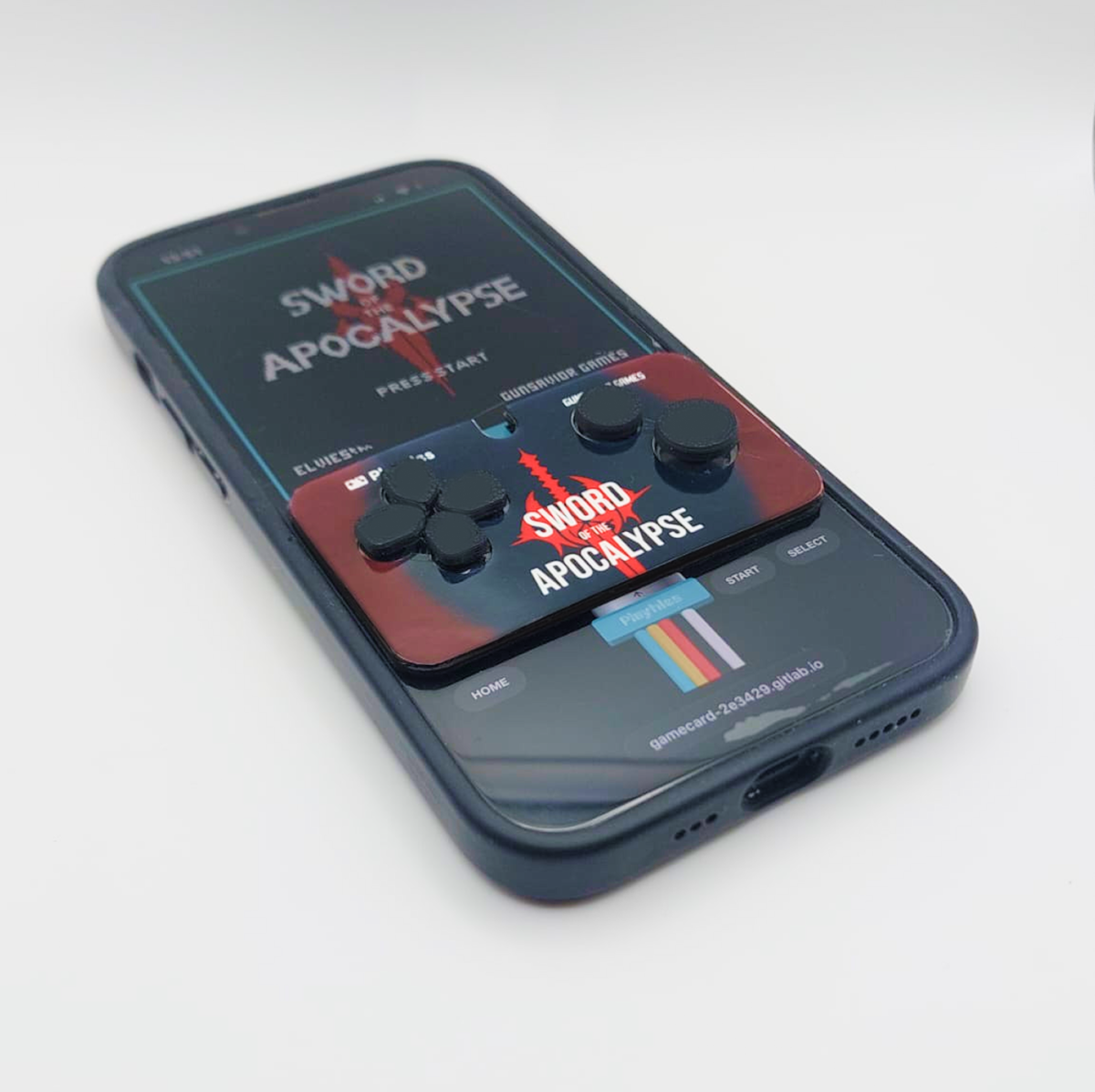
That encouragement pushed the team into stealth mode. For months, they worked in secret, refining everything from the feel of the buttons to the internal logic of their custom webapp, the little engine that would allow the physical card to talk to the virtual console on the phone. They imagined a joyful, minimalist user experience inspired by classic handheld gaming: something immediate, something you could explain in a sentence.
By mid-2025, when the pre-orders went live, response was first cautious, then enthusiastic. But Playtiles was never going to survive on hardware alone. Since the project’s inception, they had always set out to build a complete ecosystem: a creative platform bringing together players and developers around a shared console-like environment, with its own features, rules, and identity. That’s when Wesley and David immersed themselves in the GB Studio world, a grassroots scene of indie developers making retro-style games with remarkable creativity. “It felt like coming home”, they explain. These developers became the heart of Playtiles Season 1, helping transform the device into a real platform.
Protecting the Spark: Why Early IP Was Non-Negotiable
From the moment those first testers reacted with astonishment, Wesley and David knew they were holding something both original and fragile. Before revealing anything publicly, they built an IP shield around the project. “IP wasn’t about locking things down” David says, and Wesley completes him: “It was about giving the Playtiles ecosystem the space, legitimacy and stability it needed to thrive”.
They secured many IP elements of the invention: trademarks, designs, and first filed a patent application in France deliberately before any public disclosure. Their past experience with IP had taught them a simple truth: once something innovative becomes visible, imitation follows quickly. Rather than see that as a threat, they treated IP as the foundation of their entire platform strategy.
But for a small, self-funded company, there was a challenge. Every euro mattered; every decision had consequences (especially financially!). To overcome this, they studied their timelines, mapped the pace of their development, and aligned the filings step by step. They also turned to support instruments: the EU IP Office’s SME Fund Programme and the French IP Office’s national IP funding programme (INPI Pass PI). For the two co-founders, these were not minor incentives, they were game changers. The grants helped reduce filing costs, while the guidance from the national IP offices helped structure their protection roadmap coherently.
They also worked side by side with an IP firm specialised in the gaming industry. Choosing these advisors was crucial: “They understood both our constraints and our ambitions”, Wesley notes while David explains it further, “They helped us in identifying which elements should be patented, which should fall under registered designs, what belongs to trademarks, etc.”. These questions, then, defined the core of their strategy.
IP as a Bridge to Global Expansion
As soon as Playtiles went public, international interest followed. Developers, players, retailers and even some large companies began reaching out. That made the value of IP instantly visible: it shifted how meetings started and how seriously Playtiles was taken.
“A strong international IP portfolio makes licensing discussions far more straightforward”, the two co-founders explain. They became aware that they were not just showcasing a clever gaming card; they were presenting a protected, structured platform with long-term viability. For distributors and partners abroad, that “IP protected product” emphasis signalled seriousness. It reassured them that Playtiles is not just another innovation: it is a system designed to last.
When asked about the essentials of their IP strategy, Wesley and David describe that on three pillars:
- Protect the core invention: the hybrid physical-digital interaction enabled by the card by a patent.
- Protect the identity: the look, feel, and brand of Playtiles as a recognisable ecosystem by a trademark and design.
- License with confidence: enabling collaborations, co-branded editions, regional distribution, and content partnerships with clear ownership and usage boundaries.
For them, enforcement is part of the plan, but not the goal. When it comes to potential infringements, they prefer a collaborative approach. “Our priority is always to collaborate rather than confront”, they say. But the existence of a solid IP portfolio gives them the option to act if needed, and often, that is deterrent enough to maintain a fair playing field for all creators involved.
Building a Case for Early IP: Lessons for Innovators
For Wesley and David, the message to other entrepreneurs is clear. “IP is not a cost, it’s leverage” they explain. It transforms a concept into an asset that can be licensed, scaled and taken seriously by partners. It opens doors: to investors, to distributors, even to media visibility. In their view, Europe provides a fertile environment for young innovators with grants, guidance, and frameworks designed to help even very small teams secure their creations.
Their advice is simple; if you truly believe in what you’re building, protect it early. Not to close the door, but to open many more.
Images - Courtesy of Playtiles.
This Case Study was created under Creative FLIP, an EU co-funded project aimed at further increasing the long-term resilience of the CCSI in key areas such as Finance, Finance, Learning, Working Conditions, Innovation & Intellectual Property Rights.
Key Takeaways

David Pinneau and Wesley Deglise, Co-founders of INNO Studio S.A.S.
Wesley Deglise, co-founder of INNO Studio, the French company behind Playtiles, is focusing on vision and product, is a serial entrepreneur (over 25 years) with deep expertise in UX, product design, and software innovation. He holds a US patent and has been involved in multiple patent filings, steering the product development for Playtiles from concept to execution.
David Pinneau, co-founder, has been an entrepreneur for over eight years in CEO roles and operational management. At INNO Studio, the French company behind Playtiles, he drives the business strategy, the logistics and is dedicated to delivering meaningful, playful experiences that bridge the physical and digital worlds.
Together, they form a strong and complementary duo, combining visionary product architecture with operational execution under a shared dedication to their mission.