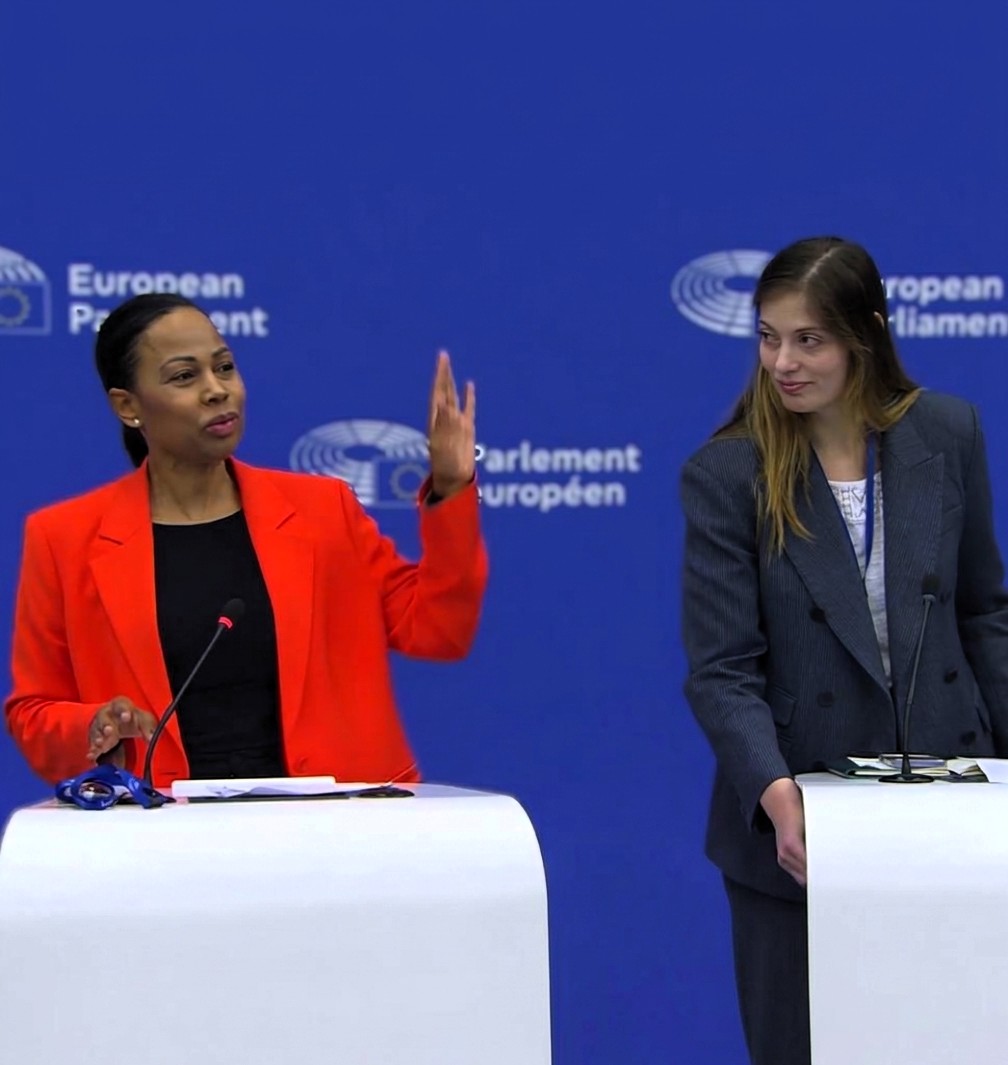
The two MEPs who led Parliament's position on AgoraEU, the EU's planned funding programme for culture, journalism and civil society, warned in Strasbourg this week that its reforms are at risk from proposed budget cuts. "If the budget isn't sufficient, the content of this report cannot be fully implemented," said Emma Rafowicz, the French Socialist who led the Culture and Education Committee. Her co-rapporteur, the Swedish Green Alice Kuhnke, who led for the Civil Liberties Committee, called the proposed cuts "devastating".
The briefing followed the announcement of the mandate at Monday's opening of the plenary session. On 25 November, the European Parliament endorsed the negotiating mandate for AgoraEU 2028–2034 by 448 votes to 206, with 10 abstentions. That means the Culture and Civil Liberties committees’ position now formally enters talks with EU governments, rather than being reopened or amended by the full chamber. Parliament's committees want €10.72bn (€9.50bn in 2025 prices). Ms Rafowicz said Parliament hoped for a budget "close to 10 billion". If the total were "around 5 billion", she said, the sums for individual sectors would fall. She described that figure as the Council's suggestion. The nearest published number comes from the Irish presidency's 10 October negotiating box, which puts AgoraEU at €5.32bn in 2025 prices, or €6.01bn in current prices. The Commission proposed €7.61bn and €8.58bn, so the box implies a 30 per cent cut, and Parliament's figure would be about 78 per cent higher. The box is the presidency's text. It binds no delegation, and its AgoraEU figure is in square brackets, meaning it is not agreed.
The European Council president, António Costa, unveiled a revised box on 21 November that cuts the overall seven-year budget by €204bn in current prices against the Commission's proposal, a further €40bn below the Irish version. Leaders meet to discuss it on Thursday and Friday. Ms Rafowicz called the box announcements "particularly disappointing" and said, "We need a budget worthy of the name."
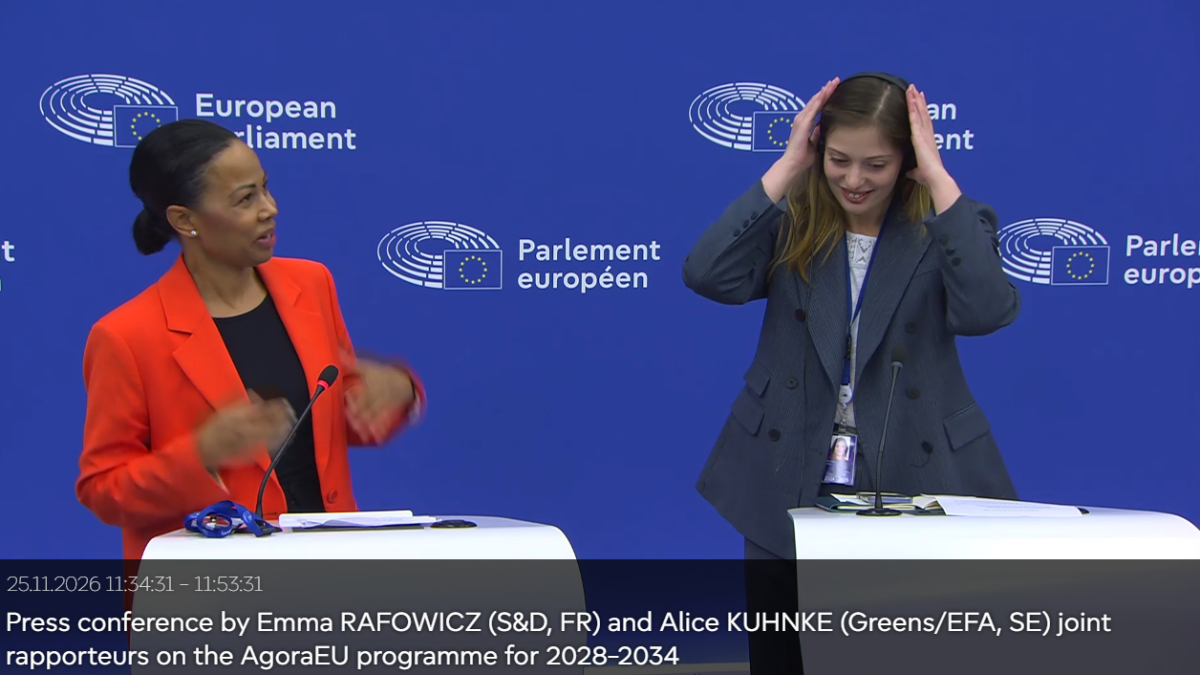
Ms Kuhnke said the Commission's proposal was "a good starting point", but "the budget needs to be increased substantially". She said that if the council succeeded in cutting it, "that would be devastating, and this would be our main battle during the trilogues." Sweden's government is among those that find Costa's plan too large. Its EU affairs minister, Jessica Rosencrantz, said on Saturday that the budget remained too big. Ms Kuhnke acknowledged her country's reputation for thrift and said that if cuts come, Europe should not "shoot ourselves in the foot" by cutting what strengthens the Union.
For MEDIA, the film and audiovisual strand that the Commission says is marking its 35th anniversary, Ms Rafowicz's message was continuity: "We're not changing a winning team." Parliament's text would, however, tighten one rule. It would reserve production support exclusively for European independent companies, where the Council's text says "primarily". It would also extend support to screenwriters and directors, which Ms Rafowicz described as covering "the whole value chain".
Ms Rafowicz presented the report as a response to "predation by these AI models" and the "pillaging of works in the press". She said it does not want "public funding for programs conceived thanks to generative AI" and asks instead for a "substantial human contribution or input". The committees' text is narrower than that. Culture and MEDIA funding would back works showing a "substantial and identifiable creative human contribution". Auxiliary AI use would still be allowed if it is transparent and complies with EU law.
The committees reject the Commission's single media pillar and would create a separate news strand with its own budget. Ms Kuhnke said: "We need to strengthen the support for independent journalists and independent media." Her reason was that "we need media that can scrutinise the people in power, such as us and others." She added that journalists are "under pressure" and "being threatened". Ms Rafowicz argued that disinformation must be tackled "at the local level close to the ground", hence "new aid for everyday regional press".
"Our civil society is vulnerable today," Ms Kuhnke said, calling AgoraEU "the democracy shield of Europe". She wants a crisis fund that can stop organisations "imploding because of a sudden rise in expenses". The draft adds rapid support for groups under threat but sets no minimum amount for it.
The Daphne programme would get its own 11 per cent. It already sat inside CERV+ in the Commission's version, and what was missing there was a ring-fenced budget. Ms Kuhnke called Daphne "a clear success" and welcomed the "wide majority" behind the change, adding, "We will fight for this in the trilogues."
Ms Rafowicz called the report "just a first step", with the trilogues still to come. She said the budget talks would show "whether the deeds are in line with the words" of leaders.
M.T.