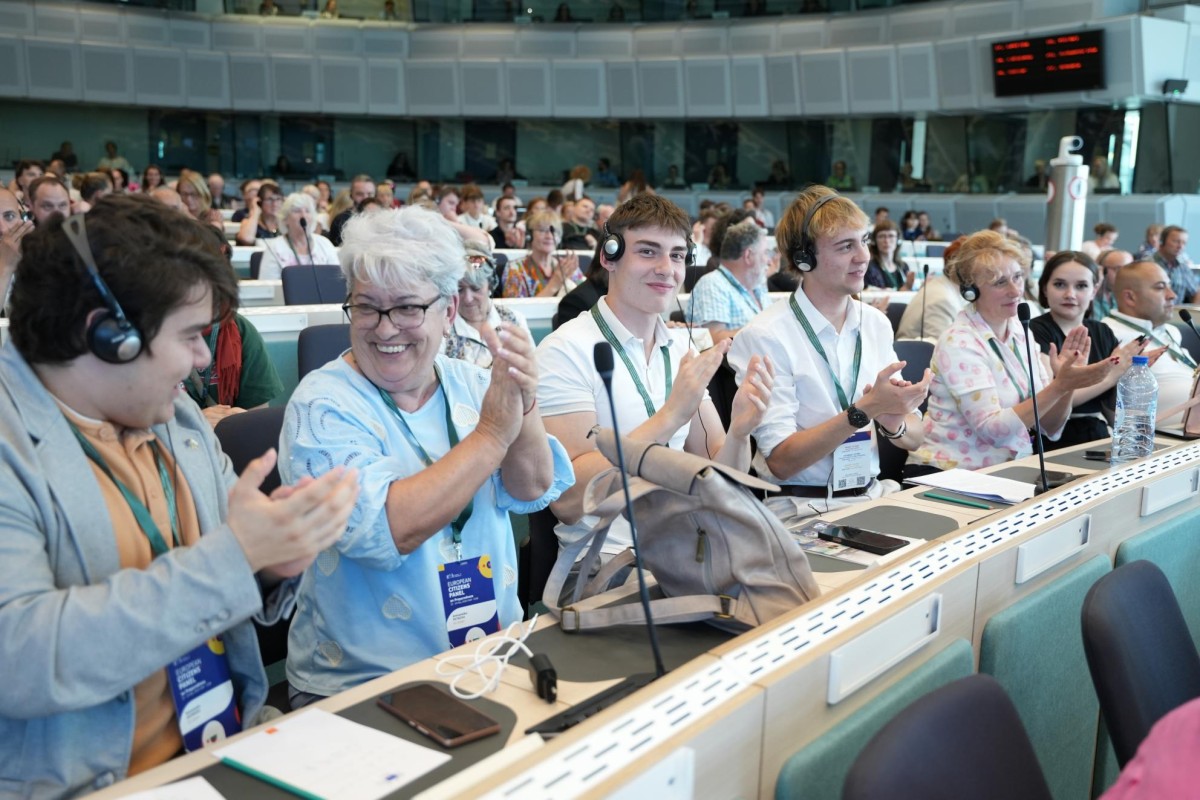
Around 150 randomly selected citizens from all 27 EU member states have told the European Commission that libraries, museums, cultural centres and local festivals should become places where democracy is practised.
The European Citizens' Panel on Democratic Resilience handed its 23 recommendations to Henna Virkkunen, the Commission's executive vice-president, after its third and final session ended in Brussels on 22 November. The panel met over three weekends: Brussels in September, online in October and Brussels again in November. The Commission says the proposals will inform its work on democratic resilience, building on the European Democracy Shield.
In the final text, culture is a method:
Safe spaces for news. Recommendation 6 wants "islands of reflection", mostly existing physical places such as libraries, community centres, cafés, schools and cultural centres, for moderated discussion of current affairs. The panel lists its own risks: young people may stay away, small towns may lack organisers, and groups may attract only the like-minded.
Democracy learned through the arts. Recommendation 11 asks the EU to fund free community spaces for the long term rather than as one-off projects. It would put democratic workshops into museums, libraries, cultural centres and public festivals, and teach civic skills through games, simulations and Theatre of the Oppressed. It also proposes Eurocafés in cities and Eurobuses in rural regions.
Music and art across borders. Recommendation 10 asks EU institutions to use music and the arts to connect citizens in different countries.
Culture as a meeting place. Recommendation 23 proposes familiar local venues, including cultural and community centres and libraries, for regular dialogue between citizens and politicians.
Literacy at local events. Recommendations 18 and 19 put media-literacy workshops and fact-checking demonstrations in libraries and at local festivals.
Bridge-building. Recommendation 20 calls for regular intercultural and intergenerational gatherings and festivals. The panel recorded a split on whether community activity alone is enough or whether attitudes must change too. "Intercultural" here, like "cultural barriers" in Recommendation 17, means differences of background rather than the arts.
"These recommendations reinforce our commitment to strengthen democratic trust and create safer and more trustworthy online spaces," said Henna Virkkunen, Executive Vice-President for Tech Sovereignty, Security and Democracy, in a written statement. By deepening citizens’ participation and civic engagement, we will shape policies that reflect everyday Europe. Democracy must be built on transparent and inclusive solutions that empower everyone.
"In many ways, the Panel is a small reflection of Europe itself: different languages, different experiences and different points of view, coming together to listen to one another and find common ground," said Michael McGrath, Commissioner for Democracy, Justice, the Rule of Law and Consumer Protection.
According to the published timetable, there will be follow-up actions from November and feedback to citizens in 2027.
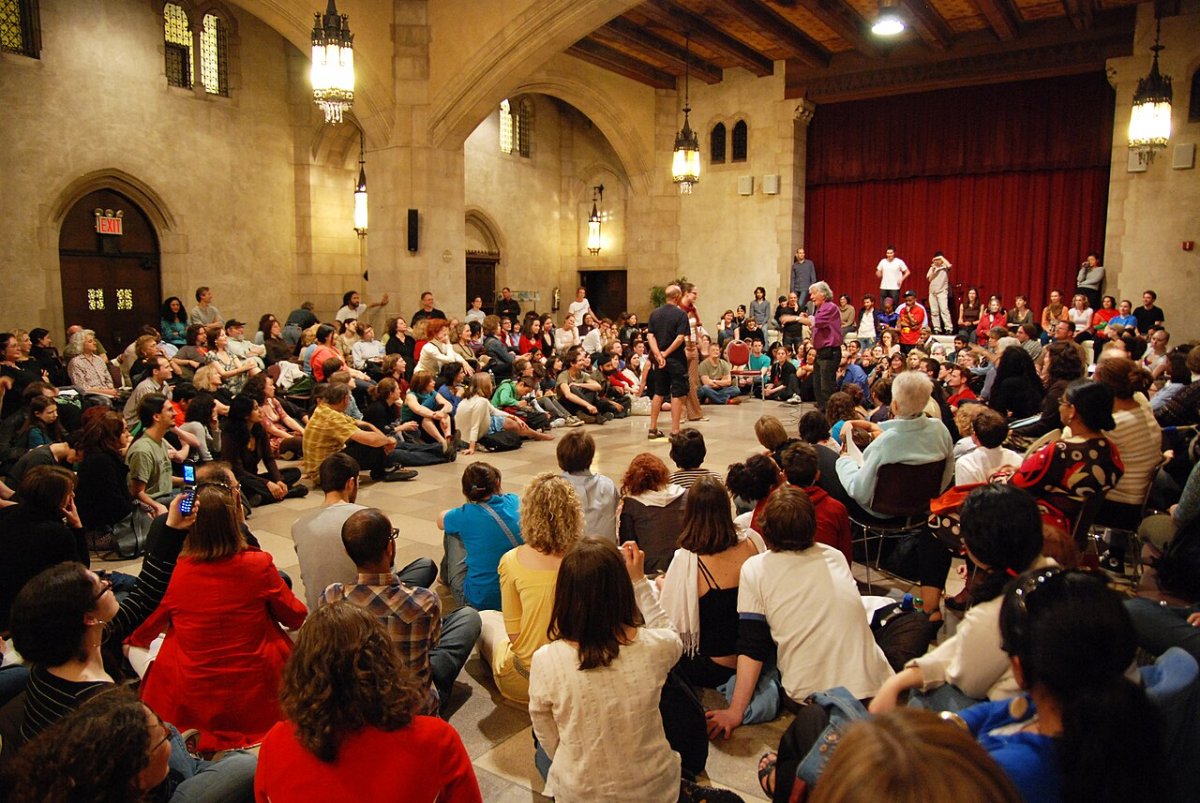 Theatre of the Oppressed was developed from the late 1960s by the Brazilian dramatist Augusto Boal, who set it out in a 1974 book. As a Rio de Janeiro city councillor, a post he held until 1996, he developed "legislative theatre", which invites audiences to propose measures that can become law.
The panel's instincts echo official EU thinking on culture too. On 20 November, the day the panel convened for its final session, the Council approved the 2027–2030 Work Plan for Culture. The resolution says cultural institutions, including libraries, museums, theatres, cinemas and heritage sites, promote democratic participation and civic engagement.
The panel also builds on a 2023 Commission Recommendation on citizen participation. The Recommendation already names cultural activities and cultural organisations as ways to strengthen civic engagement, citing a 2023 Commission study. That study found that taking part in cultural activities has a positive effect on civic engagement and social cohesion, independent of socio-economic background or education.