
In his first interview with Creatives Unite, Commissioner Glenn Micallef said the 'Europe for Culture' declaration is a 'strong signal of the importance of culture at the European level'. He defended the merging of the Creative Europe programme into a new Agora EU programme and said that the Commission has proposed EUR 1.8 billion, doubling the current budget for culture. Read on...
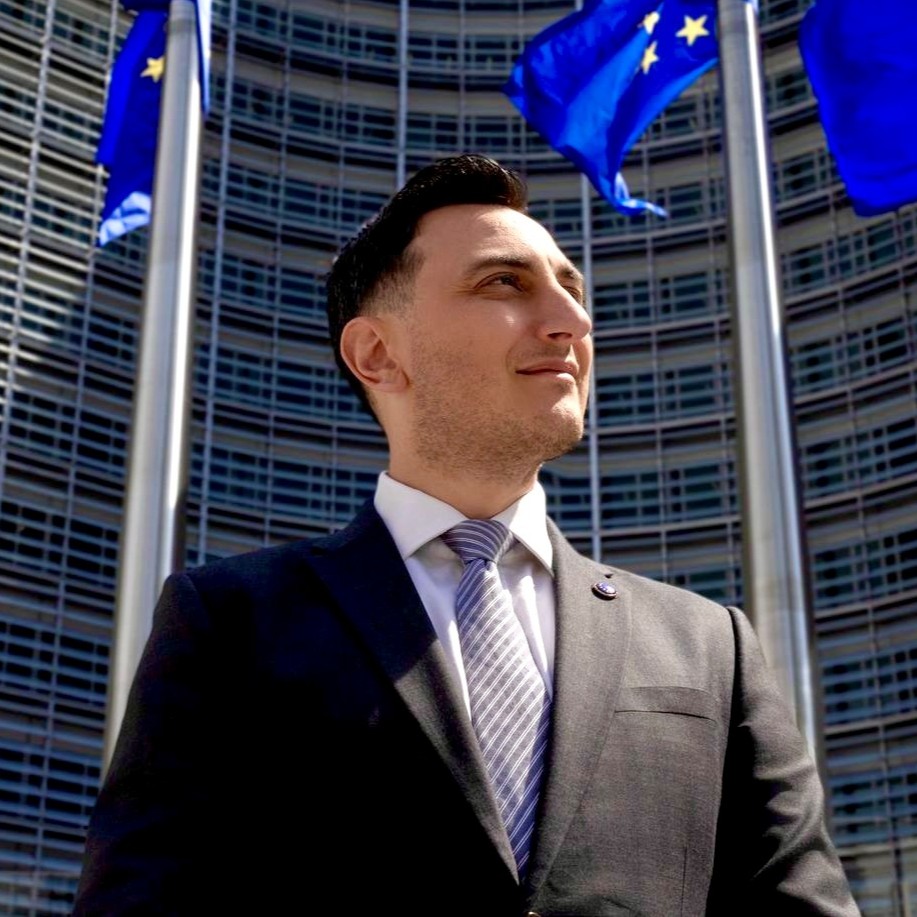
By Matthaios TsimitakisSpeaking at the closing conference of the Creative FLIP project in Brussels on 9 June, Glenn Micallef, Commissioner for Intergenerational Fairness, Youth, Culture and Sport, reaffirmed that the Commission had proposed €1.8 billion for the next Multiannual Financial Framework and the Creative Europe–Culture strand of the Agora EU Programme, which would double the current budget.
In his interview with Creatives Unite, Commissioner Glenn Micallef said that the signing of the Europe for Culture, Culture for Europe declaration by the three EU institutions (the Council, the Commission and the Parliament) last month 'is a historic moment for EU cooperation on culture', as the EU’s position is now crystal clear, and the principles behind it are agreed upon 'at the highest political level'. He also defended the merging of the Creative Europe programme into a new Agora EU programme, suggesting that Agora EU will be 'a place where culture, media and EU values meet' in the truest sense.
As Ireland takes over the rotating presidency of the Council of the EU (running from July to December 2026)—creating positive momentum due to the country's advanced policies on culture—Commissioner Micallef promised to provide 'support, guidance, and progress' on all issues brought to the fore by the creative communities of Europe: fair working conditions in future funding schemes, fair practices regarding AI innovation, and guarantees regarding artistic freedom.
Most importantly, he called on the artistic and creative communities of Europe to bring their ideas, evidence, and experience to the discussion. In his own words: 'That is how we shift the needle together.'
CU. The Culture Compass is the EU's most ambitious cultural strategy in years, and the Joint Declaration has now been formally adopted by all three governing bodies of the EU. What will it actually mean in practice for an independent musician in Riga, a theatre director in Thessaloniki, or a freelance filmmaker in Warsaw?
GM. I am immensely proud that the Joint Declaration “Europe for Culture – Culture for Europe” was signed on the 18th of June by the three Presidents of the European Parliament, the Council of the European Union and the European Commission.
This is a historic moment for EU cooperation on culture. The EU’s position on culture is now crystal-clear, and the principles behind it are now agreed upon at the highest political level. It also means that culture is one of Europe’s strategic priorities. In times of social, technological and geopolitical challenges, it is a strong signal for the importance of culture at the European level.
In practice, for cultural and creative sector professionals, the Culture Compass and the Joint Declaration mean that the EU stands with them – supporting artistic freedom, cultural rights, and fair working conditions. For the first time, the European Parliament, the European Commission and the Council have made this commitment together. Because we believe in culture. And in the artists, cultural workers, and creative professionals who bring it to life.
CU. The Compass sets out to mainstream culture across all EU policies – from climate to the digital transition. But culture is always at risk of becoming decorative in policy documents. What is the enforcement mechanism? How can you make sure that the cultural dimension will not be ignored in practice?
GM. Mainstreaming means making sure Europe’s many cultures, languages, traditions, artists and creative sectors have the space and support to flourish. In practice, that means three very concrete things: support, guidance and progress.
Support, because culture must be present in EU funding programmes. Today, more than 20 EU programmes can support culture, and member states budgeted around 1.8% of the Recovery and Resilience Facility for cultural projects. That means billions of euros.
Guidance, because many of the challenges facing the cultural and creative sectors are complex and fast-moving. Take artificial intelligence, artists’ rights, accessibility or artistic freedom. A common reference point, created together with member states, stakeholders and cultural organisations, can help them navigate these questions.
And progress, because a strategy only matters if it changes practice. The Compass gives us a framework to come back to these issues, track progress, work with Member States and listen to the sector.
CU. At the December 2025 High-Level Roundtable, you expressed commitment to improving artists' pay and social security and support for social conditionality mechanisms on public funding. That last point is radical — it would mean public money could only go to employers who meet minimum standards for creative workers. How are you planning to push that further?
GM. In the Commission proposal for the new AgoraEU programme, actions supported within the Creative Europe-Culture strand will be carried out in a way to contribute to the improvement of working conditions for artists and cultural professionals. Specific details will be described in the work programmes. Another concrete step in this direction is the EU Artists' Charter proposed in the Culture Compass: A flagship commitment to turning the principle of fair working conditions into a practical, enforceable standard across the sector.
CU. Your Intergenerational Fairness (IGF) strategy was adopted in March 2026. Culture is one of the most intergenerational things humans do – it is literally the mechanism by which each generation passes something on to the next. Is culture funded adequately for that role in the new MFF?
GM. Culture is indeed one of the strongest bridges between generations.
It is a way to pass on knowledge, values, memory and identity. And also forms of solidarity, participation and hope.
That is why culture matters for intergenerational fairness. It brings people together across age groups through storytelling, heritage and community life. So culture is about belonging, social mobility, civic participation and long-term resilience.
This is also why funding matters. Under the next MFF, the Commission has proposed AgoraEU, bringing together the current Creative Europe and CERV programmes under one umbrella, with a stronger budget. For the Creative Europe–Culture strand, we have proposed EUR 1.8 billion, doubling the current budget.
And the Culture Compass will serve as the strategic anchor for culture in the 2028–2034 MFF.
CU. The new AgoraEU programme merges Creative Europe Culture, Media, and the Citizens, Equality, Rights and Values programme into a single €8.6 billion envelope. The European Parliament has called for €10.7 billion. But for many in the cultural sector, the merger itself is the problem — culture and civil rights risk being traded off against each other in a single budget pot. Do you think the merger is the right structure?
GM. In ancient Greece, the agora was an open public space where people gathered to meet, exchange, create and trade. It was a town square in the truest sense, fostering dialogue, creativity and mutual understanding among all people. This spirit is captured in AgoraEU – a place where culture, media and EU values meet. All of these elements are key to empowering European citizens. And to building stronger, more inclusive and more resilient societies that are appreciative of diversity.
With this new programme, we want to take advantage of connections and synergies between the fields. So that we can act jointly where it adds value. But always respect the autonomy, identity and specific needs of the three areas. That is why each area will keep its own strand and its own indicative budget. But bringing them under one umbrella.
CU. The AI Act's text-and-data-mining provisions allow creators to opt out of having their work used for AI training — but the infrastructure for doing so effectively barely exists. What can the Commission do to make opt-outs practically usable, not just legally available?
GM. Generative AI offers new opportunities and challenges for the creative sectors.
At the European level, we already have a robust regulatory framework in place, which includes several exclusive rights and exceptions. In this context, the two exceptions for text and data mining introduced by the Digital Single Market (DSM) Directive have become especially significant.
The Commission is currently assessing the EU copyright rules and the practical impact of the rules introduced in 2019 and their relevance in today’s digital context. As part of this work, we will closely examine whether and how the DSM facilitates the use of copyright-protected content in the digital environment, improved licensing practices and fostered a fairer copyright marketplace.
In addition, the commission's call for evidence that closed on the 25th June gathered information on possible targeted measures to modernise the EU’s copyright framework. These measures relate to the challenges created by AI. In this context, we have indicated that we are exploring ways to improve licensing and remuneration for creators, while at the same time facilitating access to protected works for AI-related uses.
What is needed is the right framework: one that encourages innovation in AI, based on high-quality data, while also protecting copyright and related rights, which remain essential assets for the EU’s cultural and creative sectors.
CU. If Europe's cultural sector — artists, writers, musicians, filmmakers, and curators — could hold you to one specific, measurable thing by the end of your mandate in 2029, what would you want it to be?
GM. By 2029, I want artists and cultural workers across Europe to feel that things have moved in the right direction. That the Culture Compass and the Joint Declaration made a real difference in their lives.
Of course, this work takes years. It requires dialogue, trust and cooperation with Member States, artists, cultural organisations and the wider sector.
The compass gives us a direction, but it will need the sector to help make it real. Bring your ideas, your evidence and your experience. That is how we shift the needle together.