
Europe calls its cultural workers vital infrastructure. The Creative FLIP final study shows they are also underpaid, underprotected, and absorbing systemic risks that policy should carry. Seven and a half years of evidence distilled into one uncomfortable question: resilient or enduring?
By Matthaios TsimitakisAgata makes knitwear in Vilnius. Her brand, The Knotty Ones, empowers local artisans and has attracted international buyers. To grow, she combined a business angel investment for strategic guidance with an EU-backed loan channelled through a specialised financial intermediary – a juggling act most small fashion businesses never attempt. She is, by any definition, a success story. She is also, by the standards that govern most cultural workers on the continent, lucky. Somewhere in rural Romania, in a mountain village called Pocola, a programme called WhyWeCraft is teaching children to become what it calls "cultural sustainability weavers" — reconnecting them with biocultural heritage that is disappearing as younger generations leave for cities. In Dublin, Cartoon Saloon, the animation studio behind Wolfwalkers and The Breadwinner, has built a global business by treating its intellectual property as a strategic asset from day one, combining artistic vision with careful copyright governance.
These three stories — a Lithuanian knitwear brand, a Romanian village school programme, and an Irish animation studio — appear in the final study published by the Creative FLIP project, a seven-and-a-half-year EU co-funded initiative led by the Goethe-Institut and run by the European Creative Hubs Network. They are offered as examples of resilience in Europe's cultural and creative sectors. Europe has spent the last decade elevating its cultural and creative industries into the architecture of official policy. They are one of 14 designated industrial ecosystems expected to contribute to the EU's green and digital transitions. "For the EU to thrive, it must place culture at the heart of its political vision and its social and economic strategy," the Culture Compass for Europe – a strategic document that positions culture as part of the social and democratic infrastructure of the continent, as central to Europe's future as competitiveness or climate – declares. The Creative FLIP Final Study, the most comprehensive stocktake of Europe's cultural and creative sectors published this year, tells a different story. The gap between rhetoric and reality is not narrowing yet.
The Creative FLIP study identifies a single recurring pathology across every domain it examines — finance, working conditions, intellectual property, cross-sectoral collaboration, and governance. That pathology is fragmentation. It manifests differently depending on where you look. In finance, the KEA/European Investment Fund market analysis confirms that most cultural operators are micro-enterprises or self-employed individuals whose irregular income and intangible assets simply do not map onto standard financial products. The EU has responded with instruments — the Cultural and Creative Sectors Guarantee Facility, extended through InvestEU — but access to these remains heavily dependent on intermediaries who understand cultural risk profiles. Smaller, community-based and peripheral actors remain structurally underserved. Many remain locked into short-term project funding with no capacity to build long-term strategies.
In working conditions, the picture is starker. The European Labour Authority's 2024 study found that non-standard employment and undeclared work are considerably more prevalent in the cultural sector than in the wider economy. Culture Action Europe's Creative Pulse survey — the most extensive recent survey of working conditions across the sector — documents low pay, unpaid work, restricted access to healthcare and pension entitlements, and deteriorating mental health among cultural workers, with the worst effects concentrated among younger workers, migrants and minorities. The 2023 OMC report on the status and working conditions of artists found that low and irregular income, fragmented social protection, significant obstacles to cross-border mobility and limited access to collective bargaining characterise the working lives of a large proportion of people in the sector across Europe. These are structural features, not marginal exceptions.
The Creative FLIP study makes a point that individual workers are absorbing the insecurity that a well-functioning system should be carrying. During the Covid-19 pandemic, emergency support went disproportionately to established organisations, leaving freelancers and the most precarious workers most exposed. Five years on, the structural conditions have not changed. Abstract as these policy debates can sound, they land on real people. An Irish writer who was a Basic Income for the Arts recipient described it simply — "Previously, as my income was variable, it led to periods of depression and poverty. To have a regular income has minimised those times."

Ireland's Basic Income for the Arts pilot — which ran from 2022 to early 2026, paying 2,000 selected artists €325 per week — is the most rigorous experiment in structural support for cultural workers that any European government has conducted. The results were unambiguous. A government-commissioned cost-benefit analysis found the programme produced over €100 million in socio-economic benefits, with every €1 invested returning €1.39 in value to Irish society. Recipients spent significantly more time on their creative practice than the control group; the proportion experiencing enforced deprivation — unable to afford two or more basic necessities — fell from over 56 per cent to around 30 per cent. Ireland has since announced the scheme will continue as a permanent programme. No other European government has followed.
The Creative FLIP study is explicit that this is not primarily an argument about arts funding in the traditional sense but about governance. The working conditions of cultural workers — irregular income, self-employment, atypical contracts, and weak collective bargaining — are not quirks of the creative life. They are structural features that place a disproportionate share of economic and social risk on individual workers, while the sector is simultaneously expected to contribute to every major EU transition agenda. The report puts it plainly: "To celebrate the sector's resilience without acknowledging this is to normalise conditions that need reform."
Intellectual property was already a contested terrain in the cultural sector long before the arrival of generative artificial intelligence. The Copyright in the Digital Single Market Directive, passed by the European Parliament in 2019, was hailed as a milestone—a law that would close the value gap between creators and the digital platforms profiting from their work. On the occasion of its fifth anniversary this June, the European Writers Council (EWC) published a position paper with the headline "Dear Member States, Dear European Commission: Thanks for nothing".
Only 42 per cent of fiction writers in Europe receive any advance payment for their books. Remuneration has declined since 2021 — not increased. Up to 85 per cent of authors receive no financial transparency from the commercial platforms distributing their e-books and audiobooks. There are no functioning mediation bodies for contract disputes in 90 per cent of EU member states. The gap between rhetoric and reality is not narrowing. It may be widening.
The central problem concerns a provision inserted late in the directive's drafting process at the urging of the Dutch delegation, encouraged by a Microsoft-backed alliance: the text and data mining (TDM) exception in Article 4(3), which was intended to allow researchers and institutions to mine data for legitimate purposes. It was never, say the parliamentarians who voted for it, intended to cover the development of commercial generative AI. It has, in practice, become exactly that.
"The flawed overinterpretation of the TDM exception as a freeway ticket to profitable generative AI development has, for the past five years, paved the way for an all-you-can-eat free buffet for non-European tech companies," the EWC wrote. Their monitoring, covering fiction writers and children's book authors across EU and EEA countries, found no functioning all-over opt-out system in the book sector. Where opt-outs exist, they are ignored by crawlers and AI providers. Protected works have been downloaded through piracy sites, including Library Genesis, Anna's Archive and Books3, and circulated on platforms like Hugging Face and GitHub. Cultural heritage institutions have been sharing digitised works with commercial AI developers without author consent, misinterpreting Article 8 of the same directive.
The EU's regulatory response has been, on paper, ambitious. The Artificial Intelligence Act, which entered into force in August 2024, established the first comprehensive horizontal framework for AI governance in Europe. Its provisions on general-purpose AI (GPAI) models took effect on 2 August 2025, requiring providers to implement a copyright compliance policy and publish summaries of their training data. The GPAI Code of Practice — a voluntary compliance tool — was published in July 2025. In March 2026, the European Parliament passed a resolution known as the Voss Report, calling for full transparency obligations and fair remuneration mechanisms for rightsholders.
The gap between legislation and enforcement, however, is significant. Full Commission enforcement powers over GPAI models will not apply until 2 August 2026. The AI Office has indicated it will not act against Code of Practice signatories who do not immediately implement all commitments. The Code itself is voluntary. For models placed on the market before August 2025, providers have until August 2027 to bring them into compliance. For individual authors in Romania or Lithuania or Spain who have spent years — sometimes a decade — writing a book, none of these timelines offer much comfort.
The American comparison is instructive. In the United States, the Authors Guild and seventeen writers filed a class-action lawsuit against OpenAI in September 2023, arguing that mass copying of copyrighted books without permission for AI training does not constitute fair use. The number of infringement cases against AI companies more than doubled in 2025, with over 70 suits now in play. The year's most significant development was a $1.5 billion settlement in the Bartz v. Anthropic case, in which Anthropic faced massive statutory damages for downloading millions of pirated copies of works for training purposes. The settlement is notable; it is also, for most European authors, entirely out of reach. It covered only US-registered titles. The majority of European writers were not eligible.
Large AI developers and major digital platforms have the legal capacity, technical infrastructure, market position and policy momentum to navigate regulatory gaps to their advantage. Individual creators, small cultural enterprises, independent publishers and community organisations do not.
The Creative FLIP study's policy recommendations are specific and, in European terms, ambitious. They call for an expansion of cascade funding and micro-grants for freelancers and micro-organisations; mandatory mediation bodies for contract disputes in the book sector (currently absent in 90 per cent of member states); the removal or fundamental reform of the TDM exception to replace it with a voluntary, author-controlled licensing regime; and an EU Artists' Charter with genuine enforcement mechanisms rather than aspirational language.
They also call for something more structural: the embedding of cultural actors as equal partners in the governance of Europe's digital and ecological transitions. Cross-sectoral collaboration, the study notes, works when cultural actors are involved from the outset with real influence. It produces administrative overload and mission drift when they are brought in late to deliver on objectives defined elsewhere.
The next Multiannual Financial Framework (2028-2034) and the AgoraEU instrument currently being designed are the legislative vehicles through which these ambitions will either be realised or quietly shelved. The Culture Compass is genuinely ambitious in its language and is designed to serve as the strategic anchor for culture in the new MFF. The gap between strategic language and funded action, however, is exactly the gap that the Creative FLIP study spent seven years documenting.
Back in Vilnius, Agata's fashion brand is growing. In Pocola, the children are weaving. In Dublin, Cartoon Saloon is developing its next film. All three are, in the vocabulary of EU policy documents, resilient. All three required unusual combinations of luck, persistence, access and skill to reach a point that the system should, in principle, be making more broadly available.
Europe does not need more evidence that culture matters. That case has been made convincingly for decades. What it needs — and what a mounting body of evidence suggests it has not yet secured — is a political commitment to matching what the cultural sector is asked to do with the conditions under which it is expected to do it.
As the Creative FLIP study concludes, "Resilience is not secured through rhetoric but through the distribution of risk, resources, rights, knowledge and decision-making power across the ecosystem." Until that distribution changes, what Europe calls resilience is largely another word for endurance — and endurance, unlike resilience, is a cost quietly paid by individuals.

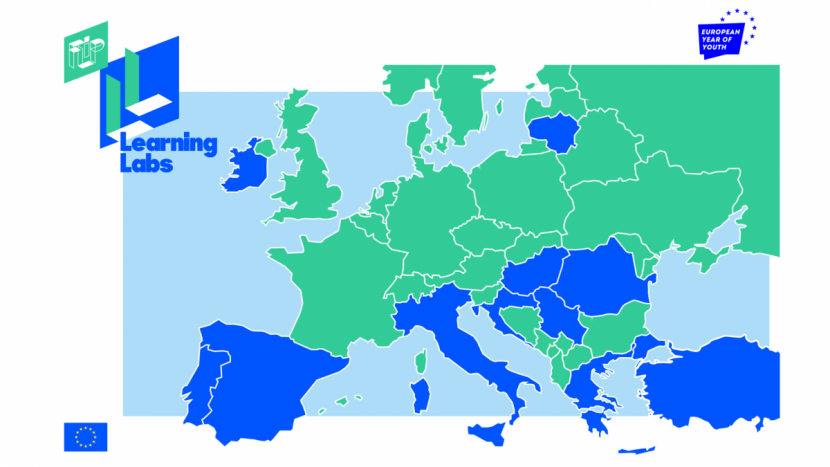
Launched in 2019, Creative FLIP ran for seven and a half years as a European Union co-funded initiative led by a consortium, which comprises the Goethe-Institut as lead partner, the European Creative Hubs Network, IDEA Consult, and the Intellectual Property Institute Luxembourg. The final study was authored by Else Christensen-Redžepović. Over that period, it delivered more than 100 learning and exchange activities, 9 international conferences, 40 stakeholder workshops and 50-plus exchanges between creative hubs across Europe. Its platform, Creatives Unite, accumulated over 270,000 users, 672,000 page views and 3,450 published posts and houses three interactive tools — So You Need Money?, This Is How We Work, and My IP, the last of which aggregates 315 resources on intellectual property from across the EU. The project produced more than 90 case studies on finance, intellectual property and cross-sectoral collaboration — including 10 on finance, 24 on IP and 55-plus on cross-sectoral themes — alongside 40 Learning Labs, 10 Cross-Sectoral Pioneers projects, 10 Ambassadors of Good Practice in non-urban areas, 3 Transformation Cross-Policy Orientation Papers and 5 introductory videos on finance and IP. Its final output, published in May 2026, is the study Towards More Resilient Cultural and Creative Ecosystems.