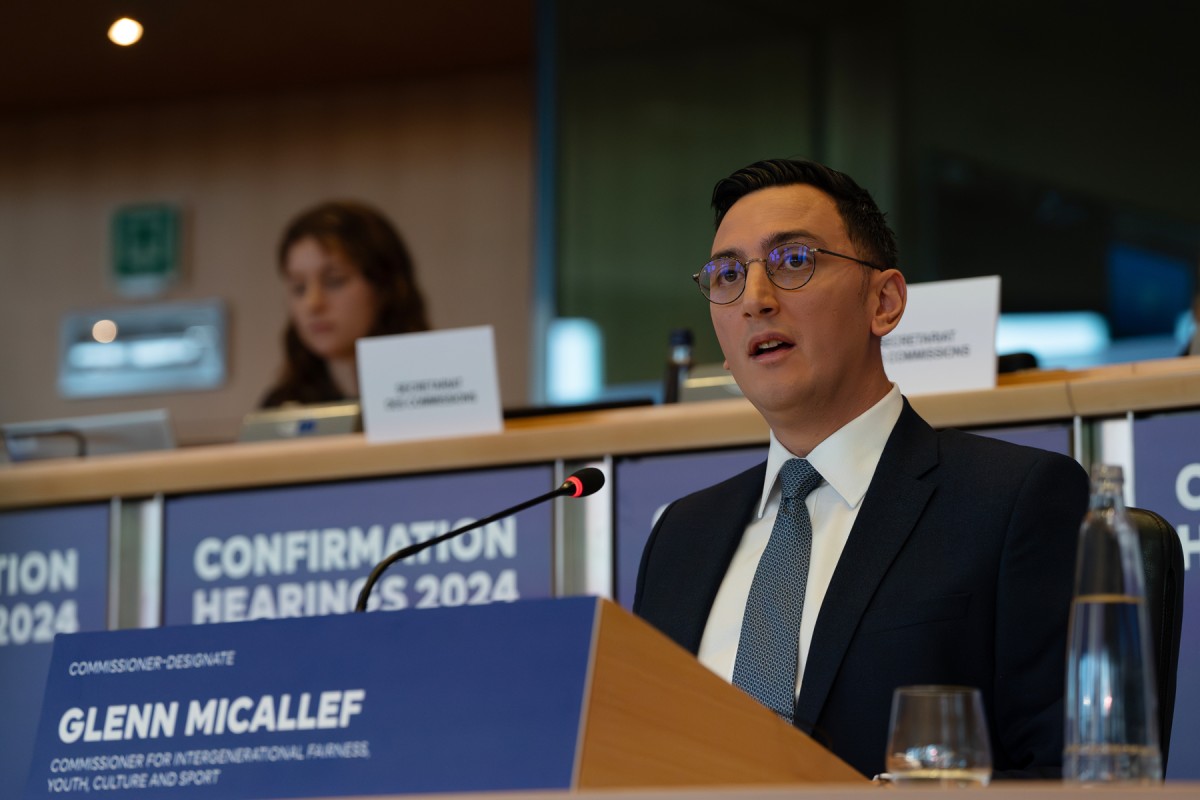


One year on from his appointment as EU Commissioner for Intergenerational Fairness, Youth, Culture, and Sport — a demanding and transformative portfolio, in his words — Glenn Micallef said in an interview with the Malta Independent that he focuses on creating stronger protections for artists and a deeper role for youth in policymaking.
One year into his mandate, EU Commissioner Glenn Micallef reiterates his commitment that “culture must pay the rent.” In an interview with the Malta Independent the commissioner is unveiling advancing work on the EU Artists’ Charter and the AgoraEU funding program. These will require EU-funded cultural bodies to uphold fair working conditions and provide clearer rights for the sector’s eight million workers. “AgoraEU, our future funding program, will place a strong emphasis on respecting and improving artists' working conditions, ensuring that those who benefit from EU funds treat artists fairly.”
The Commissioner also sets out the first operational steps of the Culture Compass for Europe, a flagship package of 20 initiatives including a State of Culture report, an EU Cultural Data Hub, and a European Prize for Performing Arts. It also includes guidelines on culture and mental well-being. All to be rolled out over the mandate. “The phrase “Culture must pay the rent” is a commitment. The almost eight million people employed in the cultural and creative sectors represent 3.8% of total EU employment. Yet, many are stuck in a cycle of short-term contracts, undeclared work, lack of stability, and juggling multiple jobs,” says Micallef. A high-level roundtable on artists' working conditions begins next week.
In his interview with the Malta Independent, Micallef says he has laid the groundwork for the Union’s first-ever Intergenerational Fairness Strategy, to be adopted in the first quarter of 2026. This follows a multi-layer consultation process involving scientists, policymakers, civil society, and a newly concluded European Citizens’ Panel. He argues that fairness across generations must be embedded across fiscal, climate, housing, and digital policies, rather than sit as a standalone principle.
Micallef also highlights youth influence on concrete EU initiatives, noting that over 40 Youth Policy Dialogues have shaped proposals ranging from the Union of Skills to the EU Democracy Shield. The upcoming EU Action Plan Against Cyberbullying, due February 2026, draws directly on input from young participants.
On AI, Micallef signals that digital rules lag technological change, announcing that a dedicated EU Strategy for AI in the cultural and creative sectors will be adopted in early 2027. It aims to ensure transparent, ethical, and diversity-preserving AI systems that enhance rather than replace human creativity.