

Creative FLIP wraps up seven and a half years with a final conference that turned retrospection into a call for systemic change. FLIP's final conference underlined progress on policy awareness but stressed structural failures in funding and precarity that remain unresolved.
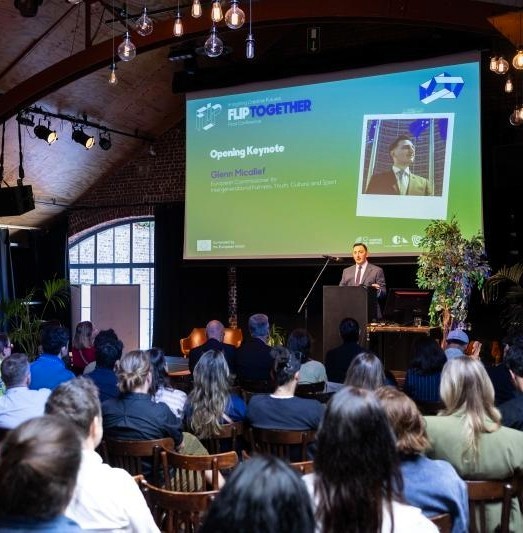
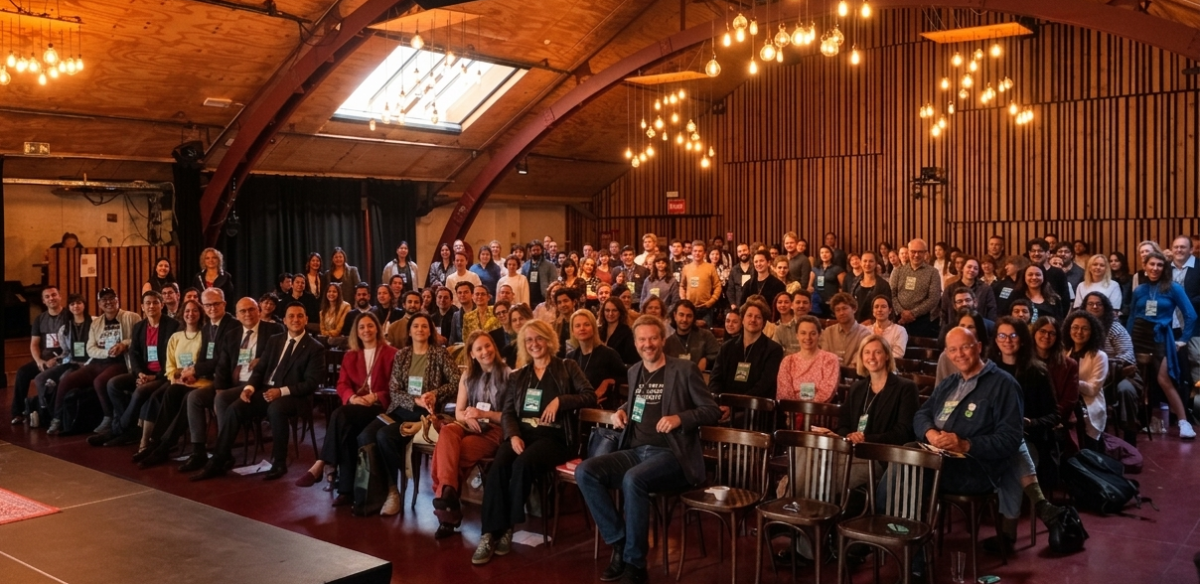
By Matthaios Tsimitakis, ECHN for Creative FLIPOn 9 June 2026, the final conference, "FLIP Together: Imagining Creative Futures", of Creative FLIP, a policy project co-funded by the European Union that began in 2019 to strengthen the resilience of Europe's cultural and creative sectors, took place at Brussels' La Tricoterie. The Brussels gathering brought together artists, policymakers, researchers, and sector representatives to say goodbye but also to ask what comes next. “Europe's cultural and creative sectors are ready to evolve, experiment and shape the future rather than react to it," said commissioner Micallef to Creatives Unite
The future is always elusive, abstract, and revolutionary, regardless of who is imagining it and what the underlying culture is. Over seven and a half years, Creative FLIP built tools, facilitated exchanges, shaped policy dialogue, and grew Creatives Unite into a platform that has served more than 270,000 users so far.
The conference opened with a live artistic demonstration—M.oving O.thers—a dance piece whose choreography shifted in real time based on audience sentiment captured via a digital poll. It was a fitting metaphor for a project that spent seven years trying to make cultural policy responsive rather than prescriptive.
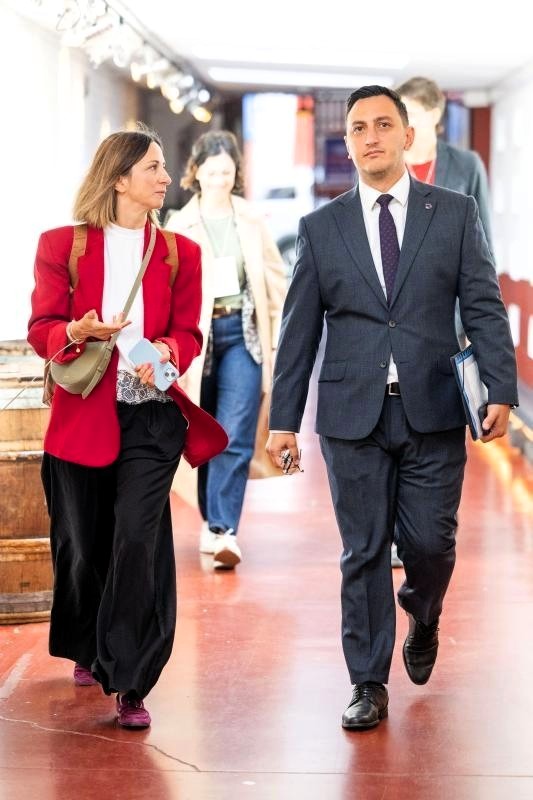
Commissioner for Intergenerational Fairness, Youth, Culture and Sport, Glenn Micallef, opened the morning with a call to resist instrumentalising culture while also defending its value to European society.
"How do we use technology without losing humanity? How do we embrace innovation whilst protecting creativity?" Commissioner Glenn Micallef set the tone while addressing the audience in the opening session
The conference fell at a significant moment for EU cultural policy. While addressing the participants, Micallef outlined three near-term deliverables under the Culture Compass framework adopted at the end of 2025: an AI strategy for the cultural and creative sectors; a structured dialogue on working conditions and the forthcoming EU Artists Charter; and a State of Culture report with a focus on artistic freedom.
“Europe's cultural and creative sectors are ready to evolve, experiment and shape the future rather than react to it. Through Creative Europe, the Creative FLIP project has helped build the spaces, partnerships and practical knowledge needed to turn creative ideas into real solutions, from Creatives Unite to cross-sectoral experimentation and access to finance,” said Commissioner for Intergenerational Fairness, Youth, Culture and Sport Glenn Micallef in an exclusive statement to Creatives Unite on the sidelines of FLIP’s final conference.
Micallef reaffirmed the Commission's intention to double funding for culture and explore financing beyond traditional grants – themes central to Creatives Unite's coverage of the three Fs debate: Funding, Fair Working Conditions, and Freedom.
As the joint political declaration "Europe for Culture, Culture for Europe" is signed today (18/6/2026) in Strasbourg by the presidents of the European Parliament, Council and Commission – a historic EU first on culture – Micallef told Creatives Unite that the Culture Compass gives us direction.
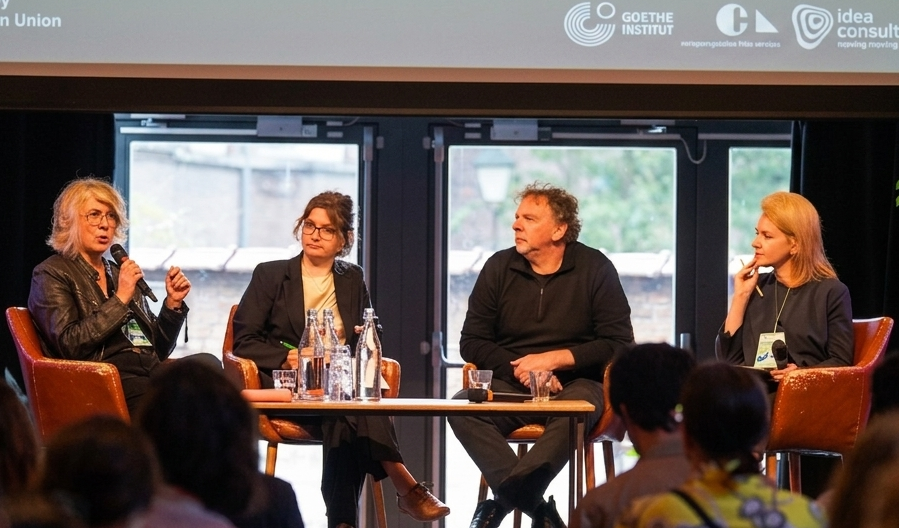
The day's opening panel, "The Value of Human Creativity in Disruptive Times", brought together novelist and European Writers Council political commissioner Nina George; cultural heritage advisor & academic project coordinator at KU Leuven, Daryna Zhyvohliadova, from Ukraine; and professor of creative economy Justin O'Connor from Adelaide University, moderated by researcher Elena Polivtseva.
George, speaking from thirty years as a writer, identified the primary threat as what she called "automated idiocy" – a compound of controlled imagination, digital colonialism, and the tendency to privilege sleek, marketable cultural production over difficult, disruptive art. Artists, she argued, are not just practitioners but democratic sentinels: "We are the canary in the coal mine of democracies and societies."
Her policy prescription was structural: remove copyright from DG Connect and return it to justice and culture, where it functions as a working condition rather than a market instrument.
Zhyvohliadova, drawing on the experience of cultural life in wartime Ukraine, reframed resilience in terms that were difficult to argue with. "Creativity is not a luxury," she said. "It is the infrastructure for resilience." She described theatres and exhibitions remaining full throughout the war — not as escapism but because communities need cultural experience as an alternative to fear and loss. Attacks on heritage, she underlined, are not collateral damage; they aim to destroy the collective memory from which futures are built.
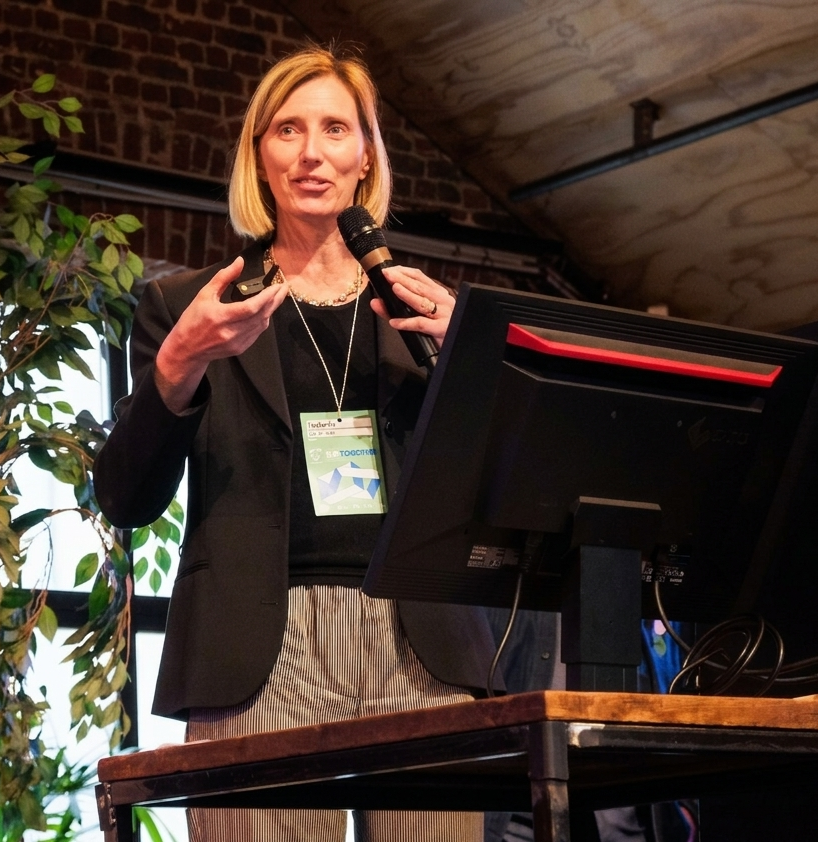
O'Connor brought a structural counterweight. Culture is not simply a sector or an innovation spillover but produces "a special kind of knowledge rooted in experience" — resistant to optimisation and capable of articulating what societies cannot yet say. The real danger, in his view, is feeding art and culture back into "the techno-industrial machine which is causing us all the problems in the first place".
Isabelle De Voldere, senior expert in innovation & competitiveness at IDEA Consult, and creative FLIP expert Joost Heinsius presented the project's final study, grounding the morning's wider arguments in structural analysis.
The study redefines resilience: not bouncing back from crisis, but bouncing forward — developing the capacity to adapt, transform, and maintain systemic viability over time. Creative FLIP mapped Europe's cultural ecosystem, identifying progress in policy awareness alongside persistent structural failures: fragmentation across governance levels, uneven access for freelancers and micro-organisations, and a short-term project-funding logic that frustrates the conditions cultural practitioners actually need.
The recommendations clustered around three priorities: investing in a robust working base (financing, working conditions, and IPR); enabling equal access to skills and participation in innovation ecosystems; and building structural, inclusive, cross-sectoral networks – connecting culture to policy domains beyond its own silo.
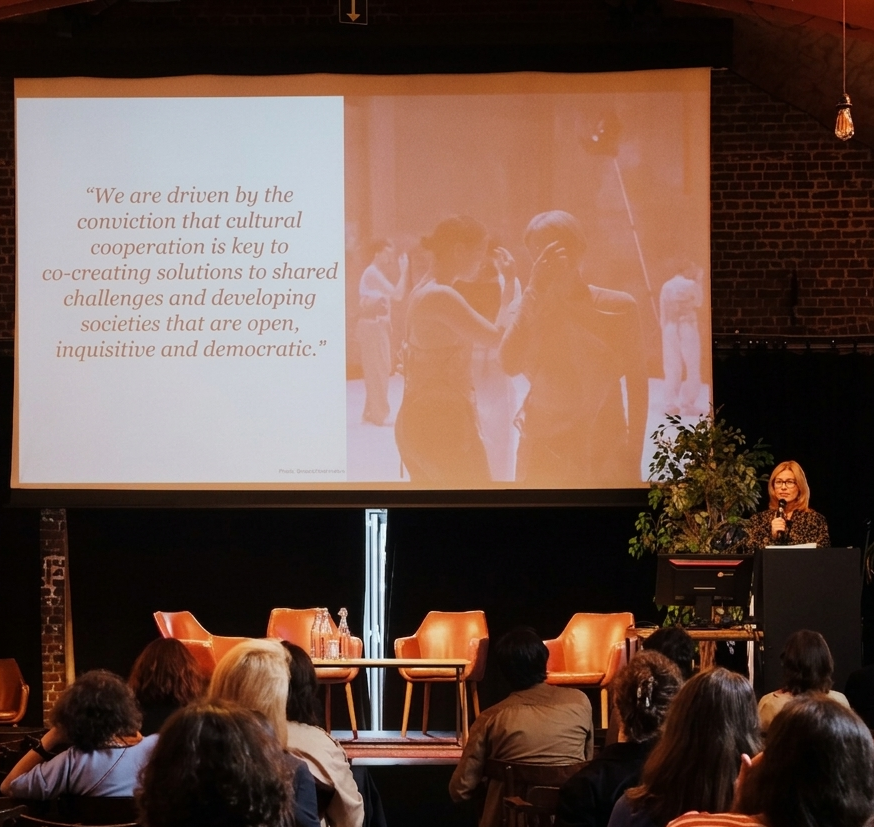
Kristin Danielsen, CEO of the Nordic Cultural Fund, former director of Arts Council Norway and chair of the International Federation of Arts Councils and Cultural Agencies, addressed the conference around a conviction worth repeating: "Culture is not a reflection of society. Culture is the power that really shapes society."
Danielsen argued that existing cultural policy paradigms — from post-war nation-building and cultural democracy to the creative economy and the data-driven paradigm — have progressively lost touch with their era. What is missing, she suggested, is a genuine debate about purpose: not how culture is consumed, but what it is fundamentally for.
Her answer centres on what the Nordic Cultural Fund now calls "meaning-making" — culture as the practice through which societies understand where they are and dare to imagine where they might go.
Marking its 60th anniversary, the fund is reorienting away from project grants and toward ecosystem investment: processes, relationships, alliances, and capacity building. Her guiding principle: "The Nordics may be too small to lead, but we are big enough to test."
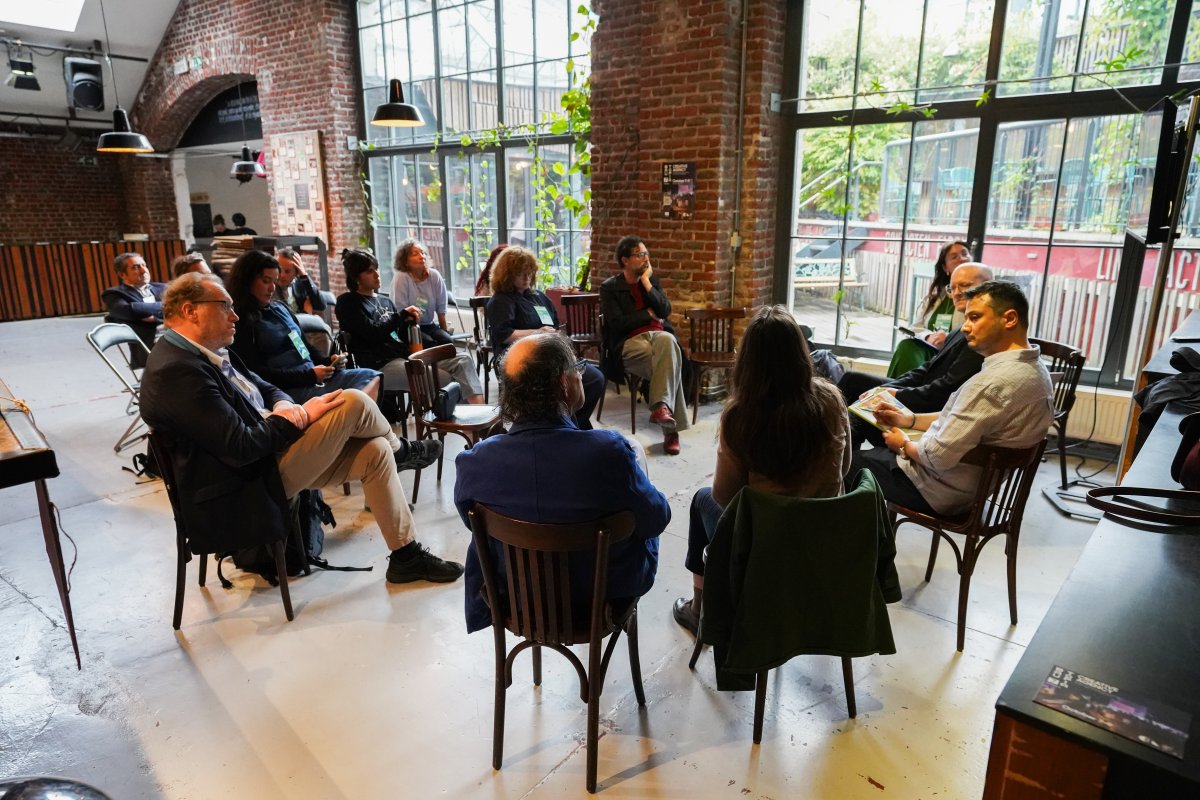
The afternoon programme centred on a series of interactive workshops reflecting the core thematic areas of Creative FLIP. These sessions provided a dynamic space for exchange, bringing together participants to explore pressing issues and future directions for the cultural and creative sectors (CCS).
Under the overarching theme “Flipping Perspectives: Sharing Stories, Shaping Futures", discussions ranged from reimagining the role of creative hubs in times of uncertainty (Platforming Culture) to contributing to the development of an EU Artists Charter through a dedicated sector consultation. Further workshops addressed emerging policy challenges, including CCS policy options in light of artificial intelligence, as well as financial frameworks through the Ekip Policy Lab.
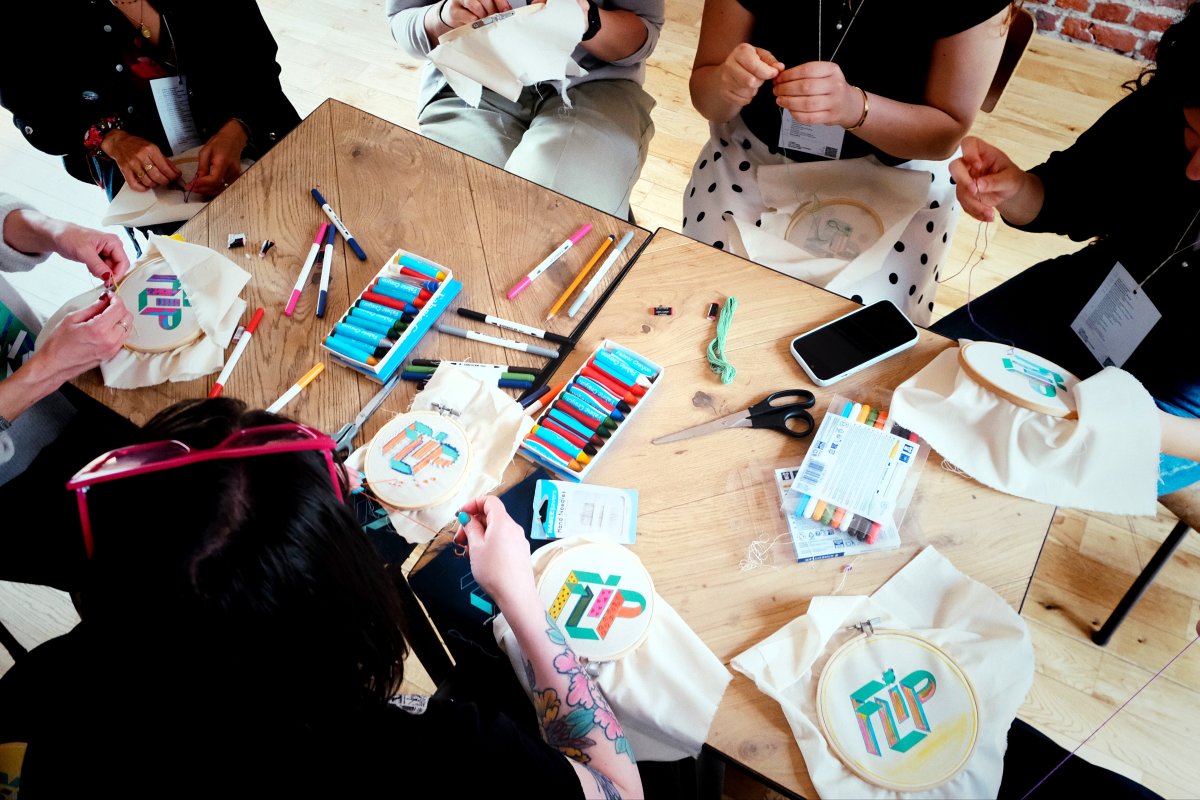
The Learning Labs on Sustainable Fashion offered hands-on insights into innovative practices such as upcycling, natural dyeing (WOUW Studio), and creative reuse (Flipping Fantastic Patches by Creative Spark). Together, these sessions fostered cross-sectoral dialogue and practical learning, highlighting pathways for transformation, fair working conditions, and strengthened collaboration across Europe’s cultural ecosystems.
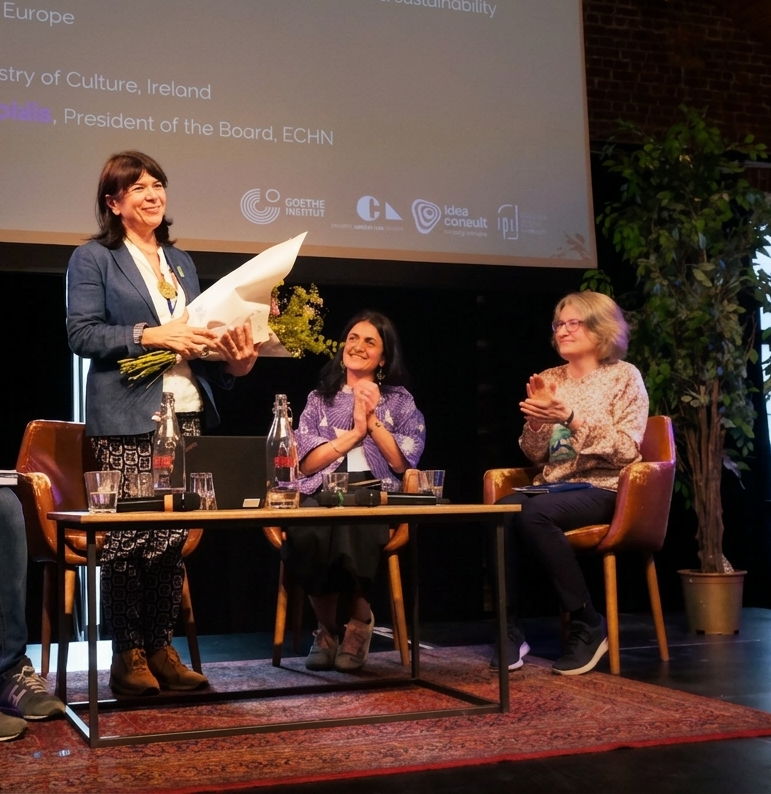
The day ended with a high-level panel bringing together the European Commission, Culture Action Europe, UNESCO’s research, and Ireland's national arts policy unit on the state of culture today and the challenges ahead.
The EU Commission’s senior official Catherine Magnant, Head of Unit, Cultural Policies, DG EAC, laid out the legacy of 15 years of EU cultural policy work, retiring at the month's end and offering an honest account of what has progressed (mainstreaming, well-being, and artistic freedom as a new concern), what has stalled (international cultural relations governance), and what risks disappearing from view (intercultural dialogue).
A glimpse of hope came when Ireland's arts policy lead, Rebecca Minch, Principal Officer, Arts Policy, Ministry of Culture, Ireland, grounded the discussion in a founding principle too often overlooked: "Policy doesn't belong to the policymakers. The policymakers are making it on behalf of the people they serve." Minch outlined the success story of Ireland’s basic income for artists, a paradigm for many across the continent nowadays.
Natalie Giorgadze, General Director, Culture Action Europe insisted that the EU's formal competence in culture – technically limited by subsidiarity – is increasingly inadequate to the issues that transgress national borders: AI, mobility, taxation, social security, and artistic freedom.
The MFF negotiations for 2028–2034 were identified as the immediate test of whether the political commitment articulated in the Culture Compass and the joint declaration translates into structural investment. Culture Action Europe confirmed it is engaging ministries of finance — not just culture — across member states.
Creative FLIP closes after seven and a half years, having contributed to a measurable increase in policy awareness at the European level, a body of practical tools and case studies, and a platform with genuine pan-European reach, our very own Creatives Unite.
What it could not resolve – fragmentation, precarity, and the gap between strategic ambition and structural investment – are the challenges now at the centre of the Culture Compass agenda.
“The Joint Declaration, 'Europe for Culture, Culture for Europe', will strengthen our collective commitment," said Commissioner Micallef in his statement to Creatives Unite. “Now the task is delivery: turning ambition into action through the future AI Strategy for the Cultural and Creative Sectors, the EU Artists’ Charter, the State of Culture Report and stronger support for Europe’s artists, creators and cultural organisations.”
The Creatives Unite platform — born in the early weeks of COVID-19 as an emergency communication channel — has served more than 270,000 creatives with more than 3,500 entries.
From three core tools: the So You Need Money funding navigator, the My IP intellectual property rights guide, and the This Is How We Work comparative working conditions explorer across European countries, it has continued evolving into a knowledge hub and much more:
Over the past two years, the platform has shifted to translate EU policy into a language that cultural practitioners can use, in response to feedback that the sector is largely unaware of what is being built at the European level on its behalf.
Structured case studies are designed to close that gap and to give tangible examples to both practitioners and policymakers who need to act on their behalf.
The platform's ambition, as stated by ECHN’s president of the board on the stage of FLIP’s conference, is to make it genuinely massive — because the sector does not know what its peers are doing nor how to translate the buzzwords and framework documents that shape its conditions. That is Creatives Unite's a promise and conviction for the future