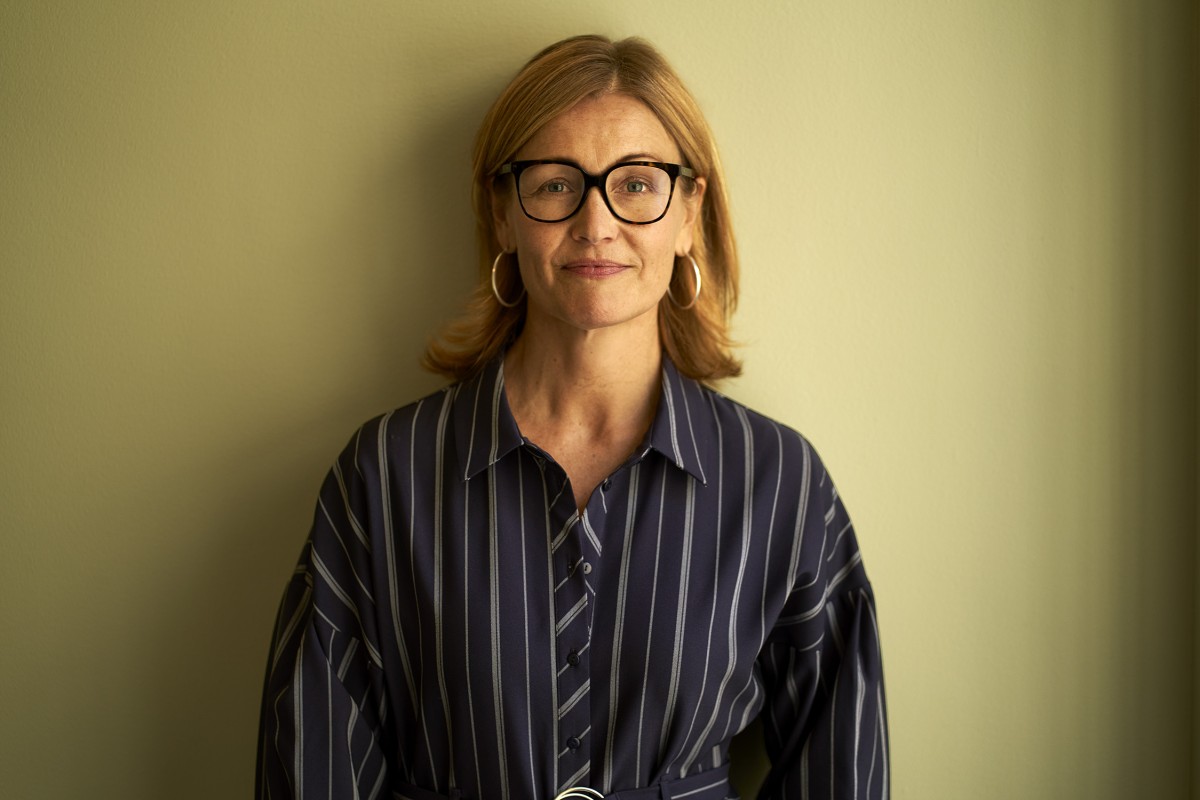


Kristin Danielsen has spent nearly three decades running cultural institutions—from the Black Box Teater in Oslo to Arts Council Norway, where she served as Director for nine years, to her current role as Chief Executive of the Nordic Culture Fund since August 2025. Before all of that, she was a professional dancer.
That arc — from performer to strategist, from embodied practice to institutional policy — shapes the way she argues. In this conversation, conducted ahead of the Creative FLIP conference, Danielsen makes a deceptively simple case: culture is not an optional layer on top of society, not a nice-to-have when budgets are generous. It is infrastructure. Like roads. Like energy. Like the digital systems we can no longer live without.
She is equally direct on the pressures now bearing down on that infrastructure: the EU budget negotiations in Brussels, the structural precarity of creative workers, the concentration of cultural power in a handful of digital platforms, and the question of whether human imagination can hold its ground in an age of artificial intelligence.
CU. In your keynote at the Beyond! North Satellite conference in Riga (April 2026), you argued that culture and the arts are infrastructure—that they are community, that they provide meaning-making spaces. Can you unpack that? What does it mean to fund culture like infrastructure? How is it different from the current project-based model in many countries?
KD. When I describe culture as infrastructure, I mean that it is part of the foundational systems that make societies function—not something that sits on top as an optional layer.
We usually think of infrastructure as physical or technical—roads, energy, digital systems. But societies also rely on less visible structures: shared narratives, trust, identity, and the ability to make sense of change. In my opinion that is what culture provides.
Culture creates spaces where meaning is negotiated, where disagreement can exist without breaking into polarization, and where we can imagine collective futures.
So funding culture, like infrastructure, means shifting the focus—from supporting predefined projects to strengthening the conditions that allow this to happen.
That is quite different from the typical project-based model, which is often short-term and output-driven. Infrastructure thinking is long-term. It invests in systems, relationships, and capacity. It recognises that culture is not only about what it produces—it is about what it enables.
CU. The Fund's new strategy (2026–2030) identifies the need to rethink existing funding models and structures as a priority. What does that rethinking look like in practice? What structures are you prepared to challenge?
KD. It means questioning some of the assumptions that have shaped cultural funding for decades.
We are moving beyond a grant-making model where funding is mainly tied to criteria-based projects with fixed outcomes. That model is still very useful useful, but it does not always reflect how artistic practice actually works—and it rarely supports deeper transformation.
So in practice, we are experimenting with approaches that are more flexible and more process-oriented.
We are curious about investing in long-term collaborations rather than one-off initiatives, processes rather than only outputs, alliances across sectors and, in some cases, institutional change
We are also working more closely with other funders, including philanthropic partners, because many of the challenges we face today are too complex to be addressed within one funding structure alone.
So the shift is really from funding activity to enabling change.
CU. You've spoken about how cultural collaboration across borders is more important than ever in a world of geopolitical turmoil and polarisation. I should add that there is a clear tendency by national political forces across the continent to close down on culture, aiming to control the narrative and their citizens' imagination. In your keynote at FLIP conference, you are talking about the need to position culture as an imaginative and generative force in shaping tomorrow's societies. What can countries or creative communities outside the Nordic region actually learn from it?
KD. I would be careful to say that the Nordic model is something to copy. Every context is different. But there are some underlying principles that may be relevant elsewhere.
One is the understanding that culture is not only reflective—it is generative. It shapes how we think, how we relate to each other, and how we imagine the future.In a time where we see increasing attempts to control narratives and limit artistic freedom, this becomes critical.
I believe that culture provides something that cannot easily be controlled—the ability to imagine alternatives.
What we try to demonstrate is that investing in artistic freedom, diversity, and collaboration gives a quite strong return of that investment; It is resilient, future-oriented societies. Not a small thing.
So the takeaway is not “be Nordic,” but rather: take culture seriously as a force that shapes the future, not just something that reflects the past. And I will quickly add that this is a message we too are struggling to convey to decision-makers in the Nordics. But we still have fertile ground for democracy, a belief in the rule of law, equal opportunities, and human rights. So I guess our struggle has a more convenient framework than in other countries.
CU. The EU is currently negotiating the 2028–2034 Multiannual Financial Framework, which includes a new programme called AgoraEU, bringing together Creative Europe Culture, Media, and Citizens’ Rights into a single €8.6 billion envelope. The European Parliament has already called for that to be raised to €10.7 billion. What’s your read on these negotiations, and what does the Nordic Culture Fund need from Brussels?
KD. On the one hand, it is encouraging to see culture, media, and citizenship being brought together. It reflects the fact that these areas are deeply interconnected.
At the same time, there is a risk that culture becomes less visible when placed inside larger frameworks. So from our perspective, two things matter.
First, scale. If we expect culture to play a meaningful role in addressing societal challenges, then the funding level has to reflect that ambition.
Second, autonomy. Culture must retain space for experimentation, critical reflection, and artistic freedom. As I will highlight at the FLIP conference, culture is a method, not a product.
So what we need from Brussels is not only funding to match the ambitions but also a stronger recognition of culture as a fundamental part of European development. My talk is titled “Culture shapes the future of the Nordics” It might just as well say Europe.
CU. As former Chair of IFACCA you've seen how cultural policy plays out from Buenos Aires to Seoul to Lagos. Where is the power concentrated in global cultural funding, and how do we redistribute it according to your opinion? According to a recent UNESCO report, the digital infrastructure of our times does not help open up the space of culture to a multiplicity of voices but rather leads to more concentration at the top.
KD. Geographically, much of it sits in (Western) Europe and North America. Institutionally, it is often held by large public bodies and foundations. And increasingly, power is concentrated in digital platforms that shape visibility and value and totally dominate the public sphere.
I believe we should look into how these power dynamics may be more evenly distributed. And this is not only about moving money. It is also about shifting who defines value, who sets agendas, and who has access to networks.
In my experience a shift would take multiple initiatives, like designing more decentralized funding structures, but at the same time keep the national policy-making level for monitoring knowledge and securing development and equal distribution. Also, we need stronger support for mobility and exchange, more horizontal partnerships, and a greater recognition of different knowledge systems.
The good thing is, and this is my experience from the work of IFACCA, is that this is already happening, often initiated by the national bodies and agencies. What may hinder this development, interestingly, is the established culture sector itself. It is a paradox that the culture sector, which is so experimental and innovative, sometimes also is so persistent to change. I struggle to get my head around that!
CU. Artificial intelligence is already transforming creative practice. Should AI-generated or AI-assisted work be eligible for public cultural funding? I think the most important question is not whether AI should be included or excluded.
KD. The real question is what kind of artistic practice we want to support in an AI-shaped world.
AI is very powerful when it comes to repetition, optimisation, and recombination. But it does not easily imagine, innovate, or create new meaning. At least not yet!
So for us, the focus has to remain on artistic intention, critical thinking, and originality.
AI can absolutely be a tool. But what we support is the human capacity to imagine, to question, and to create meaning. And that remains essential.
CU. You trained as a dancer and worked as a choreographer before moving into arts administration. What does dance still teach you—as a leader, as a strategist?
KD. Dance has influenced my thinking more than anything else. Although I have to emphasize that this training happened decades ago! But still, the training sits with me, and it has taught me discipline, to always look for improvements, and that you are never better than your last performance. And most of all, great results come from great collaborations. A lot of people think of dance as a solo and slightly ego art form. It is not. Performing arts is very much about a collective process of learning, listening, and anticipating the next move. Without words.
As a leader, I have benefited from this training, perhaps more than my MA in Arts Management, because dancing taught me that timing is key; knowing when to act and when to let things evolve is rather important in leadership.
CU. If you could give one piece of advice to a young creative professional—someone who wants to have the kind of impact you’ve had, but starting today—what would it be?
KD. To be honest, I would rather have young creative professionals advising me! And if anyone reads this and feels like responding, I do love feedback.
But I may share something that I remind myself of, and that is to dare to stay with complexity.
We live in a time that rewards speed and simple answers. But the most important ideas often take time to form. So I remain curious, but I need to force myself to be patient (very hard!) so that great ideas have time to be tested and to grow.
And above all, take your imagination seriously. In an AI world, our human imagination should remain our fiercest tool.
Because the future is shaped, first and foremost, by those who dare to imagine it.