At the Learning Lab “From Cradle to Maker” by TransfoLAB BCN, primary school students discovered the power of upcycling and circular design. Through guided visits and hands-on workshops, they transformed discarded materials into creative objects to learn that sustainability is something they can design, build, and take home.
A case study from the Creative FLIP Learning Labs 2020/21
TransfoLAB BCN’s Learning Lab introduced primary school students to upcycling, circular economy, and creative design through guided visits and practical workshops. Students explored a real makerspace, met professional creatives, and learned how to select and combine materials efficiently. Each student designed and built an object from discarded materials, applying principles of sustainability and closed-loop production. Despite Covid-19 pandemic-related adjustments, the program achieved its goals by inspiring students to think critically about waste and creativity.
In Barcelona’s Poblenou district, creativity met sustainability in a Learning Lab designed to teach children the principles of upcycling and circular economy. Hosted by TransfoLAB BCN, the program invited students from La Llacuna del Poblenou school to step inside a real makerspace, meet professional creatives, and experience the design process firsthand.
The LLab aimed to address a challenge identified by teachers in previous years: while students were motivated and resourceful, they lacked structured training in material selection and efficient use. Projects often produced excess scrap, and students struggled to join different materials effectively. TransfoLAB BCN set out to change that by combining theory with hands-on practice.
Inside the Makerspace
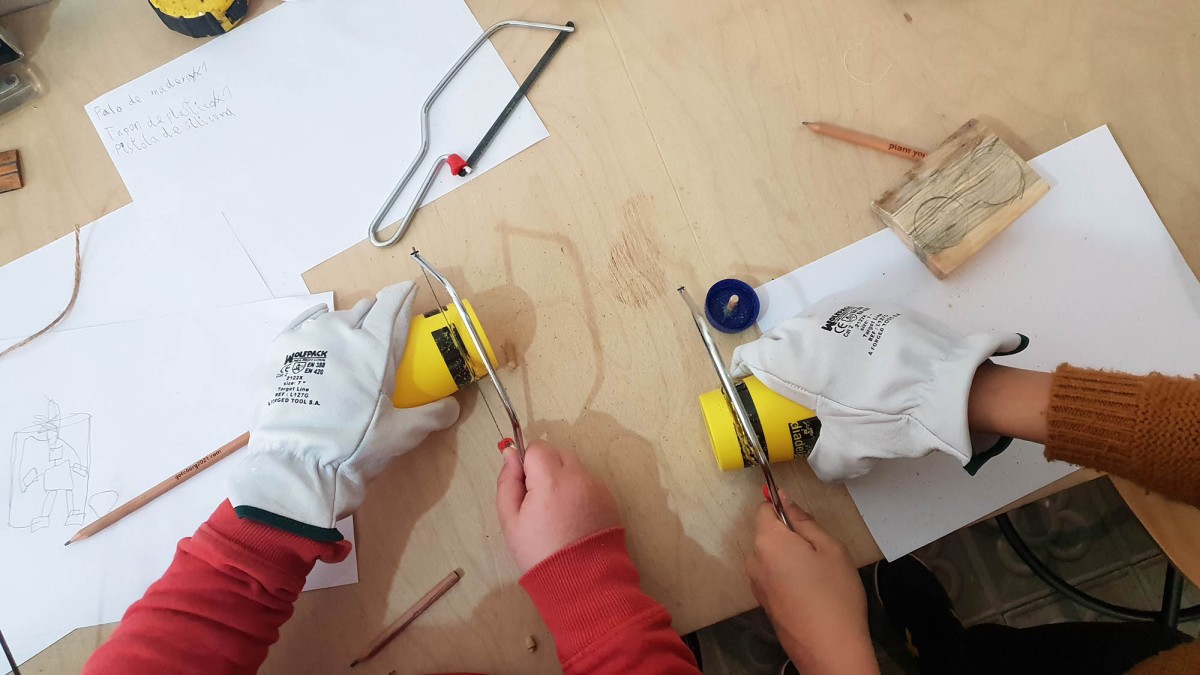
Each session began with a guided visit through TransfoLAB BCN’s workshop. Students explored different spaces, discovered tools, and met makers working on real projects. Seeing professionals in action sparked curiosity and gave children a sense of what creative work looks like beyond the classroom.
After the tour, a short lecture introduced key concepts:
- Upcycling and Circular Economy – Why reuse matters and how closed loops work.
- Creative Process – From idea to design to production.
- Material Selection – How to choose, combine, and join materials efficiently.
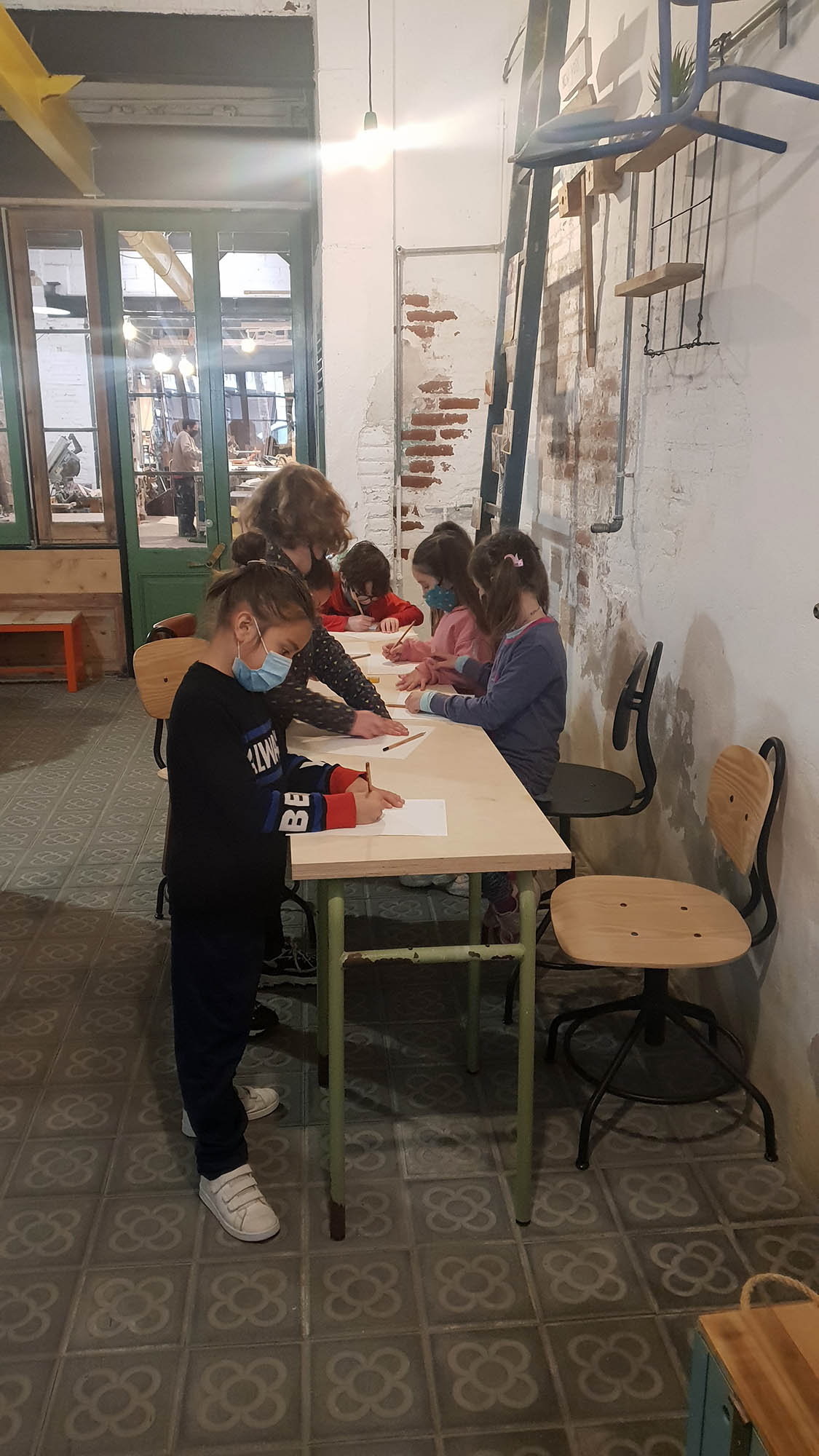
Then came the highlight: the practical workshop. Students selected discarded materials and designed their own objects, applying what they had learned.
Adapting to Challenges
The pandemic and school logistics required adjustments. Originally, classes were to be split into smaller groups, but staffing shortages made this impossible. Instead, TransfoLAB extended session durations and expanded the workspace to accommodate larger groups. Additional tools were purchased so all students could work simultaneously. Budget allocations were revised to meet these changes.
Despite these hurdles, the workshops ran smoothly. Teachers praised the organization and inclusivity, noting that even students with special needs were fully engaged thanks to personalized support and ergonomic setups.
The results were tangible and inspiring. Students understood how to minimise waste, optimise material use, and think critically about design decisions. Teachers reported that the program met its objectives and solved the challenges identified in earlier years.
Children’s enthusiasm was evident throughout the sessions. Each object reflected creativity and a deeper understanding of circular production flows.
In conclusion, this Learning Lab showed that sustainability education works best when it’s hands-on. By turning discarded materials into meaningful creations, TransfoLAB BCN empowered students to see waste as a resource and design as a tool for change. For the hub, the program also provided valuable insights into working with children, adapting spaces for inclusivity, and addressing ethical considerations in extracurricular activities.
Key Takeaways