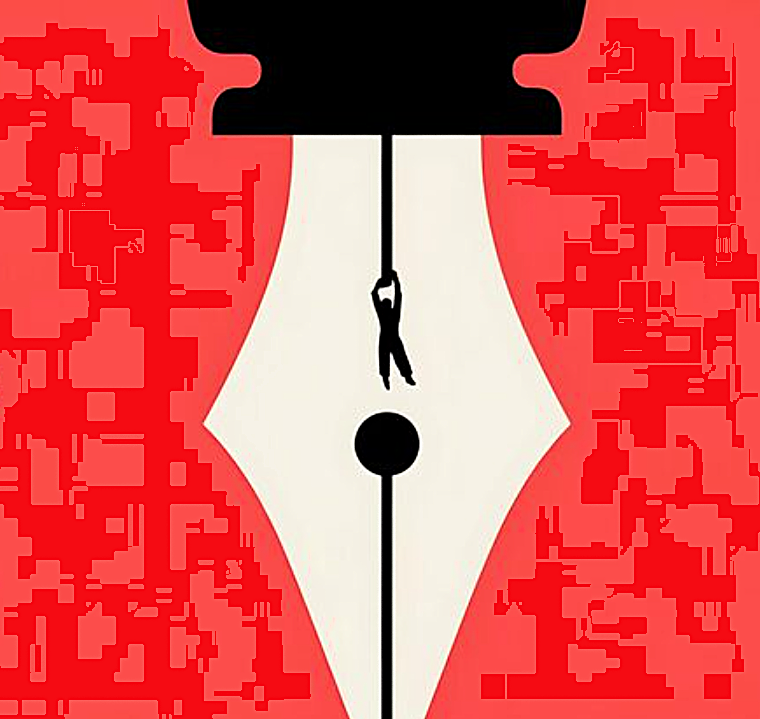
The global rate of impunity for the murder of journalists has risen for the first time since UNESCO began measuring it in 2012, leaving almost nine in ten killings judicially unresolved. The agency said on Monday, the 2nd of November, International Day to End Impunity for Crimes against Journalists, that the rate had edged up one percentage point to 86 per cent from 85 per cent two years earlier.
The biennial Director-General’s report recorded 189 journalists killed in 2024 and 2025, 20 per cent more than in the previous two years. Of these, 127 (67 per cent) died in conflict zones. Fifty were killed by drones across six war zones. The campaign theme this year is “Threats evolve. Impunity endures.”
Outside war zones, the picture is better. Killings in countries not at war fell to 62, the lowest in 18 years, and impunity there has dropped from 94 per cent in 2012 to 77 per cent.
Between 2006 and 2025, more than 1,600 journalists were killed worldwide, and close to six in seven of those cases remain unresolved, according to UNESCO’s Observatory of Killed Journalists. The UN General Assembly established the day in 2013, choosing 2 November to mark the killing of two French journalists in Mali that year.
According to the Commitee to Protect Journalists (CPJ), a record 129 were killed last year alone, about two-thirds by Israel, in Gaza, Yemen and Iran. Israel was responsible for 81 per cent of the 47 killings in CPJ classes as murder. The IDF said it does not intentionally harm journalists and that the report rests on allegations. Killings also rose in Sudan and Ukraine.
UNESCO’s report is compiled at the request of the 39 member states of its International Programme for the Development of Communication. The agency describes it as a unique mechanism within the UN system. The UN Statistical Commission recognises it as a key data source for Sustainable Development Goal target 16.10, on public access to information and fundamental freedoms.
In a joint statement, Henna Virkkunen, the Commission’s Executive Vice-President for Tech Sovereignty, Security and Democracy, Kaja Kallas, the EU’s High Representative, and Michael McGrath, the Commissioner for Democracy, Justice, the Rule of Law and Consumer Protection, warned of coordinated online harassment, unlawful surveillance, abusive lawsuits and transnational repression. Women journalists, they said, are disproportionately targeted.
"Under the European Democracy Shield, the Commission has committed to updating its Recommendation on the Safety of Journalists and stepping up support for implementing the EU's existing framework to combat abusive lawsuits against public participation (SLAPPs)," say the Commissioners in their statement.
The Commission had launched more than 100 media-support projects in 56 countries by the end of 2025, the statement said. The ProtectDefenders.eu mechanism has directly supported nearly 13,000 journalists at risk since 2015, including 686 in 2025. The statement’s background notes cite two tallies of journalists killed so far this year: 15 from the International Federation of Journalists and 34 from the Committee to Protect Journalists. The ministers concluded: “Impunity must end.”
Inside the bloc, the European Media Freedom Act has been applied since August 2025, alongside EU-wide rules against abusive lawsuits (SLAPPs). The Commission has also promised, under the European Democracy Shield, to update its 2021 Recommendation on the safety of journalists.
The Commission’s seventh Rule of Law Report, published on 17 July, points to reforms affecting media regulators, ownership transparency and journalists’ safety. The European Federation of Journalists says it seriously underestimates the decline in press freedom. It cites the Media Freedom Rapid Response monitoring report, which recorded 1,481 violations affecting 2,377 journalists or media entities in 36 European countries in 2025.
The Daphne Caruana Galizia Foundation argues that the damage is largely invisible: the story never published, the investigation never pursued, and the young journalist chooses a safer bet. Preventing journalists’ murders, it says, is Europe’s problem, because ending impunity protects others too.
"A society cannot immediately see what it isn’t told. But the consequences eventually become obvious: corruption left unchecked, institutions stripped of public trust, power protected at the expense of accountability, and more journalists murdered for asking uncomfortable questions," the press release reads.
The International Press Institute said the danger of impunity extends beyond the media to society as a whole. It urged policymakers who want to curb corruption, inequality and abuses of power to make the issue a priority.