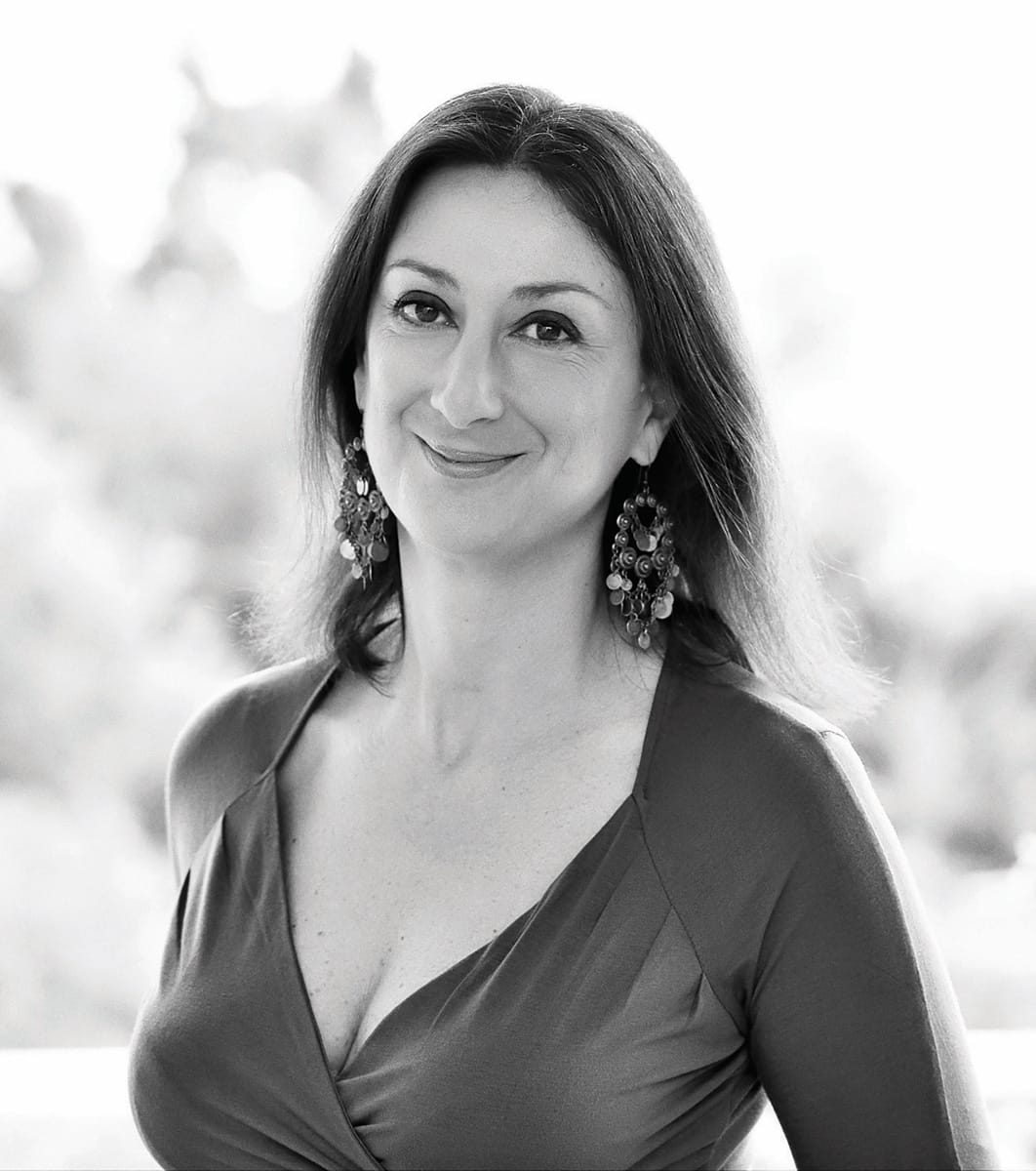



A Maltese jury has acquitted the businessman accused of masterminding the murder of the investigative journalist Daphne Caruana Galizia. This verdict has provoked fury from her family and from press freedom organisations across Europe.
Yorgen Fenech, 44, was cleared by eight votes to one of complicity in murder and criminal association to commit murder over the car-bomb killing of Caruana Galizia in October 2017. The nine-member jury — six women and three men — reached its verdict in Valletta on September 2, delivered shortly after 7.30 pm following about eight hours of deliberation at the end of a 55-day trial that had opened on July 1.
The European Centre for Press and Media Freedom (ECPMF) expressed its profound disappointment with the court’s decision to free the alleged mastermind Yorgen Fenech in the brutal assassination of Daphne Caruana Galizia.
Prosecutors alleged that Mr Fenech, whose family fortune spans property, energy and hospitality interests, including two Hilton hotels, paid about €150,000 (roughly £129,000 at current rates) through a middleman, the taxi driver turned state witness Melvin Theuma, to have the journalist killed. Caruana Galizia, 53, had been investigating Mr Fenech's secretly owned company, 17 Black, and its links to senior figures in Joseph Muscat's government when she was killed by a bomb placed under her car and detonated as she drove away from her home in Bidnija.
Mr Fenech denied both charges throughout the trial. He was indicted in 2021, having been arrested on his yacht in 2019 as he attempted to sail out of Malta, and was the last of six men prosecuted over the killing. After the verdict, he left the courtroom for a hostile crowd outside and made no comment.
Caruana Galizia's two sons were in court but left without speaking. In a statement issued afterwards, the family said the verdict had denied her "justice she deserves", adding that "the institutional failures that enabled her murder remain unaddressed and unreformed."
International press freedom organisations reacted with alarm. Maja Sever, president of the European Federation of Journalists, said the ruling amounted to "denying justice not only to Daphne's family but also to journalists worldwide who face impunity for crimes against them."
Pavol Szalai of Reporters Without Borders said Maltese authorities had "failed to identify and convict the mastermind" almost nine years after the killing. Malta's government said in a statement that it had "taken note" of the verdict and remained "committed to ensuring that justice is served."
"This case is one of the landmark cases in Europe, and we regret that today did not bring justice for Daphne," the ECPMF commented in a written statement. "The murder of Malta’s most prominent investigative journalist, Daphne Caruana Galizia, on 16 October 2017, was an attack on her, on journalism, and on the rule of law and democracy," it continued.
Malta's attorney-general is reportedly preparing to appeal the acquittal and seek a retrial. Reuters reported on September 4, citing the Times of Malta and other outlets with unnamed sources, that the prosecution intended to challenge the verdict; as of writing, the attorney-general's office had not confirmed this on the record, and by September 6 no appeal had yet been formally lodged.
Under Maltese law, prosecutors have 15 working days from the verdict to appeal, and the grounds open to them are narrower than those available to a convicted defendant: the Court of Criminal Appeal can only be asked to find a serious procedural flaw in the trial or a fundamentally mistaken application of the law, not simply to re-examine the jury's assessment of the evidence, and an appeal would not by itself overturn the acquittal unless the court agrees a retrial is warranted.
Matthew Caruana Galizia, one of the journalist's sons, welcomed the prospect of a retrial, writing on Facebook that pushing for one "is the right thing. Fenech is not otherwise free of legal jeopardy: he continues to face separate corruption, money-laundering and illegal-firearms charges connected to the Electrogas power station project.
Even with Mr Fenech's acquittal, five other men have already been sentenced over the killing. Alfred and George Degiorgio, the brothers who pleaded guilty in 2022 to planting and detonating the bomb, were sentenced to 40 years each. Vincent Muscat, a third member of the hit squad, pleaded guilty in 2021 and received 15 years. He was separately granted a presidential pardon over his role in the unrelated 2015 murder of the lawyer Carmel Chircop in exchange for information that led to the arrest of Agius and Vella. Robert Agius and Jamie Vella, who supplied the explosives, were sentenced to life imprisonment in June 2025; their appeal against those sentences was rejected by the Court of Criminal Appeal on January 21, 2026.
Caruana Galizia's killing, which came as she pursued reporting on corruption uncovered in the Panama Papers while facing more than 40 libel suits, triggered mass protests and contributed to the resignation of the then prime minister, Joseph Muscat, in January 2020. A public inquiry published in July 2021 found that the Maltese state should "shoulder responsibility" for the murder, concluding that the political climate the government of the day had created made the killing possible.
Mr Fenech's acquittal leaves unresolved, in legal terms, who ordered the killing — a gap that press freedom advocates and European institutions monitoring the rule of law in Malta say keeps the case and Malta's record on protecting journalists firmly in view.
An LLM was used for the production of this post. It was sourced and edited by Creatives Unite