



Under the motto "We use technology of today, to be (innova+crea) -tive tomorrow!", students built glowing holiday cards, designed playhouses, and experimented with 3D printing. This Learning Lab, created by FabLab Oberland e.V., transformed traditional learning into hands-on innovation by merging technology with imagination. The workshops gave young learners the confidence to create, explore, and discover that in creativity, there is no wrong answer.
By Goethe-Institut BrusselsA case study from the Creative FLIP Learning Labs 2020/21
This Learning Lab by FabLab Oberland e.V. introduced primary school students to creative technology through hands-on workshops. Originally planned for three sessions across different grades, the program adapted during lockdown by expanding two workshops to younger groups. Activities included making glowing holiday cards, designing playhouses, and experimenting with 3D printing. The LLab demonstrated that creativity and technology can empower learners, fostering confidence, curiosity, and a playful approach to problem-solving.
When FabLab Oberland e.V. first envisioned this Learning Lab, the goal was to bring technology and creativity into schools through hands-on workshops. They had planned three ambitious workshops across primary and secondary schools, introducing students to tools like laser cutters, 3D printers, and electric circuits. But then came Covid-19 and an unexpected phase of lockdowns.
Rather than cancel, the team adapted. With feedback from teachers, they decided to expand two workshops to more groups in elementary school. This pivot became a turning point for the entire project. By focusing on younger students, the Learning Lab discovered new ways to make technology approachable and fun.
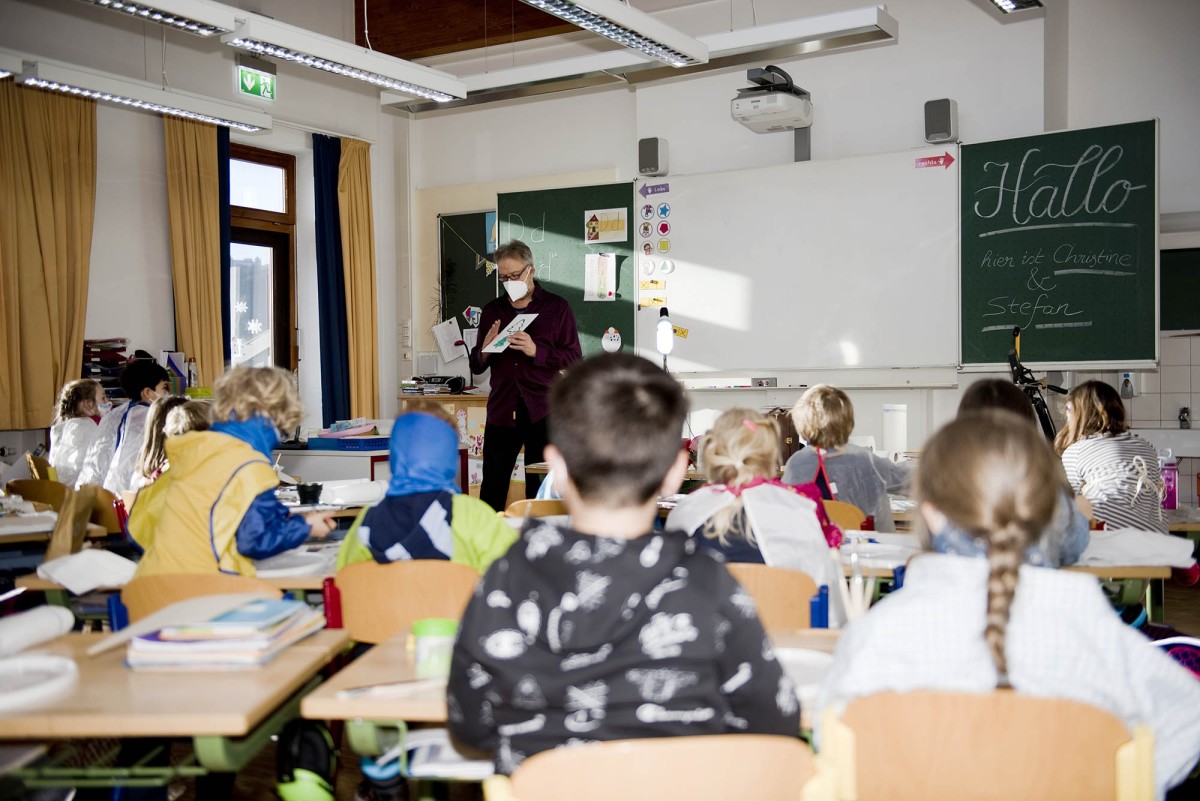
Technology of today, to be (innova+crea)-tive tomorrow
The first workshop originally targeted older students, but after adjustments, it was introduced to third graders. Here, children learned to connect copper strips to LED lights and batteries, creating glowing greeting cards. It was a challenge at first, tiny hands fumbling with circuits, but soon, the sense of achievement was palpable.
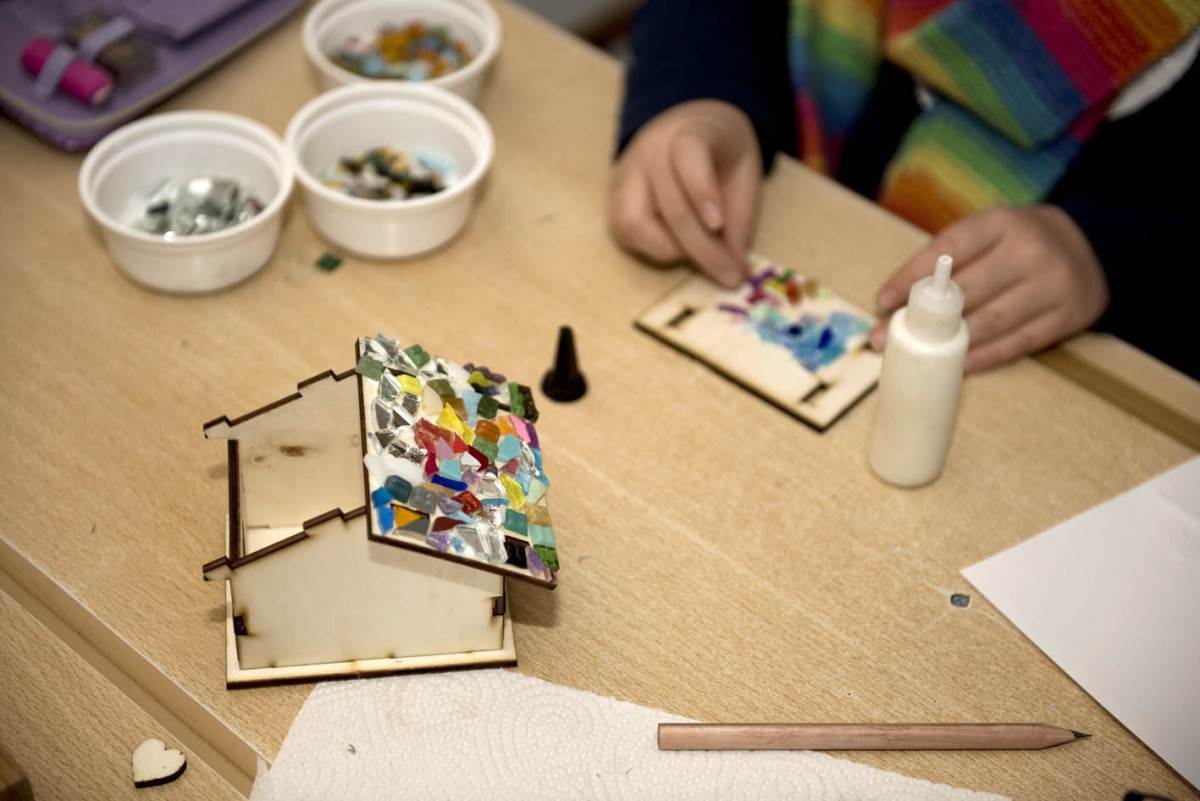
The second workshop targeted first and second graders. Could six-year-olds really engage with creative technology? With simplified steps and playful guidance, these young learners designed and decorated plywood playhouses using mosaics and painting techniques. Each child worked on their own creation, proudly adding personal touches. This clearly shows that creativity has no right or wrong answers.
Teachers played a crucial role in this transformation. Their enthusiasm was contagious. They actively helped adapt materials and integrate new approaches into their teaching. Many expressed appreciations for the maker’s space concept, seeing it as a way to bring innovation into classrooms step by step. One teacher remarked how refreshing it was to see students so engaged, while the school’s dean asked, “Wie geht’s jetzt weiter?”—a clear sign of interest in future collaborations.
Shift of Mindsets
Students learned that they could create something meaningful on their own: a glowing card for a loved one or a playhouse decorated with care. They discovered that creativity thrives on experimentation, and mistakes are part of the process. This mindset shift is invaluable, fostering confidence and curiosity that traditional lessons often struggle to achieve.
Feedback was overwhelmingly positive. Students asked when the team would return, teachers praised the workshops’ adaptability, and the school expressed interest in follow-up projects. By embracing flexibility and collaboration, The Learning Lab turned obstacles into opportunities, proving that innovation in education is not about rigid plans but about creative resilience.
In the end, this Learning Lab transformed classrooms into maker spaces, teachers became co-creators, and students discovered the joy of learning through making.
Image: FabLab Oberland e.V.
Key Takeaways