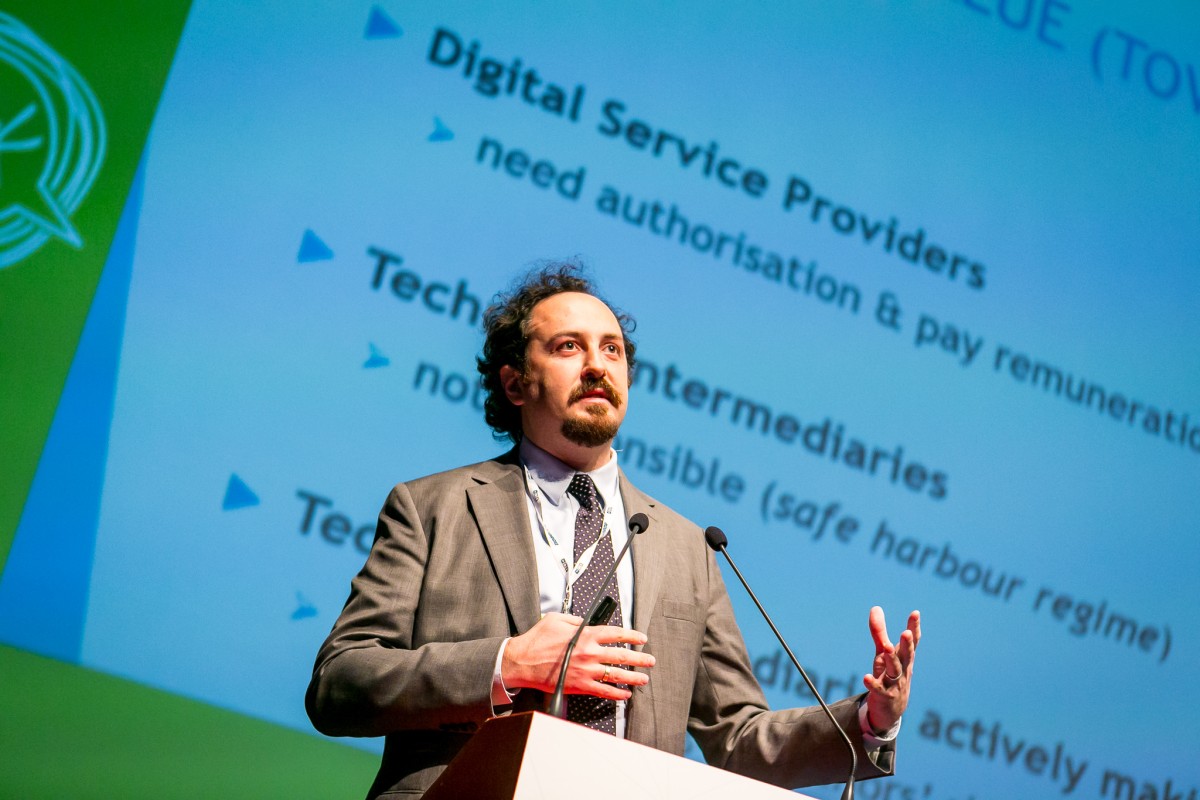


Burak Özgen, Deputy General Manager of GESAC talks to CU about copyright, fairness and rightsholders' remuneration in the digital and AI era. With a video to premiere here, he explains how the much cheaper or for free Generative AI content threatens to cannibalise human creation. Read on.
By Eirini Polydorou
Burak Özgen, Deputy General Manager of GESAC - the European Authors' Societies has been advocating for authors' rights for more than two decades, the last fourteen years serving in GESAC.
Together with Burak, we discuss copyright, AI and buy-out contracts. He responds to controversial issues and livens up the conversation with a video explaining how "Generative AI models scrape the entire internet to use existing content, in disrespect of copyright laws". He interprets fairness at the heart of the EU AI Act as transparency and rightsholders' remuneration and suggests EU policy measures that may ensure a "healthier, fairer and more sustainable ecosystem" in the promising new year 2026.
CU: We hear that AI-generated content is already replacing human creation in many areas. Some may say that this may be an exaggeration, similar to such fears expressed with technological innovation in the past.
There is a real threat that the unfair substitution effect of AI-generated content in the cultural market could have a very serious and detrimental impact first for creators, and then for the entire cultural sector. This is already happening to a certain extent: some shops and cafés say they use AI-generated content not to pay for licensed music, some broadcaster or film producers use AI-generated background music or characters to replace creators and performers, most of young designers’ or photographers’ possible work opportunities are lost as brands, publications or businesses opt for AI-generated options for their daily needs.
Creators’ works are being used by GenAI developers at massive scale with neither consent, nor remuneration, and on top of that, resulting outputs of their services are also used by third party commercial users to replace the original works, on which they are trained on. This is clearly unfair competition and infringement of rights of creators at several dimensions.
CU: Is there evidence of the extent to which this is happening?
In the music sector, according to recent studies in France/Germany, Spain and Denmark, creators are likely to lose 25 to 30% of their revenues in the coming three years, if the necessary steps to ensure proper licensing for input and a robust remuneration system for output are not guaranteed. A global economic study looking both into music and audiovisual sector, as well as the European Parliament’s legal study (section 3.3), support the same conclusions.
A recent study from the music streaming service Deezer also illustrates the enormous scale of the problem: 34% of all daily uploads to streaming platforms are AI-generated content, and 97% of the consumers fail to properly distinguish what is original or AI-generated. Considering the uncontrolled power of platforms’ algorithms and fraudulent players’ manipulation schemes, creators can only rely on the goodwill of platforms – and unfortunately not the laws – for the latter not to channel the main attention of consumers towards such content at some point for one reason or another.
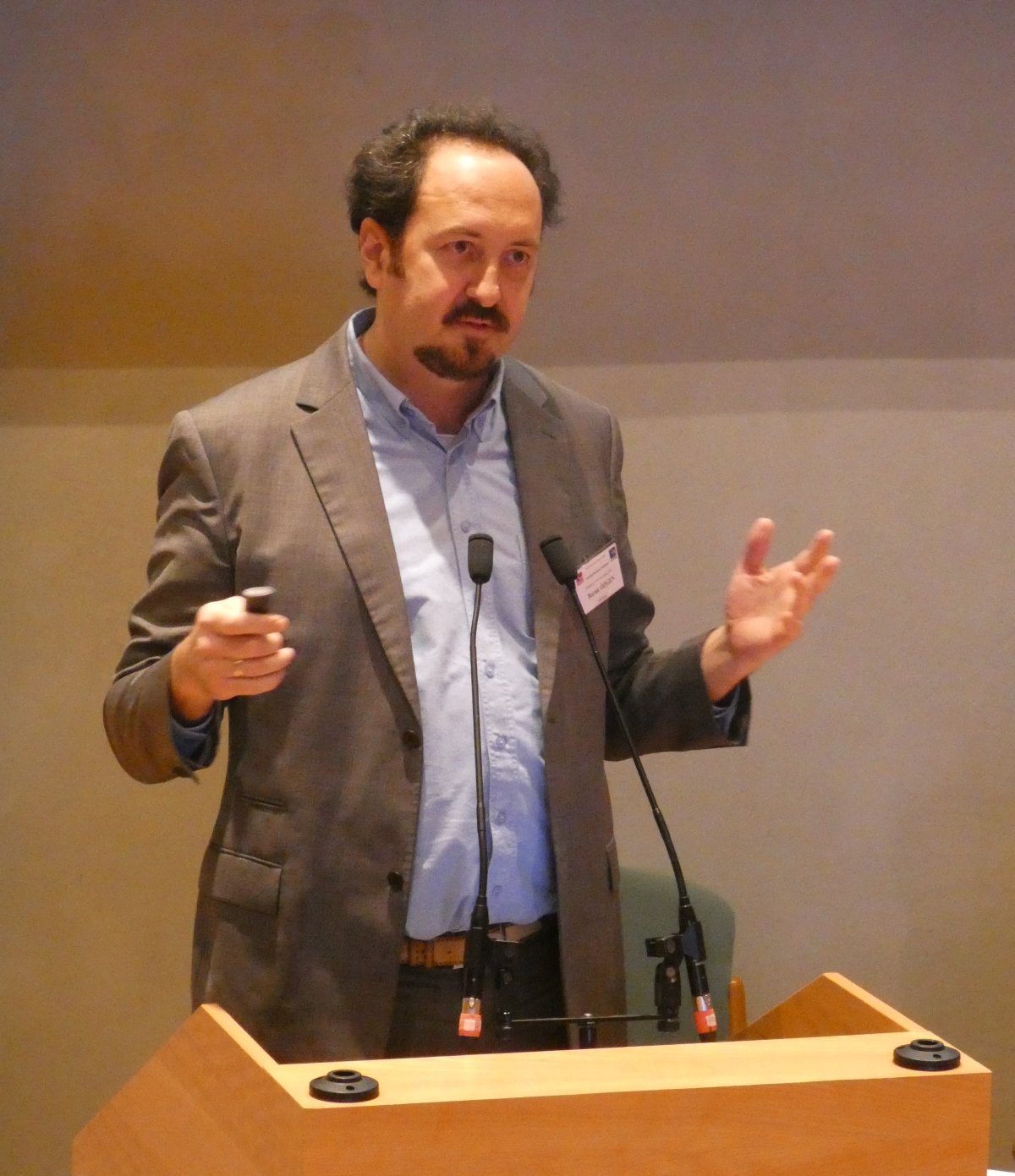 Photo by Orsolya FÜSSI-NAGY
This not a guess, it is not theoretical, it is happening now and can only be tackled with a legislative intervention at EU level to ensure continuous remuneration of creators for the use of their works both by GenAI services and the third parties using that AI generated content commercially in the cultural market.
CU: We see that fairness is the heart of the EU AI Act and under Commissioner’s statements that the priority is that creators are in full control of their works. Why did creators denounce the Commission’s launch of the guidelines in summer 2025? What is the state of play in this regard?
Creators’ community have been and still are very encouraged by EVP Virkkunen’s and Commissioner Micallef’s commitments to ensure appropriate remuneration of creators, whenever their works are used by AI services. This is an important principle, a sound political perspective and an objective that the EU is yet to achieve.
AI Act itself brought some useful elements that can be used by creators and their collective management organisations to better exercise their rights, however the effectiveness and applicability of those rules have been practically omitted by, what we call, AI Act Implementation Package (i.e. the Code of Practice, the Transparency Template and the Guidelines document for the General Purpose AI models) adopted in July/August 2025. Creators and rightholders community from all sectors have heavily criticised those documents and their compliance with EU law. However, they are now in operation and become the main reference for the implementation of the current law.
Global GenAI services continue refusing licences with rightholders, creators and their societies in Europe, and not providing any remuneration or transparency towards creators, whose works they use at massive scale. And those documents that were supposed to help implementation of current law made it even more difficult to do it, if not become a reason not to implement any EU rules at all.
This situation leaves creators with no other option than asking a new legislative framework to address the essential outstanding issues to achieve a fair and sustainable market in which European creativity and innovation can grow hand in hand. In this respect European authors’ societies ask a new additional dedicated legal framework which would bring clear and enforceable obligations to ensure:
1. Application of European rules to all GenAI services in Europe
2. A dedicated transparency and presumption scheme to have proper visibility on the use of works by GenAI companies
3. Continuous remuneration of creators for the use of AI-generated content by the commercial users
CU: Why do you see buy out contracts as a threat? Isn’t this common practice in the US? Isn’t a buy-out contract better than no contract at all for any author struggling to make a livelihood from their creative work?
First of all, the US authors are also not happy about buyout contracts, which are imposed on them. They have their own ways to oppose and tackle those unfair practices, although not always successfully.
In Europe we have the authors’ right regime, principle of appropriate and proportionate remuneration in law, and collective management organisations that authors themselves formed and manage to stand against such practices of media conglomerates or tech giants. However, lately, with the domination of non-EU-based video-on-demand platforms in the audiovisual market those long-standing principles of EU law and European cultural market are being circumvented through the buy-out contracts. These contracts are coercive, unfair and in many instances even illegal, but are in operation due to application of foreign laws and jurisdiction of foreign courts that the same contracts impose.
Especially creators of music in the audiovisual works face the risk of being blacklisted in the market if they don’t accept these contracts, which provide them with lower payment and deprive them from receiving any future royalties from the success of their works. While the legality of those contractual clauses is questionable, creators’ only chance is trying to challenge those contracts, which they were already coerced to sign, in the courts of other countries under other laws, which is obviously not realistic. EU law in its current state does not have sufficient remedies and effectiveness to address this problematic comprehensively, although there are some half way solutions in a few Member States that remain relevant only for that Member State but not across Europe.
Having a sound foundation for protection is good for all authors. Even if they might want to accept in one occasion some less favourable conditions – as you said when they think it is better than nothing in that case – this should be their own choice, but not a coercive market practice imposed on them systematically without any other alternative and without any guarantees for standard level of protection that all creators deserve. The latter is provided in Europe with the above-mentioned principles of European authors’ right regime and continuous participation to the success of their work with the collectively negotiated agreements by authors’ societies on behalf of all authors and composers.
European creators ask the EU policy makers to introduce rules to prevent circumvention of existing EU protections. This is about fairness as much as cultural and political sovereignty. Authors’ rights are also guaranteed under the Charter of Fundamental Rights and shall not be circumvented through contractual clauses that solely serve commercial interests of one party at the expense of enjoyment of such fundamental rights by creators and dismantling EU’s rule of law.
CU: Is supporting culture's intrinsic value contrary to economic goals? How can the EU support artistic freedom and fair working conditions in parallel to a growing cultural and creative industry as a driver of EU’s growth and economy?
Cultural and creative sectors are unique in creating and naturally growing a virtuous economic model. The success and uniqueness of each player in the value chain adds to the value and unique offer of the other. This is true both in terms of economic value and the richness, diversity and vibrancy of cultural fabric of the society. Indeed, support for culture is needed beyond the sole consideration of commercial value for its necessity in forming a more understanding, more resilient and more creative society, but this investment, this support, returns considerably higher benefits for the society both in economic, social and political terms than in any other sector. Again, several studies have laid the facts and figures on this.
Authors’ rights, in this respect, play a key role in sustaining this virtuous ecosystem, by allowing the creators to build a professional career based on their rights, being the source of their independence and freedom as the artist at the source of creation, becoming the basis for fair conditions, and allowing cultural businesses to grow and scale with a sound return for their investment. On this way a rich cultural sector is also helping the cities, regions, countries to become more attractive with cultural offers contributing to local businesses, inspiring new business models across the platforms to reach more people, filling our lives with joy, entertainment and more knowledge, while making us feel not alone, closer to each other and more united.
It is not a surprise that the Treaty of Lisbon and its previous versions establishing the EU foresees, beyond the need to support culture, also that “The Union shall take cultural aspects into account in its action under other provisions of the Treaties, in particular in order to respect and to promote the diversity of its cultures.”
CU: We have seen you saying that 2026 will be an important year for copyright in the EU. Why do you think that? What are your expectations?
I was referring to this based on what I am hearing more and more from policy makers and industry/sector representatives. EU decision makers, including the Commissioners and the MEPs are now more vocal in saying that they might consider a new legal framework addressing the imbalances in the GenAI sector from the perspective of copyright/authors’ rights. A recent report adopted by the Danish Presidency summarising the debates and exchanges that took place at the Council level also states that majority of the Member States consider additional EU measure as necessary.
The European Commission has already committed itself to evaluate the current legal framework in order to decide whether or what further measures can be taken and the Mission Letters given by the President von der Leyen to Commissioners at the beginning of this mandate already included the aspect “to further improve the copyright framework to address new challenges raised by market and technology development”. Possible EU level actions addressing the issues in GenAI market, coercive buy-outs in VOD market and more fairness in music streaming market would all fall under this overall objective.
I believe and hope 2026 will be the key year where all these perspectives become concrete, are transformed into sound legal proposals by the European Commission and a new page can be opened on the EU policy for a healthier, fairer and more sustainable ecosystem in Europe both for cultural creative sector itself and all other sectors that it supports to grow, so that Europe’s leading role in creativity and innovation can be maintained.
Burak Özgen is Deputy General Manager of GESAC - the European Authors' Societies (European Grouping of Societies of Authors and Composers), , which represents more than 1 million creators across Europe, rightsholders – from musicians to writers, visual artists to film directors and many more, in the areas of musical, audiovisual, visual arts, and literary and dramatic works.
Before his fourteen years in different posts in GESAC, Burak was legal and policy counsel to EMI Music Publishing. He has worked as an advisor to several industry organisations from creative sector and international projects. Holding an LLM from Ghent University in Belgium and with extensive research on collective management, he has served as visiting fellow at Columbia Law School's Kernochan Center for Law, Media and the Arts.
Image at the header - Courtesy of GESAC.