



New report in the UK shows that structural vulnerabilities, including low pay and precarity, lead to higher exit rates from the Arts, Culture and Heritage sectors (ACS) compared with other sectors. Working conditions particularly challenge women. Freelancers keep ACS going. Tailored support mostly needed. Read on.
By Eirini Polydorou
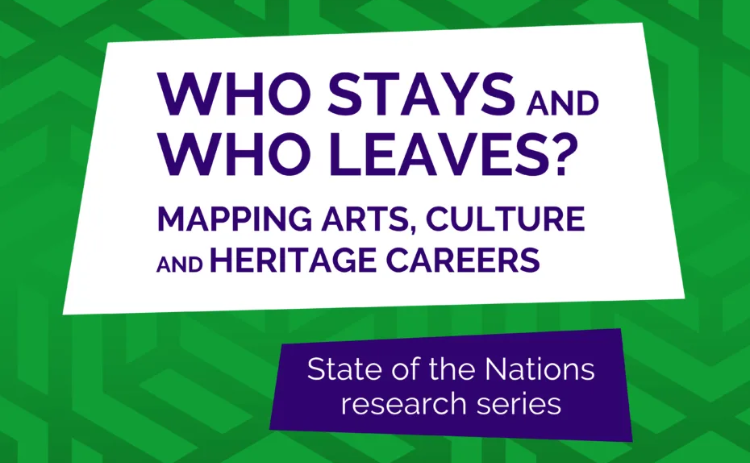
Women are more likely to leave Arts, Culture and Heritage (ACH) jobs according to ‘Who Stays and Who Leaves? Mapping Arts, Culture and Heritage Careers’, the new report published by the AHRC-funded Creative Industries Policy and Evidence Centre (Creative PEC).
Low pay, limited perspectives, lack of flexibility and precarious employment are among the structural vulnerabilities highlighted as leading to higher exit rates compared with other sectors, especially regarding early and mid-career workers, the authors of the report pointing to the need for improved and tailored workforce support.
Worsened by chronic funding gaps across the ACH sectors as a whole, such challenges appear as characteristic of ACH working conditions, particularly affecting people with caregiving responsibilities.
Women with children reported challenges that make working in the ACH sectors often incompatible with family life, since on top of low pay there is a need for out-of-hours networking for career advancement and a frequent need to work out of hours (e.g. for events, touring, weekend workshops, evening performances).
“It’s particularly troubling to see women finding jobs in the sector are often incompatible with caring responsibilities, which is something the whole industry should be turning its attention to, and finding solutions.” said Dr. Emily Hopkins, Policy Adviser, Creative PEC.
Who stays - Freelancers tend to stay, yet not always by choice
Freelancers represent approximately 59% of the ACH workforce, forming a vital backbone of the highly skilled and knowledgeable ACH jobs.
The study finds that self-employed and freelance workers are less likely to leave than employees. While providing continuity for the sector, they may stay freelance out of necessity rather than choice, taking under consideration the limited opportunities for secure employment or progression.
As commented by Paule Constable, Six times Olivier Award Winner, freelance lighting designer (credits include War Horse and The Curious Incident of the Dog in the Night-Time):
“It’s a common misunderstanding that we are all happily freelance by choice. That is often not the case. Jobs such as my own, actors, directors, casting directors, musicians: we are all freelance by necessity - there are no longer any salaried positions in these disciplines in this country. We need to strategically ensure that support for skilled freelancers is built into the government’s growth vision for our shared future. The government’s commitment to a freelance champion is an opportunity to start this work. We must focus on rebuilding trust and moving from discussion to action.”
Who leaves - Early to mid-career professionals leave and find their skills transferable
Pointing to a retention challenge for young and skilled personnel, the study finds a higher possibility for people less than 35 years of age to leave ACH occupation, while the majority of people leaving ACH careers move into managerial or professional roles in other sectors.
Nevertheless, ACH career leavers were found to feel that their ACH-related skills were not lost but transferable to their new job posts.
“The qualitative findings reinforce the importance of appropriate pay and progression opportunities. However, reassuringly for the individuals, we also find that people who leave arts, culture and heritage occupations have been able to use their skills effectively in other lines of work.” said Dr Mark Taylor, Lead Report Author, University of Sheffield.
About the Report
Responding to a well-known challenge across the CCS in Europe regarding lack of data, the particular study provides a robust basis of analysis. It combines multiple approaches including recent analysis of the Labour Force Survey from 2015 - 2024 (yielding a vast data sample of 657,060, of whom 11,920 worked in arts, culture and heritage occupations at some point) and 120 qualitative interviews.
The report is written by Dave O’Brien (University of Manchester), Mark Taylor and Ruoxi Wang (University of Sheffield), Peter Campbell (University of Liverpool) and Kate Shorvon (University of Manchester) and is part of Creative PEC’s State of the Nations series.
This report continues the State of the Nations series, building on previous Arts, Culture and Heritage (ACH) research. It is published by the Creative Industries Policy and Evidence Centre, which is led by Newcastle University with the Royal Society of Arts and funded by the UKRI Arts and Humanities Research Council (AHRC).
Find more here
Image 1 (header) by Igor Almeida Suassuna from Pixabay
Image 2 - ‘Who Stays and Who Leaves? Mapping Arts, Culture and Heritage Careers was designed by Mike Green at Green Doe Graphic Design