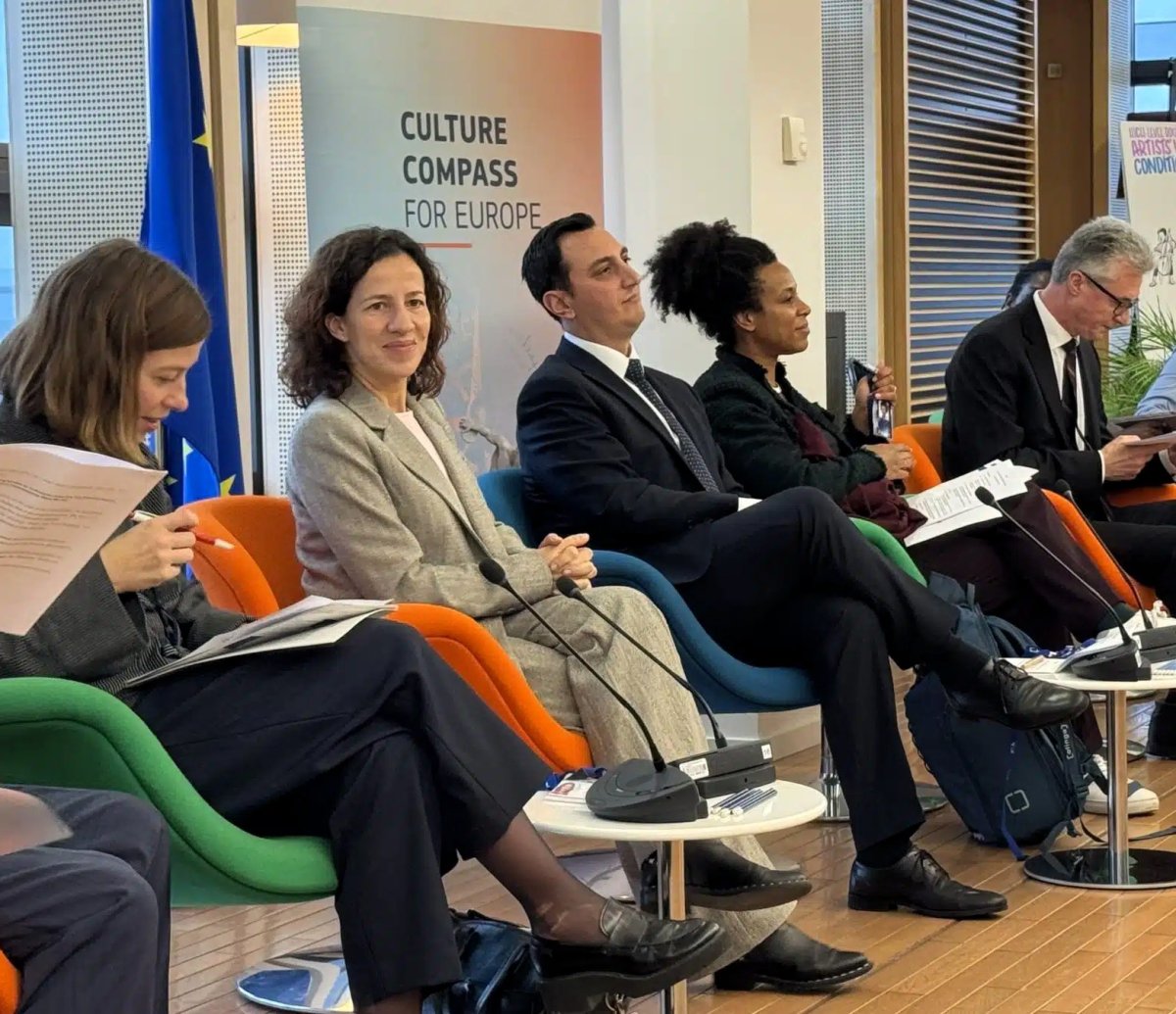


The European Commission hosted a high-level roundtable with 25 cultural organizations to advance artists' working conditions across creative sectors. Representatives discussed critical issues including fair pay, AI protections, and social rights for creative professionals.
By Matthaios Tsimitakis
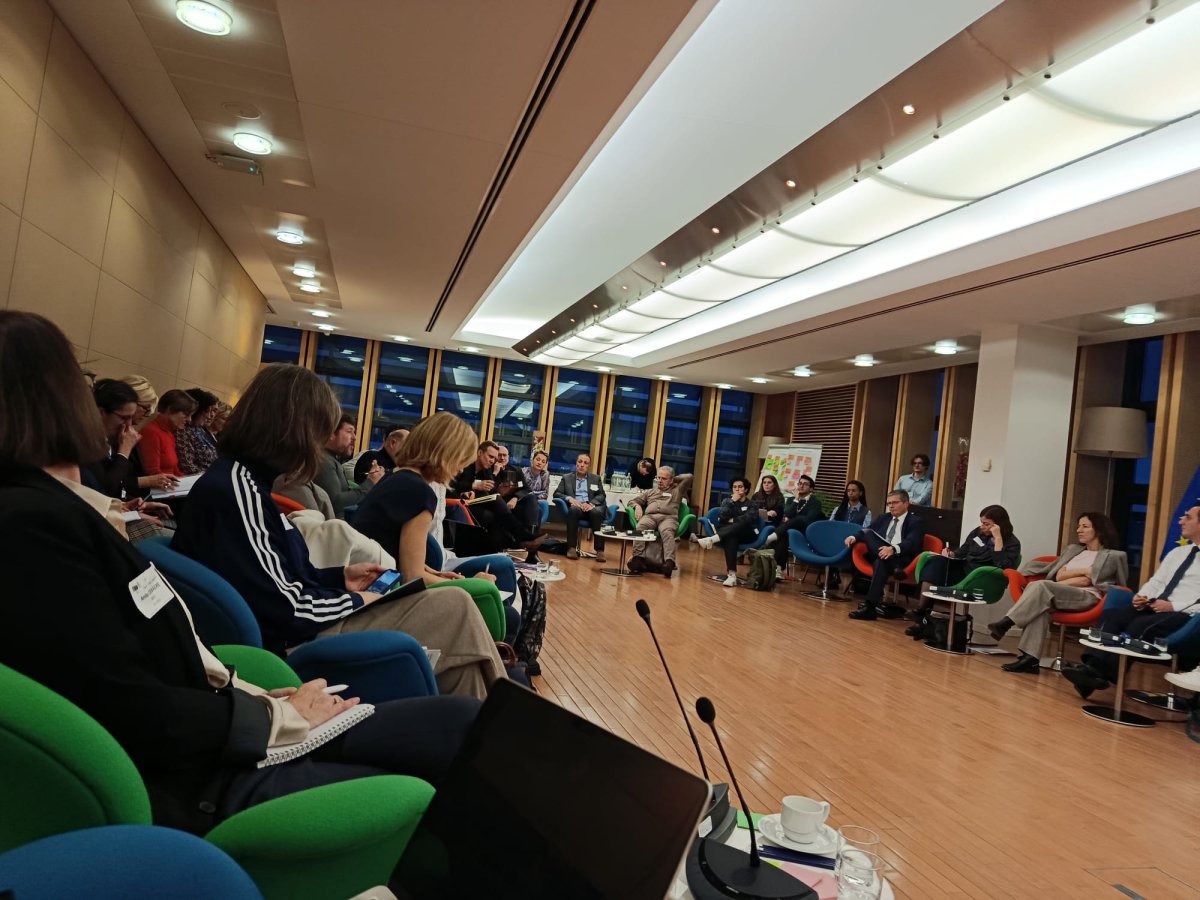
Commission Executive Vice President Roxana Mînzatu and Commissioner Glenn Micallef hosted a high-level exchange on pressing issues for artists and culture professionals. The event brought together chairs of the European Parliament's Culture and Education (CULT) and Employment and Social Affairs (EMPL) Commitees—Nela Riehl and Li Andersson—alongside 25 European organizations representing diverse creative professions.
Participants included organisations such as ACE, AVTE, FIM, EFJ, FIA and E.C.C.O., according to statements published by those organisations and sector bodies after the meeting. Three artists from France, Sweden, and the Netherlands shared firsthand experiences of working in the cultural sector, according to Culture Action Europe.
According to Culture Action Europe's detailed recap, after the meeting, social dialogue and collective bargaining emerged as a top priority, with social partners expressing readiness to work toward a framework agreement for the sector. Artificial intelligence regulation dominated discussions, with many organizations calling for an opt-in system requiring tech companies to obtain permission before using creative works for AI training.
Participants expressed hopes for a future revision of EU copyright rules, and demanded a ban on buyout contracts—deals where creators receive a one-time fee in exchange for surrendering all or most rights to future uses and revenues from their work. Increased public funding at EU, national, regional, and local levels was identified as essential, with calls for social conditionality tied to grants. This would require beneficiaries to commit to fair pay, fair practice, and decent working conditions, according to the same source.
Sector-specific concerns included protection for journalists, closing streaming loopholes, guaranteeing statutory remuneration rights for audiovisual authors, and securing performers' neighbouring rights for their lifetime. Beyond insufficient remuneration—including unpaid preparation time—participants highlighted critical gaps in social protection, particularly regarding sickness, unemployment, pregnancy, and maternity leave.
Culture Action Europe stressed that the Charter should be endorsed as broadly as possible by EU institutions, member states, social partners, networks, employers, and cultural operators who work with or commission artists. The organization's Head of Policy noted that the EU Artists' Charter concept was originally proposed in the Culture Compass and conceptualized by Culture Action Europe and Creative FLIP in their discussion paper “Towards the Culture Compass: a Sector Blueprint.”
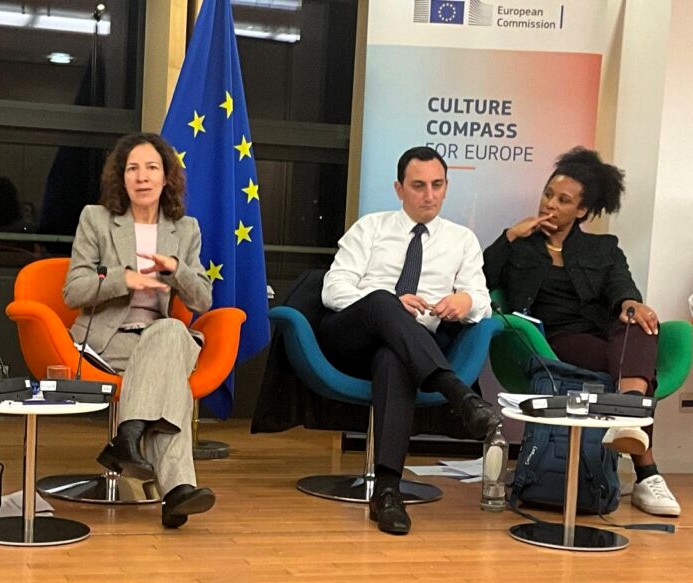
The roundtable discussions align with the recently adopted Culture Compass for Europe, the EU's most ambitious cultural strategy to date. The Compass establishes 20 flagship actions organized around four key directions: upholding cultural rights and values, empowering artists and supporting people, fostering competitiveness and resilience, and strengthening international cultural relations.
The second direction, “Artists and People” positions improved working conditions for cultural professionals as a central priority. By 7 December 2025, artists and cultural professionals were invited to share their experiences, addressing what must change for fairer, more sustainable careers.
According to the European Commission, the meeting represents a significant first step toward delivering tangible improvements to working conditions at the EU level through the preparation of the EU Artists' Charter. Commissioners reaffirmed their commitment to positioning culture at the heart of EU policymaking and making fair working conditions a reality across the creative sector.
Image 1: Courtesy of ACE
Image 2: Courtesy of ECCO
Image 3: Courtesy of FIM