





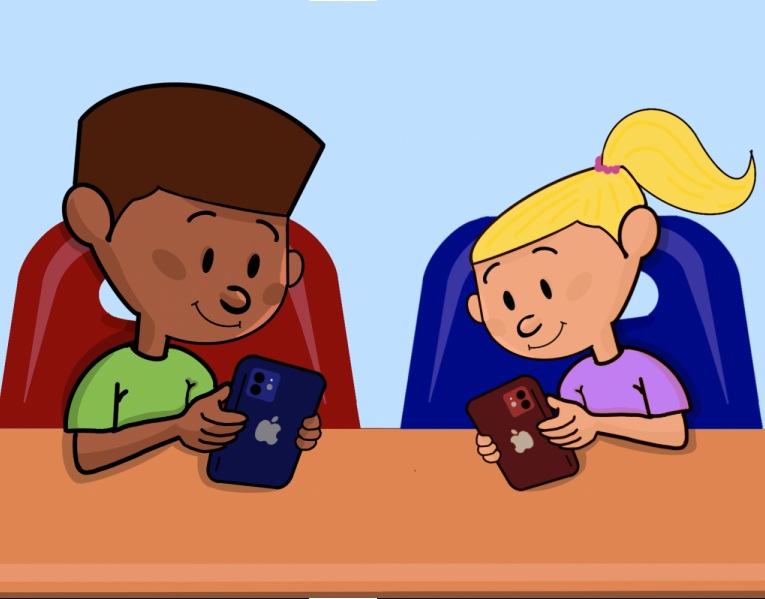

The European Commission has tabled legislation that would bar children under 13 from holding social media accounts anywhere in the European Union, permit only tightly supervised "mini accounts" for 13- and 14-year-olds, and reserve full, independent accounts for teenagers aged 15 and over.
The proposal, unveiled on September 17 by Ursula von der Leyen, the Commission president, and Henna Virkkunen, Executive Vice-President of the European Commission for Technological Sovereignty, Security and Democracy, is formally titled the EU KIDS Act. It now goes to the European Parliament and the Council of the EU for negotiation, a process legal analysts expect to take roughly two years given the scale of the proposal. "What we are witnessing is a great capture of our children," Peesident von der Leyen told the European Parliament in Strasbourg the day before the proposal was formally presented.
Three tiers, one system
Access would be graded by age, according to the Commission's summary. Under-13s would be barred from social media entirely, though they could still use child-friendly video-sharing services through an account run by a parent or guardian. Thirteen- and 14-year-olds could use "mini accounts" set up and controlled by a guardian, with restricted features and a daily cap of one hour. From 15, teenagers could open and run their own accounts.
For existing users, platforms would have six months from the rules taking effect to establish whether account holders are under 15 and to deactivate any account belonging to a child that age or younger, or one whose age cannot be established with a high degree of confidence; no fresh check would be required where a platform can already tell an account belongs to an adult.
The Act goes well beyond age limits. It would impose "safety by design" duties on social media, video-sharing platforms, online games, AI companions and chatbots, and app stores. Addictive features such as infinite scroll, autoplay without breaks and reward mechanisms would be restricted, as would profiling-based recommendation feeds and personalised advertising aimed at children. Minors' profiles would be private by default, with location, camera and microphone access switched off unless actively enabled, and platforms would have to block unsolicited contact from strangers and suspend push notifications during an eight-hour overnight window, from 10pm to 8am. AI companions and chatbots would have to be switched off by default, with safeguards against designs intended to foster emotional dependence in children.
Platforms with at least 45 million monthly active users in the EU — so-called "very large online platforms" under the Digital Services Act — would have to submit compliance plans to independent auditors before their services could be used by children at all, reversing the usual burden of proof. Breaches could bring fines of up to 6 per cent of a company's worldwide annual turnover.
Age checks without a passport
The thorniest technical question is how to verify a child's age without forcing them to hand over identity documents. Self-declaration of a date of birth would no longer be sufficient. Instead, platforms would be expected to use certified, privacy-preserving tools that confirm only whether a user clears an age threshold — 13, 15 or 18 — without revealing their name, date of birth or other personal data.
The Commission already has such a tool: an EU age-verification app, built on open-source, privacy-preserving technology, which it recommended in April that member states roll out by the end of this year. It is designed to work alongside the forthcoming European Digital Identity Wallet, due to be made available across the bloc under the EU's eIDAS 2.0 rules by the end of 2026.
Brussels is acting against a backdrop of national initiatives running ahead of EU law. Twenty-three of the 27 member states are drafting, debating or adopting measures of their own to restrict children's access to social media.
France's president, Emmanuel Macron, has been the most vocal advocate of an EU-wide age limit; France's own under-15 ban was struck down by its Constitutional Council on August 14, eighteen days before it was due to take effect, and the government submitted a revised proposal in mid-September.
Denmark has already passed a national ban for under-15s. Spain, Italy, Portugal and Poland have draft age-verification laws in progress, and Romania's Senate has approved a similar bill, which is now before the lower house, the Chamber of Deputies. Greece and Austria have pushed for tougher enforcement, including turnover-linked penalties of the kind now proposed at the EU level.
Not every government agrees on where the line should fall: earlier reporting on the draft found Spain pushing for a threshold of 16, France for 15, and the Commission's own expert panel recommending 13, while Estonia and Belgium have opposed blanket age bans in favour of regulating platform design instead.
The European Parliament had already staked out a more restrictive position of its own, voting 483 to 92 in November 2025 to call for a harmonised digital age of majority of 16.
What happens next?
The EU KIDS Act is, for now, only a proposal. It must be agreed by the European Parliament and the Council of the EU, and the final text — on age limits, verification methods and enforcement — may differ substantially from the Commission's draft.