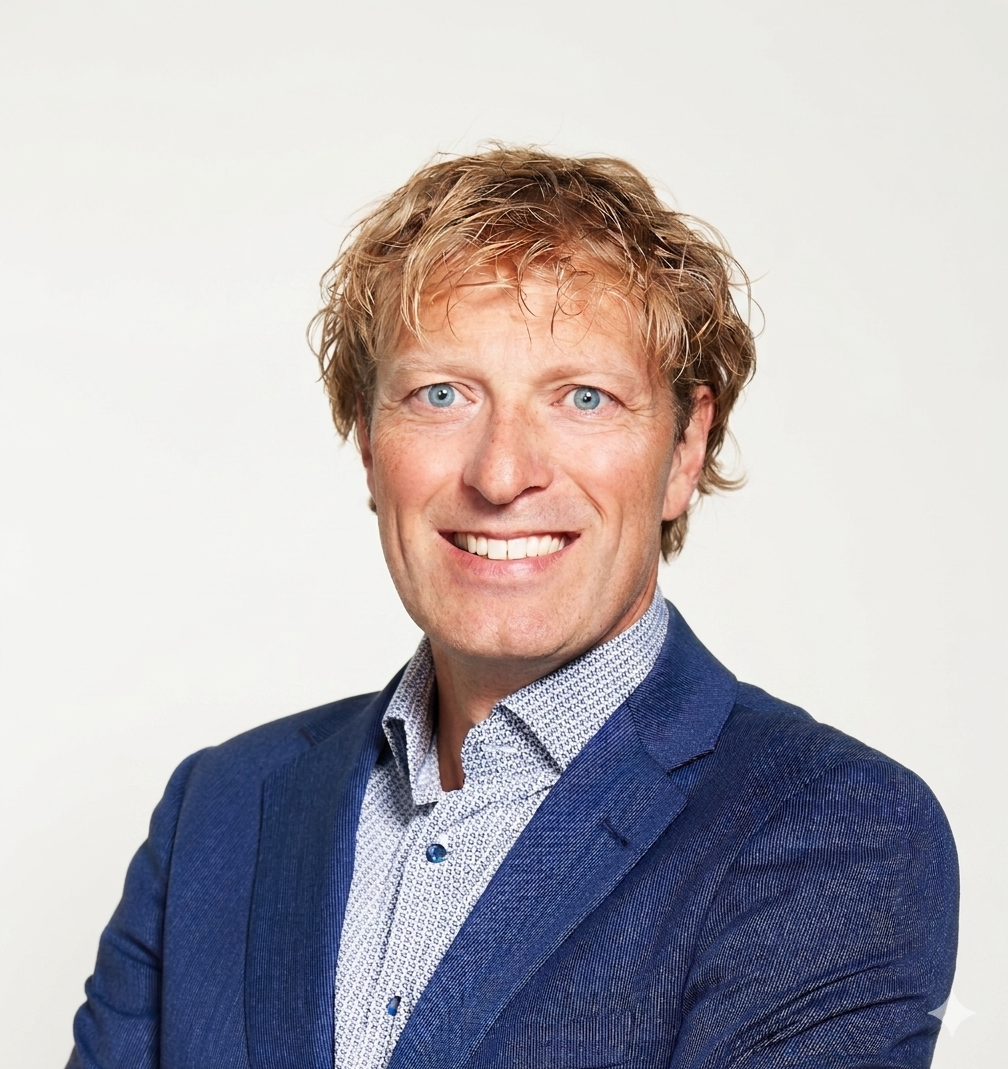



Ronald Kleverlaan, a leading voice in alternative finance, explains how crowdfunding, matchfunding, and innovative models can unlock new opportunities for professionals in the cultural and creative sector—from heritage regeneration to scaling cooperatives across Europe.
By IDEA Consult, Joost HeinsiusIn Milan, the city co-funded local cultural and social initiatives that had already raised 40% of their target through donation crowdfunding, topping up the remaining 60% — capped at €48,000 — using European Social Fund money. In the Belgian province of Antwerp, the Trividend platform goes further: crowd investment in social and sustainable SMEs is quadrupled into a loan of up to €60,000, giving community backing real financial leverage.
These models belong to a broader family of alternative finance tools — crowdfunding, matchfunding, cooperative finance, and impact investment — that have grown significantly across Europe but remain underused in the cultural and creative sector. The barrier is rarely appetite; rather, it is a lack of knowledge, rigid policies, and the absence of ecosystems that connect platforms, funders, and beneficiaries.
Ronald Kleverlaan, based in the Netherlands, has built a career on changing that. As the founder and director of the CrowdfundingHub, chairman of the Dutch Foundation on SME Financing (Stichting MKB-financiering), and director of the European Centre for Alternative Finance at Utrecht University, he has been involved in numerous EU alternative finance projects, several of which link directly to cultural activities.
In Talking Finance, CU's special feature interviewing experts in the field, Ronald Kleverlaan draws on his rich experience to map what works, what doesn't, and where new opportunities lie for the sector.
Q: You started the CrowdfundingHub at a time when crowdfunding was quite new and unknown. What is the position of crowdfunding now in the financing landscape? And how is matchfunding developing?
A: Crowdfunding in Europe has grown enormously and has become accepted as a valid form of financing. However, it is still viewed as "alternative" finance. Traditional banks, governments, and, for instance, regional development agencies still find it hard to integrate crowdfunding into their broader financing strategies. Matchfunding, where crowdfunding is combined with tools like loans or investments, is still a new concept for many regional and local governments.
In the Crowdfundmatch project for DG Regio, we identified several barriers: a lack of baseline knowledge, inadequate digitalisation of services, a lack of policy development on the subject, and the strictly internal focus of investment agencies, which often find it difficult to cooperate on an equal footing with crowdfunding platforms.
A best-practice example is the Italian city of Milan: the city matched local cultural and social initiatives that reached 40% of their goal through donation crowdfunding, providing the remaining 60% up to a €48,000 cap. This matchfunding contribution was funded through the European Social Fund.
Regional development funds have several options for engaging with matchfunding through crowdfunding. They can co-invest directly in individual projects via a crowdfunding platform, or they can invest directly in the growth of the platform itself.
The development fund of the Dutch province of Utrecht chose the latter option; they invested in the expansion of an equity crowdfunding platform to support crowdfunding for entrepreneurs across the Utrecht province.
The Trividend platform in the Belgian province of Antwerp chose a different route. Through their platform, the crowd invests in social and sustainable SMEs. That community investment is then quadrupled into a loan, up to a maximum of €60,000.
Q: Financing in the cultural and creative sector needs skills which are often lacking. In the Altfinator project, you tried to educate more financial advisors in using alternative finance. What did you find?
A: It is not just a matter of addressing a lack of knowledge and training financial advisors; alternative finance only works if you build a lasting financial ecosystem. You need targeted advocacy directed at regulatory bodies, the professionalisation of the sectoral organisations that represent different stakeholders, and better financial education. To convince stakeholders, you also need robust data collection and continuous research to prove that there is a genuine need for professionalisation.
In the Netherlands, it took more than eight years to develop this kind of alternative finance ecosystem, which required research, direct advocacy to the government and parliament, the development of new regulations, and setting up a qualification framework for SME financial advisors.
Q: Financing and maintaining cultural heritage is usually a significant challenge. You have been involved in the Hub-In project, a five-year Horizon research project that took a different approach by using innovation and entrepreneurship to drive regeneration and new financing models. What was unique about this project?
A: The project investigated cultural heritage hubs in eight European cities, from Lisbon and Belfast to Nicosia in Cyprus. The key was discovering the added value of regenerating these historic sites and mapping out how they could be transformed using different business models and financing mixes. Some hubs concentrate on creative entrepreneurship, others focus on creative placemaking and shared ownership, while others lean into sustainable hospitality.
The financing sources we researched combined public funding, private funding, and community funding in various configurations. Around 40 cultural heritage case studies were compiled into a Business Models and Finance guide.
For example, in an old market hall in Bratislava, Slovakia, a community currency was developed to pay for local products, with the surplus revenue reinvested directly into the building. Meanwhile, in the Spanish city of Cordoba, cooperative housing associations buy heritage properties for co-living spaces to prevent neighbourhood gentrification.
Q: Artists are often involved in cooperatives and communities, which frequently raises a crucial question: how can we grow and scale successful cooperatives when financing them is usually a struggle?
A: There are many ways to grow and scale. In the Scentiss research project on social entrepreneurship, this topic was our starting point. They identified several forms of scaling, such as offering new services to the same beneficiaries (expansion), addressing different social needs (diversification), or setting up new branches (duplication). However, scaling can also be framed on a more systemic level: by mobilising a social movement, encouraging other actors to adopt your practices, and influencing policy to gain wider institutional acceptance.
Q: Last question. At the moment, there is a lot of buzz surrounding impact funding. What is your take on it?
A: There is so much talk about "impact" that the concept runs the risk of becoming empty. To me, finance is only truly impactful if it generates concrete, sustainable social change.