

A museum partners with a technology company developing an augmented reality platform. The company needs content, space, and visitors; the museum needs access to new technology. Both sides benefit.
But for Ragnar Siil, the example also raises a broader question at the heart of a wider policy challenge: how can cultural organisations move beyond one-off exchanges and take a more active role in shaping, developing, and benefiting from cross-sectoral projects?
Culture is increasingly connected to fields such as technology, health, tourism, education, and regional development, yet funding systems often remain organised around separate sectors and short project cycles. For cultural and creative actors, this can make it difficult to take part in collaborations that do not fit neatly into existing funding categories.
The numbers are telling. A UK Design Council study from 2020 showed that for every pound invested in design, businesses saw, on average, a £20 return on revenue, £4 on profits and £5 on exports. A 2023 report (PDF) showed that for every £1 invested by the public sector in the Edinburgh Festivals, there is a return of £33 to Scotland!
Europe's cultural and creative industries employ around 8 million people across 1.2 million businesses, generating roughly 4% of the EU's GDP. Yet, despite being recognised as one of the EU's key industrial ecosystems, when it comes to research and innovation funding, the sector is largely invisible. Most R&D money flows elsewhere, leaving culture on the margins.
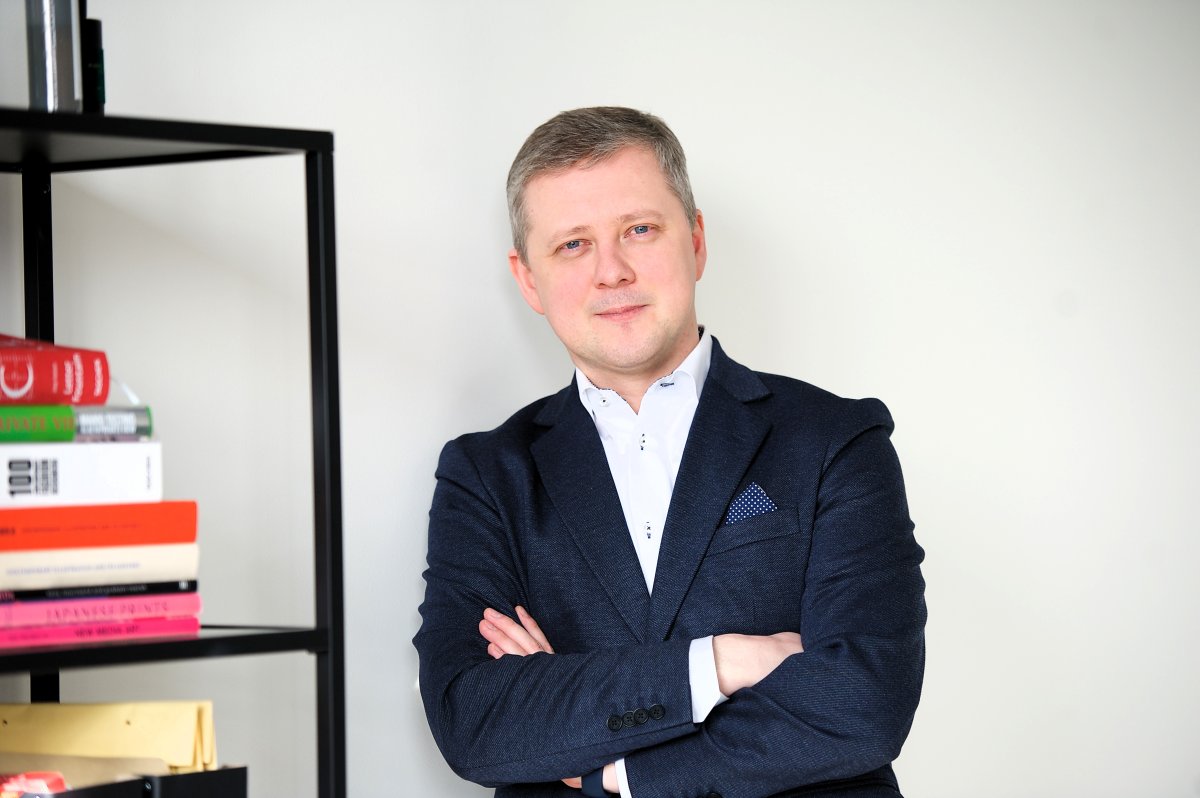
Cultural strategist Ragnar Siil argues that the arts are not a passive beneficiary of society but an active driver of innovation. He explores how embedding creativity into other sectors unlocks growth.
Ragnar Siil has spent two decades working at this intersection. Founder and managing partner of Creativity Lab and a contributor to the EU-funded ekip platform, he argues that cross-sectoral innovation becomes more useful when it is made specific: culture and health, culture and tourism, culture and technology, and culture and regional development.
In Talking Finance, CU’s special feature of interviews with experts in the field, Ragnar Siil reflects on what this means for funding, policy, and the future role of culture in wider innovation ecosystems.
Q: For cultural practitioners new to this topic, what is cross-sectoral innovation? What opportunities does it open up?
Cross-sectoral innovation, in simple terms, means bringing creativity out of its own silo and putting it to work alongside other sectors, e.g., health, tourism, education, technology, and defence. It is not culture serving as decoration for someone else's project, nor other sectors funding culture out of goodwill. It is co-creation, where cultural practitioners and organisations sit at the table as equal partners, contributing their methods, their audiences, and their ways of seeing the world.
Culture and creativity have always been very much integrated in the wider context where they operate. I don't think it's anything new. But there is a dilemma. While we think of culture and creativity in their phase 3.0 or 4.0 – integrated, shaped by technology, and blurred barriers between creators and consumers – our policy framework and, particularly, our funding framework are very much Culture 1.0. Top-down. Silo-based. Project-based. It doesn't support innovation. It doesn't support a cross-sectoral approach. And that limits actors from taking full advantage of those links.
Is it because of low awareness? Is it that the impact of culture and creativity is hard to measure, hard to quantify? Is it that the sector still lacks data and proof? Is it that the creative sector lacks a common voice? I don't know if anyone really has a definite answer.
Estonia has a very strong creative industries ecosystem compared with many other countries. We were one of the first countries to benchmark EU structural funds for creative industries. We launched national programmes for development centres, incubators, and accelerators. We have national programmes to support creative companies' exports. We have a relatively healthy system.
But here is the interesting fact. While we have those support mechanisms and funding opportunities, we are one of the few countries that have no national strategy for creative industries. The reason is very simple. I was there at the very beginning. We had money. We were given money before we needed to write a strategy. That flips things. In Latvia, they had a national strategy already in 2006. I was envious. And my Latvian colleagues said, 'Yes, we are world champions in strategy writing – but we have no money.' The Estonian success story is that creative industries have received funding by being purposefully integrated into other strategies where money lies – regional development, innovation, or tourism.
Because equal treatment of unequal players is not fair treatment. Innovation policy has to be designed with that imbalance in mind – otherwise, some players are left out before the competition even begins.
No matter how innovative or technologically advanced a creative company is, it cannot be assessed against a tech unicorn using the same yardstick. An animation studio and a SaaS (Software as a Service) startup operate on different timelines, with different cost structures, different growth curves, and different definitions of success. There is no fair set of judgement criteria that compares the two.
There are two ways to fix this. The first is to broaden the criteria so that the schemes themselves welcome a wider range of players and business models. The second is to create separate strands for creatives – mirroring the existing measures, but with thresholds, milestones, and growth expectations that reflect how the creative sector actually works. Either approach works. What does not work is pretending the playing field is level when it isn't.
A good example is the Estonian Maritime Museum's collaboration with Ericsson. Ericsson was developing an augmented reality platform – a tool that lets users create their own AR content and experience immersive environments – and they approached the museum with a straightforward offer: "You bring the collections, the space, and the visitors. We bring the technology. At the end, you get the full solution for free." It worked. The museum gained a cutting-edge visitor experience at no cost, and Ericsson gained a real-world testing ground with a built-in audience. A clear win-win.
But this is where I think we should push further. Why stop at being a testing ground? Why can't cultural institutions be co-owners of these projects – sharing not only the benefits but also the risks and the intellectual property? That is the next level of cross-sectoral collaboration. A museum is not just a venue; it is a source of content, expertise, and audience insight that has commercial value far beyond its walls. If a solution co-developed inside a museum can be scaled and sold to other sectors and other markets, the museum should be sitting at that table as a partner, not as a host.
Structural funds, without question. The reason is simple: they are decided locally. Each country and region defines its own priorities, designs its own measures, and chooses where the money goes. That is how you make funding actually serve your priority sectors – including creative industries, if you choose to include them.
Compare that to the centrally managed programmes – Creative Europe, Interreg, and Horizon Europe. The ideas are good, and the ambitions are right, but the success rate is too low. When only a small fraction of applicants get funded, you cannot build a national or sectoral strategy on it. It becomes a lottery, not a policy instrument.
There is still groundwork to do. We need to keep investing at the education level, building the mindset and the shared vocabulary and getting creatives and non-creatives into the same rooms. But we also need to go deeper. The next phase is about specificity. We should stop talking about "cross-sectoral innovation" as a single, abstract concept and start talking about its real components: culture and health, culture and tourism, culture and innovation, culture and defence, and culture and integration.
Each of these is a distinct field. Each has its own logic, its own data, its own institutions, and its own set of players. A measure designed for culture and tourism will not work for culture and defence. An ecosystem that thrives in the health space will look nothing like one built around education. The way forward, then, is to stop designing one-size-fits-all policies and start building tailored ecosystems – subsector by subsector. That is where the next wave of real impact will come from.
Q: If you could give one key piece of advice to creatives exploring this field, what would it be?
Stop waiting for the perfect creative industries strategy to land on your desk. Instead, find where the money already lies. It is sitting in other sectors' strategies and budgets right now. That is where your next project should be looking. Structural funds are your best entry point, because the priorities are set locally and you have a real chance of shaping them. And when you make your case, be specific. Do not pitch "cross-sectoral innovation" as an abstract idea – nobody is going to fund that. Pitch culture and health. Pitch culture and tourism. Pitch culture and defence. Each has its own language, its own decision-makers, and its own way of measuring success. That is where the real opportunities are. Not in waiting for the sector to be recognised, but in showing up where the decisions are already being made.
Ragnar’s career in public service began over 20 years ago at the Estonian Ministry of Culture, where he served as head of strategy and development. This expertise eventually shifted to the continental level; Ragnar chaired the EU Creative Industries Expert Group and assisted the European Commission in developing the first EU Green Paper on creative industries in 2008.
In 2011, he was appointed the Estonian Undersecretary of the Arts, responsible for both updating national cultural policy and designing creative industries support measures and linking creativity with other sectors. Following his time in government, he served as a key expert on culture and creative industries at the European Union-Eastern Partnership Culture & Creativity Programme.
Currently, Ragnar is a contributor to the EU-funded Ekip (European Cultural and Creative Industries Innovation Policy Platform). The project focuses on open innovation and the integration of creative industries into wider economic systems, framing cultural institutions as essential components of modern policy experimentation.