





What we do know
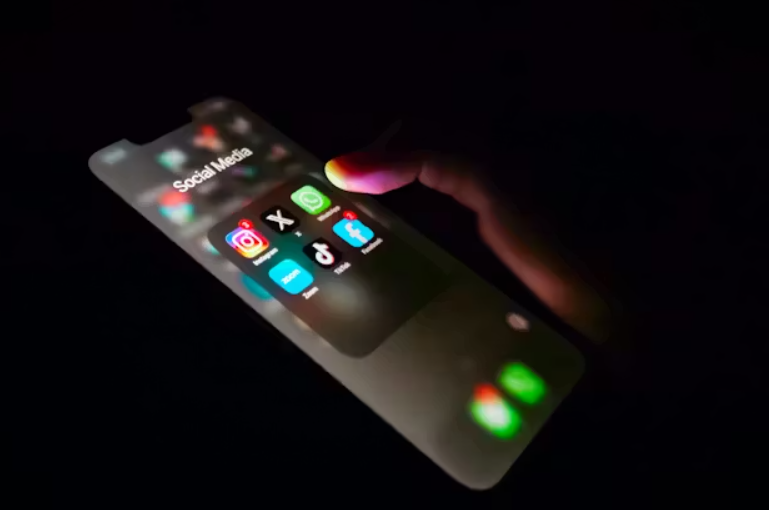
The President of the Government of Spain, Pedro Sánchez, has stated that the ban on access to social media will force digital platforms to introduce effective age verification systems. The measure places both individual responsibility on underage users and their families, and systemic responsibility on social media platforms.
This focus on the platforms themselves is, though limited to age restrictions, significant because it goes beyond mere individual responsibility. It means regulation and accountability fall to those responsible for social networks’ opaque algorithms, addictive design features and minimal content control.
The measure follows in the footsteps of Australia’s ban which came into force in September 2025, and will be followed by France and Portugal. The European Parliament has also proposed restricting access to children under 16, or requiring parental consent for teens aged between 13 and 16.
What we don’t know
Almost everything else remains to be seen. One major issue is what the law will define as “social media”. In Australia, for example, the ban does not cover the messaging services WhatsApp and Telegram, nor generative AI apps and gambling sites.
These omissions raise a multitude of questions. Are these platforms less harmful? Which social networks will Spain’s regulations cover? Will video and streaming platforms be taken into account? What about games like Roblox?
Another major question is how the “Beta Digital Wallet” tool will be implemented for age verification when logging into social media. This measure could have an impact on all Spanish people who use social media.
We also need to address children’s likely circumvention of the measures and unsupervised use of social media. This is a question both for social media corporations themselves and for families and educators.
Evidence behind the measure
To categorically state that social media causes many of young people’s mental health problems is an oversimplification, but it is true that the areas of the brain that regulate self-control, reasoning and attention mature in late adolescence. Managing one’s own access to digital content, and the time spent consuming it, is something that has to be taught.
However, previous research has also suggested that responsible, balanced screen use can be more positive than no use at all. Balanced use, for instance, correlates with a greater sense of belonging in educational centres, and with better academic performance.
UNICEF states that, for many young people, social media is a lifeline that gives them access to learning, connection and self-expression. Loneliness is another major problem facing adolescents today, especially those in minority or disadvantaged groups, and social media can help mitigate disconnection from their peers.
Looking beyond the ban
There is a risk of confusing correlation with causation, and failing to consider the possibility that social media just amplifies pre-existing problems instead of causing them directly.
The quality of evidence on how social media affects children’s mental health is modest, and when we take other contextual and personal variables into account, the effect of social media itself is relatively insignificant. When problems have social roots, it is unlikely that technical restrictions alone will solve them.
Ultimately, a ban that treats social media as the main problem without addressing deeper, underlying behaviours and social issues that affect children – bullying, misogyny, racism, academic pressure, and so on – will shift the focus away from young people’s wellbeing.
Evaluating impacts
For those of us who research this issue, one of the main questions that remains to be answered is how, when and with what indicators the ban’s impact will be measured.
Australia’s impact assessment guide focuses mainly on analysing whether its age verification system is working. Results have not been encouraging, as accuracy varies greatly depending on the platform and user profiles, and errors occur around the point where teenagers turn 16. At present, no further-reaching measurements (such as mental health or academic results) have been proposed.
For Spain’s measure to focus on minimising or mitigating the harmful effects of young people’s social media use, it needs to have clear, transparent and measurable impact criteria.
The role of schools and households
There are other questions that also need to be addressed. Will the ban be accompanied by educational measures promoting responsible use? What role will families play, and how can they be supported? How will minors’ other digital activities be regulated?
These questions can all be answered, but it will take more than prohibition. The ban will need to be accompanied by social and educational measures.
For now, we will have to await the regulation’s publication. Only then can we provide a full scientific assessment.