

Last October, Cherimus welcomed Cotranspose to Sardinia for an exchange that highlighted how long-term co-creation and the creative reuse of spaces can turn remote communities into vibrant cultural centres. The experience led to concrete plans for collaboration and strengthened their sense of belonging to a wider European network of creative initiatives.
By Goethe-Institut Brussels
In the rural landscapes of southwestern Sardinia, Cherimus acts as a bridge between contemporary art and community life. Rooted in Perdaxius, the organisation develops site-specific projects, collaborations, and cultural events that activate local spaces and engage residents. Through its replicable model that blends artistic experimentation with strong community ties, Cherimus demonstrates how rural contexts can become dynamic centres for cultural exchange.
In the former mining landscapes of southwestern Sardinia, the artist-run organisation has developed a practice rooted in the belief that art can transform relationships between people and place. Based in the small town of Perdaxius, Cherimus operates at the intersection of contemporary artistic practice and community engagement, working to make art accessible in a context often considered peripheral to mainstream cultural production.
The organisation’s approach is shaped by a long-term commitment to rural cultural development, responding to both the challenges and opportunities of working outside major urban centres. In rural areas like Sardinia, which face considerable economic and demographic decline, these initiatives embed art in everyday life and support inclusive, locally grounded regeneration.
Cherimus’ adaptable model relies on long-term community relationships, collaboration, cross-disciplinary work, mobility and exchange, the creative reuse of local spaces, and a strong emphasis on hospitality and openness. Central to their approach is co-creation: working alongside residents, students, artists, and researchers to jointly envision and produce cultural projects that respond directly to local histories, needs, and aspirations. This participatory methodology transforms passive audiences into active cultural agents, fostering empowerment, dialogue, and a sense of shared ownership over cultural and social resources. By focusing on inclusive collaboration with communities, Cherimus aims to strengthen social cohesion and build resilient cultural identities in the Sulcis-Iglesiente region.
Through exhibitions, local and international collaborations, concerts, and site-specific projects, Cherimus has gradually embedded itself in local life, activating public spaces and fostering dialogue between artists, residents, and the surrounding landscape. A milestone was Communities Between Islands, which connected artists with shared concerns across Sardinia, Corsica, and Syros. The Giardini Possibili project turned neglected green spaces in four villages into gardens shaped by local children, promoting sustainability, collective authorship, and new relationships between people and place.
It was within this context that Cherimus hosted Nina Michailidou from Cotranspose. The organisation, based in northern Greece, faces many similar challenges to Cherimus: geographical isolation, underfunding, and a decline in population. Their work is also centred around local spaces, by reclaiming unused spaces to host shared practices and various creative and social projects. This approach aligned perfectly with Cherimus’ scalable model of local regeneration.
Rather than presenting a fixed programme, the exchange unfolded as a sequence of shared experiences, conversations, and encounters shaped by local conditions and everyday rhythms. The programme began with a welcoming meeting, setting the tone for an open exchange. From the outset, the focus was not only on presenting organisational practices, but on creating a space where experiences, motivations, and challenges could be shared informally and honestly.
Over the following days, the exchange moved fluidly between site visits, cultural activities, and moments of reflection. Together, the participants explored significant local sites, including the archaeological landscape of Sant’Antioco and the coastal area of Porto Pino, using these visits as entry points to discuss broader questions around heritage, landscape, and the pressures of overtourism in rural regions.
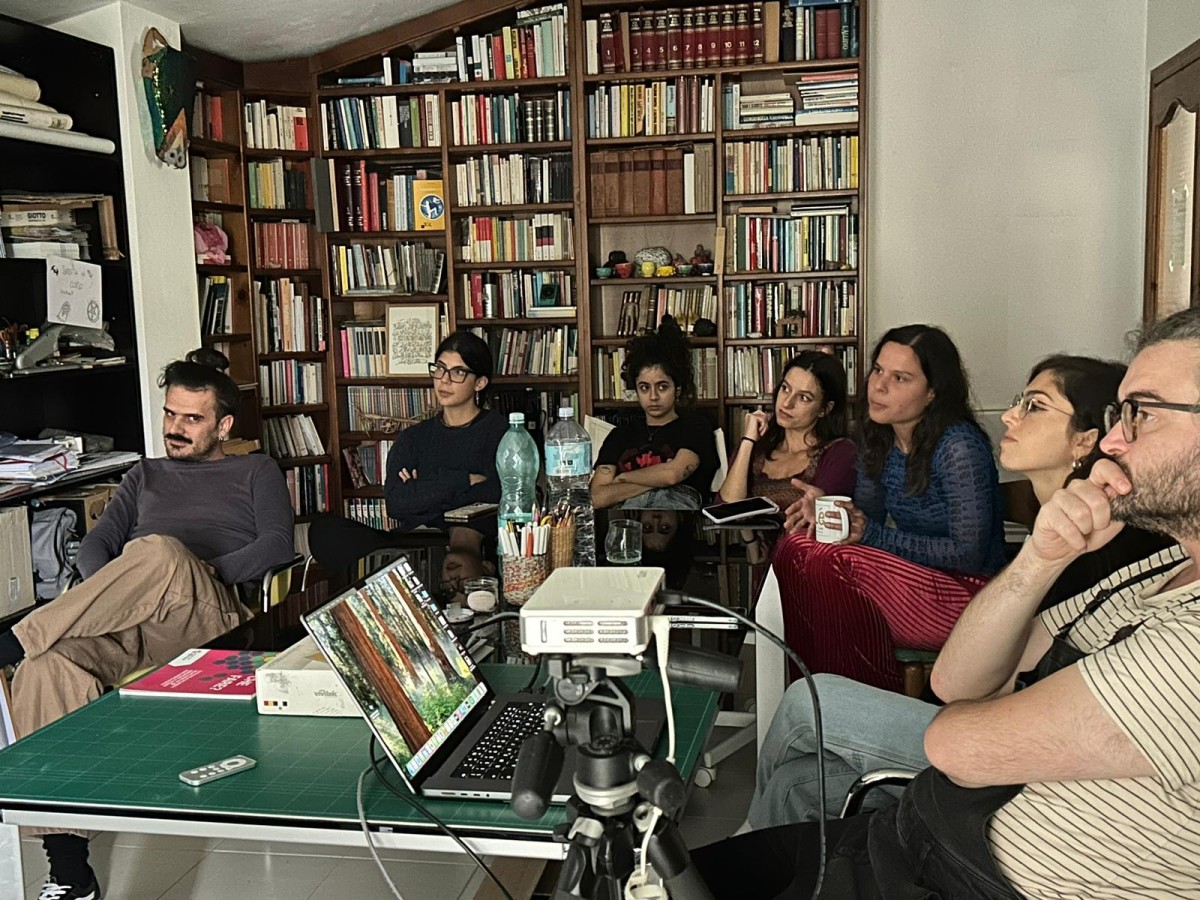
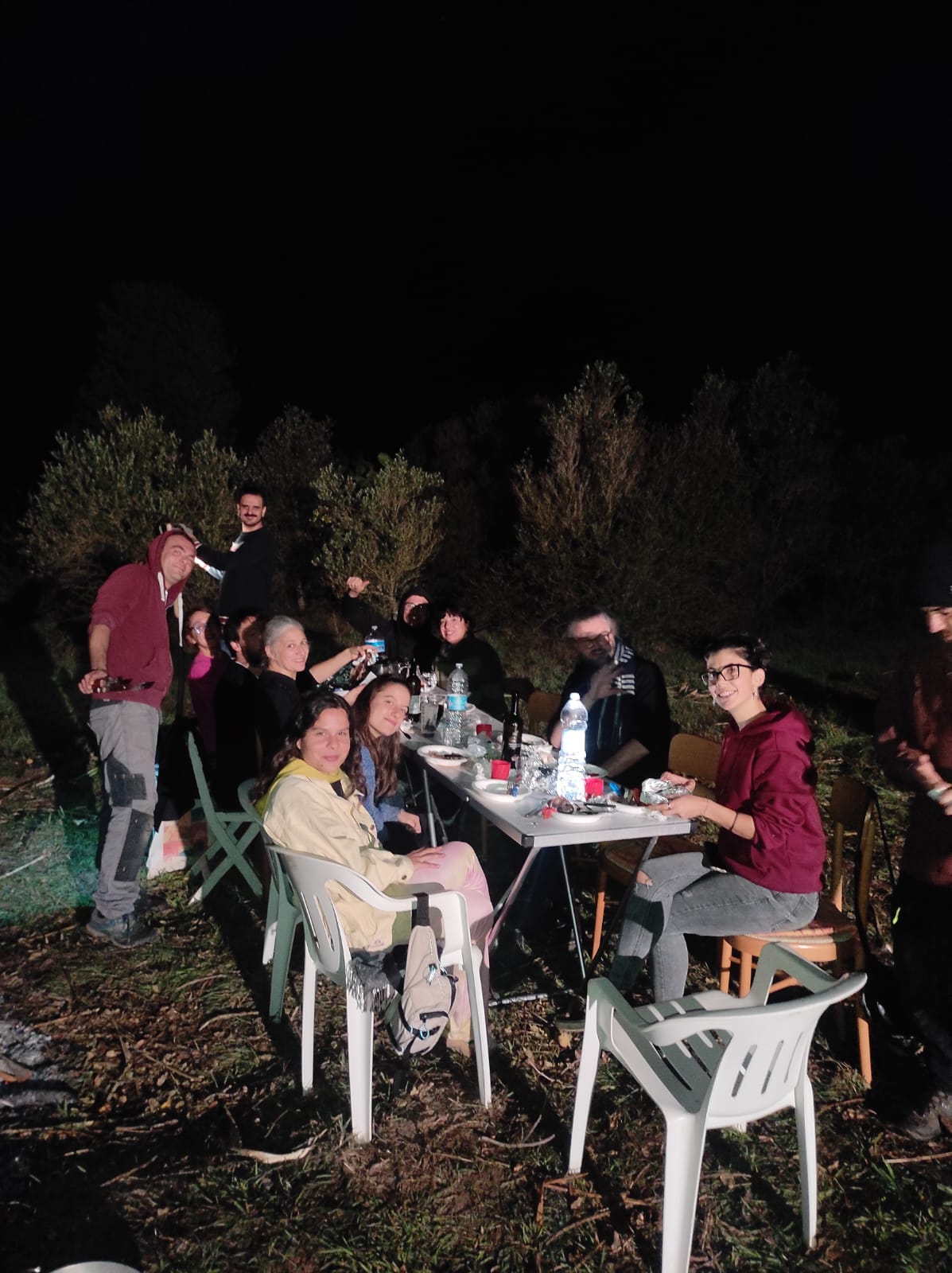
A key dimension of the exchange was its balance between structured activities and informal interaction. Meetings with collaborators, presentations of organisational practices, and discussions on working methods were complemented by spontaneous moments of exchange—often happening around meals or during shared cultural experiences.
The programme also created opportunities to engage directly with the local community. In Perdaxius, the participants visited artworks installed throughout the village and met residents involved in cultural initiatives. A visit to a partner association working with local children further illustrated how creative activities can foster participation and community cohesion, particularly among younger audiences. According to Nina, another significant aspect was “the role of nature in supporting mental health and well-being, highlighting the deep connection between environment and human experience”.
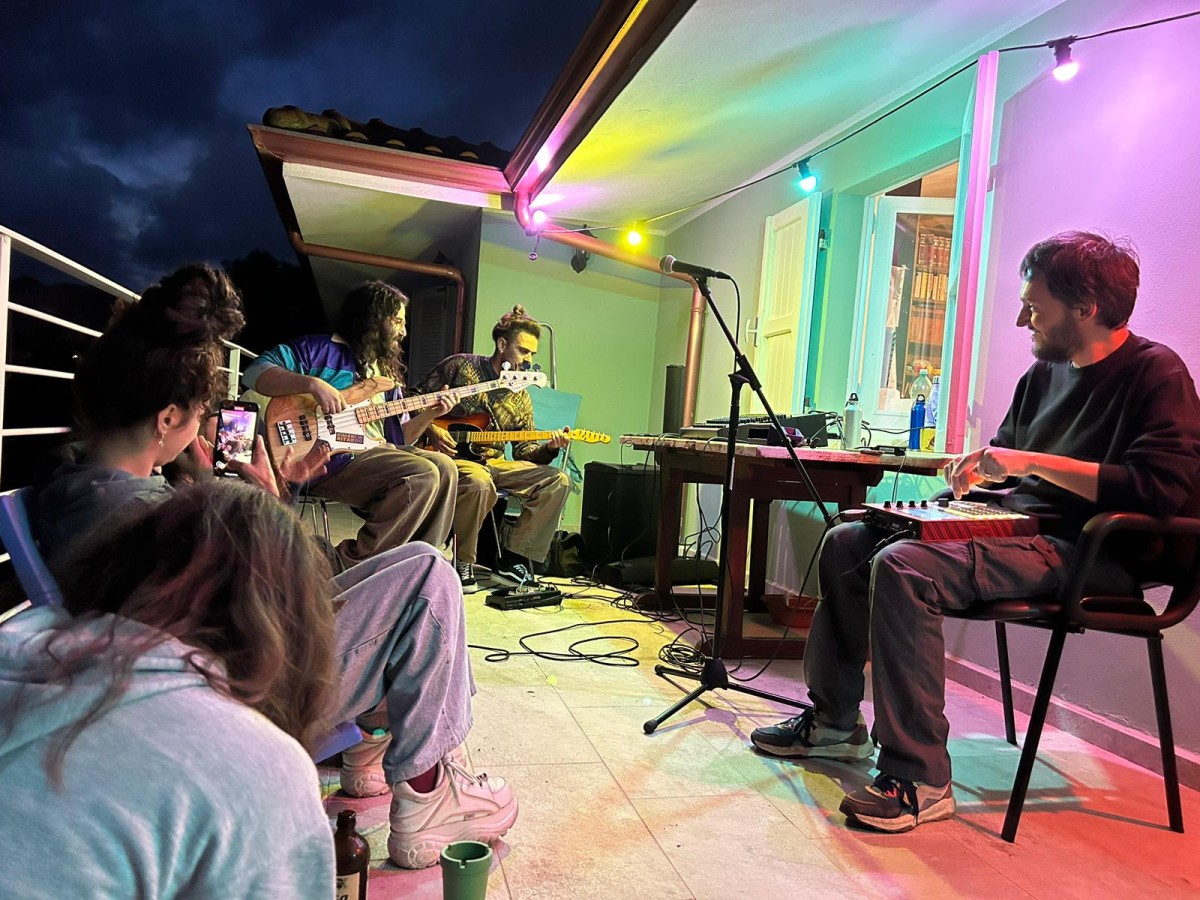
Artistic practices themselves became a shared language. A concert featuring experimental music rooted in traditional Sardinian instruments, as well as encounters with local musicians, opened discussions on how heritage and contemporary practices can intersect. At the same time, the exchange extended into everyday social settings: moments that proved equally significant for building trust and connection. As one anecdote illustrates, a spontaneous moment of dancing during a local gathering quickly transformed into collective participation, highlighting how creativity can activate social interaction in immediate and unexpected ways.
Key Takeaways

Cherimus is an artist-run organisation based in Perdaxius, a small town in the Sulcis-Iglesiente region of Sardinia. Since 2007, their mission has been to bring contemporary art into active dialogue with local communities, fostering shared cultural production that challenges marginalisation and connects peripheral places with global narratives. Central to their philosophy is the conviction that art should be created with communities, not merely for them. This co-creative approach ensures that residents are active protagonists in the creative process, empowering them to shape cultural expressions that resonate with their identities and experiences.
Cotranspose is a creative project aiming to reclaim spaces of belonging through practices of care. Located in the villages of Northern Evros (Greece), where there is an abundance of inactive spaces, it is intervening into the built environment to create the frame for social and cultural initiatives to emerge. Cotranspose invites creatives to (re)use those spaces, work together and co-create, while building a sustainable relationship of exchange with the communities that facilitate them.