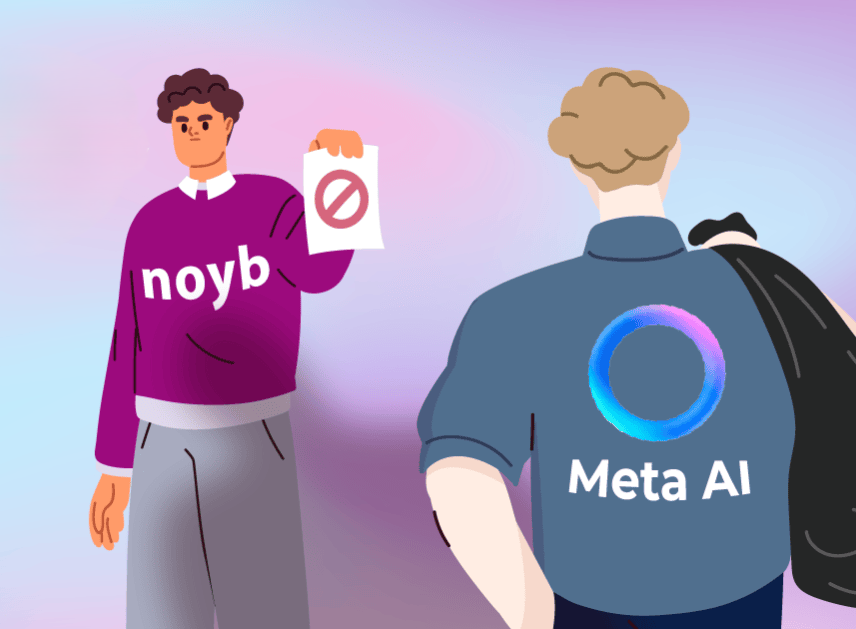
The European digital rights group noyb filed five complaints on 27 October against Scale AI in France, Italy, the Netherlands and Austria, alleging that the American company unlawfully monitors the European freelancers who help to train artificial intelligence on its Outlier platform. Two of the complaints were lodged in Austria and one in each of the other three countries. They were brought with the research groups Intérêt à Agir and DiPLab and the technical collective Reversing.Works.
Outlier employs more than 900,000 "freelance" workers, according to noyb. They train AI systems by writing prompts and ranking answers. Noyb names Meta, OpenAI, xAI, Google, Anthropic and the US government among Scale AI's customers. Meta owns 49 per cent of Scale AI, Reuters reports.
Trackers and biometric checks
Noyb's technical analysis found that while workers are on Outlier, trackers from companies including TikTok, LinkedIn, Facebook, and the survey platform Sprig and the analytics company Datadog are placed on their devices. Every few seconds, noyb says, these trackers pass workers' IP addresses, contact details, unique identifiers and the page being viewed to third parties. Reuters, which saw the complaints, reports that up to 19 trackers follow workers, including some recording keystrokes and mouse movements, and that DiPLab found the resulting data could be rebuilt into a video replaying a work session.
"Why should LinkedIn or Facebook know which tasks you're working on?" asked Lisa Steinfeld Leiser, a data protection lawyer at noyb.
Workers must also repeatedly pass identity checks run by a company called Persona, which involve a video recording of their face and an uploaded identity document, noyb says. Scale AI has justified the checks as a way of preventing fraud and verifying skills; noyb argues they go well beyond what is necessary and says Persona's terms allow it to collect further data, among them geolocation and consumer credit information.
The complaints also allege that Scale AI ignored workers' requests for their own data. Reuters reports that four workers asked Outlier for copies of their data between December 2025 and May 2026 and that none received an answer. Noyb contends that Scale AI has no valid legal basis for placing trackers on workers' devices without consent, that it breaches the GDPR's data-minimisation principle, that its processing of biometric data is unlawful, and that it has violated the right of access. It has asked the authorities for a full investigation and for administrative fines.
Scale AI's response
Scale AI disputes the allegations. The company said that the claims are "unfounded and inaccurate", that Outlier's practices are disclosed to contributors and require their consent, and that it uses standard tools to verify identities, prevent fraud and ensure accurate payment. The complaints have only just been lodged, and the allegations remain untested.
A question of sovereignty
A researcher involved in the project, welcoming the filings, argued that the case goes beyond workplace surveillance. Europe, the researcher said, risks becoming a peripheral supplier of labour and personal data to AI systems whose development, ownership and profits are concentrated elsewhere, making this a matter of labour relations, political economy and digital sovereignty. The DiPLab report published this month, on which the complaints draw, makes a similar case, framing the EU as a periphery of data extraction in AI production.
The researcher also said that workers handle personal data belonging to Europeans who use Meta's AI systems. That claim is not made in noyb's statement and could not be verified for Europe. There is, however, a precedent: in August 2025 a report revealed that four contractors hired through Outlier and Alignerr said they had repeatedly seen Meta AI chats containing users' names, phone numbers and email addresses. Meta said it intentionally limits what personal information contractors see.
The researcher linked these concerns to Scale AI's defence work. In May the company announced that the Pentagon's Chief Digital and AI Office had raised the ceiling of its agreement with Scale from $100 million to $500 million. In the researcher's view, labour exploitation, privacy and security can no longer be treated separately, and AI production does not take place in a legal no-man's-land.
MT