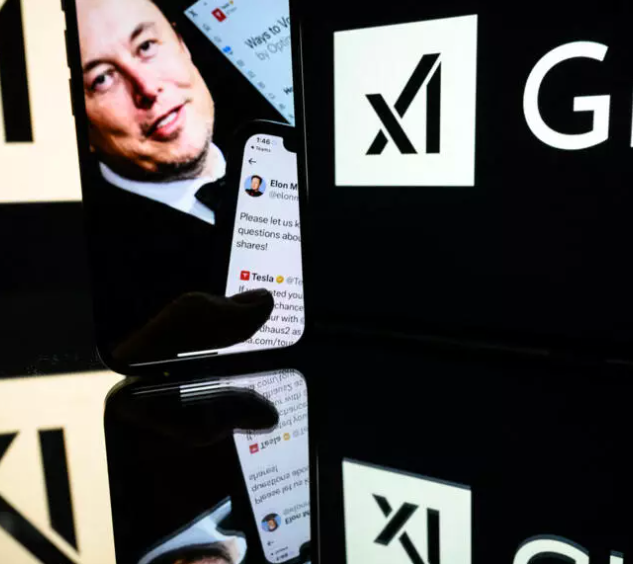



French law enforcement executed a search of X's Paris offices on February 3, 2026, intensifying a cybercrime investigation that has placed the social media platform under increasing legal pressure across multiple jurisdictions.
The raid, conducted by the Paris prosecutor's cybercrime division with support from French national police and the European Union Agency for Law Enforcement Cooperation (Europol), sought evidence related to allegations of algorithmic bias, data misuse, failures in child protection measures, the spread of Holocaust denial content, and the generation of non-consensual sexual imagery through X's artificial intelligence tool, Grok.
Elon Musk, X's owner, along with former Chief Executive Officer Linda Yaccarino and additional staff members, have been summoned for voluntary interviews beginning April 20, 2026. The individuals face potential criminal charges including dissemination of child pornography, violations of image rights protections, and denial of crimes against humanity—the latter referring to French laws that criminalize Holocaust denial.
The criminal probe was initiated in January 2025 following formal complaints lodged by a French lawmaker and a public official. The complainants alleged that X's algorithms had been subject to foreign-influenced manipulation and that the platform had engaged in fraudulent data extraction practices that interfered with automated systems.
The investigation's scope expanded significantly in July 2025 to include scrutiny of content generated by Grok, X's AI chatbot, which has faced international criticism for producing illicit imagery. French prosecutors invoked legal provisions typically reserved for organized crime cases, granting investigators enhanced powers including the authority to conduct surveillance and wiretap communications involving X executives.
During the recent raid, authorities seized materials from X's French headquarters to evaluate the company's compliance with French law. In a symbolic break with the platform, the Paris prosecutor's office announced it would cease posting updates on X, redirecting its communications to LinkedIn and Instagram instead.
Platform's Defense by X and by American politicians
X responded sharply to the investigation, characterizing it as "law enforcement theater" and an attack on free speech principles. The company has declined to comply with prior French data requests, describing them as politically motivated.
Musk personally dismissed the probe as a "political attack" and argued that authorities should direct their resources toward investigating actual criminals rather than scrutinizing social media platforms.
The French investigation represents one front in a broader international examination of X's practices, particularly concerning its Grok AI system. Similar inquiries are currently underway in the European Union, the United Kingdom, Australia, Canada, and India.
The House Judiciary Committee in the USA released a lengthy investigative report on February 3, 2026, asserting that the European Union's Digital Services Act is pressuring American technology companies to extend European content moderation standards to their operations in the United States.
The report, spanning more than 100 pages, examines how enforcement of the DSA affects major platforms including Meta, Google, and X. Committee investigators claim that internal company documents obtained through subpoena show European regulators conducting closed-door sessions with technology firms, encouraging them to modify algorithms and content policies for American users to avoid potential fines of up to 6% of global annual revenue.

The committee characterizes these practices as extraterritorial regulation that conflicts with First Amendment protections. According to the report, content affected includes political commentary, satirical material, and information that EU authorities classify as disinformation.
Republican committee members are expected to argue that both European regulations effectively impose content restrictions on American users through economic pressure on platforms. Potential outcomes from the hearing include proposals for legislative responses—possibly including renewed consideration of the "Protecting Americans from Foreign Adversary Controlled Applications Act"—and recommendations that the Trump administration consider trade-related countermeasures.
The hearing represents the latest development in ongoing tensions between US lawmakers and European digital regulations, with disagreements centering on where authority over online content should rest when platforms operate across multiple jurisdictions.