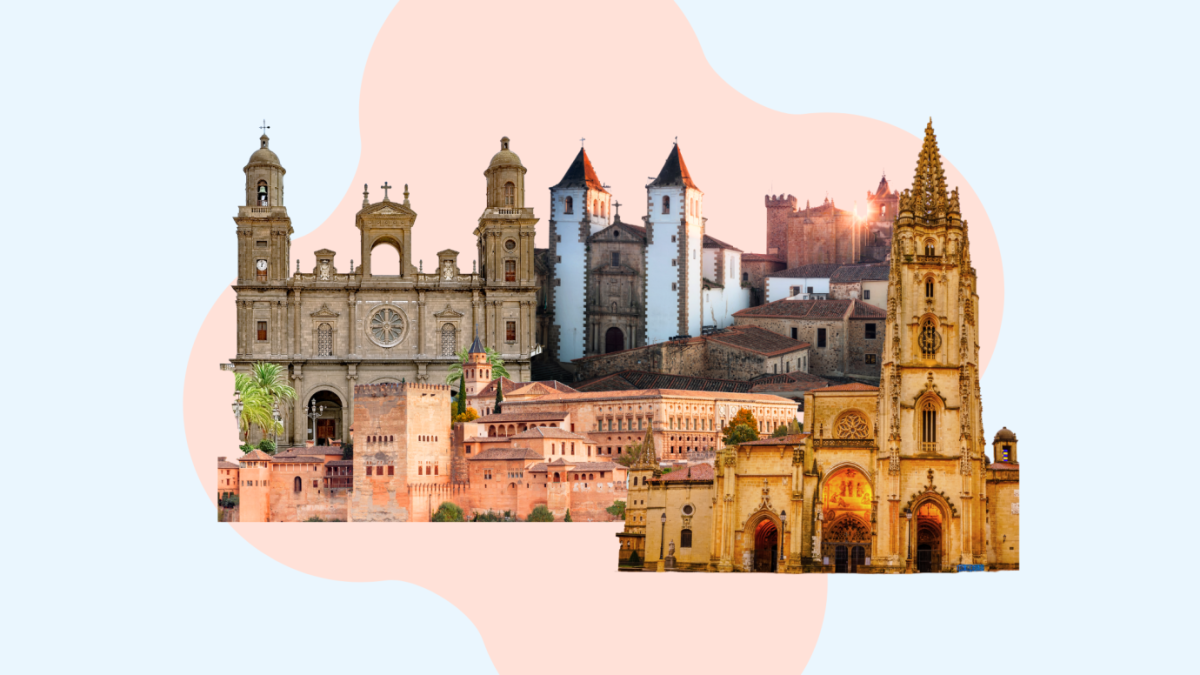



Following a week of evaluations by an impartial panel of experts gathered in Madrid, the European Commission announced on March 13 that four Spanish cities have been shortlisted to compete for the title of European Capital of Culture 2031. The panel selected Cáceres, Granada, Las Palmas de Gran Canaria, and Oviedo from a field of nine. The first obstacle was overcome by Burgos, Jerez de la Frontera, Palma, Potães, and Toledo. After holding the title in Madrid in 1992, Santiago de Compostela in 2000, Salamanca in 2002, and San Sebastián in 2016, Spain will host it for the fourth time.
The panel will meet again in Madrid in December to recommend a single winner after the four shortlisted cities have until the autumn of 2026 to submit updated bids. Spain and Malta will share the title in 2031. Europe Every city has established a unique cultural identity for their campaign. Cáceres has positioned itself as an example of how peripheral European regions can reinvent themselves as hubs of creativity by basing their bid on the idea of transcultura, which celebrates diversity and coexistence. With democracy and sustainability as guiding principles, Europa Granada has chosen a key as the emblem of its programme, which aims to create new links between civil society, science, and culture.
Las Palmas de Gran Canaria has put forth what it refers to as a "geography rebellion"—a cultural programme that questions prevailing narratives and highlights identities and knowledge systems that are frequently disregarded in mainstream European discourse. For its part, Oviedo has focused its bid on the Asturian idea of amabilidá, which is roughly translated as 'civility' or 'kindness'. It envisions a programme that employs creativity and culture to strengthen democratic resilience against social animosity and individualism.
One of the most well-known cultural initiatives in the EU is the European Capitals of Culture project. Since its founding in 1985, it has been given to over 60 cities both inside and outside of the EU. Its origins lie with Melina Mercouri, then Greece's minister of culture, whose idea it was. Cities that win the title receive the Melina Mercouri Prize, currently worth €1.5 million, funded through the EU's Creative Europe programme. The initiative aims to promote a sense of shared heritage, showcase the diversity of European cultures, and advance the cultural and economic growth of host cities. Increased tourism, a more robust cultural infrastructure, and enhanced social cohesion were all benefits of previous host cities, according to a recent European Commission assessment.
In order to facilitate careful planning, civic engagement, and the creation of long-lasting cultural strategies, cities are officially designated four years prior to their title year, Europa. Ten of the twelve independent experts on the selection panel are appointed by European organisations, while the other two are chosen by national authorities.