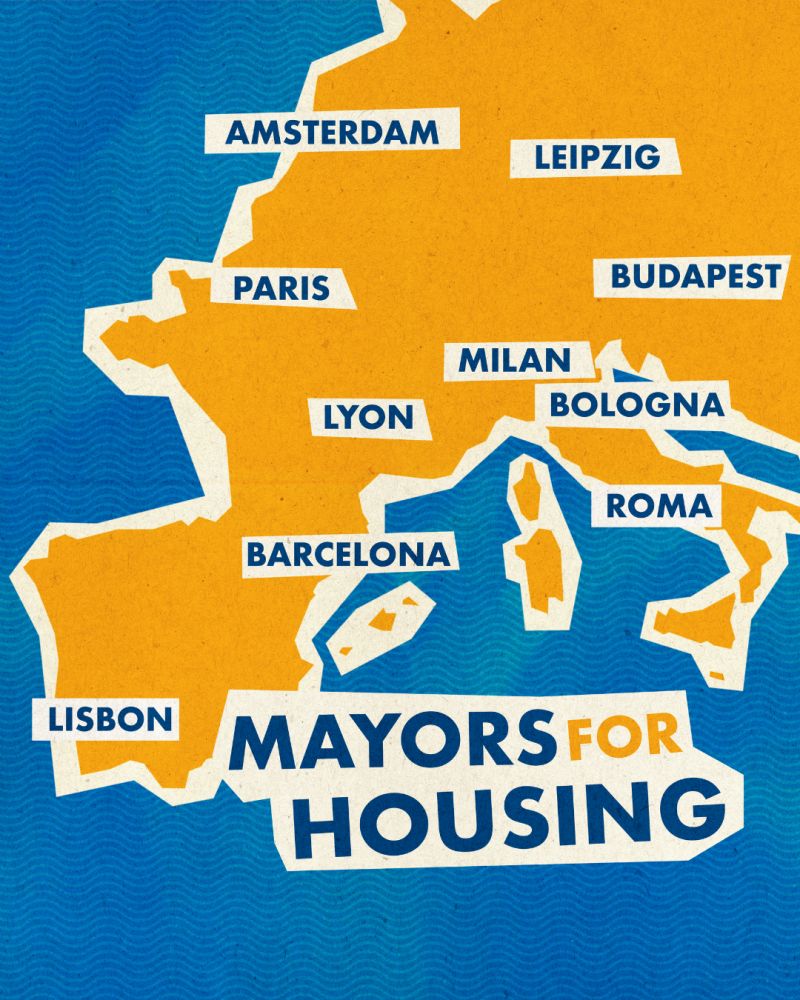



A coalition of 16 city leaders — spanning Barcelona, Paris, Rome, Amsterdam, Athens, Lisbon, Milan, Warsaw, Budapest, Ghent, Bologna, Florence, Leipzig, Lyon, Zagreb and, most recently, Dublin — has spent the past year lobbying the European Union with growing insistence, demanding that affordable housing be treated not as a welfare afterthought but as a strategic priority deserving its own dedicated funding line.
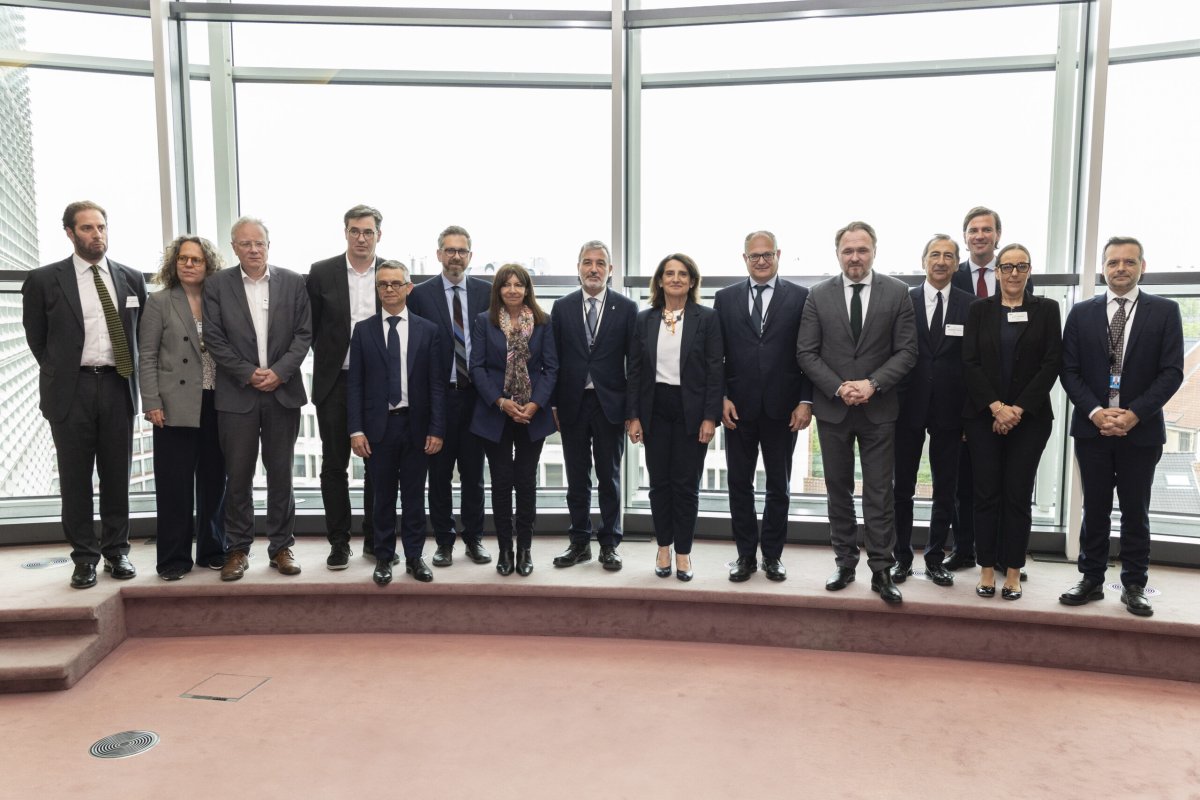
The campaign, known as Mayors4Housing and operating within the broader EuroCities network, reached a fresh milestone last week when the coalition met European Council President António Costa in Brussels for the second time in seven months. Mr Costa, who first received the mayors in September 2025, confirmed that housing would feature on the agenda of the June European Council summit, where EU leaders will begin substantive discussions on the next long-term budget – the Multiannual Financial Framework – covering 2028 to 2034. "Affordable housing is vital for social cohesion and fairness," he told reporters. "And the lack of it is at the core of people's disillusionment with democratic institutions."
The numbers the mayors cite in support of their case are stark. Across the 16 cities represented by the alliance, average rents have surged by 60 per cent and housing prices by 78 per cent over the past decade, far above the EU average. The European Commission's vice-president, Teresa Ribera, responsible for competition and the green transition, offered comparably alarming figures when she appeared alongside the mayors at a press conference on 30 April. Rents, she said, had risen by more than 60 per cent between 2013 and 2024, while building permits had fallen by over 22 per cent since 2021. "Housing has become a major concern for many Europeans," Ms Ribera acknowledged, "and it is our shared responsibility to address this issue."
The coalition's centrepiece demand is audacious by any standard. The mayors are calling for a new affordable housing fund, modelled on the Next Generation EU programme, mobilising €300 billion — of which at least €100 billion would be in grants. To unlock that funding, cities propose the creation of a category of "stressed areas"—defined by criteria such as rental price rises relative to the consumer price index or waiting lists for social housing—which would become the primary recipients of any new funds.
Beyond money, the alliance is demanding institutional recognition. Its seven-point European Housing Action Plan, presented in Brussels on 15 May 2025, calls for cities to be recognised as key partners in implementing EU housing initiatives; for emergency financing streams allowing them to build and renovate social housing; for the reform of state aid rules that currently limit public investment in the sector; and for a mandatory urban chapter within national regional partnership plans to guarantee cities a direct role in the design and delivery of EU-funded investments.
Jaume Collboni, the mayor of Barcelona, said that 15 major European cities from different political backgrounds had agreed on "a very detailed European Housing Action Plan" and that "for the first time there will be a specific EU programme on housing in a transversal way."
The political window is real. For the first time, the European Commission is formally preparing an Affordable Housing Act – draft legislation the mayors hope will enshrine their demands into EU law. Mr Costa confirmed that social and affordable housing, alongside investment in social infrastructure and the fight against homelessness, would be specific objectives of the new national and regional partnership plans proposed by the Commission.
"From Dublin to Athens, we are facing a multi-layer crisis," Mr Costa said at his September 2025 press conference. "A crisis for those who are homeless, a crisis for householders on lower incomes, but also a crisis impacting the middle class and, very especially, the young generation."
Spain's Prime Minister Pedro Sánchez has lent national-government weight to what began as a purely municipal campaign. Meeting the mayors of Barcelona, Rome and Paris at Barcelona's Cercle d'Economia conference in May 2025, Mr Sánchez acknowledged the "key role of cities" in the formulation and implementation of both national and EU housing policies.
On Tuesday, the day before the coalition's latest Brussels visit made headlines, the European Commission opened the New European Bauhaus Facility — a multi-annual instrument within Horizon Europe, the EU's flagship research programme — and launched its 2026 call for proposals under the banner "Revitalising neighbourhoods across Europe". The call carries an overall budget of approximately €101 million for 2026 alone, with indicative annual R&I funding of around €120 million across the 2025-2027 cycle.
The 2026 call covers three thematic areas: connecting the green transition, social inclusion and local democracy; circular and regenerative approaches for the built environment; and innovative funding and new business models for neighbourhood transformation. Proposals are due by 1 December 2026.