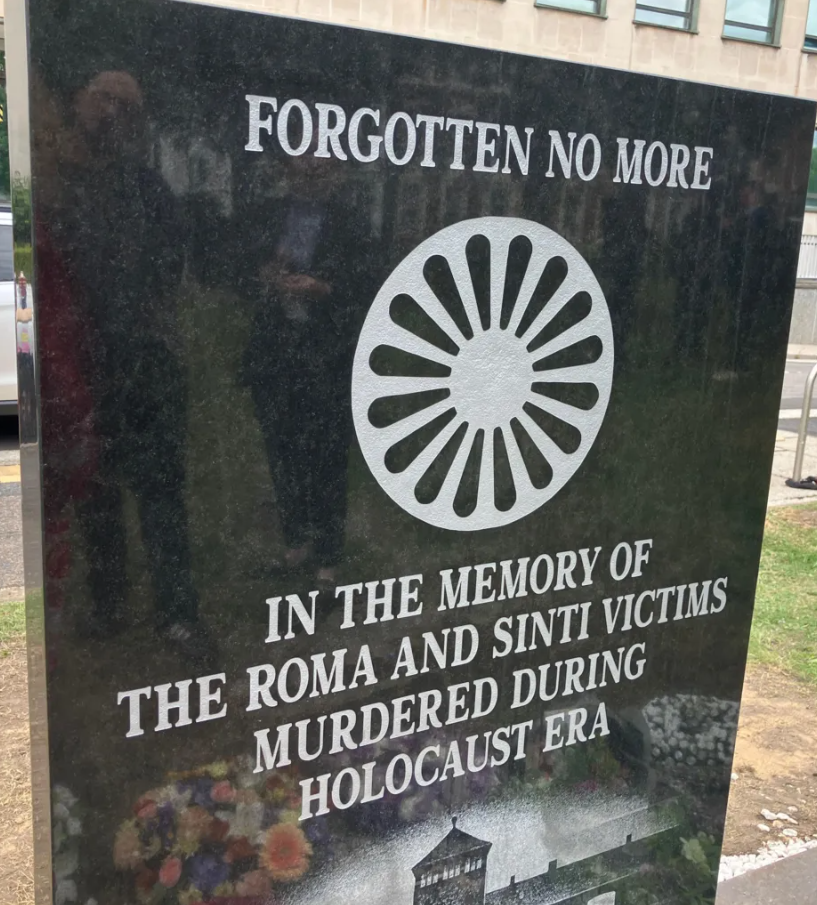


"Antigypsyism remains an enduring challenge for many Roma across Europe, continuing to drive inequality, social exclusion, systemic discrimination and violence," underlines the President of the EU Commission in her statement on the European Roma Holocaust Memorial Day, honouring the Roma and Sinti people murdered by Nazi Germany during the Second World War.
By Creatives Unite NewsroomEach year on 2 August, European institutions commemorate European Roma Holocaust Memorial Day, marking the liquidation of the Roma camp at Auschwitz-Birkenau on 2–3 August 1944 and honouring the Roma and Sinti murdered by Nazi Germany and its allies during the Second World War. The European Parliament’s 2015 resolution stated that a European day should be dedicated to the victims of the Roma genocide and named it the European Roma Holocaust Memorial Day.
The memorial date refers to the destruction of the Zigeunerfamilienlager — the so-called "Gypsy family camp” in Auschwitz II-Birkenau — where the SS killed the remaining prisoners in the gas chambers on the night of 2–3 August 1944. Contemporary and institutional accounts differ on the exact total for that night: older sources long cited 2,897 victims, while later research by the Auschwitz-Birkenau Memorial Museum places the figure at about 4,200–4,300.
The genocide of Roma and Sinti in Nazi-occupied Europe was long under-recognised after the war. The European Parliament’s 2015 resolution cited estimates of at least 500,000 Roma exterminated during the war, while the U.S. Holocaust Memorial Museum gives a lower historical estimate of at least 250,000 Roma murdered by the Germans and their allies. The Commission’s annual statements on Roma Holocaust Memorial Day connect remembrance of the Nazi genocide with present-day concerns about anti-Roma racism, which EU institutions say remains widespread.
"While we learn from the past, we must also address the injustices of the present. Antigypsyism remains an enduring challenge for many Roma across Europe, continuing to drive inequality, social exclusion, systemic discrimination and violence. This is unacceptable. 'We stand united against discrimination, racism and hatred in all their forms," Ursula von der Leyen, President of the European Commission; Roxana Mînzatu, Executive Vice-President for Social Rights and Skills, Quality Jobs and Preparedness; and Hadja Lahbib, Commissioner for Equality, Preparedness and Crisis Management, said in a statement. "Confronting this legacy is a foundational pillar of our Roma Strategic Framework 2020-2030, which champions Roma inclusion in all aspects of life. The recently adopted Anti-Racism Strategy 2026-2030 also explicitly targets antigypsyism as a distinct and severe form of racism which requires dedicated action."
At Auschwitz-Birkenau alone, about 23,000 Roma and Sinti were imprisoned, and the U.S. Holocaust Memorial Museum says approximately 21,000 died there. The European Commission has marked the day in recent years with annual statements, and the Council of Europe has also held commemorative ceremonies and issued statements on the anniversary. The European Commission says many Roma continue to experience discrimination, social exclusion and antigypsyism, and its Roma strategy sets 2030 targets to reduce discrimination and segregation.