
International Roma Day is celebrated annually on April 8. It was officially declared in 1990 in Serock, Poland, at the fourth World Romani Congress of the International Romani Union (IRU), in honour of the first major international meeting of Romani representatives, held from April 7 to 12, 1971, in Chelsfield, near London.
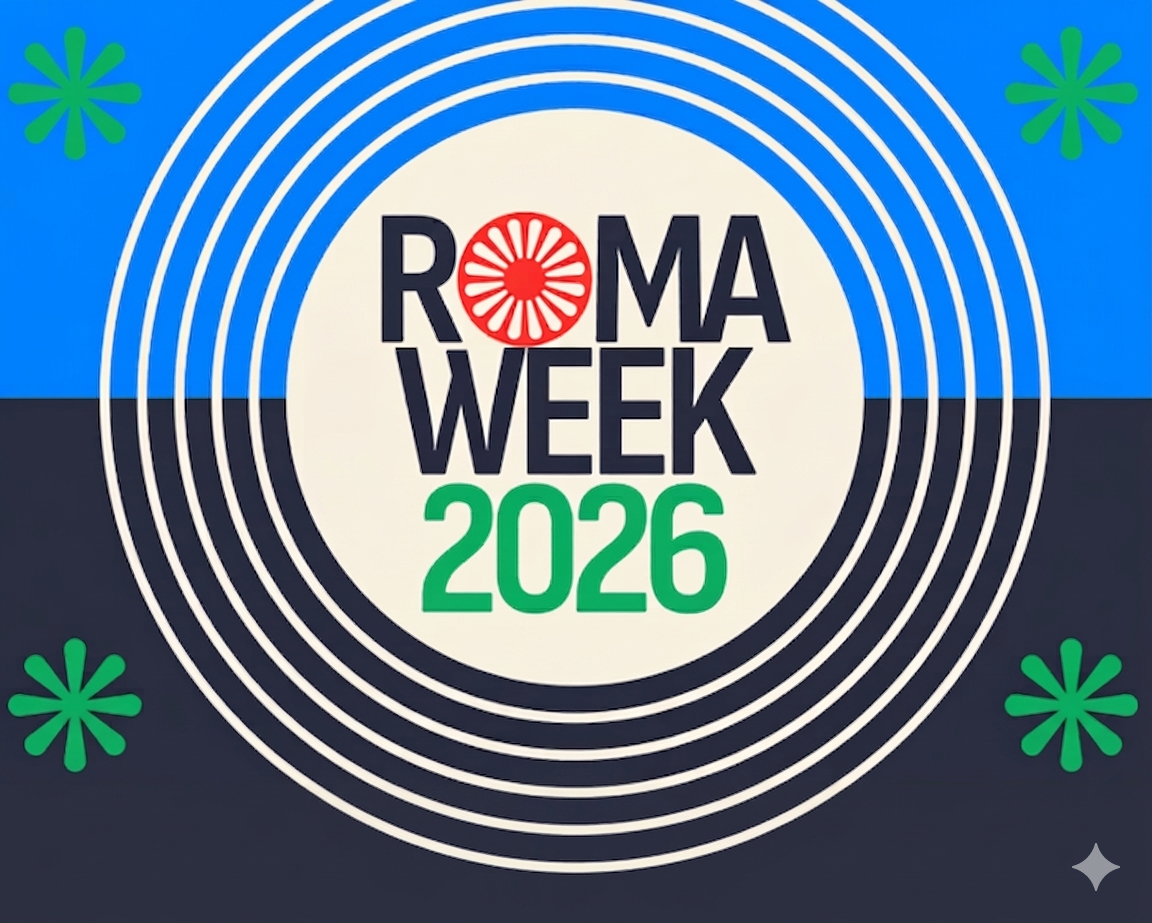
At that 1971 congress, key symbols of Romani identity — including the blue and green flag with a red chakra wheel and the anthem Djelem Djelem — were officially adopted. This year on International Roma Day, the European Commission issued a joint statement from Executive Vice-President for Social Rights Roxana Mînzatu, Commissioner for Equality and Crisis Management Hadja Lahbib, and Commissioner for Enlargement Marta Kos, drawing attention to Roma people's deep-rooted 700-year presence in Europe and describing their contributions as "integral to Europe's diverse heritage".
The statement noted that Roma citizens "often encounter widespread antigypsyism and marginalisation and often lack access to essential resources such as clean water and sufficient nutrition", adding that persistent disparities in access to education, employment, housing, and healthcare "go against our principles of democracy and equality".
The Commission's own figures place the scale of the challenge in stark relief. According to the EU Roma Strategic Framework 2020–2030, approximately 70% of Roma in the EU are at risk of poverty, while many families remain disproportionately affected by barriers to essential services. The EU estimates that 6 million Roma live inside the Union, with a further 4 million in the enlargement region, including Ukraine, Moldova, and Georgia.
On the occasion of International Roma Day, the Council of Europe's Youth Department and Roma and Travellers Division, together with the European Roma Institute for Arts and Culture (ERIAC), brought together Roma youth organisations and young people at the European Youth Centre in Strasbourg for the Roma Youth Together 2026 seminar. The event, co-organised with the International Roma Youth Network (TernYpe), the ERGO Network, and Phiren Amenca, was structured around three pillars: celebration, pride, and contribution.
The programme's methodology drew on human rights education, peer-to-peer learning, and participatory methods including creative workshops and facilitated discussions, with particular emphasis on the Council of Europe's Recommendation CM/Rec(2023)4 on Roma youth participation. The 2026 edition placed special focus on supporting Roma girls and women, young Roma LGBTI people, and Roma migrants.
In parallel, Roma Week 2026 — convened at the European Parliament — spotlighted digitalisation, education, and housing as interconnected pillars for empowerment and equality, reinforcing partnerships between the European Parliament, the European Commission, the Council of Europe, and Roma civil society. The week's programme included a high-level conference on transitional justice and antigypsyism, a film screening, and a dialogue between Roma youth activists and Members of the European Parliament.
Rights organisations used the occasion to push back against what they characterise as inadequate institutional follow-through. The European Roma Rights Centre and allied groups have consistently argued that annual statements and funding commitments have not translated into measurable reductions in poverty, segregation, or discrimination — a critique that has intensified as the EU's 2030 targets come into closer view.
Roma Week 2026 also focused on influencing the design of the upcoming EU Multiannual Financial Framework (MFF) for 2028–2035, seeking to ensure that Roma equality and inclusion remain embedded in future EU funding priorities.
The EU Roma Strategic Framework — to which member states, candidate countries including Türkiye, and partners in the Western Balkans, Ukraine, and Moldova are aligned — sets binding targets on reducing poverty gaps, expanding access to housing and healthcare, and ending educational segregation. Whether those targets will be met by 2030 remains an open and politically contested question.