


92% of EU citizens support teaching digital skills at all levels of education, as a lesson of equal importance as reading, maths, and science (78%). EU citizens count on schools and teachers to ensure next generations’ mental health and digital wellbeing in the AI era. Read on.
By Eirini Polydorou
Recognising both benefits and challenges of technology in the AI era, EU citizens count on schools and teachers to ensure next generations’ mental health and digital wellbeing, says the Commission’s Flash Eurobarometer on Future Needs in Digital Education survey.
EU citizens overall support the ban of smartphones in schools (69%), echoing the recent call by the European Parliament for a social media ban for under 16s, following the example of Australia (click on image to enlarge).
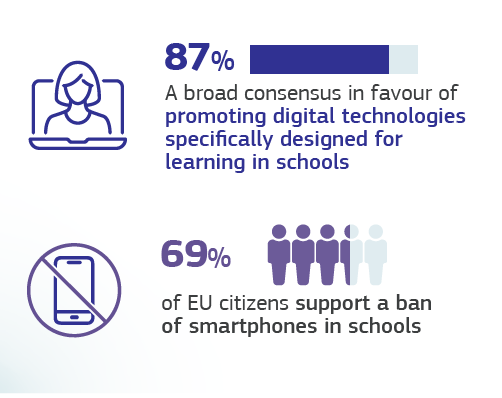
At the same time, they overwhelmingly agree (92%) on teaching digital skills at school at all levels of education, with digital technologies specifically designed for school learning (87%) and as a lesson of equal importance as reading, maths, and science (78%).
A strong majority (80%) agreed that digital literacy helps protect students against online misinformation and disinformation and a stronger majority (89%) that in order to teach students how to tell online fact from fiction, all teachers should be equipped with the necessary skills.
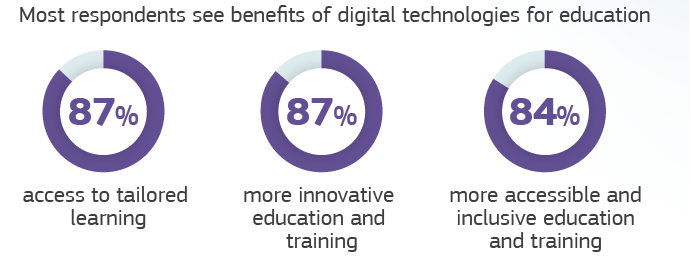
More than half (54%) respondents acknowledged AI bringing both benefits and challenges and called for its further monitoring. Such benefits include access to tailored learning (87%), more innovative education and training (87%) and more accessible and iclusive education and training (84%) (click on image to enlarge),
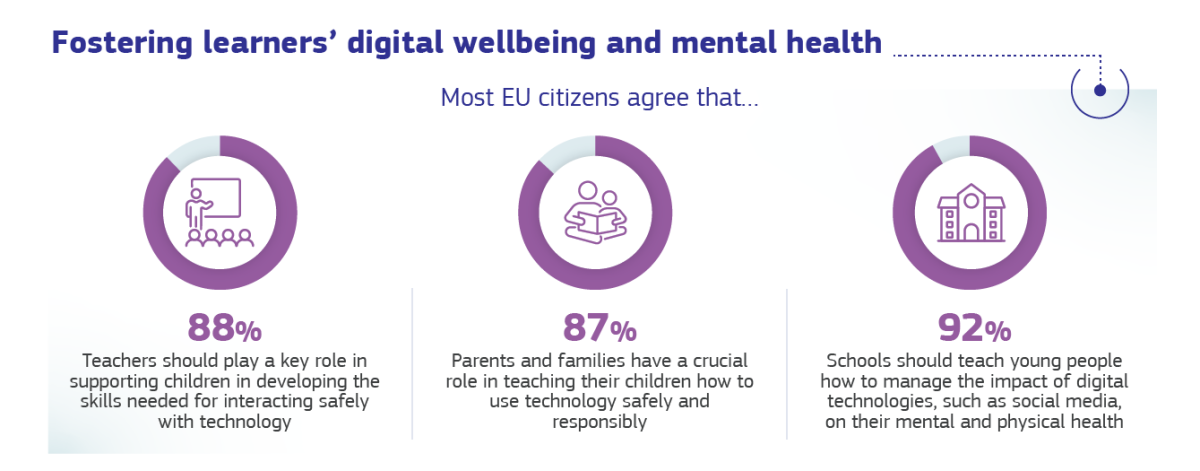
Schools to teach digital wellbeing and social media impact on mental health
Nine in ten (92%) agreed that students should be taught in shcool how to manage mental and physical health impact of digital technologies, including social media.
Nearly nine in ten also recognise the key role of teachers (88%) and parents and families (87%) on children's developing the skills needed for safe and responsible use of technology.
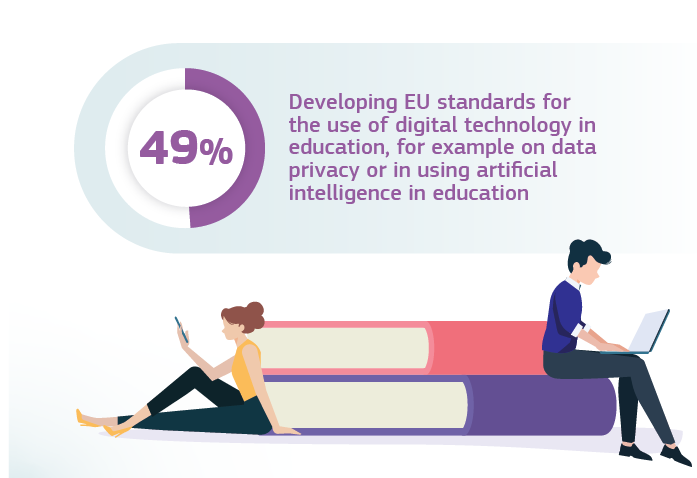
Nearly half of the respondents (49%) said that the EU can best support successful digital education across EU Member States by setting standards for the use of digital technologies in education, for example on data protection or on how to use AI in education.
Policy Context and Next Steps
“Today, digital skills are essential for everyday life and future-proof jobs. This survey shows that Europeans understand this reality clearly and are calling for stronger action. We hear their concerns, and we are working to help every European – children and adults alike – develop the digital skills they need. Their insights will guide next year’s 2030 Roadmap on the future of digital education and skills.” said Roxana Mînzatu, Executive Vice-President for Social Rights and Skills, Quality Jobs and Preparedness.
This Eurobarometer survey will help update the European Commission's efforts to strengthen digital education in the EU, including in the upcoming Education package and 2030 Roadmap on the future of digital education and skills, expected in 2026 as part of the Union of Skills.
Find more
Image in the header by Mohamed Hassan from Pixabay.
Images in the text - Available in the infographic of the Survey.