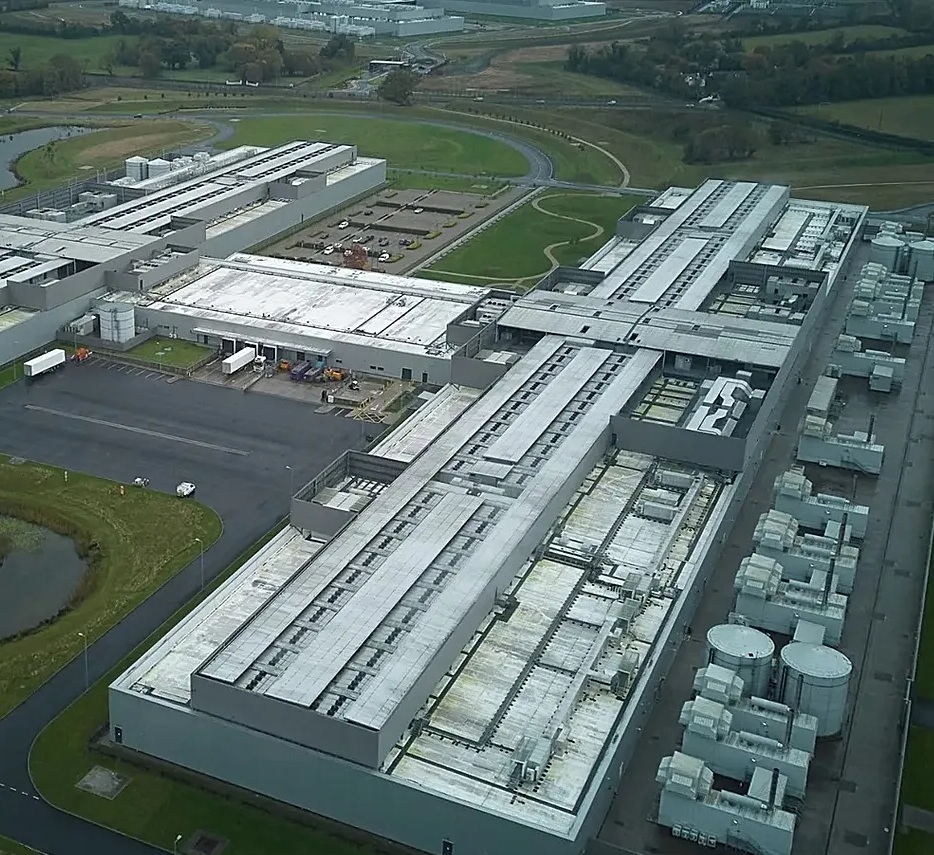



The European Union has opened competitive bidding for up to seven AI gigafactories, large-scale computing facilities intended to help Europe develop, train, fine-tune and deploy large artificial-intelligence models under infrastructure governed by EU law.
The call was published on 30 July by the European High Performance Computing Joint Undertaking (EuroHPC JU), acting jointly with participating national authorities under the EU's wider AI and technological-sovereignty strategy. The procurement will select consortia to establish and operate the facilities, from which the contracting authorities will acquire AI-computing access and related services.
Announcing the call, Henna Virkkunen, the Commission's Executive Vice-President for Tech Sovereignty, Security and Democracy, said it "represents a milestone in our AI Continent ambitions", framing guaranteed access to large-scale computing power as a strategic necessity for Europe.
According to the European Commission's announcement, the initiative is expected to mobilise more than €30 billion in total investment:
Up to €10 billion in combined EU and national public funding.
At least €20 billion in private investment is expected to be mobilised.
The €30 billion figure is a mobilisation estimate, not funding already secured. The €10 billion public component is a maximum scenario, while the €20 billion private component is the amount the Commission expects the initiative to attract.
The official tender specifications indicate that, if all seven projects were selected and received the maximum allocations in both phases, the EU contribution could reach €5 billion. Participating member states are expected to provide at least equivalent matching contributions, producing the potential €10 billion public financing total.
The €5 billion is a ceiling rather than a guaranteed appropriation. Phase 2 funding depends on the availability of resources under the next Multiannual Financial Framework, while the number of projects ultimately selected will depend on the tender evaluation and available funding.
Eighteen member states — Croatia, Czechia, Denmark, Estonia, Finland, France, Germany, Greece, Hungary, Ireland, Italy, Latvia, Lithuania, Poland, Portugal, Slovakia, Spain and Sweden — have so far signed the joint procurement agreement committing national co-funding to the initiative.
The facilities are intended to provide computing capacity for developing, training, fine-tuning and deploying large AI models. EuroHPC JU describes AI Gigafactories as being dedicated to next-generation models containing trillions of parameters, though the tender itself does not guarantee that the facilities will train the world's largest models.
The tender uses performance equivalent to Nvidia's H100 processor as a benchmark for accelerator capacity. The proposed facilities will also require high-speed interconnection, storage, cloud and orchestration systems, security controls, energy-efficient data-centre technology and managed AI services.
Consortia are free to procure hardware for either development phase from providers based in Europe or in "like-minded" countries, with part of that procurement expected to be directed toward European start-ups and scale-ups in the chip and hardware supply chain. Alongside the call and described as a follow-up to the EU-US trade deal, the Commission has signed letters of intent with three US chipmakers — AMD, Nvidia and Qualcomm — intended to give consortia more predictable access to the hardware they will need.
That arrangement sits alongside, rather than in place of, the sovereignty requirements described below: The letters of intent concern hardware supply, whereas the sovereignty conditions govern control of the infrastructure and data once it is installed.
The Commission presents the initiative as a measure to strengthen Europe's technological sovereignty. The tender requires critical infrastructure and operations to remain under EU jurisdiction and seeks to protect the facilities from unauthorised access based on non-EU laws.
Each project must have an EU-controlled coordinator and an eligible hosting entity established in a participating Member State. Critical functions — including system administration, data handling, cloud orchestration and disaster recovery — must be performed within the EU by appropriately qualified personnel. Operational data and metadata must be managed in a way that preserves EU jurisdiction and control.
The facilities must comply with applicable EU and national legal requirements, including the General Data Protection Regulation, the EU AI Act and relevant cybersecurity obligations.
The sovereignty requirements do not amount to a complete ban on American or Asian technology companies. International cloud providers and other technology companies are not categorically excluded. They may participate in eligible consortia or use the facilities as commercial customers, provided that the required EU-control, security and jurisdictional conditions are met.
The specifications also encourage bidders to develop pathways towards greater European control of software and other strategic components. They do not require a future transition to European-designed processors.
The procurement is not intended merely to purchase unmanaged access to accelerators. The tender specifies that the joint purchase should provide a managed, end-to-end service that may include infrastructure access, software environments, cloud orchestration, AI development tools, hosted models, compliance features and other value-added services.
The contracting authorities will acquire guaranteed shares of computing access and associated services from selected operators. This demand-creation model is intended to help consortia attract the private financing needed to deploy and operate the facilities, rather than treating the initiative as a conventional grant programme that pays all construction costs directly.
The tender does not establish a single fixed cost for each gigafactory. Actual costs are likely to vary according to factors including the facility's design, hardware, energy systems, location, financing structure and operating model.
At full expansion, the tender requires Lot 1 facilities to provide at least 120 megawatts of IT load and Lot 2 facilities at least 150 megawatts. Under the tender's own definition, "IT load" already includes the mechanical, electrical and plumbing systems needed to keep that computing hardware running — which would ordinarily include cooling — so these figures should not be read as covering only bare server racks. They may still exclude power for non-computing parts of a site, such as general office space or lighting, which fall outside that definition.
The selected consortia may have up to 18 months from the signature of the relevant framework and specific contracts to reach operational readiness. The tender envisages a framework contract duration of approximately 6.5 years from signature: a setup period of up to 18 months followed by five years when the Gigafactory is fully operational.
The Commission expects to complete its evaluation and announce award decisions in early 2027, after which a framework and specific contracts will be signed to allow construction to begin later that year.
The framework and specific contracts will govern the delivery and payment of computing services. Phase 2 remains dependent on the availability of funding under the next EU budget framework.
The proposed Gigafactories would add substantially more computing capacity for large model development and industrial applications. Their implementation will depend on the outcome of the competitive process, the ability of consortia to attract the expected private investment, access to suitable sites and sufficient power, and the availability of advanced processors, software and networking equipment.
The tender launches a procurement process for a potentially significant expansion of Europe's AI infrastructure, but it does not yet determine the final number, location, cost or delivery timetable of the facilities.