At Athens's Bautopia festival, a Creatives Unite panel explored how culture can move beyond passive doomism and a crisis of political imagination, urging artists to expose systemic collapse, reclaim collective agency, and resist AI-driven elitism.
On the final day of the Bautopia festival, the Creatives Unite panel at the Romantso Creative Hub in Athens asked whether culture could help us to move beyond end-times narratives and doomism. Three decades after Francis Fukuyama declared the end of history, doom has become a generational condition. A 2021 survey of 10,000 young people in ten countries, published in The Lancet Planetary Health, found that more than half believed that humanity was doomed. The survey also found that this belief was linked to a sense that governments were failing to act.
Just as we were wondering if resignation was undercutting the will to act and closed off the very stories that were needed, the younger were taking to the streets across France, Albania, Serbia, Spain, and Portugal – across Europe and the world – making our open-ended discussion unexpectedly urgent and up-to-date. Four speakers addressed the question of the crisis of imagination as the backbone of this historical process: Thanasis Moutsopoulos of the National Technical University of Athens spoke about the apparent disappearance of novelty and authenticity. Aïnhoa Jean-Calmettes of Mouvement Magazine and Libération discussed the rise of materialist challenges to the Anthropocene and collapse theory. Igor Simic of Demagog Studio examined what happens when all cultural production becomes content. Angeliki Poulou of the National and Kapodistrian University of Athens considered what happens when artistic engagement with catastrophe stops at awareness. We did not expect definitive answers, only the beginning of a debate.
A crisis of imagination
For Angeliki Poulou, a professor of digital arts and cinema at the University of Athens, the trouble lies less with the machines than with art’s own habits. Much contemporary work, she said, offers ‘stunning poetic images of dying ecosystems’, and audiences ‘walk away moved, but I can say unchanged’. ‘It becomes an experience, not a confrontation.’ Even large festivals, she argued, speak the language of awareness, resilience and impact without naming what produces the crisis.
Artists should look away from ruins, the finished image of collapse, she said, and towards what she called ‘ruination’: the continuing process of extraction, abandonment and dispossession that produces them. ‘The point is to illuminate the mechanism', she said, ‘to reveal the infrastructures beneath the surface.’ She urged a parallel move from prediction to ‘fabrication’, treating the future as a collective project rather than something computed on our behalf. Greek tragedy begins with catastrophe and asks what follows, she said, and then moves on to use the example of Orestis Karamanlis’s sound performance Tempi, made in memory of the 2023 rail disaster.
The dominance of dystopian narratives about AI in art, she suggested, may reveal less about the technology than about ‘a crisis of political imagination’, which is close to the diagnosis the moderator had offered for doomism in general. She made no claim for art’s power beyond its proper size. ‘Art cannot stop climate change by itself; it cannot dismantle capitalism or repair the ecosystems, but it can intervene in the horizon of what we can imagine as possible.’
Theatre as evidence
Ainhoa Jean Calmetes had spent a decade studying how art can be political and still found it ‘a mystery’: ‘it works differently every time’. But she could point to directors whose post-apocalyptic fictions do not leave audiences in the diagnosis. In one French production, surviving crows mourn a dead humanity and resolve to fight, and the performance stops at the moment the audience should act. Rebecca Chaillon, she said, tried to build ‘a small army of beautiful weirdos’, and ‘it brings hope, agency and the urge to organise’.
Others, such as Milo Rau and Gabriela Carneiro da Cunha, take the question out of the theatre altogether, working with Indigenous communities in the Amazon: Rau is supporting a land-rights movement’s re-enactment, and Carneiro da Cunha is helping to gather evidence that gold mining had polluted the Tapajós River. Such work, Calmetes said, supports a political struggle without pretending that ‘everything is fine’. And the traffic runs both ways: academics now borrow from theatre to ask how uprisings are narrated, one anthropologist likening them to ‘seeds that will bloom later’.
Everybody is a creator now, but art is a thing for the elites
Has artificial intelligence changed everything? ‘Thanassis Moutsopoulos denied that widespread fear; it ‘just extended the postmodern condition', he argued. There are, he said, more people today calling themselves creators than at any point in human history:
‘We are too many.’ Human-made art would survive, but ‘more and more’ as ‘a thing for the elite’.
The associate professor at the National Technical University of Athens case ran from Marcel Duchamp to the chatbot. Modernism, he said, cleared the field of every assumption about what art is; postmodernism then turned everything into reference, legible only to audiences who knew the keys. AI ‘just extended the postmodern condition’. The Greek artist Stelios Faitakis was supposed to be beyond a machine’s reach, he recalled, until someone posted ‘the new Faitakis’ on Facebook, and the Ghibli filter produced in seconds a style that Hayao Miyazaki had spent decades building by hand. ‘The philosophical change has already been done. It’s probably too late for that.’
Chefs and fashion designers (the creators), who still cared about form, looked to him closer to the 19th-century idea of the artist than contemporary artists, who he said cared about content and political statements. Most people, he added, come home after work wanting culture to make life ‘a little bit better’. Human-made art would continue, ‘more and more’ as ‘a thing for the elite’, bought by oligarchs and hosted by universities, museums and cultural hubs. ‘But dear friends, socially, this is a thing of the past.’
Thanassis Moutsopoulos: Are We All Becoming Creators?
Ahead of BAUTOPIA 7 in Athens, architecture historian Thanassis Moutsopoulos questions whether AI is really changing creativity — or just continuing a century-old pattern of disrupted authorship, vanishing geniuses, and utopias nobody quite believes in anymore.
Thanassis Moutsopoulos is refusing the premise that AI represents a rupture. He places it in a long line of technologies that already stretched the definition of authorship — the readymade, John Cage's 4′33″, Photoshop, sampling, Google — and reframes the real question not as "is this a threat to creativity" but as "are we ready for everyone to become a creator, and will the institutions that gatekeep art accept it?" Rather than locating creative agency in institutions, networks or tools, he points to an "age of the individual" — people spending unlimited time on social platforms and AI tools, feeding work back into the same channels — and pointedly declines to call it a revolution.
Moutsopoulos teaches History of Art and Cultural Theory at NTUA's School of Architecture. Still, his career has run on a parallel curatorial track: a Master of Design Studies from Harvard, a PhD from NTUA, and a commissionership of the Greek Pavilion at the 2002 Venice Architecture Biennale. He has directed photography and visual arts exhibitions in Thessaloniki, written for international reviews including Mute and Archis, and published on subjects as far afield as North Korean propaganda aesthetics and the mechanics of cultural influence.
BAUTOPIA 7 brings the European Creative Hubs Network back to Athens from October 7 to 9, hosted by BIOS across its network of venues, under the heading "Sustaining Culture & Creativity in the Age of Intelligence". Creatives Unite is organising its own panel on the last day of Bautopia in the Romantso Creative Hub in Athens.
We feel that this is the moment for culture to provide alternatives by questioning the end-times narratives that occupy public debate and our imagination at all levels. Thanassis Moutsopoulos, Igor Simić, Jean-Calmettes Ainhoa, and Angeliki Poulou will open a discussion aimed at breaking new ground rather than closing down the debate. The question is: how can we move beyond the current state of melancholy?
In this interview and in BAUTOPIA's own utopianism, Moutsopoulos notes a real tension worth sitting with: a generation struggling to picture a future better than the present, at the same moment intellectuals and curators are reviving early-20th-century utopian manifestos.
The festival asks how culture and creativity can be sustained in "the Age of Intelligence". As an art and architecture historian, do you see this as a new problem, or does it echo earlier moments when a new technology unsettled who counts as an author or a maker?
It is certainly not a new problem. Since its conception, modernity has challenged the notion of authorship as it was then understood. For example, key paradigm changes, such as Ready-Made in the Visual Arts or John Cage’s 4’33” musical piece, changed forever the limits of what could be understood as art. More recent inventions and tools like Photoshop, sampling or Google changed the notion of what reality, music, photography or knowledge and truth are. Based on that past, what happened more recently with the A.I. involvement with creativity is basically just expanding the limits we had already kept expanding for a while. Maybe the question is similar to that other old question: Is a coffee with a lot of milk still a coffee, or does it rather become milk (with a little coffee)? And are we prepared for the fact that, at the end of the line, we will eventually ALL become "creators"? Will the establishment, the elite or academia accept such expansion and democratisation?
You teach the Renaissance, when the scholar-artist and the written treatise redefined what an architect was. Is a similar redefinition happening now, with the architect or designer becoming an editor, curator, or director of intelligent systems rather than the sole author?
I think that the concept of the Great Architect is today rather obsolete. We experienced the rise of the so-called Star Architects phenomenon a few decades ago, about the same time we experienced another similar (?) phenomenon, that of “The Dictatorship of the Curator”. My feeling is that they were both dead and buried a long time ago. These days, it is rather large corporations, politicians and oligarchs who really set the tone in both fields.
"Are we prepared for the fact that, at the end of the line, we will eventually ALL become ‘creators’? Will the establishment, the elite or academia accept such expansion and democratisation?”
Simultaneously, more architects and curators are produced every year through the academic system, which sounds like an oxymoron. I don’t think it is. It rather proves that there are too many of us around to find the true genius we used to seek in the past.
The festival is called BAUTOPIA, a nod to the Bauhaus and to utopia. What can architects and cultural workers learn from how utopian visions have played out, and is that wariness useful when everyone is talking about the future again?
Well, it has been a while since I seriously thought of an incoming utopia, although a few people around Europe had such an epiphany about ten years ago. My experience with Gen Z people these days is that they are in grave difficulty visualising a future bright enough and clearly better than the present. At the same time these days, intellectuals, artists and curators, more than ever perhaps, are revisiting the glory days of utopian thought and manifestos from the early 20th century. Could that mean something? Perhaps.
This year's theme is "Creative Agency". From where you sit, teaching the next generation of architects and curating exhibitions, where does real creative agency come from today: institutions, networks, individual authors, or the tools themselves?
My feeling is there is a widespread suspicion about all kinds of institutions these days. One could easily lead to thinking that we live through an age of the individual, the lone wolf, a person possibly with a lack of social life as we used to define it. Someone possibly spending unlimited time using all available social media, as well as all kinds of technological tools, including, obviously, AI. These individuals are currently producing some kind of work, feeding it mostly back to the same channels. I think this is BIG in scale. Is it going to be some sort of revolution or a new artistic philosophy? I wouldn’t be so sure about that…
Image illustration by Creatives Unite
End Times Narratives Are Becoming Mainstream Again. Can Culture Help Us Go Beyond?
On the last day of the Bautopia festival in Athens, Creatives Unite hosts a panel discussion on a relevant and up-to-date topic at the intersection of culture and politics: end-times narratives and what culture's role may be in a future that is described as bleak, between climate catastrophe and AI takeover of agency. At Romantso Creative Hub in Athens at 16:00
More than thirty years ago, we were told by liberal thinkers like Francis Fukuyama that history had ended. Mark Fisher gave a name to what followed: capitalist realism. As the future is cancelled, he argued, it is easier to imagine the end of the world than the end of capitalism. The problem, in that picture, was a failure of imagination of the future.
Today the problem has shifted. In End Times Fascism, Naomi Klein and Astra Taylor describe how tech billionaires, religious fundamentalists and ethno-nationalists have imagined the end in vivid detail: fortified enclaves, escape from the planet. A disaster movie with a VIP section. They have made peace with the ending (once again), on one condition: that they write the story.
Amitav Ghosh, in The Great Derangement, argued that climate change is a crisis of culture before anything else: our stories were built for a stable world. 'What stories can we say in an unstable world?' he wondered in 2016.
Art historian T. J. Demos has spent years asking what art does once the world’s end is already on the screen. He is describing our times as an endgame — for liberalism, for the climate, for the world as we've known it — and asking whether the imagination itself survives.
And we all know who has grown up inside this. Gen Z has never known a world without a crisis. A 2021 survey of ten thousand young people in ten countries, published in The Lancet Planetary Health, found that more than half said humanity is doomed.
What stood out is that their distress tracked their sense that governments were failing to act. Doom, in other words, is not only a story people absorb. It is also a response to institutions that don’t answer. Resignation is the corrosive result. It undercuts the will to act, and it closes off the very stories we need. So we’re opening the debate in the field of culture, the place where a society practises imagining and forms futures.
Who gets to tell the story of the future? What does a story look like that isn’t surrender? And what can culture actually do?
Thanasis Moutsopoulos, Associate Professor, Cultural Analyst at the National Technical University of Athens, will talk about the idea of novelty or authenticity, which seems to have all but disappeared. Is that notion an afterthought of the postmodern condition or a by-product of the invasion of AI programmes at all levels of creativity?
Aïnhoa Jean-Calmettes, journalist and editor for the ideas section at Mouvement Magazine and theatre critic at Liberation, will bring to the table the debate from the academic field, how materialist approaches have grown in influence, challenging the narratives associated with anthropocene or collapse theory
Igor Simic, Creative Director at Demagog Studio, will explain how by turning all cultural production into content, everything becomes disposable, fleeting, extractivist, and irrelevant, but it also gains the potential to be flatter, more heterarchical, intertwined, and free.
Last but not least Angeliki Poulou, Assistant Professor, Department of Digital Arts & Cinema, National and Kapodistrian University of Athens and member of Medea Electronique Art Collective will examine the ways in which contemporary and digital art respond to the ecological and planetary crisis, and question what happens when artistic engagement with catastrophe stops at awareness.
The panel discussion will be open to the audience for questions and comments, as we don't expect definite and concrete answers but rather the start of a debate that is relevant, up-to-date and quite urgent indeed.
Bautopia festival at Romantso Creative Hub in Athens at 16:00
Image: Stelios Faitakis, Fortunately Absurdity is Lost (Part II: Not quite dead)
The Anaesthetisation of Catastrophe and The Crisis of Futurity
Within dominant artistic responses to the Anthropocene, a sense of apocalyptic collapse prevails. Contemporary art maps ecological destruction, archives disappearing environments, visualises climate change, and simulates future disasters. Yet these practices can also turn catastrophe into an aesthetic experience, making destruction visible without necessarily challenging the systems that produce it. Writes Angeliki Poulou
By Angeliki Poulou*
Within dominant artistic responses to the Anthropocene—or, more precisely, the Capitalocene—a sense of apocalyptic collapse prevails. Contemporary art maps ecological destruction, archives disappearing environments, visualises climate change, and simulates future disasters. Yet these practices can also turn catastrophe into an aesthetic experience, making destruction visible without necessarily challenging the systems that produce it. We sound the alarm, speak on behalf of the Earth, and call for awareness, participation, resilience, and social impact. But how often do we name the political and economic system at the root of the crisis: capitalism?
The claim that “everything is political” risks becoming politically empty when it no longer distinguishes between the forces that reproduce the existing order and those that challenge it. According to Olivier Neveux, the question is not simply whether everything is political, but how and under what conditions something becomes politicised.
This brings me to Ann Laura Stoler, Jonas Tinius and the distinction between ruins and ruination. They propose shifting our attention from ruins to ruination: from the representation of destruction to the processes that produce it. Ruination foregrounds destruction as an ongoing socio-historical process shaped by extraction, accumulation, abandonment, and dispossession. It asks us to look beyond what remains after catastrophe and examine the infrastructures and power relations that make it possible. To move from ruins to ruination is to recognise that catastrophe has a history. But if destruction is historically produced, can the future also be understood as something other than an inevitable outcome?
We once turned to gods, religions, and oracles to ask what the future might bring. Today, we increasingly turn to computational systems to predict, calculate, optimise, and recommend possible futures through data. Can AI be understood as a contemporary oracle?
"Contemporary art risks turning ecological destruction into an aesthetic experience rather than challenging the systems causing it"
Walter Benjamin's Angel of History looks back at the accumulating wreckage of the past while being propelled forward by the storm of what is called progress. Today, we seem increasingly trapped within the accumulation of destruction itself, as though catastrophe had become not an interruption of history but its horizon.
Ancient Greek tragedy offers a different relationship to narratives of inevitable endings. Catastrophe unfolds through actions, decisions, conflicts, and relations of power. Even when tragedy offers no resolution, it opens a space in which responsibility and the possibility of another order can be contested.
This tension emerges in AI Oracle by the notopia collective, presented at Ars Electronica in 2021. Visitors enter an immersive capsule, are symbolically scanned, and receive a machine-generated prophecy about their professional future. Like the ancient oracle, the machine remains largely invisible. What visitors encounter is a voice, an atmosphere, and a pronouncement. The work invites us to consider how computational systems acquire the authority to speak about our futures. These systems do more than anticipate what might happen. By determining what counts as probable, desirable, or optimisable, they also shape the horizons within which the future can be imagined.
The dominance of dystopian and apocalyptic narratives surrounding AI may therefore reveal less about technology itself than about a crisis of political imagination. While contemporary debates often focus on humanising machines, earlier artistic avant-gardes explored how machines might produce new futures, social relations, and forms of collective life.
As Mark Fisher and Franco Berardi have argued in different ways, our capacity to imagine radically different futures has become increasingly constrained. The future is now treated as something to be predicted: calculated from data, modelled, and optimised. It becomes an outcome to be managed rather than a collective horizon to be transformed.
Who decides the future? Who creates history? What happens when the construction of the future is delegated to systems of prediction rather than understood as a collective responsibility?
"Recognising that catastrophe has a history and the future has a politics requires moving from ruins to ruination and from prediction to collective fabrication."
I want to propose a shift: from the future as prediction to the future as a collective process of fabrication. A radically different response to catastrophe emerges in Orestis Karamanlis's TEMPI: 57 Heartbeats & Electronics, presented at the Athens Epidaurus Festival in 2026. Referring to the 57 people who lost their lives in the Tempi train disaster of February 2023, the art project connects 57 people through cables and contact microphones, transforming their heartbeats in real time into a collective soundscape. Here, mourning becomes a collective practice of listening and remembrance. Individual heartbeats enter a shared sonic space, bringing bodies together through a fragile relation between presence, absence, and memory. Rather than representing catastrophe from a distance, TEMPI performance poses a question: how can we inhabit a shared world after catastrophe? Where the AI oracle individualises the future as a prediction addressed to a single subject, TEMPI makes collective presence the medium through which another future might be imagined. Its political potential lies in creating a space where memory, mourning, and collective responsibility can be reassembled.
A further example is Survival Apparatus: The City as a Post-Digital Ruin, an audiovisual installation by Medea Electronique. Through collective games and processes of positioning, participating artists generate perspectives, encounters, and relations that are transformed into audiovisual material. The work becomes a laboratory for producing a shared gaze: a way of collectively asking how we see, experience, and imagine the city. The city is no longer simply a ruin to be observed. It becomes a space of relationships and possible configurations, collectively reimagined through the process of making the work.
These examples suggest two interconnected shifts. The first is from ruins to ruination: from the image of destruction to the historical and political processes that produce it. The second is from prediction to collective fabrication: from the future as a calculable outcome to the future as a field of collective action.
Art cannot stop climate change on its own, dismantle capitalism by itself, or repair damaged ecosystems. Its political potential lies elsewhere: in making the infrastructures of destruction visible, questioning the apparent inevitability of the existing order, and creating conditions in which different ways of inhabiting the world can be explored.
The artistic practices discussed here are mostly small in scale. They offer neither ready-made futures nor guarantees of transformation. Instead, they experiment with ways of assembling bodies, memories, perspectives, and forms of collective attention. To move from ruins to ruination is to recognise that catastrophe has a history. To move from prediction to collective fabrication is to recognise that the future has a politics.
Angeliki Poulou is an assistant professor in the Department of Digital Arts and Cinema at the National and Kapodistrian University of Athens, specialising in ‘History and Theory of Contemporary Art and New Media’. Her theoretical and curatorial work lies at the intersection of contemporary art, art/technology theory and new forms of performance. She has been a member of the Medea Electronique art collective since 2011, where she acts as a curator and dramaturg.
During the Bautopia festival in Athens, Creatives Unite presented a panel discussion titled 'How do we go beyond End-Times Narratives?' Thinkers, academics and artists Igor Šimić, Thanassis Moutsopoulos, Angeliki Poulou and Ainhoa Jean-Calmettes took part in an open discussion about the role of arts and culture in the current Gen Z protests around the world concerning the climate crisis, peace and democracy. Read more here
No Future: Let's Be Punk Again
Reinterpreting punk’s "no future" as an urgent call to action, cultural journalist Aïnhoa Jean-Calmettes argues that art reclaims the present by grounding political struggle, collective affect, and history’s unrealised possibilities in the here and now. This Op-Ed is part of CU's Going Beyond End Times Narratives special feature
By Aïnhoa Jean-Calmettes*
I recently realised there might be a completely different way to interpret the most iconic punk motto. I was writing a profile of the Greek choreographer Katerina Andreou for the French newspaper Libération. Her work led me to think that « no future » could mean something other than a nihilistic declaration – « enjoy now, tomorrow might bring nuclear apocalypse » – namely, more or less the opposite: « Stop putting everything off until tomorrow with all your questions and procrastination. Make your move now. Now is what matters. » By bringing us back down to earth, to the here and now and the actions we can take in it, however insignificant they may seem, Punk invites us to rearticulate a sense of time we seem to have lost.
First hypothesis: what if punk was less about « no future » than something more simple and yet forgotten: « No future without now »? Or to quote a placard seen in the recent French demonstrations, « No tomorrow without today »?
The radical subversive nature of punk might lay there even more than in the social criticism it embodies. Punk reminds us that Western modernity can only think about time by cancelling it out: it reduces the present to isolated experiences, increasingly monetised by late capitalism; it turns the past into an inexorable force; and it erases the future by picturing it as an amorphous and relentless forward rush that we call the future.
Let’s then return to the question that concern us in a punk spirit by taking it somewhat crudely at face value. What if « Go beyond end-time narrative » was not an invitation to imagine a brighter future by replacing omnipresent apocalyptic narratives with utopian counter-narratives? What if it was an invitation to put an end to the cancellation of time produced by Western modernity? Or, to quote another placard that has been flying over French demonstrations in the form of a giant red flag: an invitation to « Leave the Contemporary Era »?
The future is now.
How can culture help to make this shift? As a journalist and theatre critic, I have spent more than a decade exploring the connections between art and politics and the dialogue between performing arts and humanities. The only thing I have learned is that these encounters play out differently every time, as if for the first time. The political efficacy of a piece of art can never be taken for granted. Consuming fictions depicting radiant futures will never be enough to make us believe that they could become true or that we should fight to make them. We shouldn’t be sad about it: narratives conceived to produce specific political or emotional effects are closer to propaganda and advertising than to art.
"What if punk was less about 'no future' than something more simple and yet forgotten: 'No future without now'?"
This would be my second hypothesis: the political power of art may have nothing to do with content or the so-called and very popular « renewal of our imaginative perspectives ». When it comes to the issues that concern us here, the two most compelling theatre works I can think of are La parabole du seum by Rebecca Chaillon and Farm Fatale by Philippe Quesne. Two post-apocalyptic fictions, a genre generally regarded as politically disarming. They have in common the end with the formation of small armies of wonderful weirdos and the sparks of a revolt. These plays do not call for revolution, nor do they aestheticise uprisings. They remind us, again, that the future is invented here, now, and collectively. By bringing anger, hope, a sense of belonging, agency and the urge to organise, they remind us that the political power of the arts is also a matter of affect.
These two plays can be read as early symptoms of a paradigm shift in how we approach the ecological crisis. Could the framework of the Anthropocene, along with the idea of re-enchanting our relationship with the « more than human », be losing its grip? Third hypothesis: as ecological theory has been moving towards a more materialist approach, theatre has begun to do the same. Questions of struggle, class and production antagonisms are coming back to the forefront. Not just on stage, but behind the scenes as well. Some artists, such as Gabriela Carneiro da Cunha and Milo Rau, think politically the very conditions under which their work is produced, maline artistic production itself, are part of struggles rooted in particular places.
Reinventing the past
This brings us up against another obstacle: the persistent belief that political struggles have, for a few decades, been doomed to fail. Political decisions are no longer in the hands of elected representatives but those of economic powers; police and judicial repression are too violent; we fight, yet nothing changes. This is the place we need new narratives: in the stories we tell ourselves collectively, not just in books, stages or movie theatres. Fourth hypothesis: since the dialogue between humanities and arts works in both directions, the ways we write past and present struggles are also undergoing a profound transformation.
"By learning to look differently [...] the humanities are reinventing the past, transforming it from an inexorable fate into something else entirely: unrealised possibilities that can still be reactivated."
Methods and ways of thinking long associated with artistic practice are finding their way into the humanities laboratory. The range of questions possible to ask and the ways in which we can address them have broadened. For example: What are the dramaturgies, rhythms, temporalities and offstage spaces of revolts? By learning to look differently, filling in the silences - through critical fabulation, if necessary - broadening the frame, and attending to the long stretches of dogged struggle rather than focusing on the revolutionary event, the humanities are reinventing the past, transforming it from an inexorable fate into something else entirely: unrealised possibilities that can still be reactivated.
The fifth hypothesis, the sum of all the others: going beyond end-time narratives has nothing to do with the future but everything to do with the past and the present. Let’s be punk.
Aïnhoa Jean-Calmettes is a journalist specialising in culture and ideas. She writes for Libération and CND Magazine and coordinates the humanities sections of Mouvement. She hosts talks at the Institut du monde arabe, the Manufacture d’idées festival, and the Maison de la poésie and regularly collaborates with Villa Gillet, the Maison des écritures contemporaines de Lyon.
During the Bautopia festival in Athens, Creatives Unite presented a panel discussion titled 'How do we go beyond End-Times Narratives?' Thinkers, academics and artists Igor Šimić, Thanassis Moutsopoulos, Angeliki Poulou and Ainhoa Jean-Calmettes took part in an open discussion about the role of arts and culture in the current Gen Z protests around the world concerning the climate crisis, peace and democracy. Read more here
Youth protests across Europe: the overlapping crises facing gen Z
European youth are taking to the streets as Generation Z faces compounding pressures. Compounded by climate anxieties, soaring living costs, housing insecurity, and mental health challenges, young citizens are demanding systemic change.
Young people are facing a future that feels increasingly uncertain. Although every generation experiences turbulence while navigating adolescence, the pressures experienced by gen Z – those born between 1997 and 2012 – are different and seem more pervasive.
From climate change and mental health concerns to academic pressure, housing costs, and job and economic insecurity, today’s young people are navigating a complex set of expectations. Understanding their frustrations, including those expressed through protests across Europe, requires looking beyond individual experiences to the social conditions shaping their lives.
Adolescence has long been seen as a period of “storm and stress”. This reflects a belief that is a universal and inevitable period of emotional turmoil, behavioural conflict and identity crisis. However, this has been increasingly challenged.
Rather than being defined solely by difficulty and disruption, adolescence is increasingly viewed as a period of possibility, opportunity and growth. Yet realising that potential depends heavily on the social environments in which young people grow up.
A growing body of evidence highlights adolescence as a critical developmental period with profound implications for future health and wellbeing. There is also increasing recognition that adolescence extends well beyond the teenage years and well into the twenties.
Growing up under pressure
Young people nowadays grow up under intense and often overlapping pressure, and today this is to a higher extent than generations before.
Evidence from the World Health Organization’s Health Behaviour in School-aged Children study suggests that school-related pressure increased between 2002 and 2022 across many countries.
In 2022, among 15-year-old girls, almost two-thirds reported feeling pressured by schoolwork, compared with less than half of boys. The same research documented declines in perceived family and peer support. In other words, young people appear to be facing increasing demands while some of the social resources that help them cope with those demands are weakening.
Parental expectations and criticism have also intensified in many contexts. Success is increasingly framed as an individual responsibility, while educational pathways have become more competitive. At the same time, social media can amplify processes of social comparison, putting young people’s achievements, appearance and lifestyles under constant public scrutiny. For many, there is little respite from the pressure to perform.
Economic concerns add another level of pressure. Rising living costs, high tertiary education expenses and uncertainty about future employment rank among young people’s greatest worries.
Across the EU, 40% are highly concerned by rising prices and the cost of living. In 2026, national surveys show that around 70% of Irish adolescents consider emigration for better life conditions. Over 20% of Dutch secondary school students are concerned whether they will ever be able to afford a home.
A warming planet and an uncertain future
Today’s young people are growing up amid an increasingly visible climate crisis. They hear repeated warnings about the short- and long-term consequences of climate change. Their generation will be disproportionally affected, and they know it.
For some, this contributes to feelings of anxiety, worry, sadness, anger and helplessness about environmental degradation and the future. Concerns like this about a genuine global threat can be a rational and entirely understandable response.
What can make these concerns particularly difficult is the perception that the decisions affecting young people’s future are often made without their meaningful involvement or consideration of their needs. This cycle of intergenerational injustice needs to be acknowledged and addressed. When people feel they have little influence on issues that will meaningfully shape their lives, this can lead to frustration.
Evidence from many countries suggests that Gen Z are experiencing poorer mental health than previous generations. Although patterns vary across cultures and contexts, large scale studies point to increasing levels of emotional distress and psychological difficulties among young people.
Public discussions often focus on explanations at an individual level: excessive screen time, reduced resilience and difficulties coping with everyday challenges. While these factors may play a role, they do not account for the whole story.
Mental health is shaped by the interaction between individual experiences and wider social, economic and cultural environments in which people live. As such, the current rise in mental health difficulties should not be understood as a solely individual problem. Rather, it reflects a response to broader societal pressures that young people face as they move towards adulthood.
Despite these challenges, it would be wrong to portray gen Z as a generation defined only by anxiety or pessimism. Protests concerning housing, education, climate policy and economic inequality can express frustration, but they also demonstrate agency and a desire to influence decisions about the future.
A 2025 survey of 6,703 young people across Europe found that 80% of young respondents in Germany considered EU membership a good thing, up from 65% in 2024. In France, the figure rose from 53% to 60%. The study also highlighted the importance young people attach to making the cost of living affordable.
These findings challenge the assumption that today’s young generation is simply disengaged from society. Young people are not passive recipients of social pressures. They organise, question existing arrangements and seek alternatives.
The difficulties facing gen Z are not entirely new. What makes their experience distinctive is the combination of pressures and the uncertainty surrounding the transition to adulthood. Rather than asking whether today’s young people have it harder than previous generations, we should ask more productive questions: what kind of society are we asking them to navigate? And what can be done to make it healthier, fairer and more hopeful?
Igor Simic, creative director of Demagog Studio, closed the BAUTOPIA 7 session with a lecture arguing that every image has become a vector and that the creative’s task is to build worlds worth breathing in.
In a five-minute film that premiered in Switzerland shortly before the festival, Mickey Mouse has a religious vision, and Joan of Arc appears to him. The pairing is deliberate, Igor Simic told the audience in Athens: the Mickey of Steamboat Willie and Carl Theodor Dreyer’s silent film The Passion of Joan of Arc entered the public domain on the same day. The film, he said, is his thesis in miniature. ‘Everything is content,' and if we live in an attention economy, attention should be understood far more broadly – ‘almost spiritually’.
Simic set attention against obedience. Donald Trump signs off his Truth Social posts with ‘thank you for your attention to this matter'. Simic noted, which makes attention a form of compliance. The shift he described, which he traced to the early 20th century, is from images as holy objects to what the artist Trevor Paglen calls ‘operational images’: vectors that do things and now, in Simic’s words, ‘watch us’, registering whether we linger, tap or scroll past. The result is what he called the ‘big flat now’, borrowing a title from the Berlin magazine 032c. Every Instagram post is a square, so Palestine and celebrity trivia are given the same physical space under the thumb.
None of this is new, he argued. Marcel Duchamp’s Nude Descending a Staircase already looks ‘almost like AI art’, with its robotic figure, and his urinal works ‘almost as world building’, an object that creates discussion around it. John Berger observed in the 1960s that advertising had replaced the holiness of images; Simic proposes replacing ‘images’ with ‘content’. Joseph Beuys said everyone is an artist. ‘So tough luck,’ Simic said. 'We're all just content creators.’
Content is also capital. He pointed to the Marvel Universe as ‘a pipeline machine for generating money’, to Spotify’s internal term ‘perfect fit content’, music good enough to be ignored, and to Grand Theft Auto, which his film school teacher Paul Schrader once held up to students as ‘Goodfellas on steroids’. Studios that once made motion pictures are now ‘agnostic about the medium’, he said, and care only about the intellectual property they own. A paparazzo today ‘is probably a more daring creator than 90% of publicly funded art’.
But content can glitch, and he offered a roll-call of those who make it do so. The Vienna collective Total Refusal enters video games to study non-player characters through Marxist labour theory and asks ‘why we, the NPCs of the modern world, don’t start glitching’. The One Piece flag raised in the Nepalese uprising showed, he said, how ‘pure fiction and real politics’ can mix. He described Serbia’s student movement as ‘emergent gameplay’, a form in which, unlike film, ‘the people create the content’.
From attention he moved to intention. Of Christopher Nolan’s The Odyssey, Simic said, the criticism was never about how it was made: Emily Wilson, whose translation Nolan used, objected to ‘what he wanted to make, not how he made it’, as Simic related it. ‘Intention is one portion of our lives where we have control,’ he said. ‘And in a way, that’s the only spiritual access you can have.’
His own answer, in practice, is what he calls constellations: worlds spread across media and held together by characters rather than a single story. He cited Mark Lombardi’s drawings of financial networks, Olga Tokarczuk’s ‘constellation novels’ and Denis Villeneuve’s decision to post three short films online before a Blade Runner release. His own constellation began with the 2018 game Golf Club Wasteland, which borrows from Yugoslav and East German monuments and puts monuments to Elon Musk in the ruins. It grew into an in-game radio show, a sequel and a prequel that Netflix’s games division asked for. The work has been shown at Ars Electronica in Frankfurt; at Palazzo Strozzi in Florence; and, shortly before the festival, at the Lyon Biennial.
The apocalypse, he reminded the audience, once meant a revelation rather than merely doomsday, and his generation lived through the dissolution of Yugoslavia. ‘We’re already living the apocalypse,’ he said. ‘We’re already in the junk space of ruins.’ Against that, he described the creative’s task as ‘making bubbles that create oxygen … that other people want to breathe in’. He closed as he had on the panel, with an admission of likely defeat: ‘We will fail.’ It was, in effect, his answer to the session’s question: not a competing story about the end of the world, but a world built beside it.
During the Bautopia festival in Athens, Creatives Unite presented a panel discussion titled 'How do we go beyond End-Times Narratives?' Thinkers, academics and artists Igor Šimić, Thanassis Moutsopoulos, Angeliki Poulou and Ainhoa Jean-Calmettes took part in an open discussion about the role of arts and culture in the current Gen Z protests around the world concerning the climate crisis, peace and democracy. Read more here
Igor Simic is a Serbian-American filmmaker, video game director, artist and writer living between New York and Belgrade. He graduated from Columbia University with a BA in Film Studies and a BA in Philosophy. Igor’s short films screened at international film festivals, but the same films along with installations were shown at the Lyon Biennale, Kunstmuseum Magdeburg, Manifesta 14, Kunsthalle Mainz, Ulm Museum, Palazzo Strozzi, Chateau de Montsoreau, The Art Institute of Chicago, Hygiene Museum Dresden, etc. Perhaps his best known work is the short film Melancholic Drone, which won the First Prize at Loop Barcelona in 2016. Simic is the co-founder of Demagog Studio, a video game company, with 3 games that take place in the same fictional world, including the original soundtrack Radio Nostalgia From Mars. The games were featured by Apple, released by Netflix and premiered at Tribeca Film Festival. Simic wrote and directed all of the games. The studio will release its fourth game in 2027 on PC and Nintendo Switch, produced by Arte France and Shochiku. Simultaneously, Igor is filming his first feature-length film. He also works for the Berlinale Talents program, Sarajevo Film Festival and often gives public talks. In the art context, Simic is represented by Galerie Anita Beckers in Frankfurt.


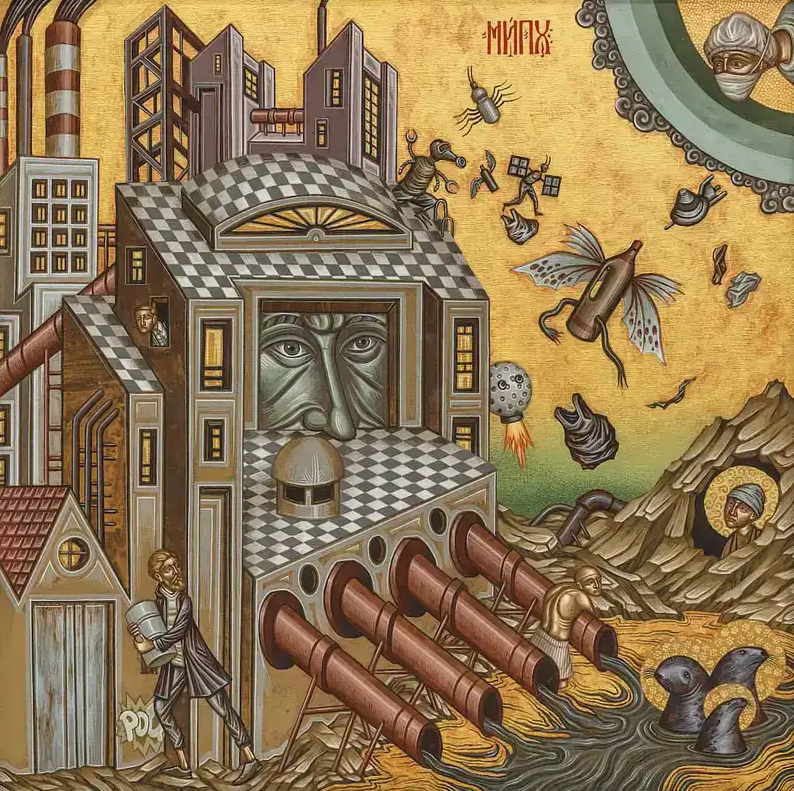

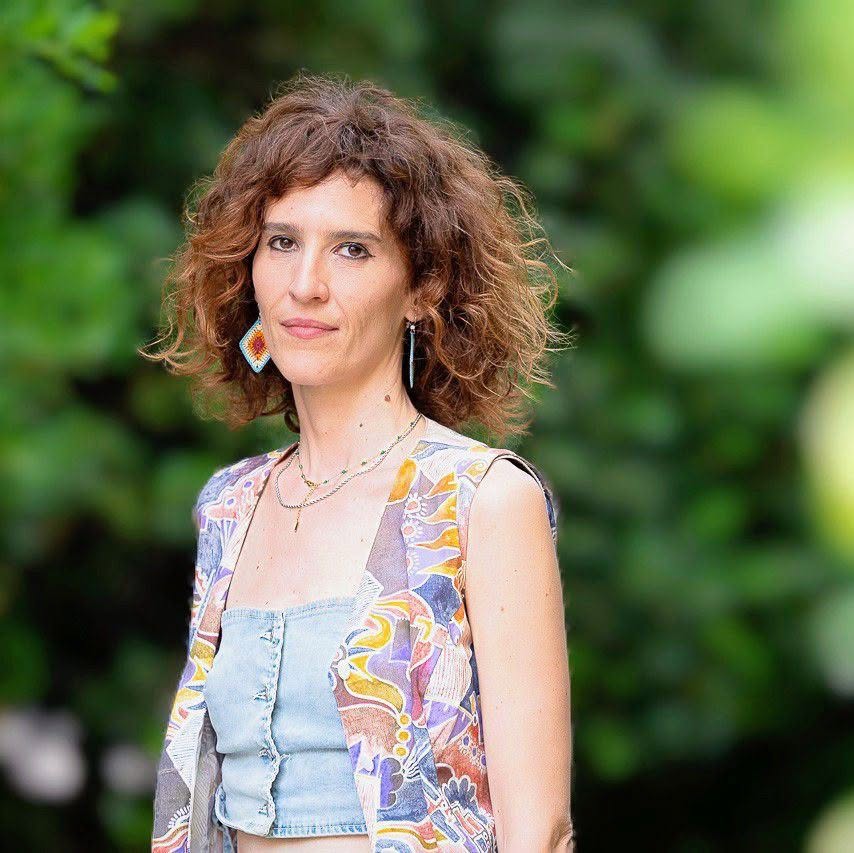 Angeliki Poulou is an assistant professor in the Department of Digital Arts and Cinema at the National and Kapodistrian University of Athens, specialising in ‘History and Theory of Contemporary Art and New Media’. Her theoretical and curatorial work lies at the intersection of contemporary art, art/technology theory and new forms of performance. She has been a member of the Medea Electronique art collective since 2011, where she acts as a curator and dramaturg.