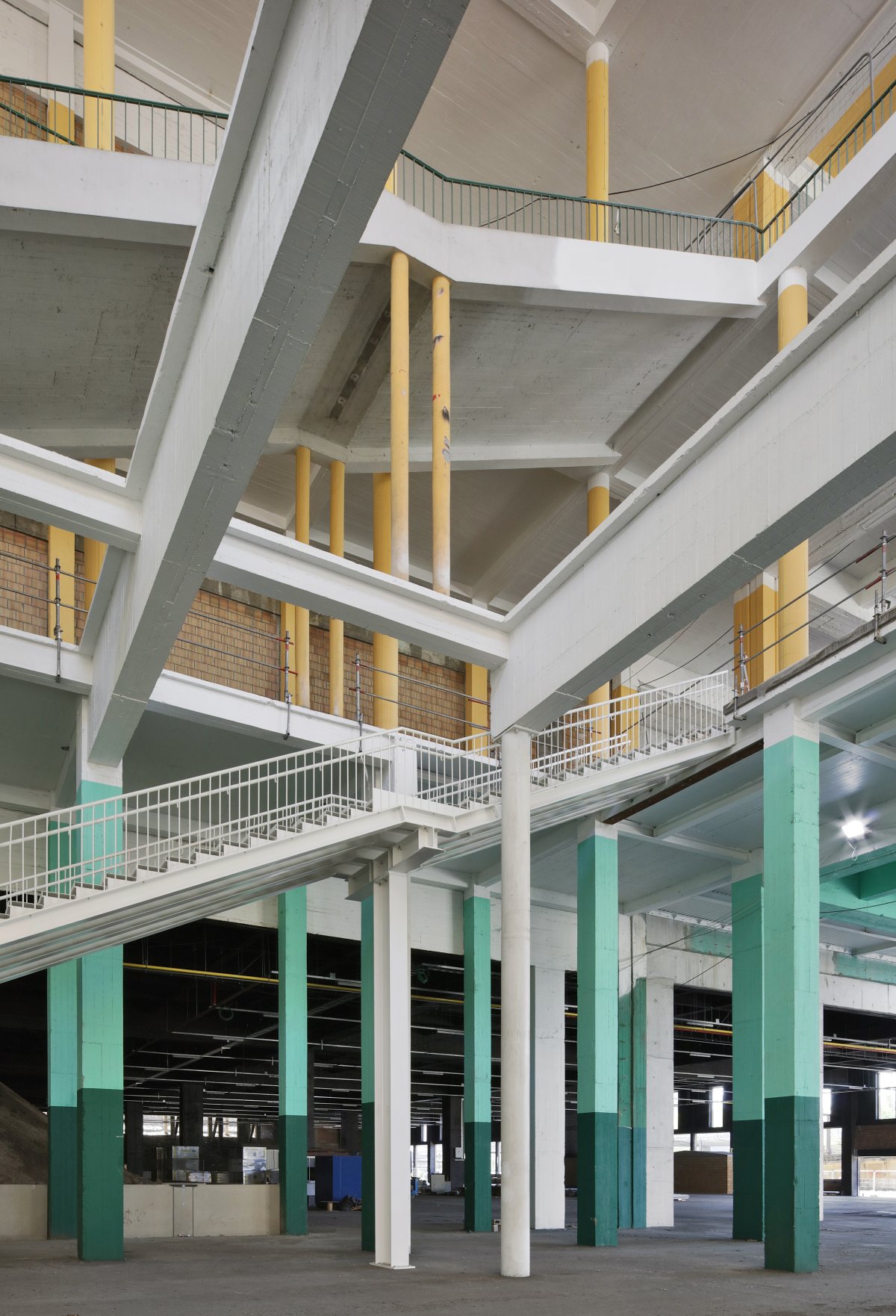



The most prestigious architecture prize in the European Union has been awarded to the renovation of a crumbling 1950s convention centre in Charleroi, Belgium — awarded for its intelligent and precise transformation of an immense existing exhibition building, "demonstrating how architecture can work with what is already there to unlock new spatial, social, and material possibilities", as the press release reads.
The Fundació Mies van der Rohe and the European Commission announced the winners of the 2026 European Union Prize for Contemporary Architecture / Mies van der Rohe Awards in Oulu, Finland. The announcement was made on April 16 at the Silo, an industrial landmark designed by Alvar Aalto in 1931 — a fitting choice of venue for a prize that this year made adaptive reuse its dominant theme.
Together, the two awarded projects were chosen for demonstrating "how architecture can transform our living environments into sustainable, inclusive, and inspiring places", in the words of Glenn Micallef, European Commissioner for Intergenerational Fairness, Youth, Culture and Sport, who made the announcement in Oulu.
The 2026 Architecture Winner is the Charleroi Palais des Expositions, designed by Brussels practice AgwA and Ghent-based architects Jan De Vylder Inge Vinck, commissioned by the City of Charleroi. The Emerging Architecture prize went to Vidic Grohar Arhitekti for Temporary Spaces for the Slovenian National Theatre Drama in Ljubljana.
The two winners were chosen by a jury chaired by Smiljan Radić Clarke — the Chilean architect who is also this year's Pritzker Architecture Prize laureate — alongside Carl Bäckstrand of White Arkitekter, Chris Briffa, Zaiga Gaile, Tina Gregorič, Nikolaus Hirsch, and Rosa Rull Bertrán. The winners were selected from 410 nominated works spanning 40 European countries.
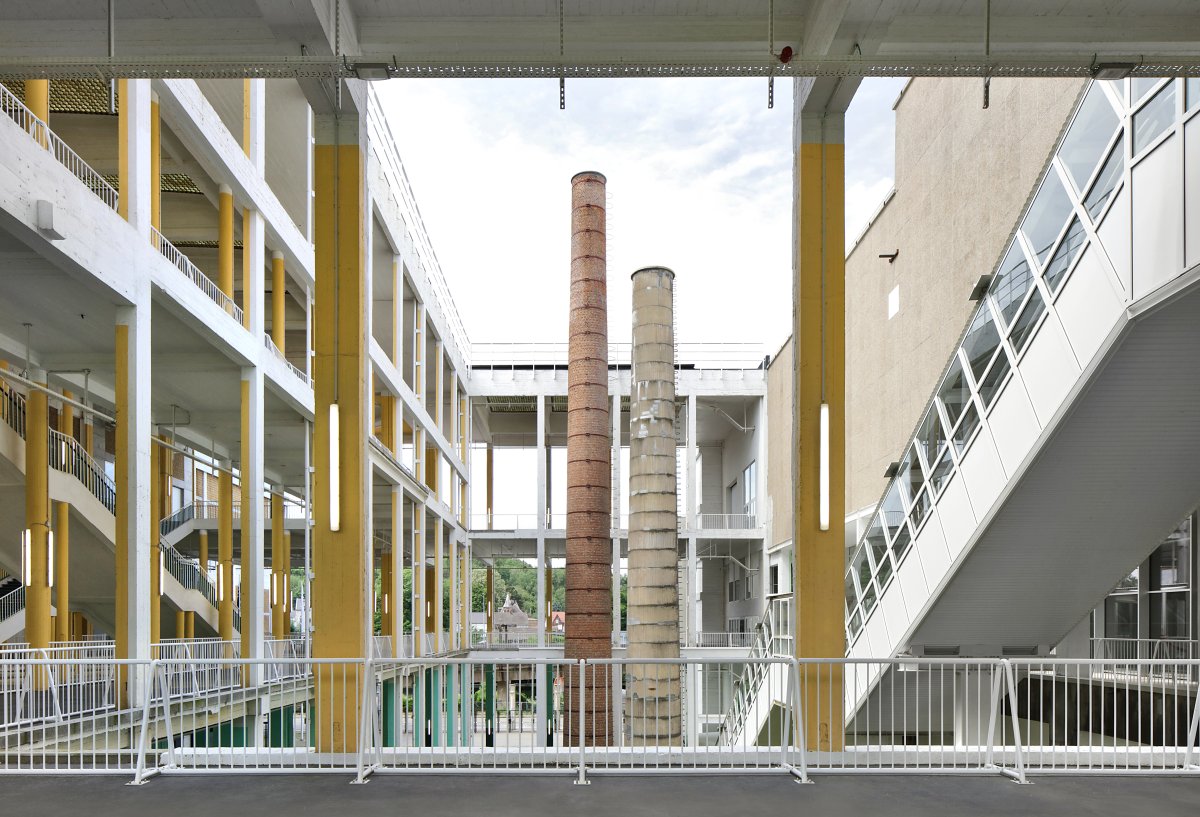
The Charleroi Palais des Expositions is the renovation of a mid-twentieth-century convention centre in Belgium's Wallonia region. Its southern volume was converted into parking; the northern volume contains the minimal enclosed programme, and in between is a three-level garden — a situation that arose from a tight budget, leading the architects to create what amounts to a "zero energy" structure. The architects stripped the exterior walls to create shaded terraces overlooking the urban landscape, providing thermal insulation to the building envelope.
"The project explores the potential of this vast volume, situated on sloped terrain, while preserving its extraordinary qualities such as scale, rationality, and monumentality. The aim was to reassess the historical and heritage value of each part of the existing structure to guide precise decisions on demolition, conservation, and renovation,' reads the announcement of the award rationale. 'Architectural interventions aim to be as undesigned as possible. Circulation is being rethought. The project literally invites public space, parking, and landscape to invade the building while reconnecting the city centre with its surroundings. " So, then, according to the jury, "This renovation is not an endpoint, but it allows the building to evolve and live anew."
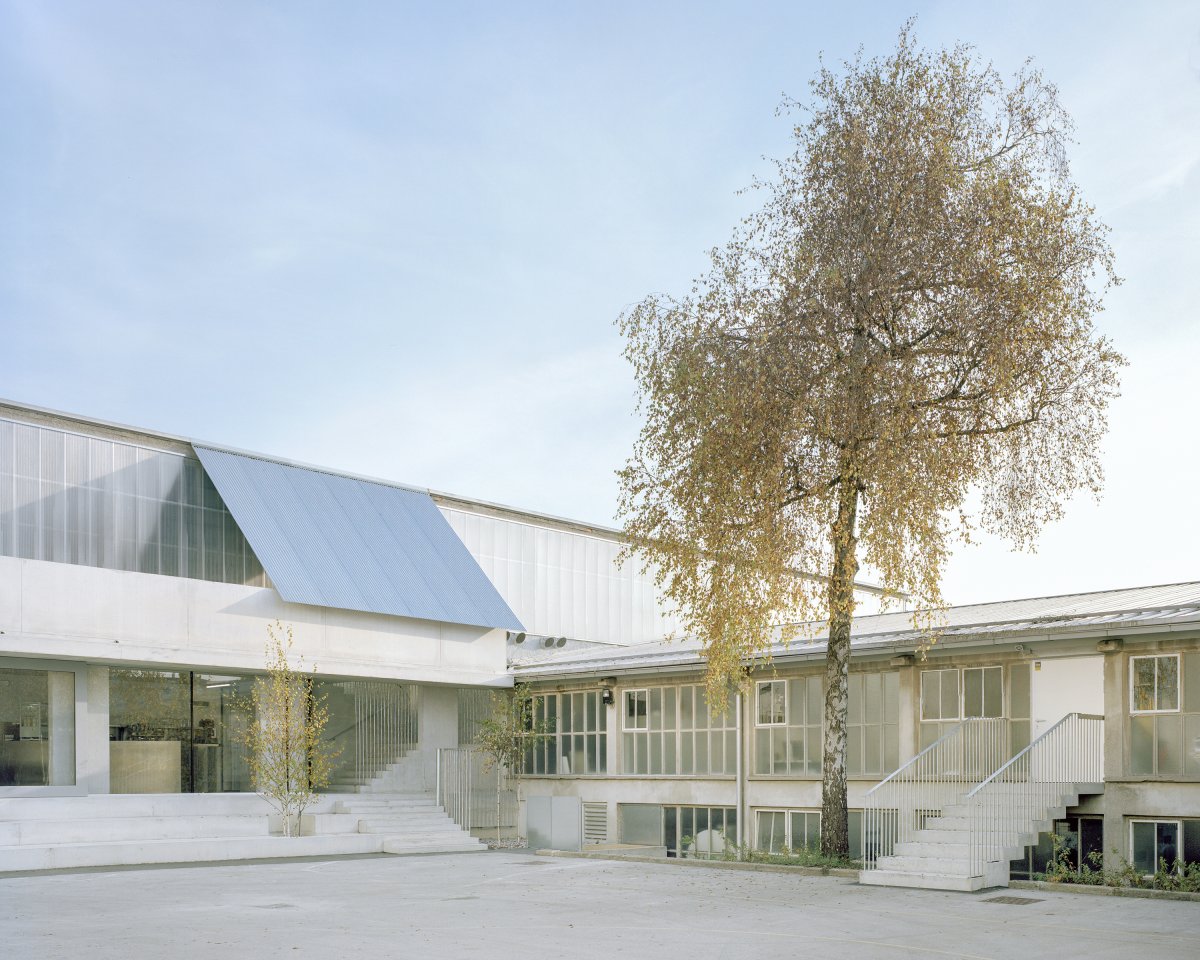
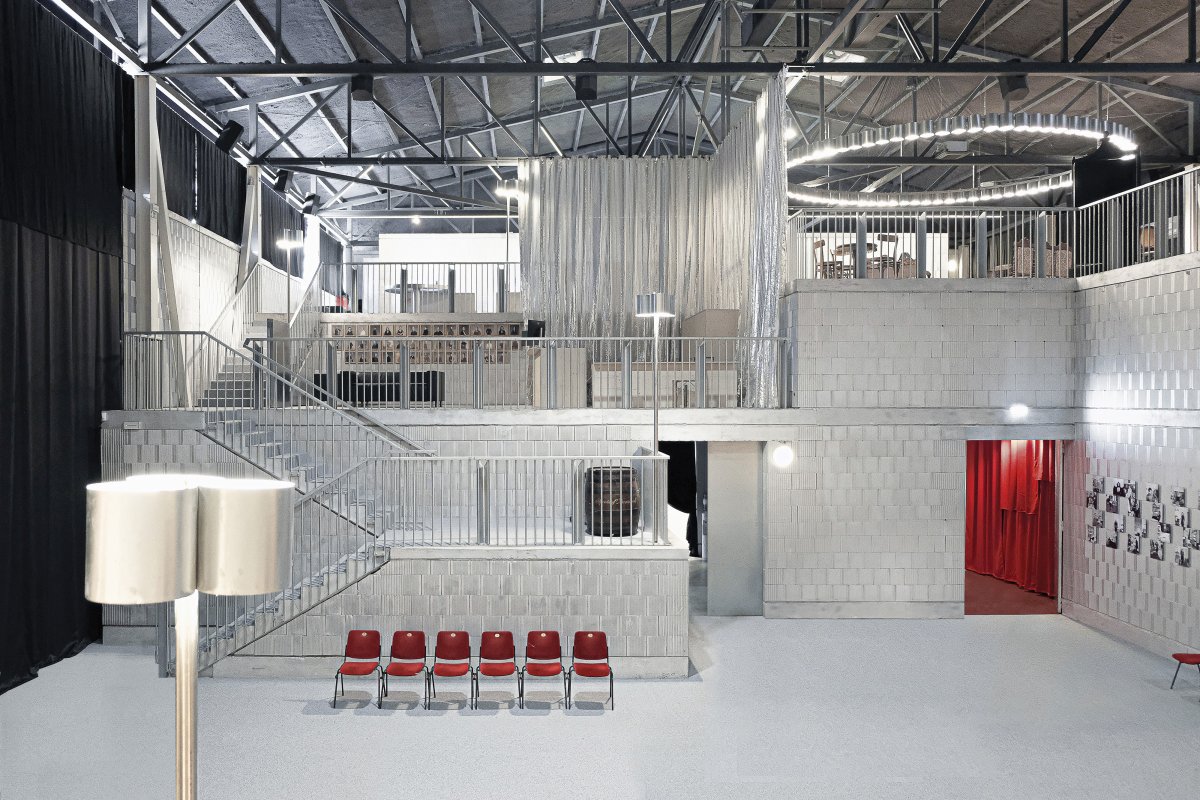
The Ljubljana project — lightweight, impermanent structures erected around the National Theatre Drama during its renovation — received the Emerging Architecture award. It was awarded for its ability "to transform a temporary condition into a powerful and lasting architectural statement, activating an abandoned industrial complex into a vibrant cultural infrastructure", as the jury says in a press release.
"The goal of the project was to establish and organise temporary spaces for the entire programme of the main Slovenian theatre in historical industrial buildings, within a limited budget, within 10 months, with a sustainable spatial and material definition. The new architecture creates a specific character within the generic context of the business-industrial zone," reads the jury's announcement.
Now in its 19th edition, the European Union Prize for Contemporary Architecture / Mies van der Rohe Awards is organised by the Fundació Mies van der Rohe with the support of the Creative Europe programme of the European Commission. The €60,000 biennial prize is considered the highest honour for architecture in the European Union.
Four of the seven finalists announced in February were renovations rather than new construction — a statistic that reflects a broader turn in European architectural culture away from demolition and towards repair. Two of the four most recent award cycles have gone to renovated or transformed buildings.
The five architecture finalists were the Charleroi Palais des Expositions in Belgium by AgwA and architecten Jan De Vylder Inge Vinck; the Rehabilitation of Vapor Cortès-Prodis 1923 in Terrassa, Spain, by H Arquitectes; Lot 8, LUMA Arles — Renovation of Le Magasin Électrique in Arles, France, by Atelier Luma, BC Architects & Studies and Assemble; the Josephine Baker–Marie-José Pérec Sports and Cultural Centre in La Bouëxière, France, by onze04; and the Gruž Market in Dubrovnik, Croatia, by ARP / Peračić-Veljačić. The two emerging architecture finalists were a cultural centre and a theatre — the Multi-Service Cultural Centre Le Foirail in Laguiole, France, by Betillon & Freyermuth and Crypto Architectes; and the Temporary Spaces for the Slovenian National Theatre Drama in Ljubljana by Vidic Grohar Arhitekti.
The EUmies Awards Days, including the Awards Ceremony, will take place on 11 and 12 May 2026 at the Mies van der Rohe Pavilion and Palau Victòria Eugènia in Barcelona, in the context of the Barcelona World Capital of Architecture. The programme will include talks with the winners and finalists; an exhibition of the 40 shortlisted works on view through 6 July; and an Out & About programme – organised with Guiding Architects – inviting the public to visit shortlisted buildings across Europe with their architects. The exhibition will then travel to other European cities.