

The 61st Venice Biennale opened on May 9th amid unprecedented institutional rupture, marking the first time the venerable exhibition has confronted geopolitical fissures of this magnitude. Russia's participation for the first time since 2022 has drawn fierce opposition from European governments and civil-society groups, while demands for the exclusion of Israel from the exhibition have prompted mass artist withdrawals and jury resignations.
The crisis deepened when the entire five-member prize jury – comprising Solange Farkas, Zoe Butt, Elvira Dyangani Ose, Marta Kuzma and Giovanna Zapperi – announced their collective resignation, just days before the opening. The decision followed their earlier statement that they would not award honours to artists from countries whose governments or leaders face charges of crimes against humanity by the International Criminal Court, a declaration that implicitly targeted both Russia and Israel.
In response to the jury's withdrawal, La Biennale announced it would replace the traditional awards with two visitors' prizes, decided through anonymous email voting by ticket holders. The Biennale's decision-making structure – traditionally centred on a curatorially appointed jury wielding significant prestige that has remained largely intact since 1895 – has effectively dissolved. The awards announcement is scheduled for November 22nd, when the exhibition closes.
Russia's announced return to the Biennale provoked immediate condemnation from European capitals. The country was barred de facto from the 2022 edition when its curator and participating artists withdrew in protest against the invasion of Ukraine, calling it "unbearable". It did not participate in 2024, instead lending its Giardini pavilion – which it has owned since 1914 – to Bolivia.
Biennale President Pietrangelo Buttafuoco has maintained that the foundation's bylaws permit Russia's participation under the principle that any nation with diplomatic relations with Italy may exhibit. This position, technically defensible, has nevertheless positioned the institution in direct conflict with European policy consensus. The Russian pavilion opened only to media and guests during previews and remains closed to the general public.
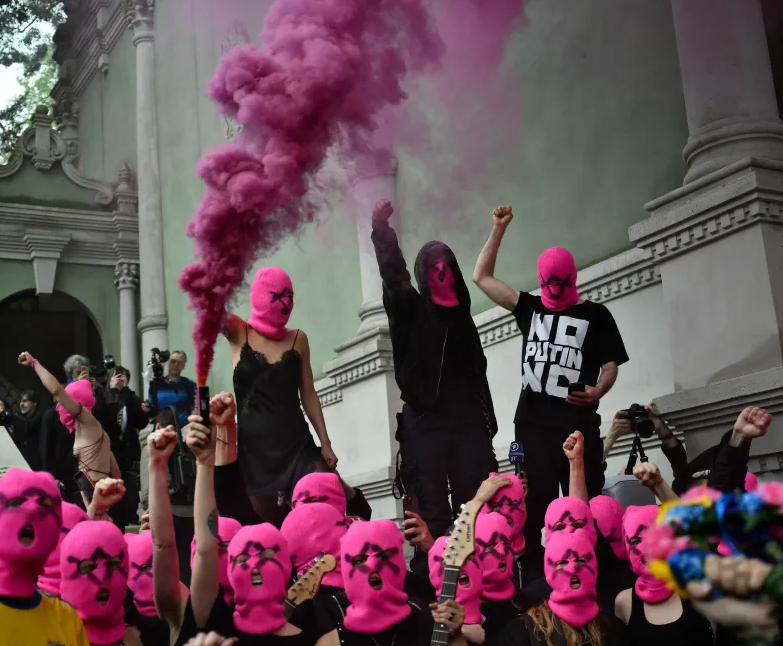
Ahead of the opening, employees and staff-related groups at the Biennale reportedly joined symbolic walkouts and broader protests. In the VIP preview days, several national pavilions withheld full operations or curtailed programming. During the opening period, the Russian feminist punk group Pussy Riot, in collaboration with the Ukrainian‑origin group Femen, stormed the Giardini area, targeting the Russian pavilion.
Wearing pink balaclavas, they lit smoke bombs in the colours of Ukraine—blue and yellow—and released pink smoke, chanting slogans such as “Russia’s art is blood” and “Disobey!” Italian police intervened, cordoning the pavilion and blocking access for about 30 minutes, effectively forcing the Russian pavilion to suspend public entry temporarily.
Italy's Culture Minister, Alessandro Giuli, boycotted the opening ceremony, signalling his government's internal division over the decision. Yet his dissent was undercut when vice prime minister Matteo Salvini visited the Russian pavilion and defended the Biennale Foundation's decision as an expression of artistic freedom.
At the European Commission level, the response was sharper. Executive Vice-President Virkkunen and Commissioner Micallef issued a common statement whereby they underlined that Member States, institutions, and organisations "must act in line with EU sanctions and avoid giving a platform to individuals who have actively supported or justified the Kremlin's aggression against Ukraine. This decision by the Fondazione Biennale is not compatible with the EU's collective response to Russia's brutal aggression. Should the Fondazione Biennale go forward with its decision to allow Russia's participation, we will examine further action, including the suspension or termination of an ongoing EU grant to the Biennale Foundation."
The Commission has threatened to freeze a 2 million euro grant to the Biennale Foundation, with several nations arguing that cultural institutions cannot serve as instruments for whitewashing state aggression. “While Russia bombs museums, destroys churches and seeks to erase Ukrainian culture, it should not be allowed to exhibit its own,” High Representative of the European Union for Foreign Affairs and Security Policy Kaja Kallas said after a meeting of EU foreign ministers. “Russia’s return to the Venice Biennale is morally wrong, and the EU intends to cut its funding.”
The exhibition's title, "In Minor Keys", was conceived by the Swiss-Cameroonian artistic director Koyo Kouoh as an invitation to marginalised voices and underrepresented narratives in global art. The irony has not been lost on observers: the Biennale's foundational theme of inclusivity has instead precipitated one of its most exclusionary moments. Koyo Kouoh passed away on the 10th of May 2025.
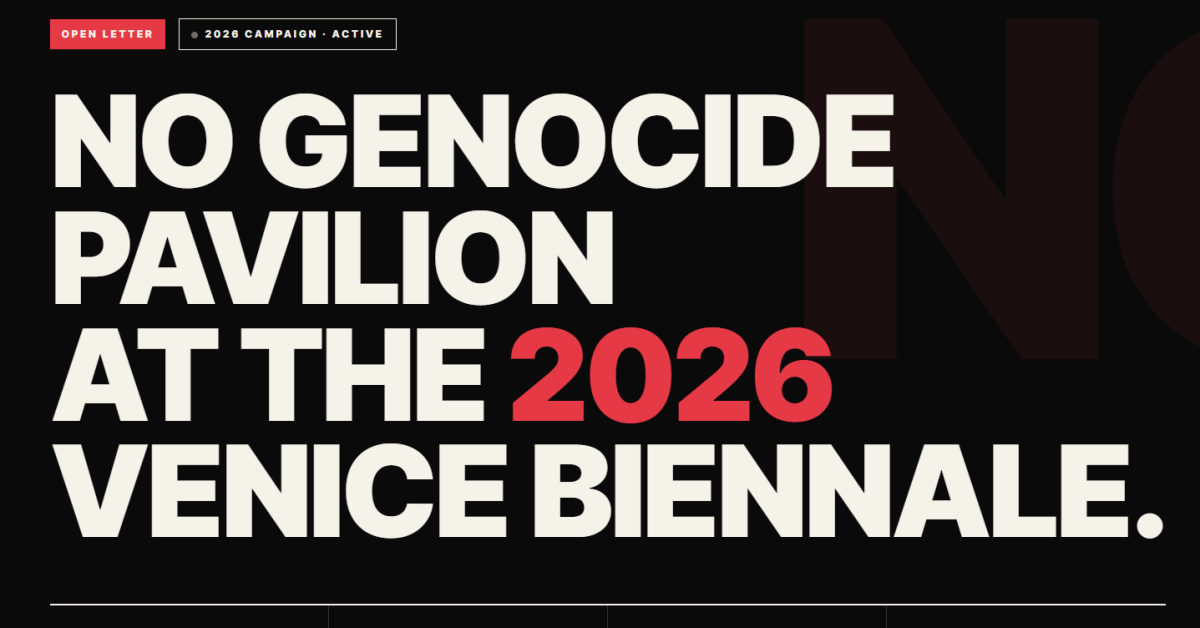
Parallel to the Russian-related outcry, more than 200 artists, curators and workers signed an open letter demanding the exclusion of Israel's pavilion in response to alleged war crimes committed in Gaza. Another letter expanded the critique to include the United States' military involvement in the region.
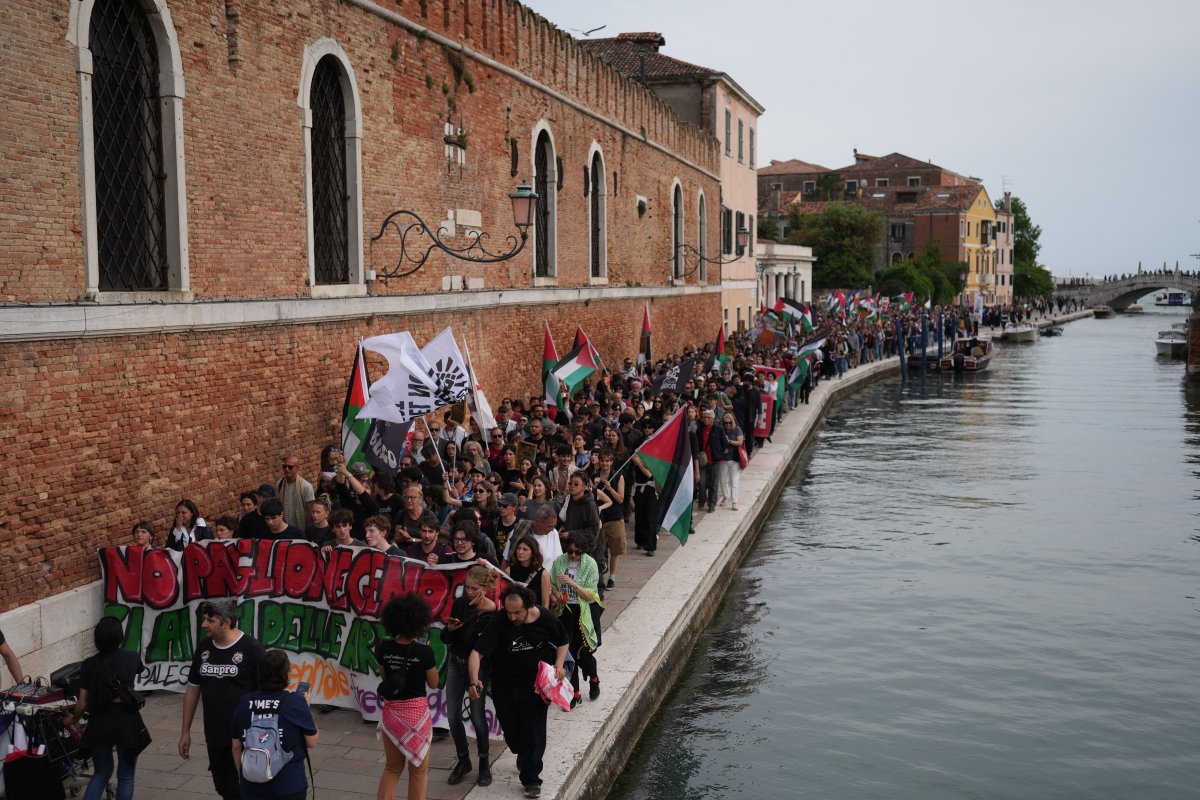
The protests escalated into coordinated action when participants across multiple national pavilions, including Japan, Finland and the United Kingdom, temporarily closed their spaces on May 9th in solidarity with the Art Not Genocide Alliance. Thousands of demonstrators gathered outside the Israeli pavilion, with some groups clashing with police.
Israeli sculptor Belu-Simion Fainaru, representing the country this year, defended the value of cultural dialogue during conflict. Yet his position has remained marginalised within the broader narrative dominating the event.
La Biennale di Venezia was founded in 1895 as the International Exhibition of Art of the City of Venice. The first edition attracted over 224,000 visitors and included works by internationally prominent artists.
The exhibition expanded across the twentieth century: the Biennale Musica was established in 1930; the Venice Film Festival in 1932 (claiming status as the world's first film festival); and Biennale Theatro in 1934. Architecture joined in 1980 and dance in 1999. It was reconstituted as a foundation in 2004 to modernise governance structures.
The Biennale operates across two principal venues: the Giardini (Gardens), home to some thirty permanent national pavilions built since 1907, and the Arsenale, a sprawling former military complex repurposed in recent decades to accommodate growing numbers of participating nations and collateral exhibitions.
Historical precedent exists for political intervention in the Biennale's curatorial mission. In 1974, following Chile's military coup the previous year, the then-president Carlo Ripa di Meana chose to cancel the national pavilions entirely and devoted that year's exhibition to democracy and social change – a decision of comparable institutional magnitude to what is unfolding now.
The Biennale Foundation has publicly maintained that its role is to convene, not to sanction. This position reflects a mid-century consensus that culture transcends politics – a doctrine increasingly challenged by artists themselves, who argue that artistic freedom cannot be divorced from the political context in which art is made and exhibited. The 61st Venice Biennale runs until November 22nd.