
The 9th of February 2026 marked a watershed moment for Hellenism worldwide as UNESCO's inaugural World Greek Language Day elevated the mother tongue of Western civilisation to the pantheon of officially recognised UN observances. While Greeks in the homeland and Cyprus have celebrated this date since 2017, the international endorsement represents a diplomatic and cultural triumph that resonates far beyond ceremonial significance.
The UNESCO General Conference formalised the proclamation during its 43rd session in late 2025, selecting a date imbued with national symbolism: the anniversary of Dionysios Solomos' death in 1857. The poet who penned the Hymn to Liberty—Greece's national anthem—now lends his memory to a global celebration of the language that gave the world democracy, philosophy, and the very alphabet that carries these words.
A Living Bridge Across Millennia
The international recognition owes much to Professor Giannis Korinthios, a Greek academic based in Italy whose decade-long advocacy refused to allow Greek to be relegated to museum status. His vision—that Greek should be understood as a living, evolving organism rather than an archaeological artifact—found fertile ground in UNESCO's mission to safeguard intangible cultural heritage.
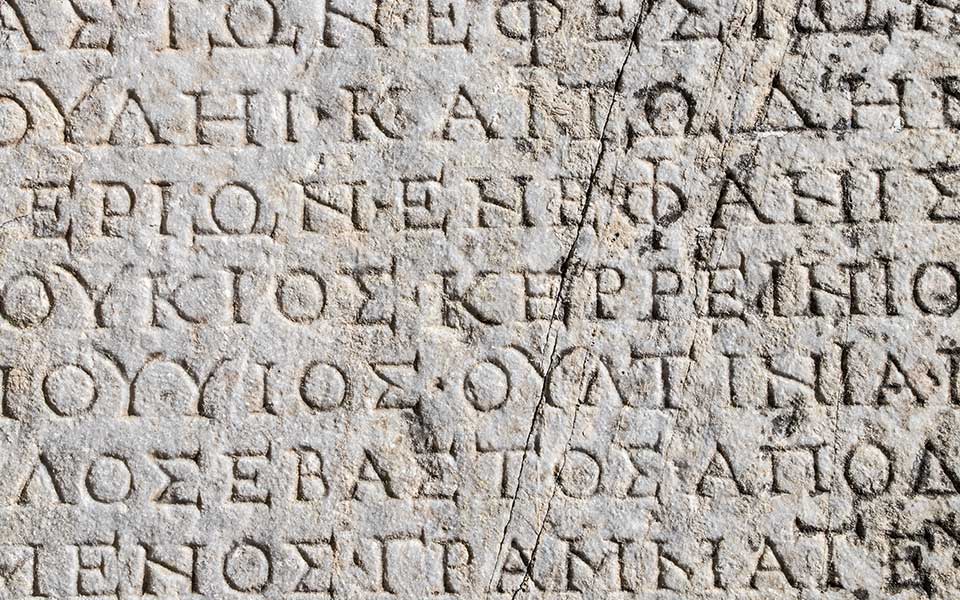
Greek's credentials are formidable. With over 4,000 years of oral tradition and 3,400 years of written documentation stretching back to Mycenaean Linear B tablets, it stands virtually alone among living languages in its chronological depth. The Hellenic innovation of adapting Phoenician script into the first true alphabet with vowels revolutionised human communication, creating the template that would eventually carry Latin, Cyrillic, and countless other writing systems.
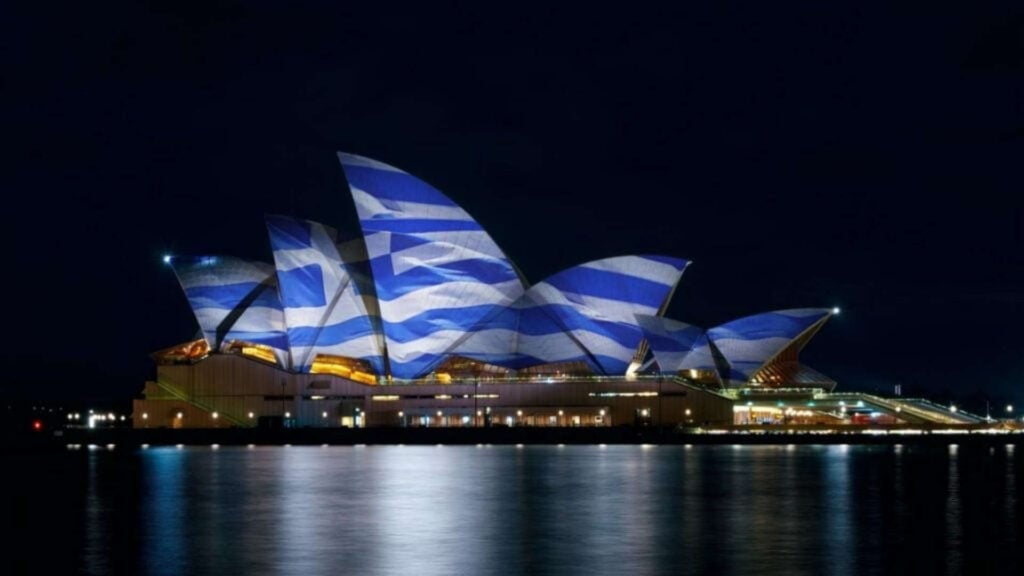
Yet the language's influence transcends historical curiosity. From "philosophy" to "drama" to "physics," from "democracy" to "theater," to "academy," Greek terminology forms the skeletal structure of modern scholarly discourse across disciplines. It is, as supporters note, the "DNA" embedded in global civilisation's genome.
Sunday's commemorations spanned five continents. At the National Library within the Stavros Niarchos Foundation Cultural Centre, President Konstantinos Tasoulas and Prime Minister Kyriakos Mitsotakis addressed the nation in ceremonies broadcast live. At UNESCO headquarters in Paris, international delegates and poetry readings underscored the language's universal appeal, transmitted via UN Web TV to global audiences.
Particularly notable was Australia's enthusiastic participation. The University of Sydney hosted its first UNESCO-sanctioned event, a fitting gesture from a country whose Greek-speaking community ranks among the world's largest outside Europe. Australia's co-sponsorship of the UN resolution proved crucial in securing the day's official status, demonstrating how diaspora communities can leverage their adopted nations' diplomatic machinery in service of ancestral cultural preservation.
The Zolotas Demonstration
The article's inclusion of Xenophon Zolotas' legendary 1959 speech before the International Monetary Fund serves as both linguistic curiosity and persuasive evidence. Speaking in what appeared to be English but constructed almost entirely from Greek-derived words, the then-Governor of the Bank of Greece delivered a sophisticated economic analysis that was simultaneously comprehensible to Anglophone audiences and triumphantly Hellenic in vocabulary.
His opening salvo—"It is Zeus' anathema on our epoch and the heresy of our economic method and policies that we should agonize the Skylla of nomismatic plethora and the Charybdis of economic anaemia"—demonstrated that one could discuss monetary policy, political economy, and institutional reform using Greek terminology exclusively. The speech's enduring circulation proves what Greek advocates have long maintained: that their language isn't preserved in aspic but actively circulates through the bloodstream of modern thought.
For Greece, UNESCO recognition carries implications beyond cultural prestige. It strengthens the hand of educational institutions promoting Greek language instruction abroad, provides a platform for renewed emphasis on classical education domestically, and offers a counternarrative to perceptions of Greece as a nation defined solely by economic challenges or tourist attractions.
The timing is particularly apt. As Greece continues its post-crisis national repositioning, cultural diplomacy offers a realm where the country's historical capital translates into contemporary soft power. A language that predates most European nations by millennia, that coined the word "Europe" itself, and that continues generating new scientific terminology serves as a reminder that influence operates across temporal scales longer than quarterly GDP reports.
Whether this official recognition translates into measurable increases in Greek language study, or remains primarily symbolic, matters less than the underlying affirmation: that in an era of linguistic homogenisation, the international community has formally acknowledged that some tongues carry inheritances too valuable to be measured merely by speaker populations. Greek, with its unbroken thread connecting Homer to hashtags, stands as UNESCO's latest testament to that principle.
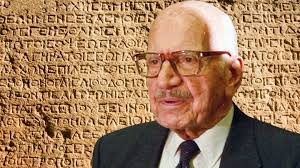
In 1957 and again in 1959, Xenophon Zolotas, then representative of the Greek Government to the IMF and the World Bank, gave a speech in english using only Greek words to demonstyrate the influence the language had exetred on moden western civilization and culture. Here is the speech of 1959:
 --
--
Kyrie,
It is Zeus’ anathema on our epoch and the heresy of our economic method and policies that we should agonize the Skylla of nomismatic plethora and the Charybdis of economic anaemia.
It is not my idiosyncracy to be ironic or sarcastic but my diagnosis would be that politicians are rather cryptoplethorists. Although they emphatically stigmatize nomismatic plethora, they energize it through their tactics and practices. Our policies should be based more on economic and less on political criteria. Our gnomon has to be a metron between economic strategic and philanthropic scopes.
In an epoch characterized by monopolies, oligopolies, monopolistic antagonism and polymorphous inelasticities, our policies have to be more orthological, but this should not be metamorphosed into plethorophobia, which is endemic among academic economists.
Nomismatic symmetry should not antagonize economic acme. A greater harmonization between the practices of the economic and nomismatic archons is basic.
Parallel to this we have to synchronize and harmonize more and more our economic and nomismatic policies panethnically. These scopes are more practicable now, when the prognostics of the political end economic barometer are halcyonic.
The history of our didimus organization on this sphere has been didactic and their gnostic practices will always be a tonic to the polyonymous and idiomorphous ethnical economies. The genesis of the programmed organization will dynamize these policies.
Therefore, I sympathize, although not without criticism one or two themes with the apostles and the hierarchy of our organs in their zeal to program orthodox economic and nomismatic policies.
I apologize for having tyranized you with my Hellenic phraseology. In my epilogue I emphasize my eulogy to the philoxenous aytochtons of this cosmopolitan metropolis and my encomium to you Kyrie, the stenographers.