
Kornelia Kiss discusses funding sources for cross-sectoral work as well as capacities, skills, and the practical know-how needed for creatives working at the intersection of culture and health. She emphasises the importance of long-term collaboration and sustainable frameworks to support this emerging field
By IDEA ConsultIn 2016, 12% of Europeans reported feeling lonely more than half of the time – a figure that jumped to 25% during the first months of the pandemic. Loneliness alone increases the risk of physical illness, cognitive decline and premature death, and yet it remains almost entirely outside the reach of biomedical treatments.
A landmark review of over 300 scientific studies and 500 projects, compiled by the EU-funded CultureForHealth initiative, found that cultural activities can have measurable psychological, physiological, social and behavioural benefits for people across the life course.
Cultural interventions, the research argues, are uniquely placed to address precisely these social determinants of health that medicine cannot easily touch. From live music in intensive care units in Denmark to group singing programmes for maternal mental health, the evidence spans clinical settings, communities and workplaces.
In Brussels, psychiatrists at the Brugmann Hospital began formally prescribing museum visits to patients with depression and burnout — the first scheme of its kind in Europe. In Aarhus, Denmark, the municipality invested 2.1 million DKK in 40 cultural initiatives as part of a dedicated culture and health plan. And at the policy level, the WHO published a dedicated report, initiated by the CultureForHealth project, on how arts activities can support the mental health and wellbeing of forcibly displaced people.
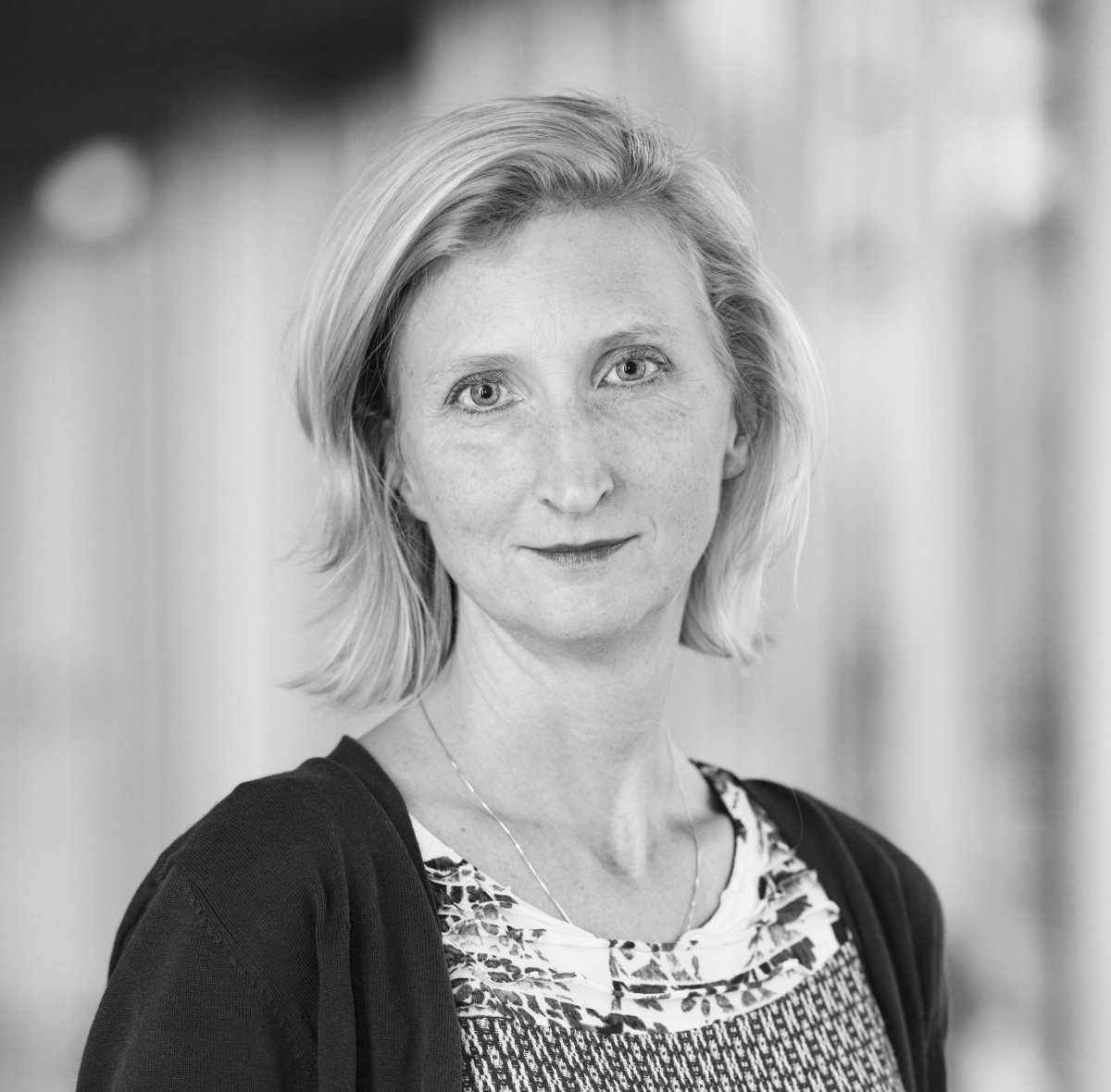
Kornelia Kiss is a co-author of the CultureForHealth Report and an expert in the intersection of culture, health, policy, and cross-sector innovation, with a strong track record in advocacy, research and transnational collaboration. She currently serves as Head of Culture and Health at Culture Action Europe (CAE), one of the largest cross-cultural networks in Europe.
In Talking Finance, CU’s special feature of interviews with experts in the field, Kornelia talks about culture’s role in health and well-being and how to strengthen policy frameworks and practical collaboration across sectors – especially between culture and health systems.
A: I am head of CultureandHealth at Culture Action Europe, an organisation with around 300 members, many of whom are networks representing the cultural sector towards European and global institutions. Within this role, I have been closely involved in the CultureForHealth initiative. I contributed to the CultureForHealth report and participated in related member-state meetings.
I also lead the Culture and Health Platform, which was developed following one of the key recommendations of the CultureForHealth report – namely, that stronger connections need to be built across countries and sectors and that actors need spaces to learn from each other. The platform brings together 17 organisations across Europe that were already active in this field and interested in strengthening cooperation.
Cross-sectoral innovation is not always about “innovation” in the sense that it is not new. The link between culture and health has been there since the birth of humankind. Apollo, the Greek god, was responsible for healing. music and poetry at the same time. So historically, culture, health, education, and social life were not so separated. Over time, however, our systems have become highly compartmentalised, and collaboration across sectors has become less obvious. Cross-sectoral innovation means reconnecting these fields to respond to complex societal challenges.
In the context of culture and health, it refers to building structured collaboration between the cultural sector and the health sector. The evidence increasingly shows that engaging in cultural activities is a health behaviour, much like physical activity, which is now widely recognised as beneficial to health, something that was not always considered obvious. Today, many bottom-up initiatives are successfully working at this intersection. The challenge is to create sustainable frameworks, funding structures and policy recognition so that this work is not temporary but embedded. Cross-sectoral innovation in culture and health is therefore about creating the conditions for these sectors to work together in a lasting and systemic way.
Q: What concrete opportunities does cross-sectoral innovation open up for artists and cultural organisations? What kinds of roles are creatives playing in this innovation and these projects?
Cross-sectoral innovation opens up new spaces and new types of work for artists and cultural organisations. It can mean access to different funding streams, especially from the care, social or health sectors, where budgets are much larger than cultural budgets. At a time when cultural budgets are being cut and artists are struggling, this can be very beneficial. Health budgets are also being reduced, of course, but we are not necessarily asking the health sector to increase its funding. Rather, we are asking for it to be spent more wisely – through prevention, early action, and stopping secondary issues (such as depression) from developing on top of an existing disease. That said, this is not for every artist, and not everyone is expected to work in this way.
For artists, it can mean working in different environments – hospitals, care homes, mental health contexts, workplaces, and youth settings. I have to admit, these are tough environments. Often, it is not the artists’ main job but a part-time activity alongside their own artistic practice. At the same time, it can enrich their practice and provide strong societal value.
In many cases, the cultural sector is leading these projects, for now, often trying to prove that this work functions – sometimes even voluntarily, like hospital clowns do. The health side rarely initiates, although there are champions within the system. Ideally, projects are co-designed between the artist and the care/health side. Artists often work together with NGOs that know or engage a specific social group.
Q: Which types of funding are currently used to support such initiatives? Are funding sources from different sectors combined? Only grants, or do you see private funding, etc.? Emerge.
Funding varies widely between member states. Cultural budgets are generally much smaller than health budgets, yet many initiatives still rely on cultural funding or short-term project grants. Often, funding stops even when initiatives are successful. This project-to-project logic creates instability. However, more and more is taken up from the health side.
In some countries, there are structural approaches. In Sweden, by law, 1% of hospital budgets must go to art. In Finland, hospitals have cultural consultants responsible for culture provision, although funding still has to be applied for regularly. In Denmark, culture has been integrated into mental health policy, with permanent funding from the health side for research into culture and health. Things are changing.
Private funding sources are emerging. More private foundations are recognising socially engaged arts and these intersections. Artists are also now organising successful crowdfunding campaigns.
Q: For an artist or cultural organisation interested in working at the intersection of culture and health, what are the basic requirements for getting involved in these types of projects/initiatives? What are the capacities, skills, or good-to-knows for creatives who want to work in this field?
There is a set of identified skills for this field (links below), although when presented, it can sometimes frighten artists because it seems like an ideal profile. There is an ongoing discussion about whether certification is needed. Some universities offer training programmes (for example, in Turku, Torino, and the Baltics), and there are specialised courses.
However, often the most important skills are social skills – listening, connecting, and understanding how to speak to people. It is less about clinical knowledge and more about communication and relationship-building. Some artists naturally have these abilities.
There is no consensus yet in the cultural sector about formal qualifications. A practical approach is to look at experienced artists, shadow them, and learn from their practice. Get inspired by actions such as Rednoses.
Sustainability is also key. Residencies or short exchanges are often not enough. Ideally, the artist lives close by, and the practice is continuous. That is why cooperation with an institutional partner can be important – it increases the likelihood of long-term funding and continuity.
Q: What should practitioners pay attention to moving forward, and if you could give one key piece of advice to creatives exploring this field, what would it be?
Find your champion – someone on the non-cultural side who believes in what you do. Listen to their concerns, learn their priorities, and speak their language. Use their terminology to explain how your project contributes to their goals. Start with buy-in.
Look for calls outside the cultural budget. Introduce one innovative cultural element into a health call. Apply repeatedly. Build visibility. Meet the people in the other sector who are already pushing this forward. We cannot break down silos between culture and healthcare entirely – the sectors are different. But we can build bridges around a common goal.
Dive deeper and explore
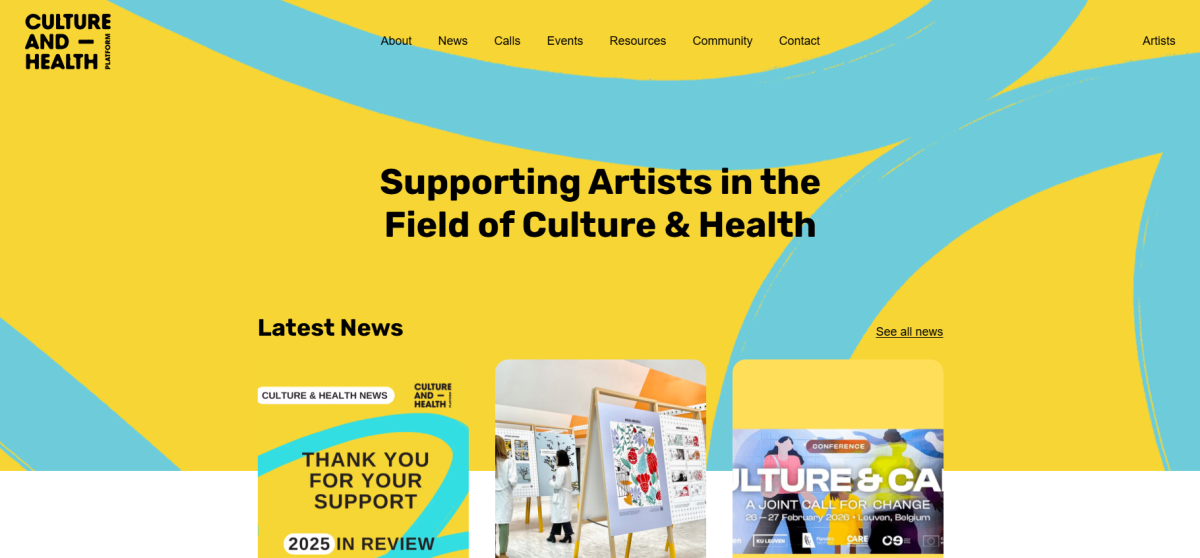 The CultureAndHealth Platform, led by Culture Action Europe, is a four-year initiative supporting over 200 emerging European artists working at the intersection of culture, health, education, care, and social sectors. It aims to highlight the role of culture in improving health, well-being, and social innovation.
The programme offers financial support through grants, learning opportunities via trainings and peer exchanges, international networking events and conferences, and an upcoming online platform to connect the cultural and health sectors.
It currently has open calls for international artist shadowing programmes in both Italy and Finland, offering funded residencies of up to €1,050 for EU-based artists with at least three years of professional experience working at the intersection of arts and health – a tangible entry point for those ready to deepen their practice in this field.
The programme also provides national support in 14 countries to help adapt the project locally and aligns with EU priorities on cultural participation, health equity, and inclusive, participatory arts practices. It provides financial support through: